
tpo roofing
What Is a TPO Roof? Is It Good for New Mexico Buildings?
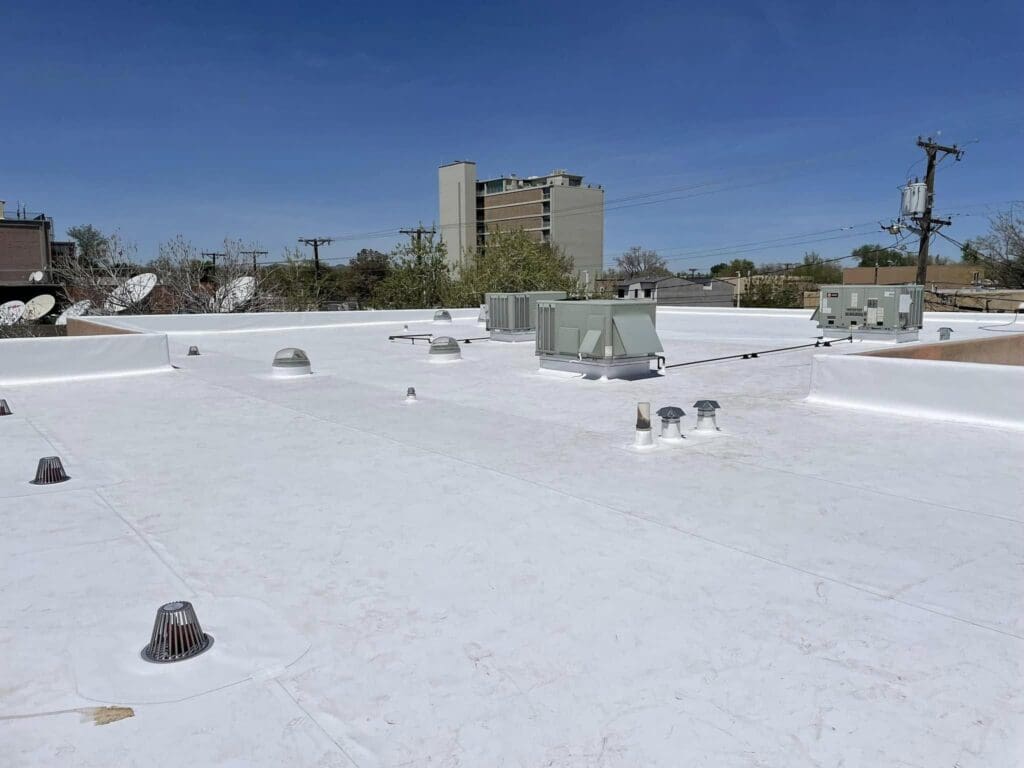
TPO, or thermoplastic polyolefin, is a single-ply roofing membrane commonly used on flat and low-slope roofs. It can be a good option for many New Mexico commercial buildings and some homes because reflective TPO surfaces and heat-welded seams suit many applications. However, proper installation, drainage, insulation, flashing, maintenance, and the condition of the building all…
Read MoreWhy Do TPO Roof Seams Fail?
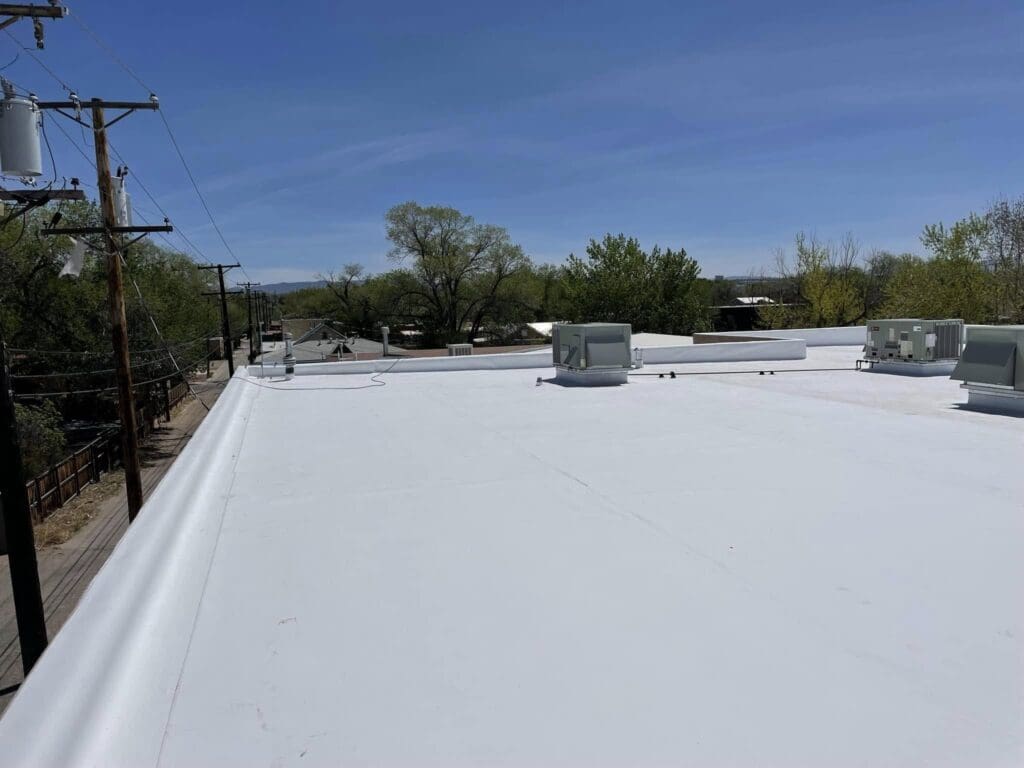
TPO roof seams can fail because of incomplete heat welding, contamination, improper welding conditions, insufficient pressure, membrane movement, aging, wind stress, rooftop damage, or poor previous repairs. An isolated failed seam may often be repaired, but repeated seam failures can indicate a broader problem involving installation, moisture, attachment, or the overall roofing system. For property…
Read MoreHow Long Does a TPO Roof Last in New Mexico?
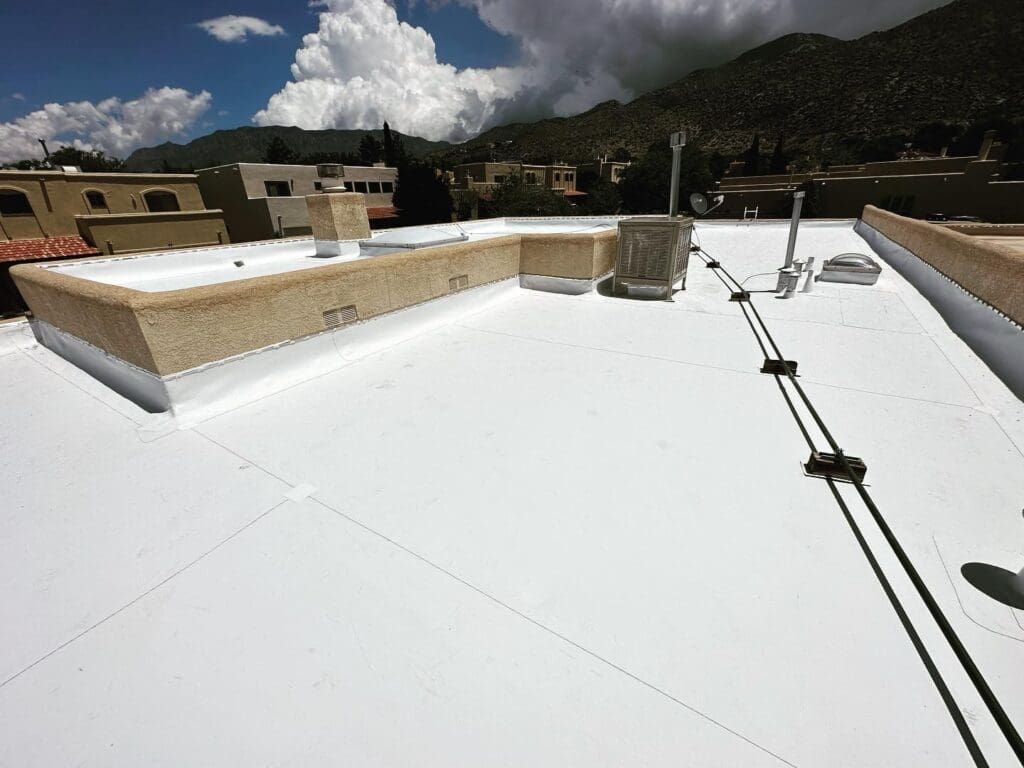
A properly installed and maintained TPO roof can provide many years of reliable service in New Mexico, but there is no single lifespan that applies to every roof. TPO roof longevity depends on membrane quality and thickness, installation, drainage, UV and weather exposure, rooftop traffic, maintenance, and how quickly developing problems are repaired. That last…
Read MoreHow Does Hail Damage a TPO Roof?
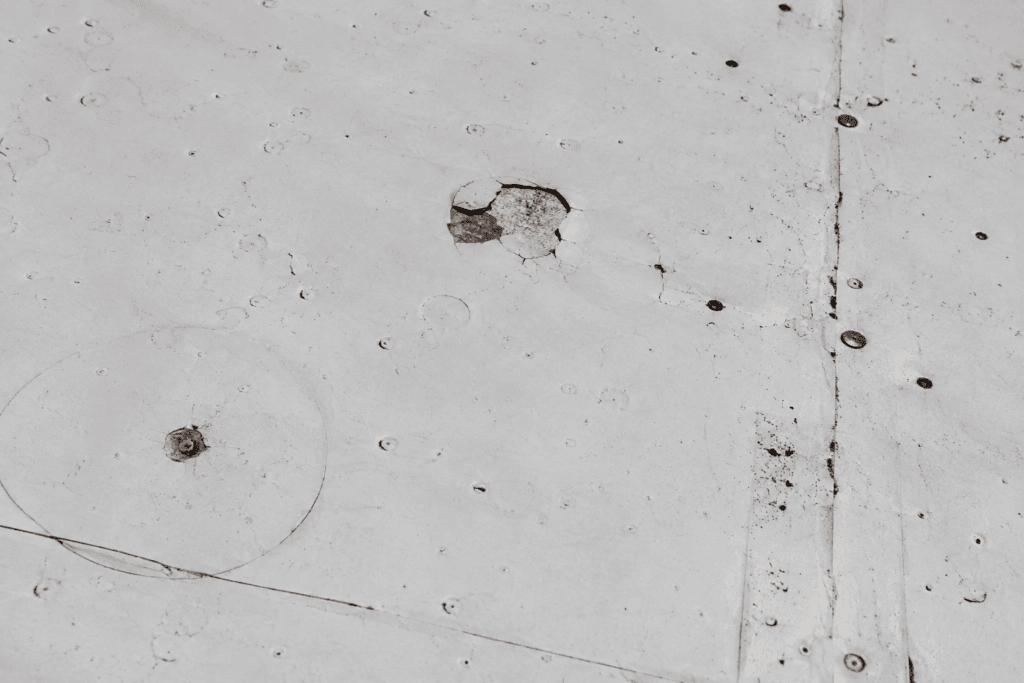
Hail can damage a TPO roof by puncturing or weakening the membrane, stressing seams and flashing, and damaging cover board, insulation, or rooftop details below and around the surface. The severity depends on hail size, wind, impact angle, membrane condition, roof age, substrate, and the complete roofing assembly. For commercial property owners in Albuquerque and…
Read MoreCan You Walk on a TPO Roof Without Damaging It?
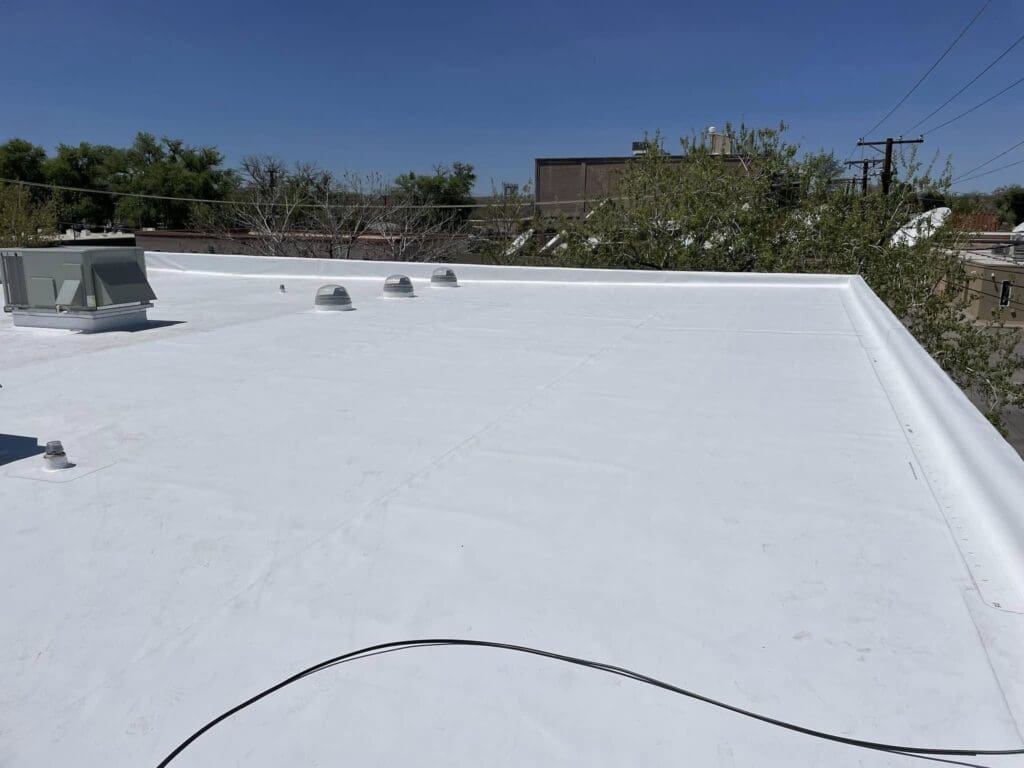
Yes. Limited, necessary foot traffic is generally possible on many properly installed TPO roofs, but a TPO membrane should not be treated as a general walking surface. Repeated traffic, sharp objects, dropped tools, loose fasteners, carts, concentrated loads, and walking over wet or weakened areas can puncture or damage the roofing system. For commercial property…
Read MoreCan a TPO Roof Be Repaired or Does It Need Replacement?
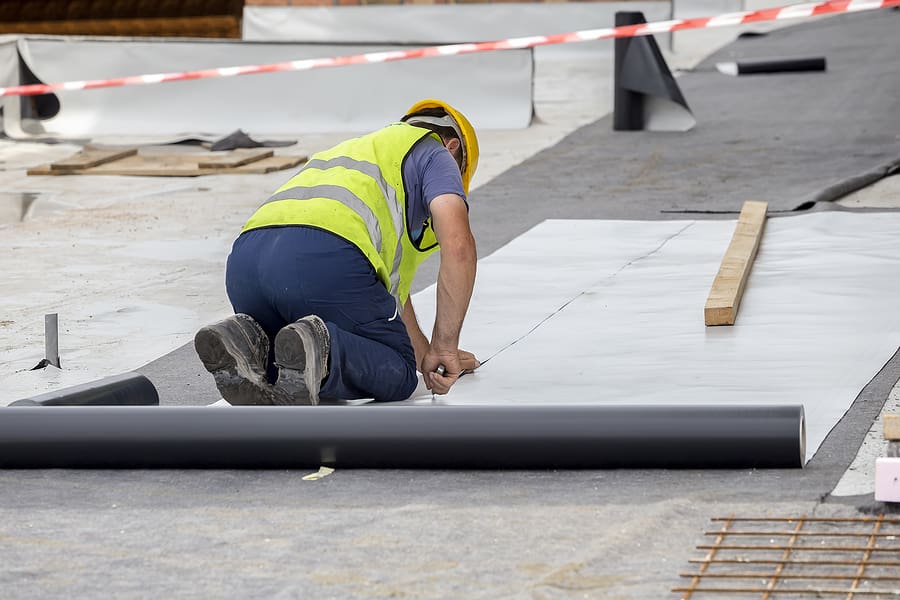
Yes, many TPO roofs can be repaired when damage is localized. Punctures, open seams, flashing failures, and some areas of wet insulation may be repairable. Replacement becomes more likely when deterioration, moisture, drainage problems, or repeated failures affect large portions of the roof. Condition—not age alone—should drive the decision. Discovering a leak in a TPO…
Read MoreWhat Are the Layers on a TPO Roof?
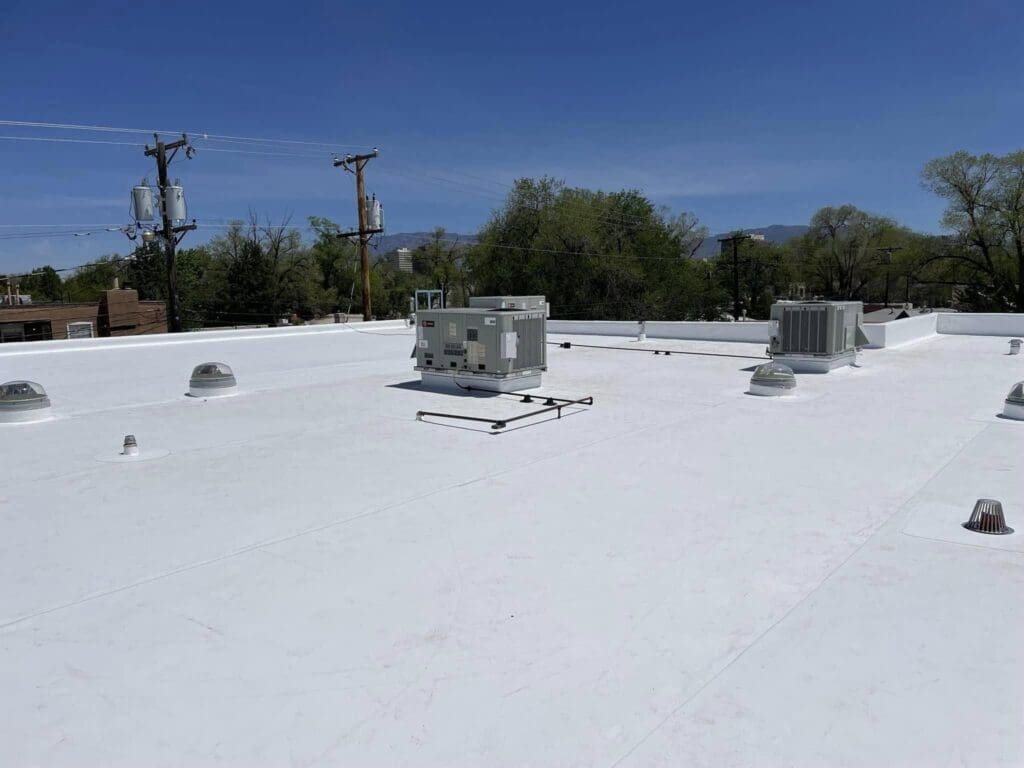
What Are the Layers on a TPO Roof? A TPO roof is made up of more than the white membrane you see from the outside. A typical TPO roofing system may include a structural roof deck, an air or vapor-control layer when required, roof insulation, tapered insulation where needed for drainage, a cover board, an…
Read MoreFull TPO Replacement vs. Silicone Coating for NM Warehouse Roofs
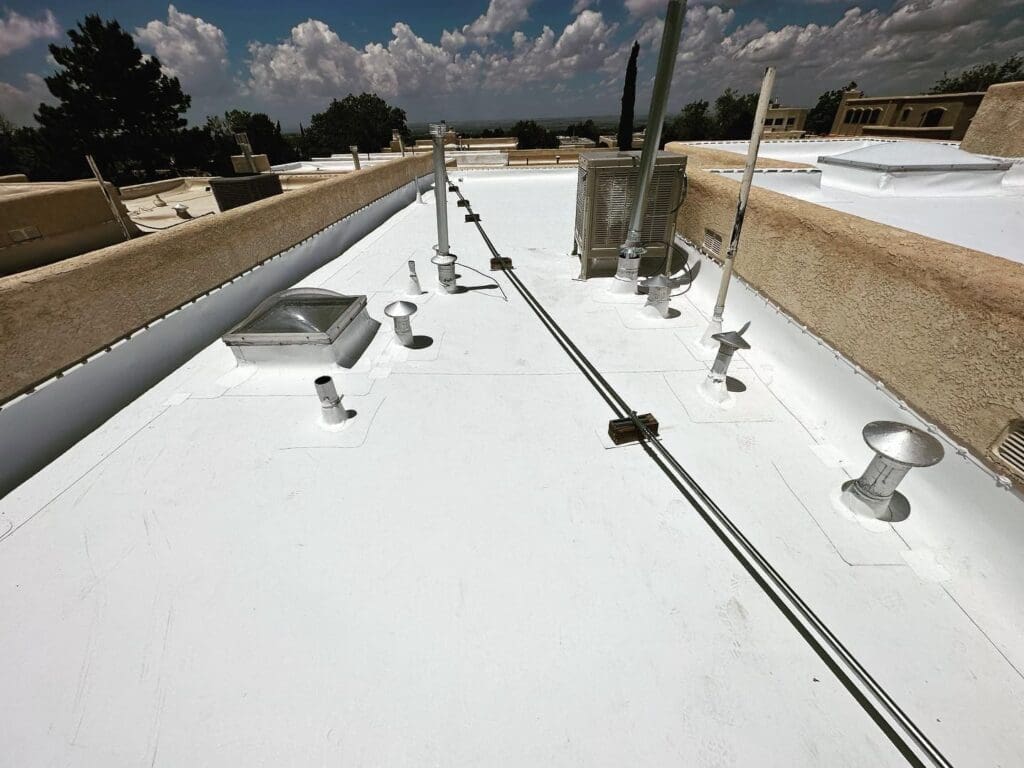
If you manage a large-scale distribution facility or manufacturing plant in the West I-40 Corridor, the North I-25 Industrial Park, or down by the Airport Corridor, you are sitting on top of an enormous financial liability: your flat roof footprint. When that expansive membrane begins to show its age, you will inevitably be pitched two…
Read MoreHow White TPO Roofing Slashes NM Commercial Cooling Costs
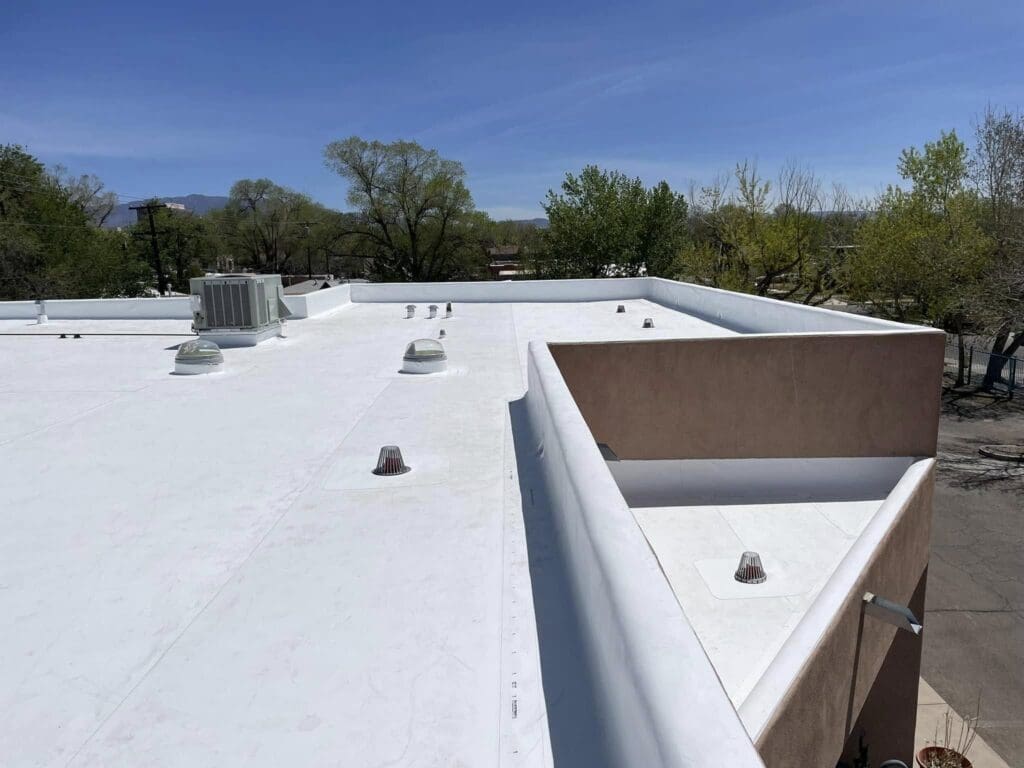
If you manage a commercial facility or industrial warehouse in the Albuquerque or Santa Fe area, your building is constantly fighting an uphill battle against the elements. Out-of-state property managers often underestimate the sheer operational strain of running a facility in the high desert. They look at our peak summer temperatures and assume our cooling…
Read More