
Can You Walk on a TPO Roof Without Damaging It?
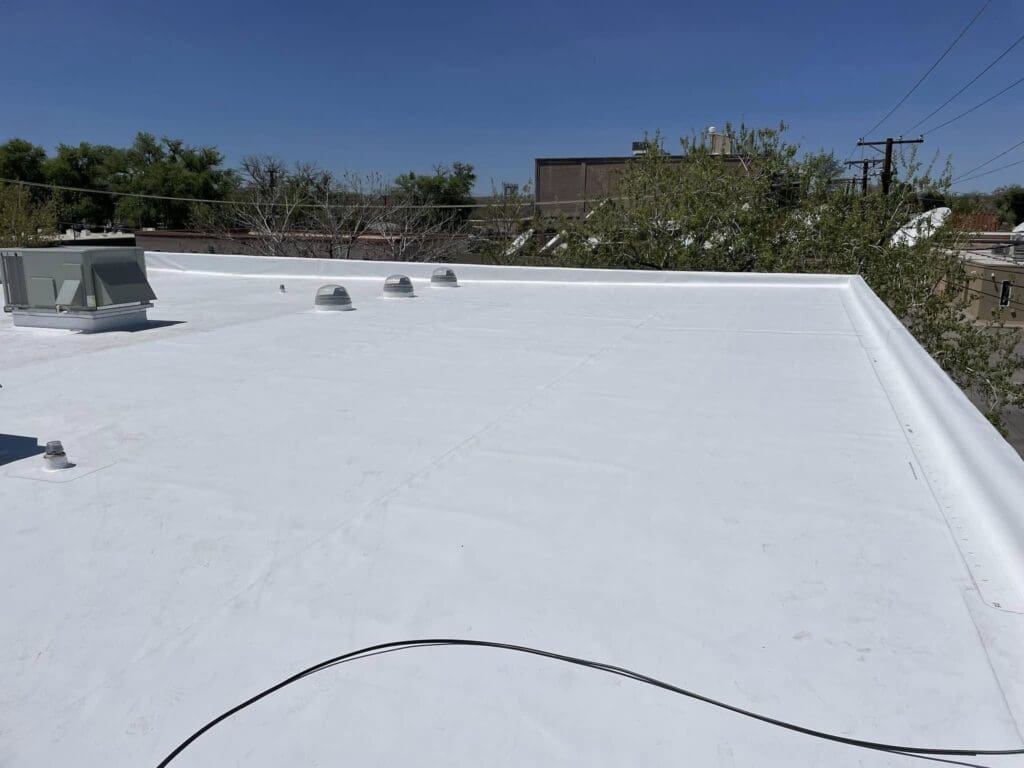
Yes. Limited, necessary foot traffic is generally possible on many properly installed TPO roofs, but a TPO membrane should not be treated as a general walking surface. Repeated traffic, sharp objects, dropped tools, loose fasteners, carts, concentrated loads, and walking over wet or weakened areas can puncture or damage the roofing system.
For commercial property owners, avoiding all rooftop traffic is often unrealistic. HVAC technicians, electricians, solar contractors, plumbers, maintenance crews, and roofing professionals may all need access to equipment located on the roof.
The better question, therefore, is not simply whether someone can walk on a TPO roof. It is how the roof can be accessed without unnecessarily damaging the membrane.
Designated walk pads, controlled rooftop access, careful handling of tools and equipment, and professional inspections after service work can help reduce the risk.
This is particularly important in New Mexico, where intense sunlight, high roof-surface temperatures, monsoon storms, hail, windblown debris, and dramatic temperature changes already place considerable stress on commercial roofing systems.
What Is a TPO Roof?
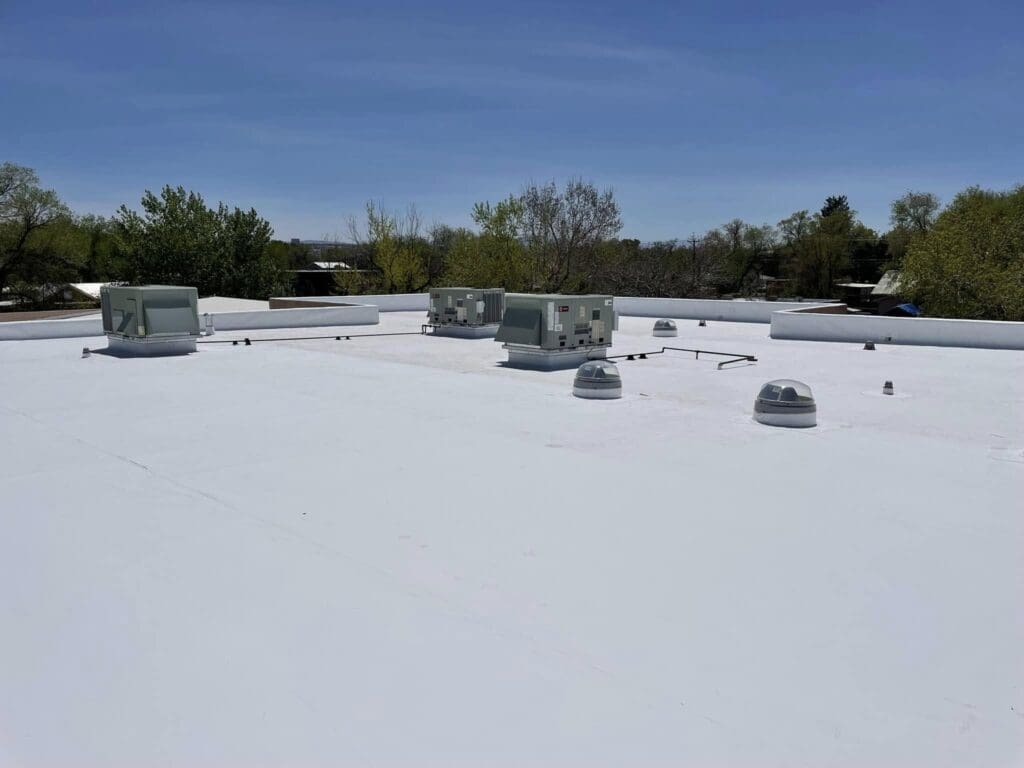
TPO stands for thermoplastic polyolefin. It is a single-ply roofing membrane commonly installed on commercial and low-slope buildings.
TPO roofing has become popular because it can provide a durable, reflective, and relatively lightweight waterproofing surface. The membrane is installed across the roof and joined at seams, typically using heat-welding techniques.
A complete TPO roofing system may also include:
- Roof decking
- Vapor-control components where required
- Roof insulation
- Cover board depending on the assembly
- TPO membrane
- Fasteners or adhesives
- Heat-welded seams
- Flashings
- Roof drains and scuppers
- Penetration details
- Walkway pads where appropriate
The important thing to understand is that the visible TPO membrane is part of a complete roofing assembly.
It is designed primarily to keep water out of the building.
It is not designed to function like a patio, sidewalk, equipment platform, or other surface intended for unrestricted pedestrian traffic.
Will Walking on a TPO Roof Damage It?
Not necessarily.
Occasional foot traffic on a TPO roof that is properly installed, structurally sound, dry underneath, and in good condition does not automatically mean the membrane will be damaged.
Problems become more likely when rooftop traffic is frequent, uncontrolled, concentrated in the same locations, or combined with tools, equipment, debris, or deteriorated roofing conditions.
The condition of the roof matters as much as the person walking across it.
For example, someone carefully crossing a sound section of membrane to service rooftop equipment presents a very different situation from a crew repeatedly dragging equipment across an aging membrane containing weak areas and wet insulation.
TPO Roof Traffic: Lower-Risk vs. Higher-Risk Activities
| Lower-Risk Situation | Higher-Risk Situation |
| Limited necessary service access | Frequent uncontrolled foot traffic |
| Using designated walk pads | Repeatedly walking directly on membrane |
| Carrying tools securely | Dropping tools or equipment |
| Removing screws and fasteners immediately | Leaving sharp fasteners on the roof |
| Walking across sound, dry roofing | Walking over soft or unstable areas |
| Protecting membrane beneath equipment | Placing heavy equipment directly on TPO |
| Inspecting roof after service work | Leaving without checking for damage |
| Using appropriate access routes | Dragging ladders, panels, carts, or materials |
| Professional roofing inspection | Unnecessary property-owner rooftop access |
The objective is not to prohibit every person from accessing the roof. It is to control how, where, and why that access occurs.
What Actually Damages a TPO Roof During Foot Traffic?
Walking itself is only part of the issue.
Many traffic-related TPO problems result from what people carry, drop, drag, or leave behind.
Common hazards include:
- Screws
- Sheet-metal fragments
- Sharp fasteners
- Dropped hand tools
- HVAC panels
- Ladders
- Equipment carts
- Electrical components
- Metal brackets
- Solar-installation materials
- Construction debris
- Sharp shoe contamination
- Heavy equipment concentrated in a small area
A tiny puncture can be especially troublesome because it may not create an immediate interior leak.
Water may enter later during a monsoon storm, travel beneath the membrane, move through insulation, and eventually appear inside the building far from the original puncture.
By then, what started as a very small opening may have become a much larger moisture problem.
Can Dropped Tools Puncture TPO Roofing?
Yes.
A screwdriver, drill, piece of sheet metal, sharp HVAC component, screw, or similar object can damage a roofing membrane under the wrong conditions.
This is one reason rooftop contractors should manage tools carefully.
Even small hardware matters.
Imagine an HVAC technician removes several sheet-metal screws while servicing a rooftop unit. One screw falls onto the membrane and is overlooked.
Someone later steps directly on it.
Instead of a person’s weight being spread across the bottom of a shoe, much of that force can become concentrated on the sharp screw beneath it.
The result can be a small puncture that is difficult to see during a casual visual inspection.
This illustrates an important rule for protecting TPO roofing:
Keep sharp objects off the membrane.
Can HVAC Technicians Walk on a TPO Roof?
HVAC technicians frequently need rooftop access on commercial buildings, and their work is one of the strongest reasons to plan traffic routes when a TPO roof is installed or maintained.
The HVAC technician is not necessarily the problem.
The repeated traffic surrounding the equipment is.
Rooftop HVAC units may require:
- Filter changes
- Seasonal maintenance
- Electrical repairs
- Refrigeration work
- Fan or motor replacement
- Drain-line service
- Equipment replacement
- Emergency repairs
That can mean multiple trips across the same portion of the roof every year.
Over time, the path from the roof-access point to the HVAC equipment can become one of the highest-traffic areas on the entire roofing system.
There is also increased potential for tools, screws, equipment panels, and service materials to contact the membrane around the HVAC curb.
For buildings with frequently serviced rooftop equipment, designated walkways can provide an additional layer of protection.
What Are TPO Walk Pads?
TPO walk pads are compatible protective materials installed over designated portions of a roofing system to help protect the membrane from recurring service traffic.
They are commonly considered around:
- HVAC equipment
- Roof-access points
- Service ladders
- Exhaust fans
- Mechanical equipment
- Solar equipment
- Communications equipment
- Frequently serviced penetrations
- Other regularly accessed rooftop areas
Walk pads can also create an obvious route directing technicians toward equipment rather than allowing everyone to choose a different path across the roof.
They are especially useful when the same equipment requires regular maintenance.
Walk pads should be compatible with the particular roofing system and installed according to applicable roofing-system and manufacturer requirements.
They should not simply be improvised using random materials placed over the roof.
Do Walk Pads Make a TPO Roof Safe for Unlimited Foot Traffic?
No.
Walk pads provide additional protection, but they do not turn a TPO roof into a pedestrian deck.
They also do not eliminate other rooftop hazards.
Commercial roofs may contain:
- Unprotected edges
- Fall hazards
- Skylights
- Electrical equipment
- Hot surfaces
- Slippery areas
- Ponding water
- Loose debris
- Weak decking
- Hidden soft areas
- Mechanical equipment
A walkway protects the roofing membrane along a designated route. It does not make rooftop access inherently safe.
Access should still be limited to people who have a legitimate reason to be on the roof and who follow appropriate safety practices.
Can Walking Damage TPO Roof Seams?
Traffic can contribute to stress around seams and roofing details, particularly where traffic is frequent or where the membrane is already compromised.
TPO membranes rely on properly constructed seams to maintain a continuous waterproofing surface.
Problems around seams can develop because of installation issues, contamination, movement, mechanical damage, aging, or stresses concentrated around penetrations and equipment.
Repeated traffic close to seams can add another source of mechanical stress.
This deserves particular attention around:
- HVAC curbs
- Roof penetrations
- Drains
- Equipment supports
- Parapet transitions
- Frequently traveled service routes
A seam that appears normal from several feet away may still require closer professional evaluation if leaks have developed or the area has experienced heavy rooftop activity.
Can Walking on a TPO Roof Cause a Leak?
It can if the traffic damages the membrane or another roofing component.
For example, foot traffic could contribute to a leak if someone:
- Steps on a sharp fastener.
- Punctures the membrane.
- Damages flashing around equipment.
- Stresses an already compromised seam.
- Drops a tool that cuts the membrane.
- Drags equipment across the roof.
- Damages an aging or deteriorated section.
- Walks across an unsupported or weakened area.
The resulting leak may not become obvious immediately.
New Mexico may experience long periods without significant rainfall. A puncture could therefore remain unnoticed until the next substantial rain or monsoon storm.
That delay can make diagnosing the source more difficult.
What Happens If Someone Walks Over Wet Insulation?
This is one of the reasons property owners should be cautious about walking on flat roofs themselves.
The surface can look relatively normal while materials underneath it are wet or deteriorated.
Moisture can enter through:
- Membrane punctures
- Failed seams
- Damaged flashing
- Roof penetrations
- HVAC curb details
- Drainage components
- Previous repairs
- Other waterproofing failures
Once moisture reaches the roofing assembly, it may spread beyond the original opening.
Wet or deteriorated insulation can lose strength. The roof may feel unusually soft or unstable underfoot.
Walking over these areas can place additional stress on the membrane and underlying materials.
More importantly, a soft area can represent a safety concern.
If an area of a roof feels soft, unstable, or unusual, avoid unnecessary traffic and have it professionally evaluated.
Is It Safe to Walk Through Ponding Water on a TPO Roof?
Ponding water should not be treated as a convenient walking path.
Standing water can make roofing surfaces slippery and may conceal membrane conditions underneath.
It can also indicate a drainage problem.
Potential causes include:
- Clogged drains
- Blocked scuppers
- Improper roof slope
- Compressed insulation
- Structural deflection
- Poorly designed drainage
- Previous roofing work that altered water flow
Ponding water also makes it more difficult to inspect the membrane underneath.
Rather than repeatedly walking through a ponding area, the better approach is to determine why water is remaining on the roof and whether drainage improvements or repairs are needed.
How Does New Mexico Heat Affect TPO Roof Traffic?
New Mexico’s climate deserves special consideration when planning rooftop work.
Commercial roof surfaces can become extremely hot under intense summer sunlight.
Albuquerque and Santa Fe also experience high levels of ultraviolet exposure because of abundant sunshine and elevation.
These conditions affect both the roofing system and the people working on it.
Roofing professionals and other contractors should consider:
- Membrane condition
- Surface temperature
- Weather conditions
- Manufacturer requirements
- Type of work being performed
- Equipment being transported
- Appropriate worker-safety precautions
There is no single universal temperature at which every TPO roof suddenly becomes safe or unsafe to walk on.
Different products, assemblies, ages, conditions, and manufacturers can have different requirements.
That is why building owners should avoid relying on a simple temperature rule.
What About TPO Roof Traffic During Cold Weather?
Santa Fe and higher-elevation areas of Northern New Mexico can experience freezing temperatures, snow, ice, and freeze-thaw cycles.
Cold-weather roof access creates a different set of concerns.
Snow or ice can:
- Make the roof slippery
- Conceal seams and penetrations
- Hide debris
- Cover damaged membrane
- Obscure roof edges or other hazards
Repeated freezing and thawing can also place stress on roofing details when water enters small defects.
Rooftop access should always take actual weather and roof conditions into account.
Can Hail or Wind Make a TPO Roof More Vulnerable to Foot Traffic?
Storm damage can change the condition of a roof before anyone walks on it.
New Mexico roofs regularly face:
- Hail
- High winds
- Windblown debris
- Monsoon rainfall
- Dramatic temperature swings
A membrane may have experienced impact or mechanical damage during a storm. Flashing may have loosened. Debris may be scattered across the surface.
Walking across the roof before its condition has been evaluated can make it easier to overlook existing storm damage or step on debris capable of damaging the membrane.
After a significant storm, a professional roof inspection can help determine whether the membrane, seams, flashing, drainage components, and penetrations remain serviceable.
Should a TPO Roof Be Inspected After HVAC Work?
For commercial property owners, this is one of the most practical preventative-maintenance steps available.
Consider having the roof checked after significant work involving:
- HVAC systems
- Solar equipment
- Electrical systems
- Plumbing
- Satellite equipment
- Communications equipment
- Exhaust fans
- Mechanical installations
- New roof penetrations
The roofing contractor and mechanical contractor perform different jobs.
An HVAC technician may complete excellent mechanical work without being responsible for evaluating the condition of the entire roofing system afterward.
A roofing inspection can look for problems such as:
- New punctures
- Loose fasteners
- Damaged membrane
- Disturbed flashing
- Open seams
- Debris
- Damage around HVAC curbs
- Improperly sealed penetrations
- Changes affecting drainage
- Signs of concentrated traffic
This can be particularly valuable before New Mexico’s monsoon season.
Finding a puncture while the roof is dry is considerably better than discovering it after water reaches the building interior.
Can Solar Installation Damage a TPO Roof?
Solar systems and TPO roofing can coexist, but installation and future maintenance create additional rooftop traffic.
Solar work may involve:
- Installers
- Tools
- Wiring
- Racking components
- Electrical equipment
- Fasteners
- Repeated travel routes
- New penetrations depending on the system
The roof should be protected during the work, and the roofing system should be evaluated whenever installation activities could have affected the membrane or flashing.
The same principle applies to other trades.
The goal is not to keep necessary contractors off the roof.
The goal is to make sure their work does not unintentionally compromise the waterproofing system protecting the building below.
What Are Signs That Foot Traffic May Have Damaged a TPO Roof?
Traffic-related damage is not always dramatic.
Possible warning signs include:
- Visible punctures
- Cuts
- Scrapes
- Abrasion
- Loose or open seams
- Damaged flashing
- Loose fasteners
- Debris embedded against the membrane
- Damage near HVAC equipment
- Repeated wear along service routes
- Soft areas
- Interior water stains
- New leaks following rooftop service
A small defect should not be ignored simply because the roof is not currently leaking.
Waterproofing problems are usually easier to address before moisture spreads through the roofing assembly.
Can a Punctured TPO Roof Be Repaired?
Often, yes.
A puncture does not automatically mean the entire TPO roof needs replacement.
When damage is localized and the surrounding membrane, insulation, and roof deck remain in serviceable condition, a professional repair may be possible.
The damaged area must first be properly evaluated.
If moisture has entered underneath the membrane, the contractor may need to determine how far it has spread.
A repair may involve removing damaged material, addressing wet insulation where necessary, preparing the existing membrane, installing compatible TPO repair material, and properly welding the repair into the existing roofing system.
The important word is compatible.
TPO repair should not be approached by simply applying whatever caulk, roofing cement, or patching product happens to be available.
The existing roofing system and repair material must work together.
Does a Puncture Mean the TPO Roof Needs Replacement?
Usually not by itself.
One localized puncture on an otherwise serviceable TPO roof is very different from widespread membrane deterioration.
Replacement becomes more likely when an inspection finds broader problems such as:
- Multiple leaks
- Extensive wet insulation
- Widespread seam failure
- Major flashing deterioration
- Large unstable areas
- Significant drainage problems
- Deteriorated roof decking
- Repeated unsuccessful repairs
- Membrane deterioration across substantial portions of the roof
The decision should be based on the condition of the entire roofing assembly rather than the existence of one defect.
This reflects Rocky Mountain Roofing Services’ approach to roof evaluation: determine what is actually wrong and recommend the least extensive solution that can reasonably provide dependable long-term performance.
How Can Commercial Property Owners Reduce TPO Foot-Traffic Damage?
The most effective strategy is to manage rooftop access rather than simply hoping nobody damages the roof.
1. Limit Unnecessary Traffic
Only people who need rooftop access should be there.
A commercial roof should not become an observation area, shortcut, break area, or storage surface.
2. Install Appropriate Walk Pads
Designated membrane-compatible walk pads can help protect routes to frequently serviced mechanical equipment.
3. Create Defined Service Routes
Make the intended path from roof access points to HVAC and other equipment obvious.
This helps concentrate necessary traffic on protected areas.
4. Control Tools and Fasteners
Technicians should keep screws, fasteners, drill bits, sheet-metal fragments, and sharp components organized and off the membrane.
5. Do Not Drag Equipment Across the Roof
Ladders, HVAC panels, tools, carts, equipment, and construction materials can scrape or puncture roofing membranes.
6. Protect the Roof During Major Mechanical Work
Larger HVAC, electrical, solar, or construction projects may require temporary protective measures.
7. Inspect After Contractors Leave
Look for evidence of roofing damage after significant rooftop work.
A professional inspection is especially useful when new equipment or penetrations have been installed.
8. Maintain Drains and Scuppers
Traffic should not interfere with drainage, and debris from rooftop work should never be allowed to block drains.
9. Schedule Preventative Roof Inspections
Regular inspections can identify minor membrane, seam, flashing, and drainage problems before they become larger leaks.
10. Keep Records of Rooftop Work
Property managers should know who accessed the roof, when they were there, and what work was performed.
If a leak later develops, that information may help narrow the investigation.
Should Property Owners Walk on Their TPO Roofs Themselves?
Unnecessary DIY roof access is not recommended.
The concern goes beyond protecting the TPO membrane.
Roofing work and rooftop inspection involve genuine safety hazards, including:
- Falls
- Roof edges
- Ladders
- Slippery surfaces
- Extreme heat
- High winds
- Electrical equipment
- Mechanical equipment
- Skylights
- Weak decking
- Hidden soft areas
A flat roof can look deceptively easy to walk across because it does not have the obvious steep slope associated with many residential roofs.
That does not make it risk-free.
Professional roofing crews use appropriate safety equipment, fall-protection procedures, and inspection methods for rooftop work.
If you suspect roof damage, the safer approach is to schedule a professional roof inspection rather than climbing onto the building yourself.
How Often Should a Commercial TPO Roof Be Inspected?
Preventative maintenance should be part of the long-term management of a TPO roofing system.
Professional inspections are particularly useful:
- At least annually as part of a maintenance program
- After major hailstorms
- After severe wind events
- After significant monsoon storms
- After rooftop HVAC work
- After solar installation
- After electrical or plumbing work
- After new penetrations are installed
- When interior water stains appear
- When roof traffic has increased
The objective is to catch small defects while they are still manageable.
A tiny puncture or stressed flashing detail may be relatively straightforward to repair when found early. The same opening becomes more complicated if moisture has already spread through insulation or reached the roof deck.
Why Is TPO Roof Maintenance Especially Important in New Mexico?
TPO roofing in Albuquerque and Santa Fe must perform under demanding environmental conditions.
New Mexico roofs can experience:
Intense UV Exposure
Long periods of strong sunlight continually expose the roofing system to ultraviolet radiation.
High Surface Temperatures
Commercial roofs can become significantly hotter than the surrounding air during sunny summer conditions.
Large Temperature Changes
Warm days followed by much cooler nights create repeated expansion and contraction.
Monsoon Rain
Sudden heavy rainfall can expose punctures, flashing problems, seam defects, and drainage issues quickly.
Hail
Hail can damage roofing membranes, flashing, rooftop equipment, skylights, and other components.
High Winds
Wind can move debris across a roof and affect vulnerable edges and flashing details.
Snow and Freeze-Thaw Conditions
Santa Fe and higher-elevation communities experience colder winter conditions that can add another source of stress to roofing systems.
These conditions make preventative maintenance particularly valuable.
A TPO roof already has enough environmental challenges without adding preventable mechanical damage from uncontrolled rooftop traffic.
Frequently Asked Questions
Can you walk on a TPO roof?
Yes, limited necessary foot traffic is generally possible on many properly installed TPO roofs. However, the membrane should not be treated as a general walking surface, and unnecessary traffic should be avoided.
Will walking on TPO damage it?
Not automatically. Damage risk increases with repeated traffic, sharp objects, dropped tools, equipment, concentrated loads, weak areas, and existing roof deterioration.
How much foot traffic can a TPO roof handle?
There is no universal amount that applies to every TPO roof. The answer depends on the roofing system, membrane, underlying assembly, condition, manufacturer requirements, and type of traffic.
Do TPO roofs need walk pads?
Walk pads are particularly useful on frequently traveled routes, including paths between roof-access points and HVAC or other mechanical equipment.
Can HVAC technicians walk on TPO roofing?
Necessary HVAC access is common on commercial TPO roofs. Designated walkways and careful tool and equipment handling can help reduce membrane damage.
Can dropped tools puncture TPO?
Yes. Sharp or heavy tools, screws, fasteners, sheet metal, and equipment components can puncture or cut a TPO membrane.
Can carts damage a TPO roof?
They can. Wheels and concentrated loads may stress or damage the roofing assembly, particularly when equipment is heavy or the roof underneath is weakened.
Can walking damage TPO seams?
Repeated traffic can contribute to mechanical stress around seams and details, especially when the seam is already compromised or located in a high-traffic area.
Can you walk through ponding water on a TPO roof?
It is better to avoid unnecessary traffic through ponding areas. Standing water may be slippery, conceal membrane conditions, and indicate a drainage problem requiring evaluation.
Can wet insulation make a TPO roof unsafe to walk on?
Yes. Wet or deteriorated materials beneath the membrane may create soft or unstable areas. These areas should be professionally evaluated.
Should a TPO roof be inspected after HVAC or solar work?
It is a good preventative-maintenance practice, particularly after substantial rooftop work, equipment replacement, or installation of new penetrations.
Can a punctured TPO roof be repaired?
Often, yes. Localized damage may be professionally repaired when the surrounding membrane and underlying roofing assembly remain in serviceable condition.
Does one TPO puncture mean the roof needs replacement?
No. A localized puncture does not automatically require replacement. A professional inspection should determine the extent of the damage and whether moisture has spread beneath the membrane.
How can you protect a TPO roof from service traffic?
Limit unnecessary access, use compatible walk pads where appropriate, establish designated service routes, protect the membrane during equipment work, control tools and fasteners, and inspect the roof after contractors complete rooftop work.
Should building owners inspect TPO roofs themselves?
Because rooftop access involves fall hazards, extreme temperatures, slippery surfaces, electrical equipment, weak areas, and other hazards, professional roof inspections are generally the safer approach.
Schedule a TPO Roof Inspection in Albuquerque or Santa Fe
You can walk on many TPO roofs when necessary, but every trip across the roof should be treated as access to a waterproofing system—not a normal walking surface.
For commercial buildings, some rooftop traffic is unavoidable. HVAC technicians, electricians, plumbers, solar contractors, communications crews, and maintenance personnel may all need periodic access.
The solution is to manage that traffic intelligently.
Limit unnecessary access. Establish protected routes where appropriate. Keep tools, screws, fasteners, equipment, and sharp debris away from exposed membrane. And consider having the roof inspected after significant mechanical or construction work.
Conclusion
Yes, you can walk on many TPO roofs without damaging them when access is limited, necessary, and handled properly.
But TPO should never be confused with a surface designed for unrestricted pedestrian traffic.
Repeated foot traffic, sharp fasteners, dropped tools, equipment, carts, ladders, HVAC service, solar work, and concentrated loads can all increase the possibility of punctures or other membrane damage. The risk becomes greater when the roof already contains wet insulation, soft areas, aging materials, damaged seams, or compromised flashing.
For commercial property owners, eliminating rooftop access entirely usually is not realistic.
Managing it is.
Designated walk pads, controlled service routes, careful handling of tools and equipment, inspections following rooftop work, and ongoing preventative maintenance can help protect the roofing system.
Most importantly, a small traffic-related defect does not automatically mean the TPO roof needs replacement. Localized punctures and other isolated damage may often be repaired when the surrounding roofing system remains dry, stable, and serviceable.
A professional inspection can determine whether the roof needs a localized repair, additional traffic protection, preventative maintenance, or more extensive corrective work.
Protecting a TPO roof from unnecessary foot-traffic damage is ultimately part of protecting the entire building beneath it.
Epilogue – New Mexico TPO Roofing by Rocky Mountain Roofing Services
Rocky Mountain Roofing Services provides TPO roofing, commercial roof inspections, TPO roof repair, leak detection, preventative maintenance, and other flat roofing services throughout Albuquerque, Santa Fe, and surrounding New Mexico communities.
With more than 35 years of combined roofing experience, the company understands the effects that New Mexico’s intense UV exposure, heat, monsoon storms, hail, wind, and temperature changes can have on commercial roofing systems.
If contractors regularly access your TPO roof—or you are concerned that HVAC, solar, electrical, plumbing, or other rooftop work may have damaged the membrane—schedule a professional inspection before a small puncture becomes a larger moisture problem.
Rocky Mountain Roofing Services
100 Mountain Park Place, Suite A
Albuquerque, New Mexico 87114
Santa Fe Office
150 Washington Avenue, Suite 201
Santa Fe, New Mexico 87501
Phone: 505-717-1925
Call 505-717-1925 to request a free roof inspection or free roofing quote and have an experienced New Mexico roofing professional evaluate the condition of your TPO roofing system.