
How Does Hail Damage a TPO Roof?
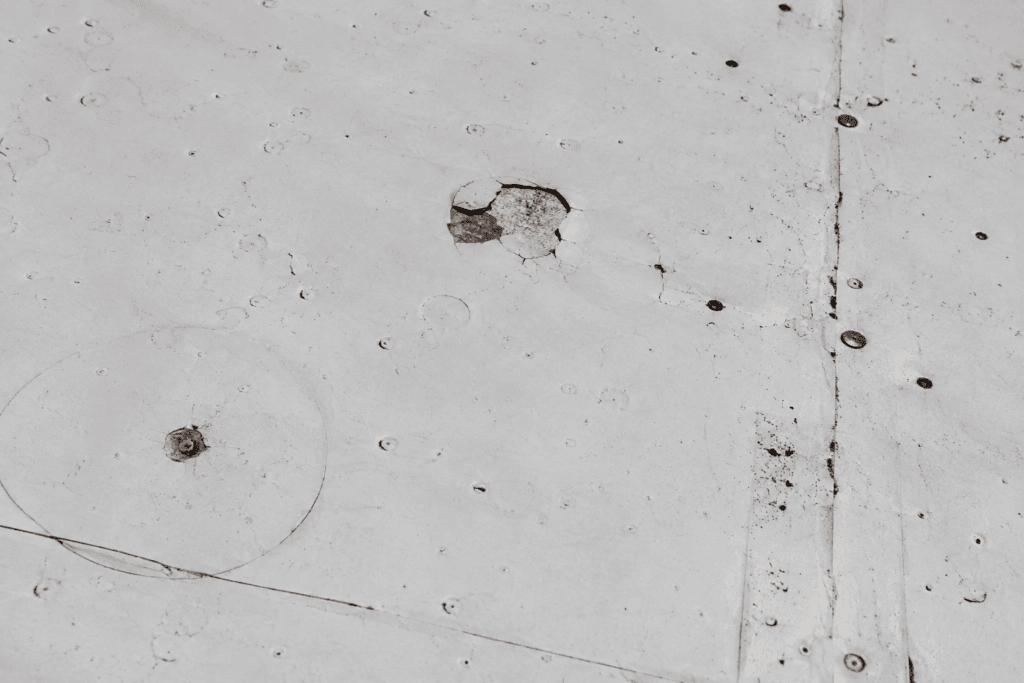
Hail can damage a TPO roof by puncturing or weakening the membrane, stressing seams and flashing, and damaging cover board, insulation, or rooftop details below and around the surface. The severity depends on hail size, wind, impact angle, membrane condition, roof age, substrate, and the complete roofing assembly.
For commercial property owners in Albuquerque and Santa Fe, one of the challenges with hail damage is that it is not always obvious.
A severe impact may create a visible puncture or damaged flashing. Other impacts may weaken the membrane or underlying roofing materials without immediately allowing water into the building.
That means a TPO roof can come through a New Mexico hailstorm without an obvious interior leak and still deserve a professional inspection.
This becomes particularly important when hail arrives with the high winds and heavy rain common during New Mexico thunderstorms. Wind-driven hail can strike roofing materials and rooftop equipment at different angles, while subsequent rain can quickly expose openings created during the storm.
Understanding hail damage therefore requires looking at more than the white membrane you see on top of the building.
It requires looking at the entire TPO roofing system.
What Parts of a TPO Roof Can Hail Damage?
TPO, or thermoplastic polyolefin, is a single-ply membrane commonly used on commercial and low-slope roofing systems.
A typical TPO roof is made up of several components rather than a single sheet of material.
Depending on the particular roof assembly, those components can include:
- TPO membrane
- Reinforcement within the membrane
- Heat-welded seams
- Flashing
- Cover board
- Roof insulation
- Fasteners or adhesives
- Roof decking
- Perimeter and edge details
- Drains and scuppers
- HVAC curbs
- Pipe and equipment penetrations
When hail strikes the roof, impact energy moves through these materials.
That is why two buildings covered with TPO can respond differently to the same storm. Membrane condition matters, but so do the materials underneath it.
What Determines How Bad TPO Hail Damage Will Be?
| Factor | Why It Matters |
| Hail size | Larger hailstones generally carry greater impact potential |
| Wind | High winds can increase impact force and drive hail at an angle |
| Membrane condition | Older or previously damaged material may respond differently than material in good condition |
| TPO membrane/product | Thickness, reinforcement, manufacturer and system design can influence performance |
| Cover board | A suitable cover board can affect how the roof assembly responds to impact |
| Insulation | Type, density and existing condition can influence support beneath the membrane |
| Substrate | The materials beneath the membrane affect the overall response to impact |
| Roof age | Years of UV exposure, thermal movement and previous weather can affect roof condition |
| Existing repairs | Previously repaired areas may require closer evaluation after a storm |
| Rooftop equipment | HVAC units, curbs, penetrations and metal components create additional vulnerable details |
| Storm conditions | Hail accompanied by wind and heavy rain can create multiple types of roof damage at once |
There is no single hailstone size at which every TPO roof will fail.
Likewise, no TPO system should be assumed to be completely hail-proof.
The actual outcome depends on the roof assembly and storm conditions.
Can Hail Puncture a TPO Membrane?
Yes. A sufficiently severe impact can puncture or fracture a TPO membrane.
A puncture creates a direct path through the roof’s primary waterproofing layer.
Once that occurs, rainwater can potentially reach the materials underneath the membrane.
But not every hail impact produces an obvious round hole.
Impact damage can also appear as:
- Cuts
- Fractures
- Small splits
- Dents or deformations
- Surface impact marks
- Damage around seams
- Damage near flashing
- Disturbed roof edges
- Damage around penetrations
Some defects are easy for a roofing professional to identify during a close inspection. Others can be considerably more subtle.
That is one reason inspecting a TPO roof only from the parking lot is not enough to determine whether it escaped a serious hailstorm without damage.
Can a TPO Roof Have Hail Damage Without Leaking?
Yes.
This is one of the most important things commercial property owners should understand after a hailstorm.
No leak does not necessarily mean no damage.
An impact may weaken part of the roofing system without immediately creating an opening large enough for water to reach the interior.
There may also be a delay between the initial damage and the first obvious symptoms.
For example, a storm could damage or weaken a roofing detail during relatively brief rainfall. The building may show no interior water intrusion afterward.
Weeks later, another monsoon storm brings heavy rain.
Water finds the weakened area and begins entering the roofing assembly.
Even then, it may take additional time before moisture reaches the building interior.
This creates the impression that the second storm caused the roof problem when the original hailstorm may have contributed to the initial damage.
What Does Hail Damage Look Like on TPO Roofing?
TPO hail damage does not have one universal appearance.
Professional roofers may look for evidence including:
- Membrane punctures
- Cuts or fractures
- Surface deformation
- Impact marks
- Damaged or stressed flashing
- Problems around penetrations
- Damaged perimeter components
- Loose or displaced metal
- Damage around HVAC equipment
- Signs of moisture beneath the membrane
- Damage to previous repair areas
- Changes around seams and details
The inspection should not stop with the membrane.
Roof-mounted mechanical equipment, metal components, vents, skylights, curbs, drainage components, and penetrations may provide additional evidence of what occurred during the storm.
A hailstorm affects the roof as a system.
Can Hail Damage TPO Roof Seams?
Hail does not automatically cause properly constructed TPO seams to separate.
However, seams deserve careful attention following a significant storm.
TPO sheets are joined using heat-welded seams to create a continuous waterproofing surface. Those seams are critical components of the roofing system.
Hail impact and associated high winds can place additional stress on vulnerable roof areas, particularly when seams or adjacent materials were already experiencing problems.
Roofing professionals may therefore pay particular attention to seam areas near:
- HVAC curbs
- Roof penetrations
- Drainage components
- Parapets
- Roof edges
- Previous repairs
- Equipment supports
- Other high-stress details
A seam issue found after a hailstorm should be professionally evaluated rather than automatically attributed to one cause.
Installation, age, contamination, thermal movement, prior damage and storm forces can all influence seam performance.
How Does Hail Damage TPO Flashing?
Flashing protects some of the most complicated transitions on a roofing system.
These areas can include:
- HVAC curbs
- Pipes
- Vents
- Parapet walls
- Roof edges
- Equipment penetrations
- Skylights
- Other transitions
These details deserve particular attention after severe weather because they involve transitions between roofing materials, vertical surfaces, mechanical equipment or other components.
Hail can strike the flashing itself.
High winds occurring during the same storm can also stress edge details, sheet metal and vulnerable components.
A roofing professional inspecting hail damage should therefore evaluate both the field membrane—the large open areas of TPO—and the detailed areas surrounding equipment and penetrations.
Can Hail Damage the Cover Board Under a TPO Roof?
The design of the roof assembly can affect how the roofing system responds to impact.
Some TPO systems include a cover board beneath the membrane.
The cover board provides a more substantial surface between the membrane and insulation and can contribute to the overall durability of the assembly.
That does not mean a roof containing cover board is hail-proof.
Rather, it illustrates why TPO hail performance should not be judged solely by the membrane.
Consider two TPO roofs.
One may have a robust underlying assembly with appropriate cover board and insulation. Another may have a different substrate or materials that have deteriorated over time.
Even if the visible membranes appear similar, the two roofing systems may respond differently when struck by hail.
Can Hail Damage the Insulation Under TPO?
Yes, the underlying roofing assembly can be affected by impact or by water intrusion resulting from storm damage.
Insulation serves important functions within a commercial roofing system.
When insulation becomes damaged or wet, the problem can extend beyond the original point of impact.
Moisture entering through a puncture may migrate beneath the membrane and affect a larger area.
Wet insulation can:
- Lose insulating performance
- Contribute to soft areas
- Complicate roof repairs
- Allow moisture to spread beyond the original opening
- Increase the scope of necessary corrective work
This is why repairing only the visible surface opening may not always be enough.
The contractor first needs to determine what happened underneath it.
Does Roof Age Affect TPO Hail Damage?
Roof age can influence how a TPO roofing system responds to severe weather, but age alone does not determine whether the roof is damaged.
A roof’s condition matters.
Over years of service in New Mexico, a TPO roof can experience:
- Intense ultraviolet exposure
- High summer roof temperatures
- Daily temperature swings
- Hailstorms
- High winds
- Monsoon rainfall
- Freeze-thaw conditions
- Snow in higher elevations
- Rooftop service traffic
- Previous repairs
These stresses accumulate over time.
An older roof that has been professionally maintained may remain serviceable, while another roof of similar age may contain existing deterioration.
The post-hail inspection therefore needs to distinguish between storm-related impact damage and conditions that may have existed before the storm.
Does TPO Membrane Thickness Affect Hail Resistance?
The membrane itself is one factor in the roof’s overall response to hail.
Different TPO products and roofing systems can vary in thickness, reinforcement, construction and manufacturer specifications.
However, property owners should avoid reducing hail performance to a single membrane measurement.
The complete system matters.
That includes:
- Membrane
- Reinforcement
- Cover board
- Insulation
- Attachment method
- Substrate
- Flashing
- Roof age
- Installation quality
- Existing condition
A thicker membrane alone should not be treated as a guarantee against hail damage.
When evaluating a new TPO roof for a hail-prone location, the roofing assembly should be considered as a complete system.
Can Wind Make Hail Damage Worse?
Yes. Wind can be an important part of a severe hail event.
Hail does not always fall vertically onto a roof.
Strong winds can drive hail at an angle and expose surfaces that might receive less impact during a calm storm.
Wind-driven hail may affect:
- Parapets
- Flashing
- HVAC equipment
- Vertical roof details
- Skylights
- Vents
- Sheet metal
- Roof edges
High winds can also create their own roofing problems during the same storm.
This means an inspection after a severe New Mexico thunderstorm should not focus exclusively on identifying hail marks.
The contractor should evaluate the broader effects of the storm.
Why Is Hail a Particular Concern in New Mexico?
New Mexico roofing systems operate in a demanding environment.
In Albuquerque and Santa Fe, hail can arrive as part of thunderstorms that also produce strong winds and sudden heavy rainfall.
This combination matters.
A roof can experience impact damage and wind stress, followed almost immediately by rain testing the waterproofing system.
New Mexico also has substantial ultraviolet exposure.
Before a hailstorm ever arrives, years of intense sunshine and thermal cycling may already have affected an older roofing system.
Santa Fe and higher-elevation communities introduce additional weather conditions, including colder temperatures, snow and freeze-thaw cycles.
The result is a roofing environment in which storm damage should be evaluated in the context of the roof’s overall condition—not as an isolated event.
Can Small Hail Damage an Older TPO Roof?
Potentially, but there is no universal hail-size rule that determines whether damage occurred.
Hail severity depends on multiple variables.
A relatively new, well-supported TPO system may respond differently than an older membrane over deteriorated underlying materials.
Likewise, wind-driven hail can behave differently from hail falling during relatively calm conditions.
Rather than trying to determine damage from hailstone size alone, consider:
- How severe was the storm?
- Were winds high?
- What condition was the roof in beforehand?
- How old is the roofing system?
- What is beneath the membrane?
- Was there previous damage?
- Did rooftop equipment sustain impacts?
- Have leaks or other symptoms appeared?
The most reliable answer comes from inspecting the actual roofing system.
Why Can TPO Hail Damage Be Hidden?
A TPO roof is a layered assembly.
Property owners usually see only the upper membrane.
If hail weakens the membrane, damages underlying materials or allows a small amount of water into the assembly, the problem may not immediately be visible from above or below.
Moisture can also move.
The place where water eventually appears inside the building may not be directly underneath the original opening.
That is why roof leak diagnosis can become complicated.
A ceiling stain tells you that water reached the interior.
It does not necessarily tell you exactly where water first entered the roofing system.
Visible Hail Damage vs. Hidden Damage
| More Visible Damage | Potentially Hidden or Delayed Damage |
| Obvious membrane puncture | Small fracture or weakened membrane |
| Torn material | Moisture beneath membrane |
| Damaged sheet metal | Wet insulation |
| Visible flashing damage | Damage beneath an apparently intact surface |
| Displaced roof component | Slow moisture migration |
| Obvious equipment damage | Damage that leaks during a later storm |
| Large impact defect | Subtle stress around an existing vulnerable detail |
This is why waiting for an interior leak is not the best way to determine whether a roof survived a major hailstorm.
How Do Roofers Inspect a TPO Roof After Hail?
A professional post-storm inspection should evaluate the roofing system systematically.
The exact process depends on the building, roof assembly, storm and conditions found during the inspection.
1. Review the Overall Roof Condition
The contractor looks at the general condition of the TPO membrane and identifies areas that deserve closer attention.
2. Examine the Field Membrane
Open roof areas are inspected for punctures, cuts, fractures, impact marks, deformation or other unusual conditions.
3. Inspect Seams
Heat-welded seams and surrounding membrane are evaluated for visible problems or storm-related stress.
4. Inspect Flashing and Penetrations
HVAC curbs, pipes, vents, parapets, equipment and other penetrations are checked carefully.
5. Examine Roof Edges and Metal
Wind and hail can affect perimeter details and metal components.
6. Inspect Drainage Areas
Drains and scuppers should remain clear and functional, particularly when storm debris has accumulated on the roof.
7. Look for Signs of Moisture
When conditions warrant further investigation, moisture-detection methods may help determine whether water has entered the roofing assembly.
8. Document Findings
Photographs and written observations can create a useful record of the roof’s condition following the storm.
The objective is to understand the scope of the problem before deciding what repair is appropriate.
Can Infrared Scanning Find Hidden TPO Hail Damage?
Infrared inspection or other moisture-detection methods can sometimes help roofing professionals identify areas where moisture may be present beneath a roof membrane.
These methods do not replace professional judgment.
They are diagnostic tools.
When appropriate, they can help a roofing professional identify areas that warrant closer evaluation.
Depending on the findings, additional investigation may be needed to determine the condition of insulation or other components beneath the membrane.
The inspection method should match the roof and the problem being investigated.
Should You Walk on Your TPO Roof After a Hailstorm?
Property owners should avoid unnecessary rooftop access following severe weather.
There are two separate concerns.
The first is protecting the roof.
Storm debris, damaged metal or weakened roofing materials may be present.
The second—and more important—concern is personal safety.
A storm-damaged commercial roof may contain:
- Wet and slippery membrane
- Loose debris
- Sharp metal
- Damaged equipment
- Electrical hazards
- Hidden soft areas
- Unprotected roof edges
- Fall hazards
A flat roof may look easy to access because it lacks a steep slope, but it is still a professional work environment with serious hazards.
Allow trained roofing professionals using appropriate safety procedures to perform the inspection.
How Soon Should a TPO Roof Be Inspected After Hail?
After a significant hailstorm, it is generally better to have the roof evaluated promptly rather than waiting for a leak.
Early inspection provides several advantages.
It can:
- Identify obvious storm damage
- Find smaller defects before additional rain
- Document roof conditions
- Identify damaged flashing or equipment areas
- Detect possible moisture concerns
- Establish whether repairs are necessary
- Help prevent small openings from becoming larger problems
This is especially valuable during New Mexico’s monsoon season, when another storm may arrive before an unnoticed defect has been addressed.
What Should Property Owners Document After a Hailstorm?
Good documentation can be useful for long-term roof management and, where applicable, discussions with insurance professionals.
Consider keeping records of:
- Approximate date and time of the storm
- Photographs taken safely from the ground
- Visible hail accumulation
- Interior water stains
- New leaks
- Damaged exterior components
- Professional roof inspection findings
- Roof photographs
- Repair recommendations
- Previous roof maintenance records
- Prior repairs
- Manufacturer and warranty information when available
Avoid assuming that visible storm damage automatically means a particular repair will be covered by insurance.
Coverage depends on the policy and circumstances.
A roofing contractor can document roofing conditions, while coverage questions should ultimately be addressed through the appropriate insurance professionals.
Can a Hail-Damaged TPO Roof Be Repaired?
Often, yes.
Hail damage does not automatically mean a TPO roof must be replaced.
Localized damage may be repairable when:
- Damage is limited to specific areas
- Surrounding membrane remains serviceable
- The roof assembly remains stable
- Moisture has not spread extensively
- Compatible TPO repair materials can be used
- Seams and flashing remain generally serviceable
A professional TPO repair may involve removing or preparing the damaged area and installing compatible membrane material using appropriate heat-welding procedures.
If wet or damaged insulation is found underneath the membrane, those materials may also need to be addressed.
The goal is not simply to cover the visible mark.
The goal is to restore the integrity of the roofing assembly.
When Might Hail Damage Require More Than a Localized Repair?
A broader solution may need to be considered when the inspection identifies conditions such as:
- Widespread impact damage
- Numerous membrane punctures
- Extensive moisture
- Large areas of damaged insulation
- Multiple compromised roof details
- Significant flashing damage
- An unstable or deteriorated membrane
- Widespread problems combined with an aging roof
- A roof assembly that no longer provides dependable long-term performance
Even then, the decision should be based on actual inspection findings.
Rocky Mountain Roofing Services’ approach is to evaluate the roof individually rather than assuming every storm-damaged roof needs replacement.
Repair, Restoration or Replacement?
| Condition | Possible Direction |
| Isolated puncture with dry surrounding materials | Localized professional repair may be appropriate |
| Limited flashing or detail damage | Targeted repair may be possible |
| Several localized damaged areas | Multiple repairs may be evaluated |
| Damage plus localized wet insulation | Damaged roofing and wet materials may require removal and repair |
| Widespread impacts | Broader corrective options should be evaluated |
| Extensive moisture throughout assembly | Replacement may become more practical |
| Aging roof with widespread storm damage | Long-term repair economics should be evaluated |
| Roof remains largely serviceable | Preserve and repair where practical |
The appropriate solution depends on what the inspection reveals.
Can Repeated Hailstorms Shorten the Life of a TPO Roof?
Repeated severe weather can contribute to cumulative stress on any roofing system.
In New Mexico, a TPO roof may experience hail, wind, UV radiation, temperature swings and monsoon rain over many years.
One storm may cause no meaningful damage.
Another may produce localized repairable damage.
Repeated events combined with age and existing deterioration can eventually affect the roof’s long-term performance.
This is why maintenance history matters.
A roof that receives regular inspections gives property owners opportunities to identify and repair problems rather than allowing multiple issues to accumulate unnoticed.
How Can You Help Protect a TPO Roof From Future Hail Damage?
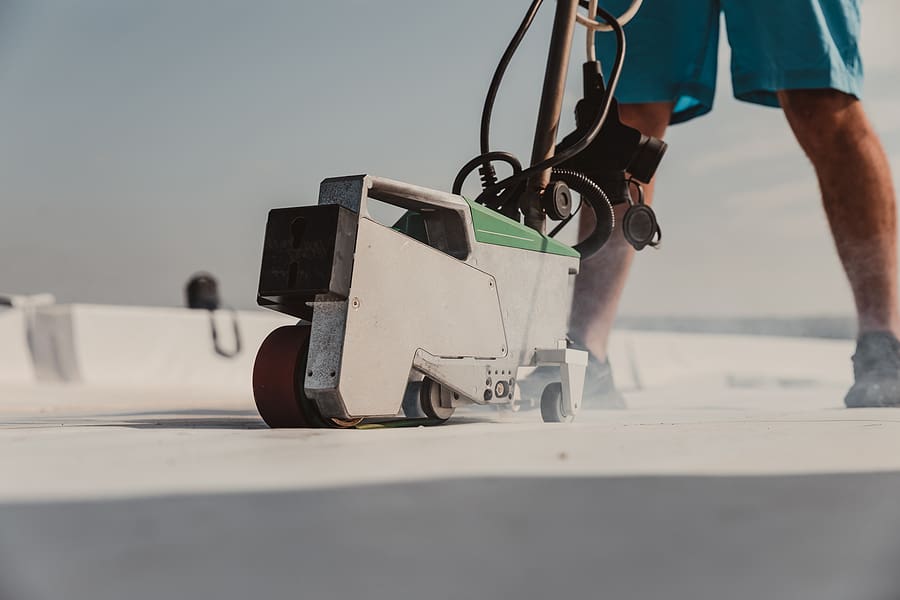
No roofing system can eliminate weather risk, but good design and maintenance can improve long-term performance.
Important considerations include:
Choose the Roofing Assembly Carefully
TPO roof performance depends on more than the surface membrane. Membrane selection, cover board, insulation, substrate and system design should reflect the needs of the building.
Maintain the Roof
Preventative maintenance can identify existing weaknesses before the next storm arrives.
Inspect Flashing
Roof transitions and penetrations deserve regular attention because they are critical waterproofing details.
Keep Drains Clear
New Mexico thunderstorms can produce heavy rainfall. Drains and scuppers need to move that water away efficiently.
Inspect After Significant Storms
A post-storm inspection can identify new problems while they are still manageable.
Repair Damage Promptly
A small puncture is generally a more manageable roofing problem before water has spread through the insulation.
How Often Should a TPO Roof Be Inspected in New Mexico?
Regular professional inspections are an important part of commercial roof management.
At minimum, annual inspection provides an opportunity to evaluate the membrane, flashing, drainage and rooftop details.
Additional inspections may be appropriate:
- After significant hail
- After severe winds
- After major monsoon storms
- After rooftop HVAC work
- After solar installation
- When interior water stains appear
- When new leaks develop
- When unusual soft areas are suspected
- Before major planned maintenance decisions
The purpose is not to find reasons to replace the roof.
It is to understand its condition.
Preventative maintenance can often extend roof life by finding small problems before they become major repairs.
Frequently Asked Questions About TPO Hail Damage
Can hail damage a TPO roof?
Yes. Hail can puncture, fracture, deform or otherwise damage a TPO membrane and can also affect flashing, rooftop details, cover board, insulation and other parts of the roof assembly.
What does hail damage look like on TPO roofing?
Possible signs include punctures, cuts, fractures, impact marks, deformations, damaged flashing, disturbed metal components and damage around penetrations. Some damage may be subtle or hidden.
Can hail damage TPO without causing an immediate leak?
Yes. A hail impact can weaken roofing materials without producing an immediate interior leak. Water intrusion may become apparent during a later storm.
Does cover board protect TPO from hail?
Cover board can influence the impact performance of the complete roof assembly, but it should not be considered a guarantee against hail damage.
Can hail damage insulation underneath TPO?
Impact or subsequent water intrusion can affect insulation beneath the membrane. Wet insulation may lose performance and can increase the scope of repairs.
Can wind make hail damage worse?
Wind can drive hail at different angles and expose flashing, roof edges, equipment and vertical details to additional impact. High winds may also cause separate storm damage.
Does an older TPO roof have greater hail risk?
Age can be one factor because older roofs have experienced more UV exposure, thermal movement and weather. Actual roof condition is more important than age alone.
Can hail damage TPO seams?
Hail does not automatically open properly welded seams, but impacts and wind can stress vulnerable details or already-compromised areas. Seams should be inspected after significant storms.
Should a TPO roof be inspected if it is not leaking?
After a significant hailstorm, yes. The absence of an interior leak does not prove the roofing system is undamaged.
Can infrared inspection find hidden damage?
Infrared or other moisture-detection methods can sometimes help identify areas where moisture may be present beneath the membrane. These methods are diagnostic tools and should be interpreted by experienced roofing professionals.
Can a hail-damaged TPO roof be repaired?
Yes. Localized damage can often be repaired when surrounding roofing materials remain dry, stable and serviceable.
Does hail damage mean my TPO roof needs replacement?
No. Replacement should be based on the extent of damage, moisture conditions, overall roof condition and expected long-term performance—not simply the fact that hail occurred.
When might replacement be necessary?
Replacement may become appropriate when impact damage is widespread, moisture is extensive, multiple roofing components are compromised, or the existing system can no longer provide dependable long-term performance.
How soon should I schedule a hail inspection?
Following a significant storm, prompt inspection is preferable to waiting until a leak appears, particularly during New Mexico’s monsoon season when additional heavy rain may follow.
Should I climb onto the roof to photograph hail damage?
Property owners should avoid unnecessary rooftop access. Wet surfaces, loose debris, sharp metal, damaged equipment, soft areas and fall hazards can make post-storm roofs dangerous.
Schedule a TPO Hail Damage Inspection in Albuquerque or Santa Fe
A TPO roof does not have to be leaking immediately after a hailstorm to have suffered damage.
Hail can affect the membrane, seams, flashing, cover board, insulation, roof edges, penetrations and rooftop equipment. Some problems are obvious. Others may not become apparent until another New Mexico storm tests the roofing system.
That makes a professional post-storm roof inspection one of the most useful steps a property owner can take.
Rocky Mountain Roofing Services provides TPO roofing, commercial roof inspections, hail damage inspections, roof repair, storm damage assessments and preventative maintenance throughout Albuquerque, Santa Fe, and surrounding Central and Northern New Mexico communities.
With more than 35 years of combined roofing experience, the company understands how New Mexico’s hailstorms, high winds, intense ultraviolet exposure, monsoon rains, high elevation and temperature swings affect commercial roofing systems.
The objective of an inspection is not to assume the roof needs replacement.
It is to determine what actually happened.
If the damage is localized, professional repairs may be enough. If moisture or impact damage is widespread, Rocky Mountain Roofing Services can explain the available options and help determine the most practical long-term solution.
Rocky Mountain Roofing Services
100 Mountain Park Place, Suite A
Albuquerque, New Mexico 87114
Santa Fe Office
150 Washington Avenue, Suite 201
Santa Fe, New Mexico 87501
Phone: 505-717-1925
If your TPO roof has recently been exposed to significant hail, call 505-717-1925 to request a free roof inspection or free roofing quote.
Conclusion
Hail damages a TPO roof by transferring impact energy through the membrane and into the roofing assembly beneath it.
Depending on storm severity and roof construction, the result can range from no meaningful damage to localized membrane punctures, fractures, flashing problems, damaged insulation or widespread deterioration requiring more extensive corrective work.
The most important point is that hail damage is not always immediately visible.
A roof may not leak during the storm. A small impact defect may remain unnoticed until monsoon rain, thermal movement, wind or another weather event exposes the weakness.
That is why the condition of the complete roofing system matters more than simply looking for obvious holes in the TPO membrane.
Hail size, wind, impact angle, membrane condition, roof age, cover board, insulation, substrate, existing repairs and rooftop details can all influence how a particular TPO roof responds.
After a significant Albuquerque or Santa Fe hailstorm, a professional inspection can determine whether the roof remains serviceable, needs localized TPO repair, contains hidden moisture, or requires a broader roofing solution.
Most importantly, hail does not automatically mean roof replacement.
Accurate diagnosis comes first.
Finding and repairing localized storm damage early can help prevent a small roofing problem from becoming a larger moisture problem and can help preserve the useful life of a TPO roofing system whenever practical.