How Do I Know When a Foam Roof Needs Recoating?
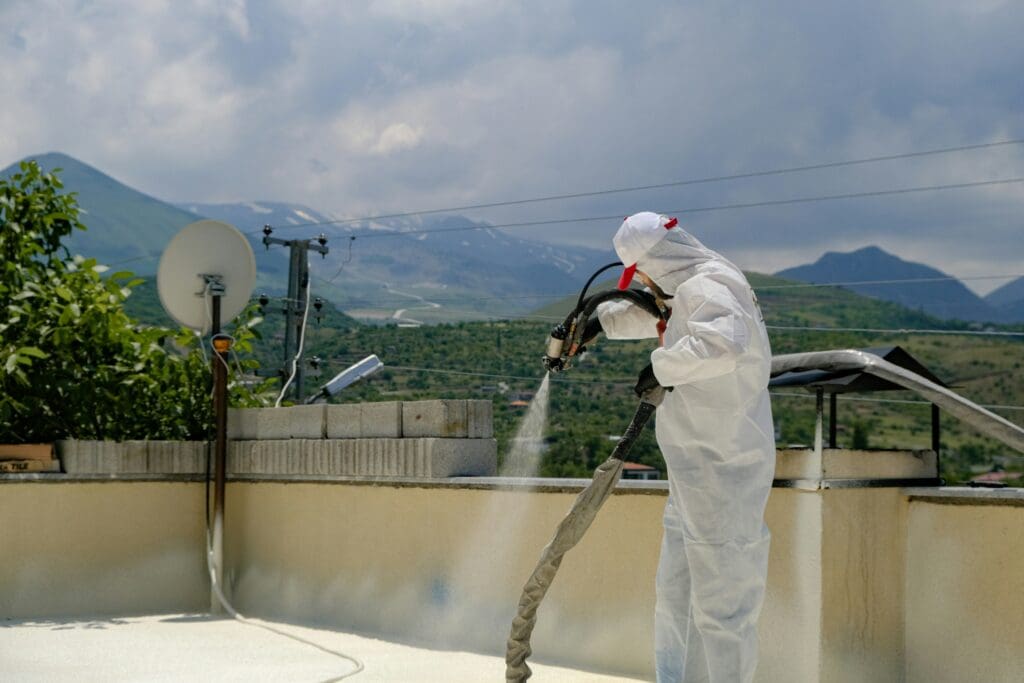
Your foam roof may need recoating when its protective surface begins to wear thin, crack, peel, or expose the foam underneath. Fading and a chalky appearance can also indicate aging, although these changes alone do not necessarily mean the roof needs a new coating.
The key is determining whether the protective coating is still doing its job.
In Albuquerque and Santa Fe, strong ultraviolet (UV) sunlight, temperature changes, hail, and seasonal monsoon storms can gradually affect foam roofing systems. Recognizing coating deterioration before leaks develop may help prevent more extensive damage.
However, recoating is not always the right solution. Some roofs need minor repairs, while others have moisture or drainage problems that must be corrected before a new coating can be applied.
What Are the Clearest Signs a Foam Roof Needs Recoating?
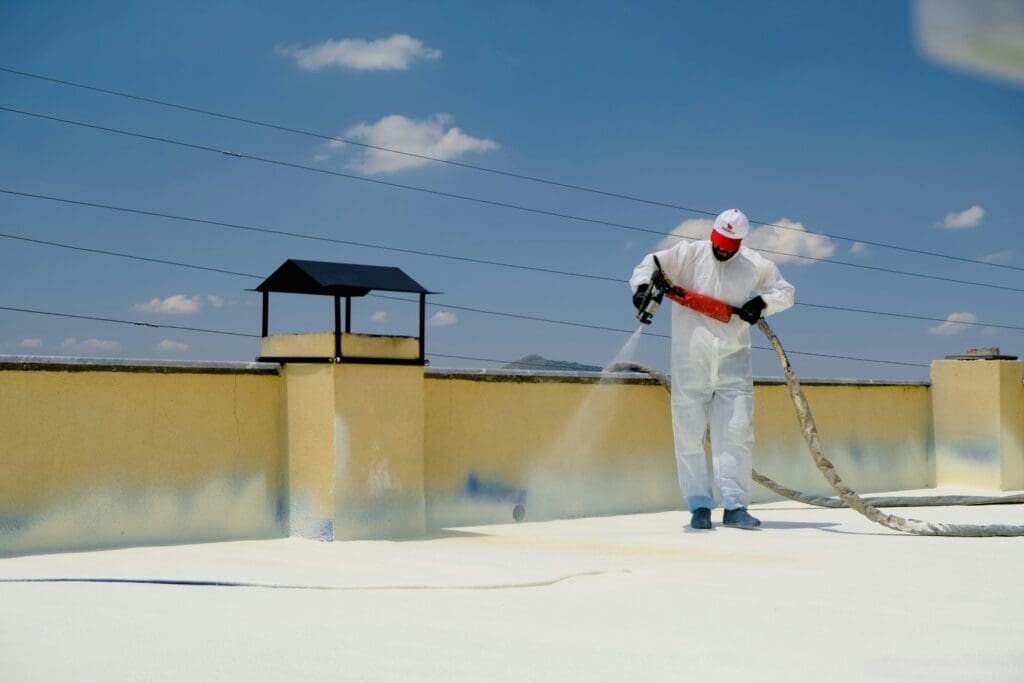
A spray polyurethane foam (SPF) roofing system has two important components. The foam provides insulation and forms the roof surface, while a protective coating shields it from sunlight and weather exposure.
When that coating deteriorates, the underlying foam becomes more vulnerable to damage.
1. The Roof Coating Looks Chalky or Faded
One of the earliest changes homeowners may notice is a coating that looks dull, faded, or powdery.
Some roof coatings develop a chalky residue as their surfaces weather. White coatings may lose their original appearance or develop uneven discoloration.
This does not automatically mean the coating has failed.
A roof can show cosmetic aging while retaining enough protective material to perform properly. The important factors are whether the coating remains intact, properly bonded, and sufficiently thick.
If your roof looks faded but has no obvious cracks, peeling, or exposed foam, a routine professional inspection is a reasonable next step.
2. The Protective Coating Is Wearing Thin
Thinning coating deserves more attention than ordinary discoloration.
You may notice patches where the surface looks uneven or areas that appear different from the surrounding roof. Wear may be more noticeable near rooftop equipment, maintenance access routes, or drainage points.
A coating that becomes too thin may no longer provide the intended protection against UV exposure.
Because visual appearance cannot reliably establish coating thickness, a roofing professional should evaluate the material against the requirements of the existing roofing system.
3. The Coating Is Cracking, Peeling, or Blistering
Cracks, peeling, and blisters can indicate that the protective coating is deteriorating or losing adhesion.
These conditions may appear as small splits, raised bubbles, loose edges, or sections separating from the roof surface.
Not every crack means the entire roof needs recoating. A small damaged area may be repairable.
Widespread cracking or peeling, however, raises questions about the condition of the existing coating and whether a new coating will adhere properly.
Simply covering loose or deteriorated material may not correct the cause of the problem.
4. Yellow or Brown Foam Is Visible
Exposed foam is one of the strongest warning signs that a foam roof needs professional attention.
The protective coating prevents sunlight from directly reaching the spray polyurethane foam. When the coating wears away, UV exposure can cause the foam surface to deteriorate.
Affected foam may become rough, brittle, or powdery.
If yellowish or brown foam is visible through missing coating, the area should be evaluated promptly. Damaged foam may require removal and repair before recoating.
The important distinction is that a worn coating and damaged foam are not the same problem. Recoating protects sound foam, but it cannot restore foam that has already deteriorated.
Does a Leaking Foam Roof Only Need a New Coating?
No. A roof leak does not automatically mean recoating will solve the problem.
Water can enter through damaged foam, but it may also penetrate around flashing, skylights, plumbing vents, rooftop equipment, or parapet walls.
On flat and low-slope roofs, the location of an interior water stain may not match the actual point where water entered.
For example, a ceiling stain near an air-conditioning unit could be caused by deteriorated flashing rather than worn foam coating.
Adding a new coating over the surrounding roof would not necessarily repair that opening.
A professional leak investigation should identify the source of water intrusion before deciding whether the roof needs localized repairs, recoating, or more extensive work.
Homeowners experiencing recurring leaks can learn more about common flat roof problems in New Mexico, including drainage issues and deteriorated roofing materials.
When Does a Foam Roof Need Repairs Before Recoating?
Recoating is most appropriate when the existing roofing system remains suitable for restoration.
Several conditions may need to be corrected first.
Damaged foam. Areas weakened by UV exposure, impact, or other deterioration may require repair or replacement. Applying a new coating over unsound foam can leave the underlying defect unresolved.
Trapped moisture. Moisture beneath the coating or within the roofing assembly needs investigation. Sealing over wet materials without addressing the source of water intrusion can contribute to continued deterioration.
Poor coating adhesion. Loose or peeling coating may need to be removed or properly prepared. The new material must be compatible with the existing system and applied to a suitable surface.
Damaged flashing. Openings around vents, equipment, and roof transitions need appropriate repairs before the protective coating is restored.
Drainage problems. Standing water caused by blocked drains or inadequate drainage cannot be corrected simply by adding another coating.
For additional information about drainage issues, see What Causes Ponding Water on a Flat Roof in New Mexico?.
How Can I Tell Whether My Foam Roof Needs Maintenance, Recoating, or Major Repairs?
The condition you observe can help determine how quickly to arrange an inspection.
| Visible roof condition | What it may indicate | Sensible next step |
| Fading or light chalking | Normal coating weathering | Plan a routine inspection |
| Patchy or visibly thin coating | Reduced protective coverage | Schedule a coating assessment |
| Peeling, cracks, or blisters | Possible coating deterioration or adhesion problems | Arrange prompt evaluation |
| Exposed yellowish foam | Loss of UV protection | Request prompt repair assessment |
| Recurring leaks or suspicious soft areas | Possible underlying moisture or system damage | Investigate before recoating |
| Water repeatedly collecting in one area | Possible drainage problems | Evaluate drainage and roof condition |
Consider two homeowners with aging foam roofs.
The first notices a chalky white surface but no exposed foam or evidence of leaking. That roof may need routine maintenance or recoating in the future, depending on its actual condition.
The second notices peeling coating and exposed foam near a roof drain. That situation deserves more prompt attention because the protective layer is visibly compromised.
Neither roof can be fully diagnosed by appearance alone. The difference is the level of concern and the appropriate next step.
How Do Albuquerque and Santa Fe Weather Affect Foam Roof Coatings?
New Mexico’s climate makes regular roof maintenance especially important.
Strong Sunshine and UV Exposure
Albuquerque and Santa Fe experience intense sunshine throughout the year.
UV exposure matters because spray polyurethane foam needs a protective coating to shield it from sunlight. When the coating wears thin or becomes damaged, the foam underneath becomes more vulnerable to deterioration.
Temperature Changes
Roofing materials expand and contract as temperatures change.
Repeated movement can place stress on aging coatings, especially around existing cracks, roof penetrations, and transitions between different materials.
Santa Fe’s colder winters also make it important to examine drainage areas where snow, ice, and freezing conditions may affect the roofing system.
Hail and Monsoon Storms
Hail can damage a foam roof’s protective surface even when the roof does not immediately leak.
Windblown debris may also scratch or puncture coatings.
During summer monsoon storms, heavy rainfall can expose weaknesses around drains, parapet walls, and roof penetrations.
Many New Mexico flat roofs use canales to direct water through parapet walls. If a canale becomes blocked or damaged, water may collect on the roof instead of draining properly.
Learn more about water backing up around roof canales and why drainage problems deserve attention before recoating.
Following a significant hailstorm, a roof inspection may be worthwhile even without an interior leak.
What Should a Professional Foam Roof Inspection Check?
A useful foam roof inspection should examine more than the coating’s appearance.
A roofing professional should evaluate the condition of the protective layer and look for problems that could affect whether recoating is appropriate.
Important areas include:
- Coating condition and thickness. Is the protective layer intact, or has it worn thin in certain areas?
- Coating adhesion. Are sections peeling, lifting, or separating from the foam?
- Exposed or deteriorated foam. Has sunlight or physical damage affected the underlying material?
- Possible moisture intrusion. Are there signs of trapped moisture or damage beneath the visible surface?
- Flashing and roof penetrations. Are vents, skylights, rooftop equipment, and parapet details properly protected?
- Roof drainage. Are canals, drains, and low areas allowing water to leave the roof?
The findings should help determine whether the roof needs cleaning, localized repairs, recoating, or a more extensive restoration.
Rocky Mountain Roofing Services provides professional roof inspections in Albuquerque and Santa Fe for residential and commercial properties.
What Should I Ask Before Approving Foam Roof Recoating?
Before approving a recoating project, ask the roofing contractor to explain the existing roof’s condition and why the proposed work is appropriate.
Useful questions include:
- Is the coating simply weathered, or is it no longer providing adequate protection?
- Is any foam damaged, exposed, or affected by moisture?
- Can localized repairs address the problem, or is broader recoating justified?
- What coating was originally installed, and is the proposed material compatible?
- What surface preparation and repairs are required?
- Are drainage or flashing improvements needed?
- What warranty conditions and future maintenance requirements apply?
These questions help distinguish a roof that is suitable for preventative recoating from one that needs additional repairs.
How Often Should a Foam Roof Be Inspected or Recoated?
A foam roof should generally receive a professional inspection at least annually, with additional attention after significant storms or visible damage.
However, there is no universal recoating schedule that applies to every foam roof.
Recoating needs depend on the coating material, original application, roof exposure, maintenance history, and manufacturer requirements.
A roof that remains properly protected may not need recoating simply because it has reached a certain age. Conversely, a newer roof with exposed foam or damaged coating may need attention sooner.
If you do not know when your roof was last coated, an inspection can help establish its current condition and future maintenance needs.
Frequently Asked Questions About Foam Roof Recoating
Can I Tell from the Ground Whether My Foam Roof Needs Recoating?
You may be able to notice obvious damage from a safe ground-level location, upper-story window, or existing roof photograph. However, coating thickness, adhesion, and concealed moisture cannot be reliably evaluated from a distance.
Avoid climbing onto a roof to investigate suspicious areas. Roof access involves fall hazards, particularly near edges, skylights, or damaged surfaces.
Does Discoloration Mean My Foam Roof Coating Has Failed?
Not necessarily. Discoloration can result from ordinary weathering, dirt, or surface aging.
A professional evaluation can help determine whether the coating remains protective or needs maintenance.
Can a Foam Roof Be Recoated Without Replacing the Foam?
Yes, when the existing foam is sound, dry, properly attached, and suitable for restoration. Damaged areas may need repair first.
Recoating is not an appropriate substitute for correcting widespread moisture damage or underlying roofing defects.
Schedule a Foam Roof Inspection in Albuquerque or Santa Fe

A foam roof does not need to leak before it deserves attention. Peeling coating, exposed foam, visible thinning, and recurring drainage problems are reasons to have its condition evaluated.
Rocky Mountain Roofing Services provides residential and commercial roof inspections, roof repairs, roof coatings, and preventative maintenance throughout Albuquerque, Santa Fe, and surrounding New Mexico communities.
With more than 35 years of combined roofing experience, the company focuses on practical recommendations based on each roof’s condition and long-term performance needs.
If you are unsure whether your foam roof needs recoating, localized repairs, or more extensive restoration, contact Rocky Mountain Roofing Services for a professional evaluation.
Call 505-717-1925 or request a roofing quote to discuss your roof’s condition.
Foam Roof Recoating Disclaimer
The information in this article is provided for general educational purposes. Foam roof recoating intervals, minimum coating thickness, surface preparation, material compatibility, and warranty requirements vary depending on the roofing system, coating manufacturer, installation conditions, and roof maintenance history. There is no single recoating schedule or coating specification that applies to every foam roof.
Before recoating, homeowners should have their roofing system professionally evaluated and consult the applicable manufacturer’s current technical documentation and warranty requirements. A professional inspection can help determine whether the roof needs maintenance, localized repairs, recoating, or more extensive restoration. This article does not replace manufacturer specifications or a qualified roofing professional’s assessment.