PVC Roofing Systems in Albuquerque and Santa Fe New Mexico

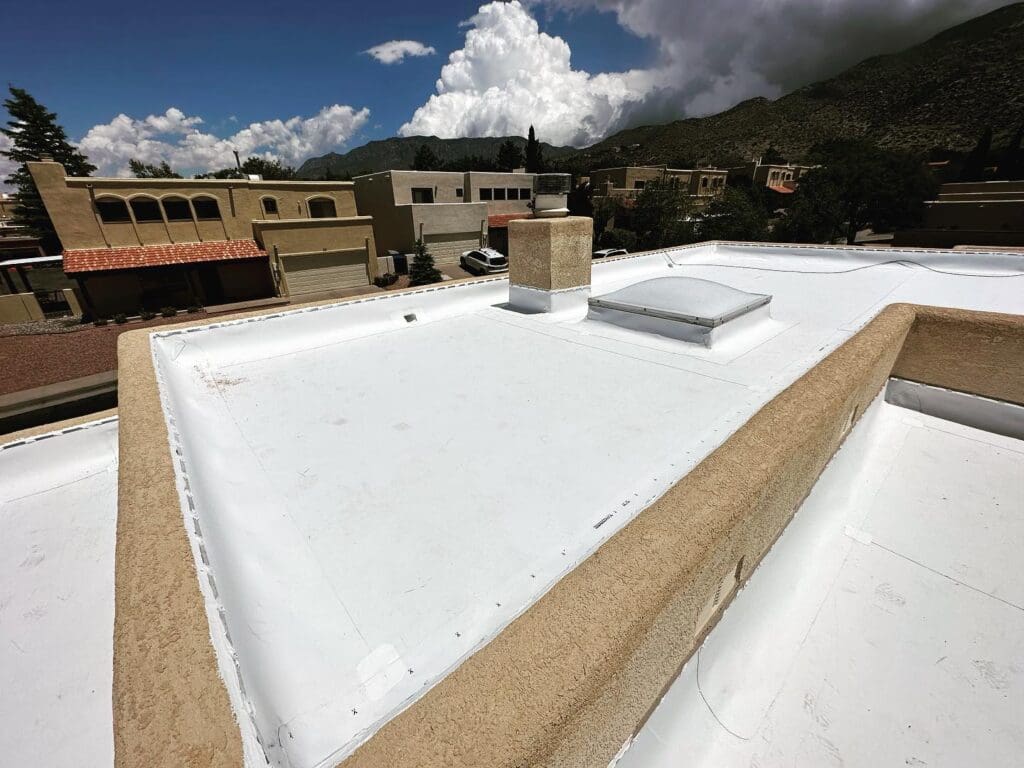
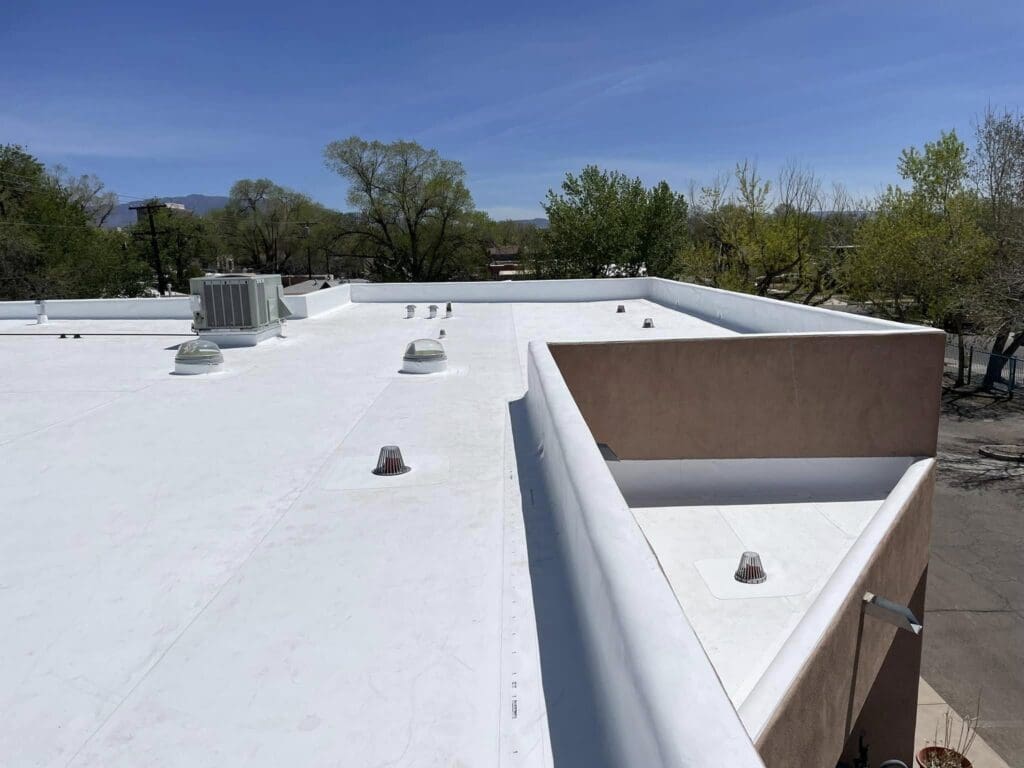
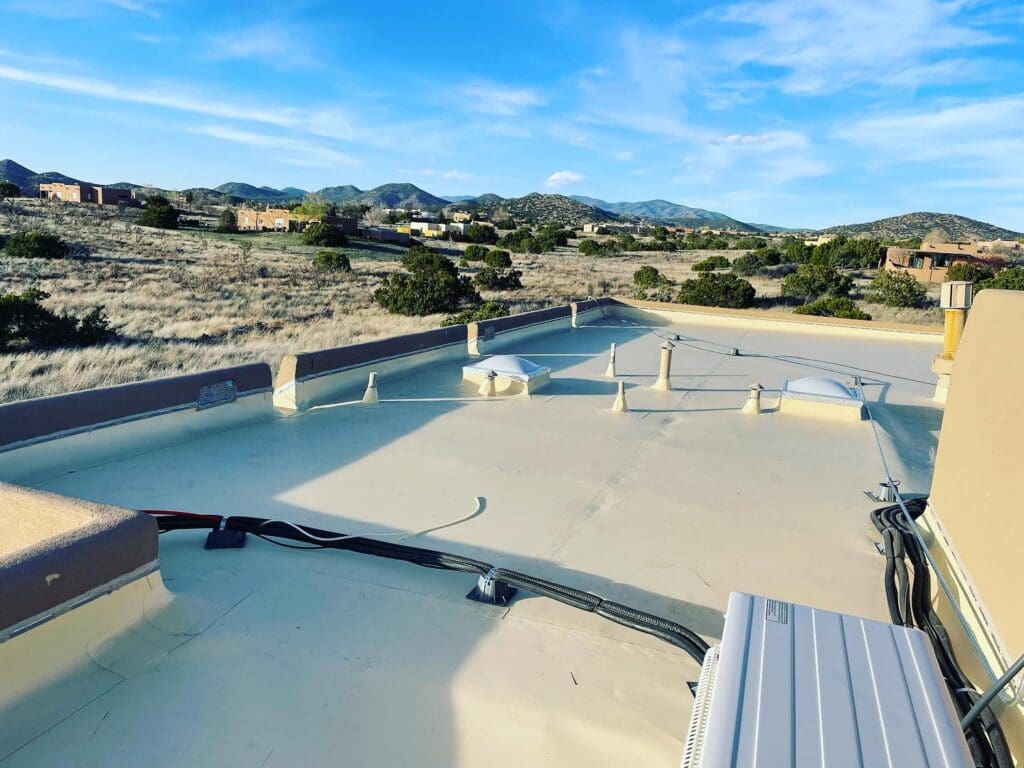
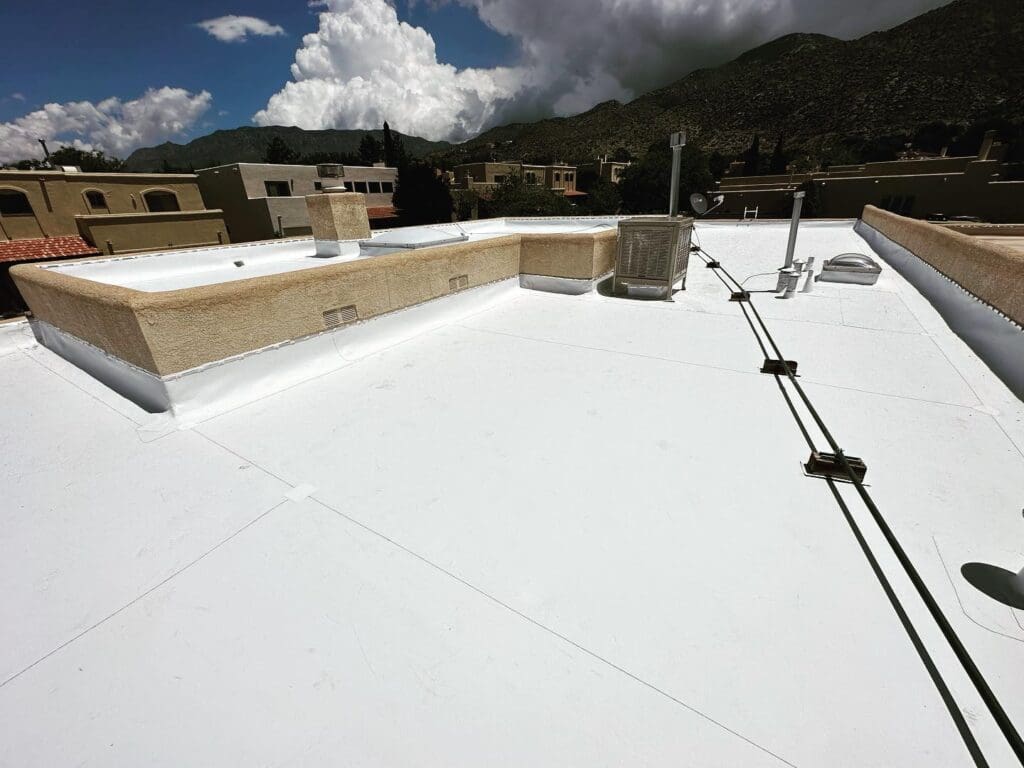
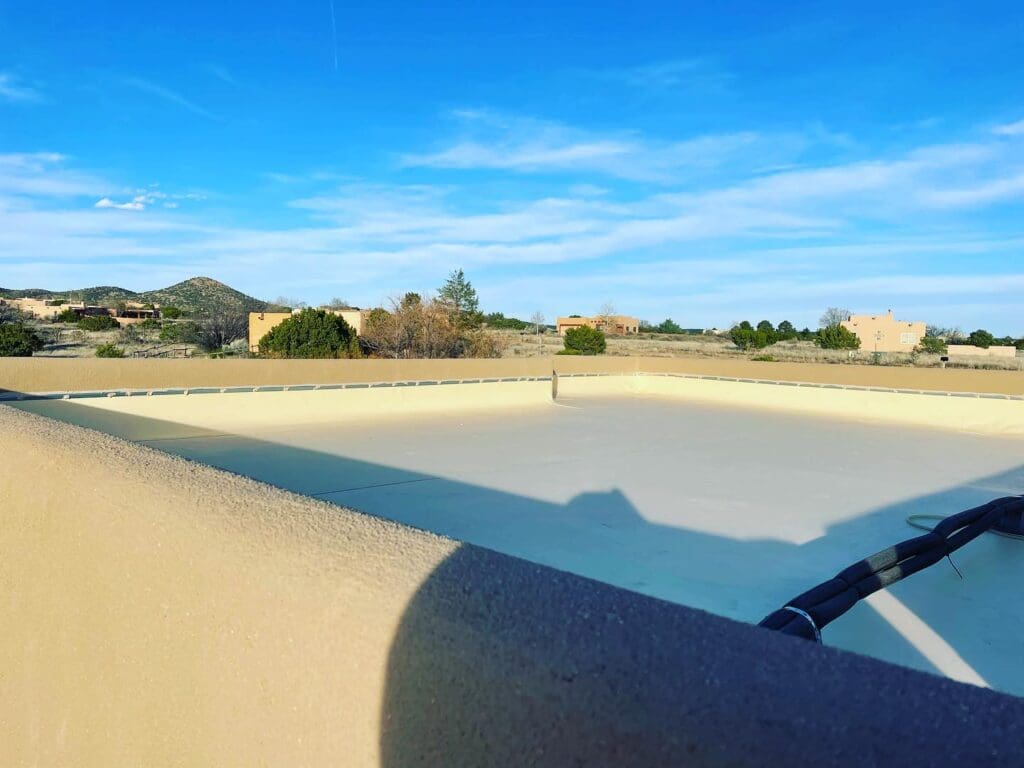
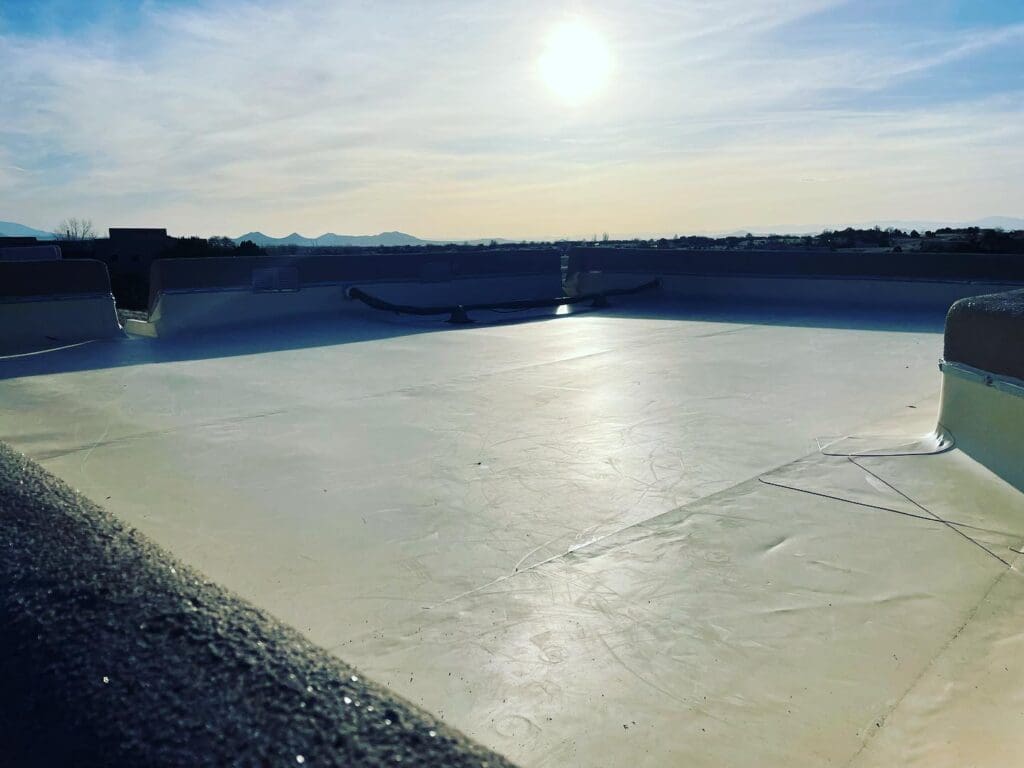
 PVC roofing is a durable single-ply roofing system commonly used on commercial and low-slope buildings. PVC membranes are known for heat-welded seams, flexibility, weather resistance, chemical resistance, and reflective membrane options. These characteristics can make PVC roofing especially useful for restaurants, commercial kitchens, industrial facilities, and other buildings where the roof may be exposed to grease, oils, chemicals, intense sunlight, and demanding weather conditions.
Rocky Mountain Roofing Services provides PVC roof inspections, repairs, maintenance, replacement, and installation throughout Albuquerque, Santa Fe, and Central and Northern New Mexico.
With more than 35 years of combined roofing experience, our team understands that choosing a commercial roofing system requires more than comparing materials. The roof deck, drainage, insulation, rooftop equipment, building use, existing roofing materials, and New Mexico's climate all need to be considered before determining whether PVC is the right system for your property.
What Is PVC Roofing?
PVC stands for polyvinyl chloride. In commercial roofing, PVC is a flexible thermoplastic membrane designed for flat and low-slope roofing systems.
PVC has been used as a commercial roofing material for decades. Modern PVC roofing membranes typically incorporate reinforcement and other components designed to improve their performance as part of a complete roofing assembly.
Unlike roofing systems made from multiple layers of asphalt and reinforcing material, PVC is considered a single-ply roofing membrane.
Sheets of PVC membrane are installed across the roof and typically joined using hot-air welding. This process fuses adjoining membrane sheets together to create a continuous weather-resistant roofing surface.
The PVC membrane, however, is only the top portion of the complete roofing system. A PVC roof may also include insulation, tapered insulation for drainage, a cover board, attachment materials, flashing, and other components installed over the structural roof deck.
The exact assembly varies according to the building and roofing system.
What Are the Benefits of PVC Roofing?
PVC roofing offers a combination of characteristics that can make it an excellent choice for certain New Mexico commercial properties.
Chemical and Grease Resistance
One of PVC roofing's most important characteristics is its resistance to many chemicals, oils, grease, and other contaminants.
This can make properly specified PVC roofing particularly attractive for restaurants, commercial kitchens, food-processing operations, manufacturing facilities, and industrial buildings.
Chemical compatibility still needs to be evaluated for the specific membrane and expected exposure. No roofing material should be assumed to withstand every possible chemical.
Heat-Welded Seams
PVC membrane sections are typically joined using hot-air welding.
Rather than relying only on adhesives to connect membrane sheets, properly performed heat welding fuses the adjoining PVC surfaces together.
The quality of these seams is an important part of the roof's long-term weather protection.
Reflective Roofing Options
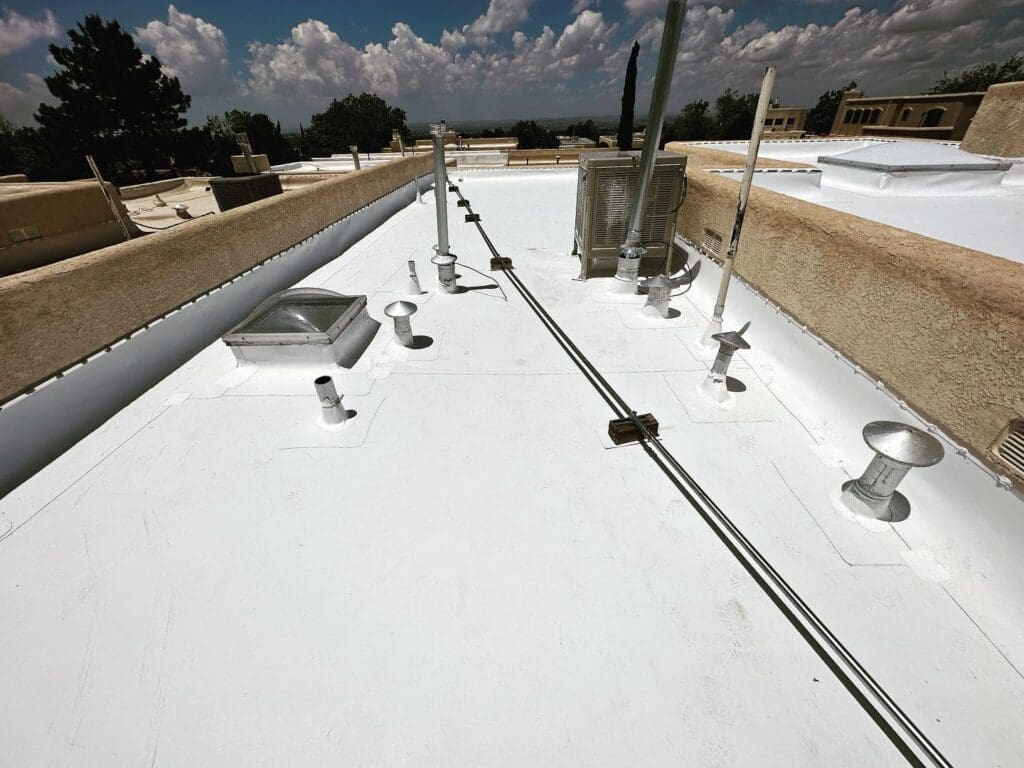
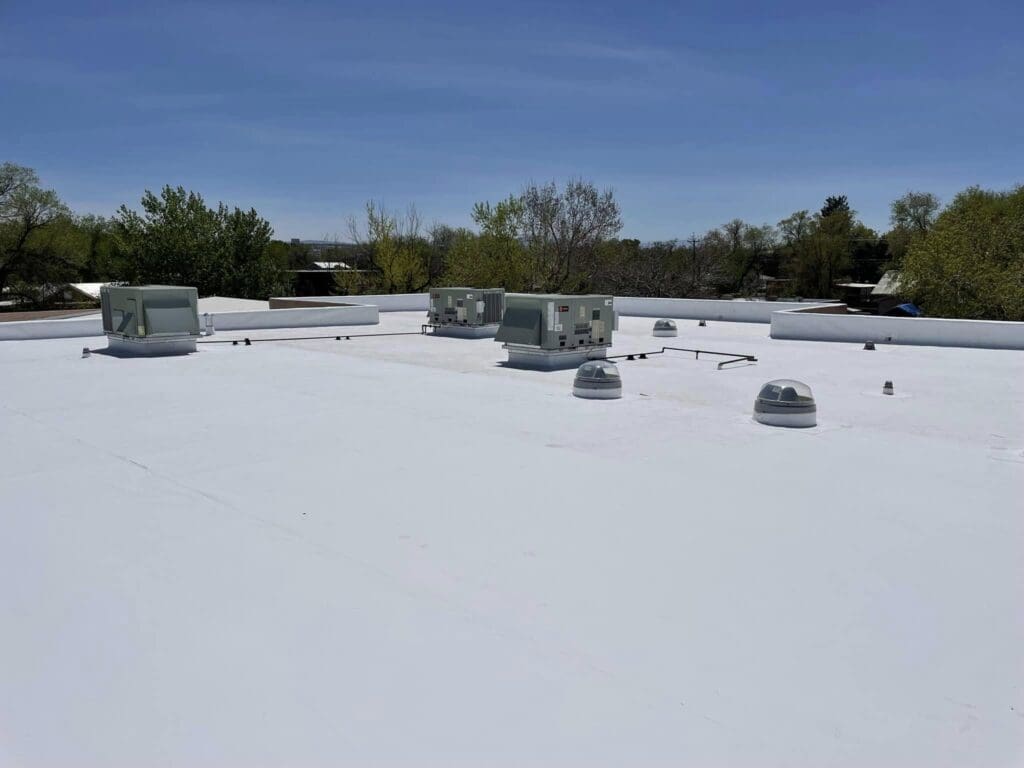
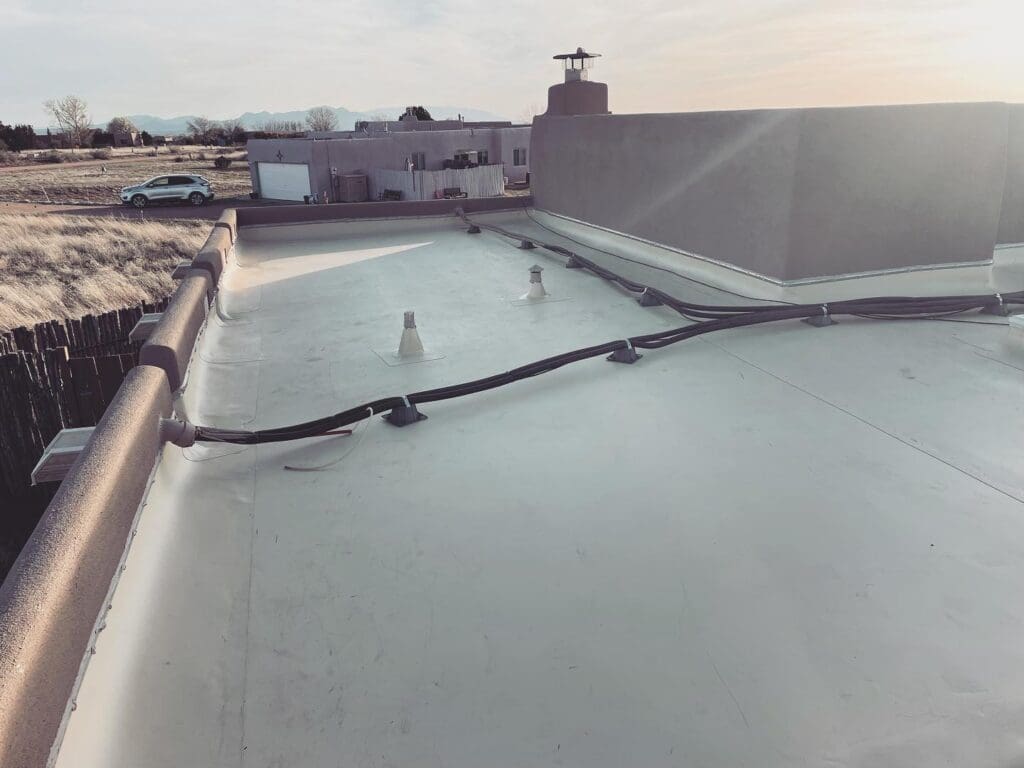
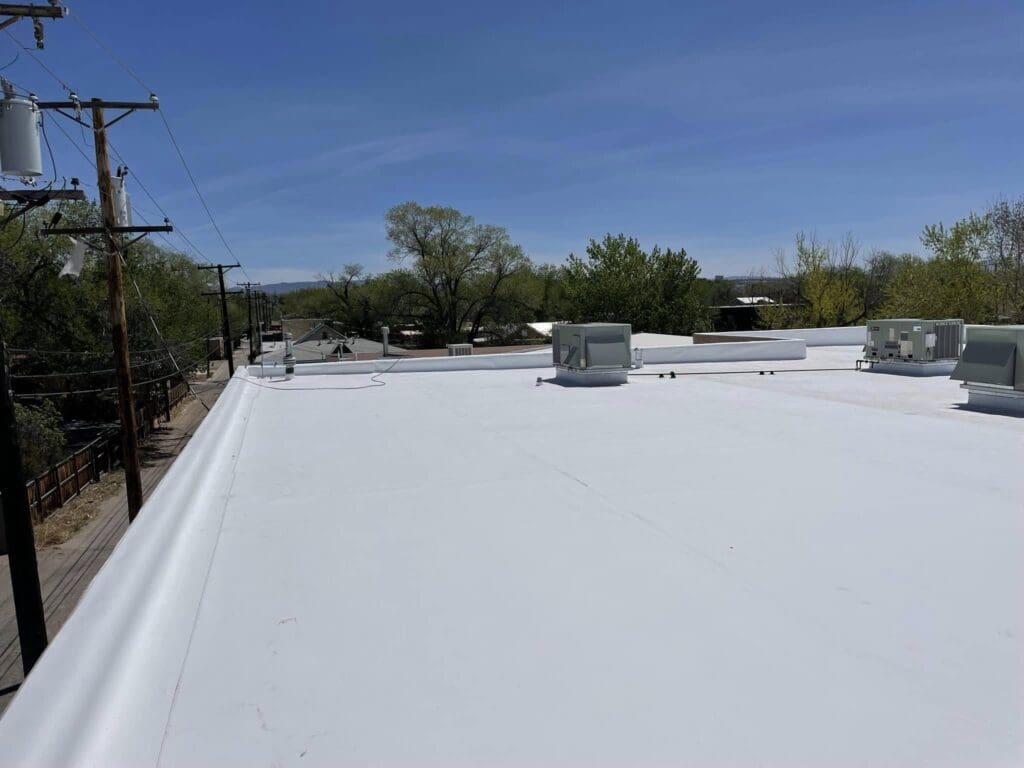
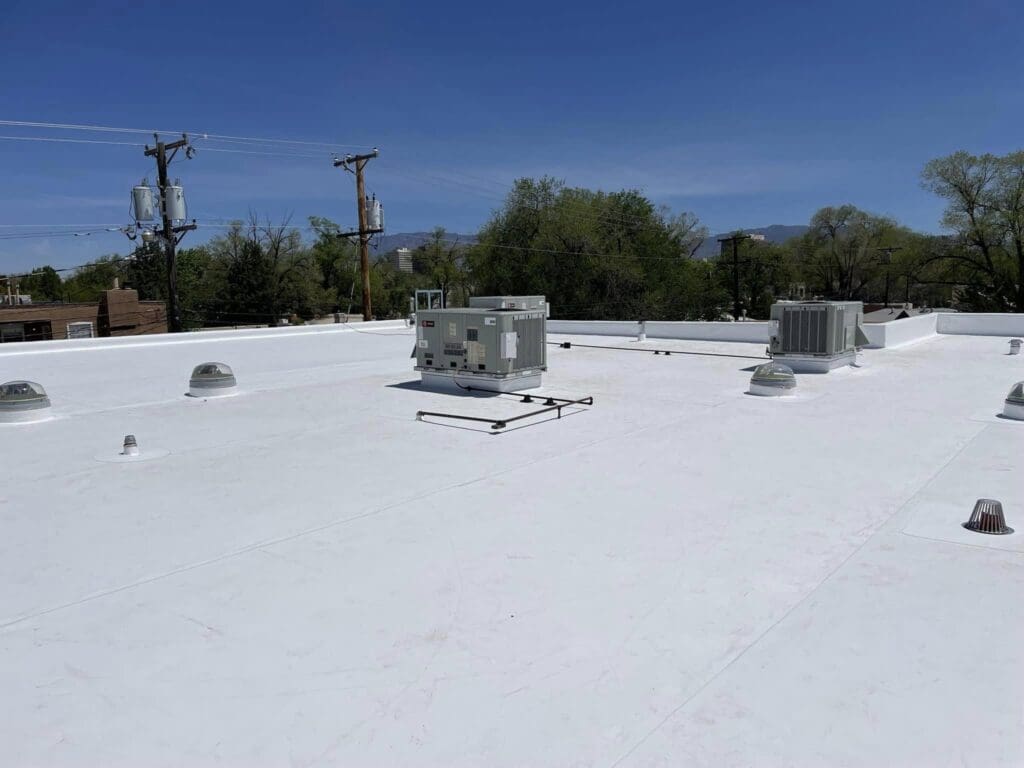
White and other reflective PVC roofing membranes can reflect more solar radiation than darker roofing surfaces.
That can be particularly valuable in Albuquerque, Santa Fe, and other areas of New Mexico where commercial roofs experience intense sunshine.
Reflective roofing may help reduce roof-surface temperatures and heat transfer into some buildings. Actual energy performance depends on many factors, including insulation, HVAC efficiency, building design, climate, and roof condition.
Flexibility
PVC roofing membranes are designed to remain flexible enough to accommodate normal movement within an appropriately designed roofing system.
That is important because commercial roofs experience repeated heating and cooling as outdoor temperatures change.
Commercial Roofing Versatility
PVC can be used on many types of flat and low-slope commercial properties, including offices, retail buildings, restaurants, warehouses, industrial facilities, multifamily properties, and other commercial structures.
Different membrane thicknesses and roofing assemblies allow a PVC system to be designed around the requirements of the individual building.
Why Is PVC Roofing Popular for Restaurants and Commercial Kitchens?
This is one area where PVC deserves particular consideration.
Commercial kitchen exhaust systems can release grease, oils, and other contaminants. Depending on the location of the exhaust equipment and prevailing conditions, those substances may eventually collect on nearby roofing surfaces.
Some roofing materials can deteriorate when repeatedly exposed to certain contaminants.
PVC roofing's resistance to many chemicals, grease, and oils can therefore make it a strong candidate for properties such as:
- Restaurants and commercial kitchens
- Food-processing facilities
- Hospitality properties
- Manufacturing plants
- Industrial facilities
- Buildings with exhaust systems that release grease or other contaminants onto the roof
That does not mean every restaurant automatically needs PVC.
The type and concentration of contaminants, exhaust locations, roof design, drainage, membrane specifications, and other factors should be considered before choosing a roofing system.
Specific chemical compatibility should also be verified for the PVC product being considered.
How Does PVC Roofing Perform in New Mexico?
Roofing materials in New Mexico face environmental conditions that are very different from those in many other parts of the country.
Rocky Mountain Roofing Services works with these conditions every day. New Mexico roofs must deal with high elevation, intense ultraviolet exposure, hail, high winds, monsoon storms, snow, freeze-thaw cycles, and dramatic temperature swings.
Intense UV Exposure
New Mexico receives abundant sunshine, and high elevation can increase the amount of ultraviolet radiation reaching roofing materials.
PVC membranes are available in highly reflective configurations that can be well suited to sunny climates.
However, reflectivity does not eliminate the need for maintenance. Membranes, seams, flashings, drains, and penetrations should still be inspected regularly.
High Roof-Surface Temperatures
A commercial roof exposed to direct New Mexico sunlight can become significantly hotter than the surrounding air.
Reflective PVC membrane can reduce solar heat absorption compared with many darker roofing surfaces.
Insulation underneath the membrane is also a major part of the building's thermal performance.
Daily Temperature Changes
New Mexico can experience substantial temperature changes between daytime and nighttime.
Roofing components respond to these changes by expanding and contracting.
Proper system design, attachment, flashing, and installation help the roofing assembly accommodate this movement.
Monsoon Rainfall
New Mexico may be dry much of the year, but summer monsoon storms can put large amounts of water on a flat roof very quickly.
That makes roof drainage extremely important.
Drains, scuppers, canales, and other drainage components need to remain clear. Low areas and drainage deficiencies can contribute to ponding water.
Even an excellent membrane cannot compensate for a poorly functioning drainage system.
High Winds
New Mexico winds can place substantial pressure on commercial roofing systems.
Roof edges, corners, flashings, attachment systems, and penetrations require particular attention because these areas can experience significant wind forces.
Hail
PVC is durable, but no roofing membrane is hail-proof.
Hail performance can be influenced by membrane thickness, age, substrate, insulation or cover board beneath the membrane, temperature, hail size, and storm severity.
After a significant hailstorm, a professional roof inspection can help identify punctures, impact damage, flashing problems, or other conditions that may not immediately produce an interior leak.
Snow and Freeze-Thaw Cycles
Snow and freezing temperatures become increasingly important in Santa Fe and higher-elevation communities throughout Northern New Mexico.
Water entering small openings can also be affected by freeze-thaw cycles.
This is another reason small membrane, flashing, and drainage problems should be corrected before they become larger problems.
Is PVC Roofing Energy Efficient?
PVC can be an energy-conscious commercial roofing option, particularly when a reflective membrane is used.
A light-colored membrane can reflect a greater percentage of incoming solar energy than many dark roofing materials.
Potential advantages may include:
- Lower roof-surface temperatures
- Reduced solar heat absorption
- Reduced heat transfer into certain buildings
- Lower cooling demand under appropriate conditions
- Reduced heat-related stress on some roofing components
Rocky Mountain Roofing Services does not recommend judging energy performance by membrane color alone.
The amount and type of roof insulation, HVAC equipment, windows, building construction, air leakage, occupancy, and other factors all contribute to a building's overall energy consumption.
What Are the Layers of a PVC Roofing System?
A PVC roof is more than the membrane visible from outside the building.
A typical roofing assembly may include, from bottom to top:
- Structural roof deck — supports the roofing system.
- Air or vapor-control layer — included where the roof design requires it.
- Roof insulation — improves thermal performance.
- Tapered insulation — may be used to establish slope and improve drainage.
- Cover board — may provide additional protection and a stable membrane substrate.
- Attachment system — fasteners, plates, adhesives, or another approved method secure the roofing components.
- PVC membrane — provides the primary weather-resistant roofing surface.
- Heat-welded seams — join individual membrane sheets.
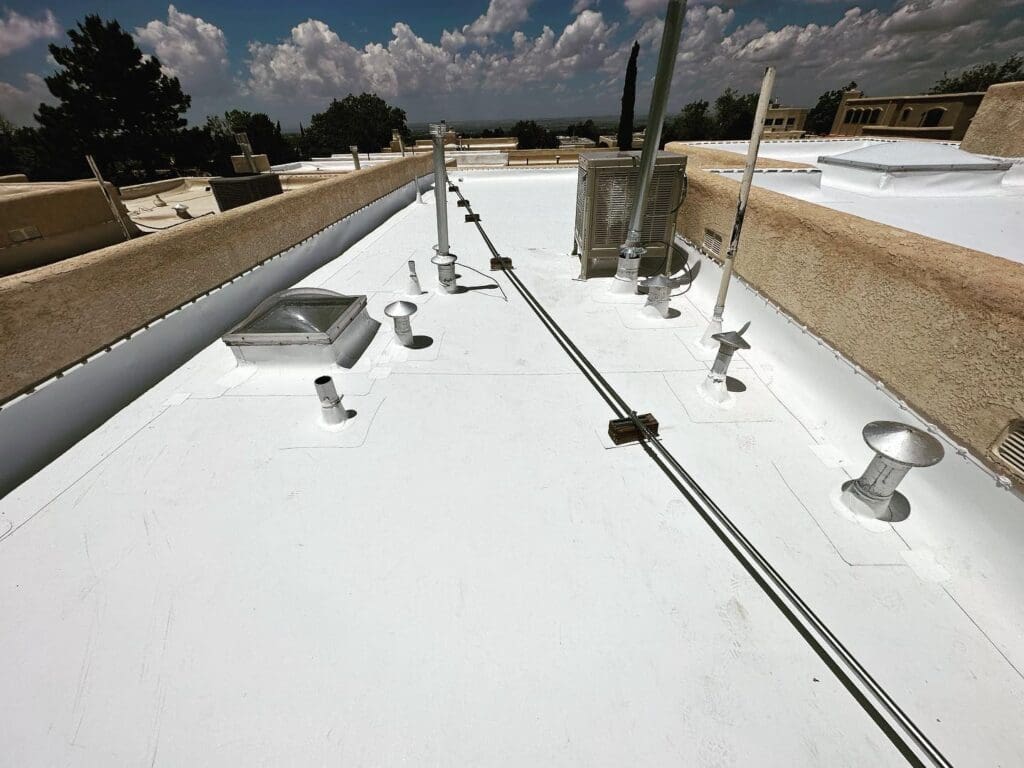
- Flashing and penetration details — protect transitions around walls, drains, vents, pipes, HVAC equipment, and other roof penetrations.
Not every PVC roof contains every layer listed above.
The exact assembly depends on the structural deck, building design, insulation requirements, drainage, attachment method, existing roof, manufacturer specifications, and applicable requirements.
How Is a PVC Roof Installed?
PVC roofing can be installed using different approved methods.
Two common approaches are mechanically attached and fully adhered systems.
With a mechanically attached system, approved fasteners and plates are used as part of the process of securing roofing components.
With a fully adhered system, compatible adhesive bonds the membrane to an appropriate prepared substrate.
The correct installation method depends on the roofing assembly, building design, deck, wind requirements, manufacturer specifications, and other project conditions.
Regardless of attachment method, installation details matter.
Seams, roof edges, drains, parapet walls, HVAC curbs, pipes, vents, skylights, and other penetrations must be properly integrated into the roofing system.
How Are PVC Roof Seams Sealed?
PVC is a thermoplastic membrane, which allows adjoining membrane sheets to be joined using hot-air welding.
During installation or repair, specialized equipment heats the appropriate membrane surfaces. The adjoining materials are then pressed together to create a welded seam.
Successful welding depends on proper surface preparation, equipment settings, temperature, membrane condition, and installer technique.
Seams deserve attention during future inspections because they are critical components of the roof's weather protection.
An isolated seam problem may sometimes be repairable without replacing the entire roofing system.
What Problems Can Develop on a PVC Roof?
PVC is durable, but it is not maintenance-free or damage-proof.
Common problems that can affect flat roofing systems include:
- Membrane punctures or cuts
- Damaged or open seams
- Failed flashing
- Problems around roof penetrations
- Clogged drains
- Ponding water
- Hail damage
- Wind damage
- Rooftop service damage
- Contamination
- Aging roofing materials
- Incompatible previous repairs
- Wet insulation beneath the membrane
- Roof-deck deterioration following prolonged water intrusion
Some of the most important damage may not be visible from the surface.
For example, water entering through a small membrane opening can potentially migrate into insulation beneath the roof.
The location of an interior water stain also may not be directly below the original roof opening.
Professional leak detection and roof inspection are therefore important when determining what actually needs to be repaired.
Can a PVC Roof Be Repaired?
Yes. A leaking or damaged PVC roof does not automatically need to be replaced.
Repair may be practical when:
- Damage is localized.
- The leak source can be identified.
- Wet insulation is confined to a manageable area.
- The surrounding membrane remains stable.
- The underlying deck remains sound.
- An isolated flashing or penetration has failed.
- Compatible repair materials and procedures can be used.
For example, a localized puncture may require opening and evaluating the affected area, removing unsuitable wet material when necessary, restoring the underlying assembly, and properly repairing the PVC membrane.
The important part is diagnosing the entire problem rather than simply covering the visible defect.
Rocky Mountain Roofing Services' approach is to evaluate each roof individually and recommend repair or replacement according to its condition and long-term performance needs—not a one-size-fits-all solution.
When Should a PVC Roof Be Replaced?
Replacement becomes more likely when deterioration is no longer limited to isolated areas.
Possible indicators include:
- Widespread membrane deterioration
- Multiple recurring leaks
- Extensive wet insulation
- Broad seam failures
- Widespread flashing deterioration
- Significant roof-deck damage
- Repeated repairs that do not provide lasting results
- Major drainage deficiencies
- Extensive roof-system deterioration
- A building renovation that changes roofing requirements
Age alone should not determine whether a PVC roof needs replacement.
Two roofs of similar age can be in very different condition depending on installation quality, maintenance, storm exposure, drainage, roof traffic, previous repairs, and other factors.
A thorough inspection provides better information for deciding between continued maintenance, repair, restoration where appropriate, and replacement.
PVC Roofing vs. TPO Roofing: What's the Difference?
PVC and TPO are both popular single-ply thermoplastic roofing membranes, and both are widely used on commercial flat and low-slope buildings.
They share several characteristics, but they are not the same material.
| Feature | PVC Roofing | TPO Roofing |
|---|---|---|
| Roofing type | Single-ply thermoplastic | Single-ply thermoplastic |
| Seam method | Typically heat welded | Typically heat welded |
| Reflective options | Yes | Yes |
| Chemical/grease resistance | A notable PVC strength, depending on the system and exposure | Product-specific; exposure requirements should be verified |
| Commercial applications | Extensive | Extensive |
| Flat/low-slope roofs | Yes | Yes |
| Installation options | System dependent, including mechanically attached or adhered | System dependent, including mechanically attached or adhered |
| Best application | Depends on building, exposure, and roofing requirements | Depends on building, budget, design, and project requirements |
So, is PVC better than TPO?
Not automatically.
PVC can be particularly attractive when resistance to grease, oils, or certain chemicals is a major consideration. That may give it an advantage for some restaurants, food-processing operations, manufacturing facilities, and industrial buildings.
TPO may be a strong choice for other buildings based on cost, system design, manufacturer options, project requirements, and the property's long-term needs.
The better approach is to evaluate the building first and select the roofing system second.
Can PVC Roofing Be Installed Over an Existing Roof?
Sometimes—but a roof recover should never be assumed to be appropriate simply because PVC can be installed in different roofing assemblies.
The existing roof needs to be evaluated first.
Important questions include:
- Is moisture trapped within the existing roof?
- What condition is the roof deck in?
- How many roofing layers are already present?
- Is existing insulation suitable?
- Does the roof drain properly?
- Can the new system be adequately attached?
- Are the existing materials compatible with the proposed assembly?
- What do applicable building and manufacturer requirements allow?
Installing a new membrane over an unstable or moisture-damaged roofing system does not correct the underlying problem.
A professional evaluation should determine whether a recover is appropriate or whether removal and replacement of some or all existing roofing materials is the better solution.
How Long Does a PVC Roof Last?
There is no single lifespan that applies to every PVC roof.
Long-term performance depends on several factors, including:
- Membrane type and thickness
- Installation quality
- Roof-system design
- New Mexico weather exposure
- Drainage
- Roof traffic
- Maintenance
- Chemical exposure
- Hail and wind damage
- Flashing condition
- Rooftop penetrations
- Previous repairs
- Insulation condition
- Roof-deck condition
A well-maintained roofing system will generally have a better opportunity to reach its intended service life than one that receives attention only after water enters the building.
Rocky Mountain Roofing Services recommends regular roof inspections, including additional evaluations after significant storms or when there are signs of a leak. The company's maintenance guidance includes annual inspections, post-storm inspections, drain cleaning, flashing inspections, debris removal, and prompt repair of minor leaks.
Is PVC Roofing Right for Your New Mexico Building?
PVC deserves serious consideration for many commercial and low-slope roofing projects.
It may be particularly appropriate for:
- Commercial flat roofs
- Restaurants and commercial kitchens
- Food-related businesses
- Industrial facilities
- Manufacturing buildings
- Properties exposed to grease or certain chemicals
- Buildings where a reflective membrane is desired
- Existing PVC roofs requiring compatible repair or replacement
But a roofing system should be selected based on the building, not simply on the popularity of the material.
A warehouse, restaurant, retail center, office building, manufacturing facility, and multifamily property can have very different roofing requirements.
Before recommending PVC, Rocky Mountain Roofing Services can evaluate the roof's condition, deck, insulation, drainage, rooftop equipment, penetrations, exposure, and long-term performance goals.
In some cases, PVC may be an excellent fit. In others, TPO roofing, spray foam, roof coatings, modified bitumen, built-up roofing, or another flat roofing approach may make more sense.
The objective is to select a durable roofing solution appropriate for the property and New Mexico's climate.
PVC Roofing in Albuquerque
Commercial roofing in Albuquerque must perform through intense sunshine, summer heat, hail, high winds, sudden monsoon rainfall, and significant daily temperature changes.
Reflective PVC roofing can be attractive for Albuquerque commercial buildings because it combines a light-colored weather surface with the benefits of a heat-welded single-ply system.
But material selection is only part of successful flat roofing.
Drainage, insulation, membrane attachment, flashing, roof penetrations, and workmanship are equally important.
Rocky Mountain Roofing Services serves commercial property owners throughout Albuquerque, including the Northeast Heights, North Valley, South Valley, Westside, Uptown, Downtown, Nob Hill, Four Hills, Paradise Hills, Academy Acres, Journal Center, and surrounding communities.
PVC Roofing in Santa Fe
Santa Fe presents another set of roofing challenges.
Higher elevation increases exposure to intense sunlight, while colder winter temperatures, snow, freeze-thaw cycles, hail, high winds, and large temperature swings can all affect roofing systems.
PVC can be an effective option for appropriate Santa Fe commercial and low-slope buildings when the roofing assembly is designed and installed for the property's specific requirements.
Drainage is particularly important because melting snow and winter moisture need a reliable path off the roof.
Rocky Mountain Roofing Services serves Santa Fe properties throughout Downtown, Southside, Museum Hill, Eldorado, Tesuque, Airport Road, Cerrillos Road, Midtown, and surrounding Northern New Mexico communities.
PVC Roofing Frequently Asked Questions
Is PVC roofing good for flat roofs?
Yes. PVC is specifically used as a roofing membrane for commercial and other low-slope roofing applications. Whether it is the best option for a particular property depends on the roof deck, drainage, insulation, building use, exposure, existing materials, and long-term roofing goals.
What are the main advantages of PVC roofing?
PVC roofing can provide heat-welded seams, flexibility, reflective membrane options, weather resistance, and resistance to many chemicals and contaminants. Its chemical and grease resistance can make it particularly useful for certain restaurants and industrial facilities.
Is PVC roofing good for New Mexico?
PVC can be a strong option for appropriate New Mexico buildings because reflective membranes can help address intense solar exposure, while the roofing system can be designed for local wind, rain, snow, and temperature conditions. Proper installation, drainage, and maintenance remain essential.
Is PVC roofing good for restaurants?
PVC can be particularly attractive for restaurant and commercial-kitchen roofs because properly specified PVC membranes can resist many grease, oil, and chemical exposures. The actual membrane should always be checked for compatibility with the contaminants expected on the roof.
Is PVC roofing energy efficient?
Reflective PVC membranes can reduce solar heat absorption compared with many darker roofing surfaces. The actual effect on building energy use depends on insulation, HVAC efficiency, building construction, climate, and other factors.
What is the difference between PVC and TPO roofing?
Both are single-ply thermoplastic membranes commonly used on commercial flat roofs, and both typically use heat-welded seams. Their chemical formulations and specific performance characteristics differ. PVC is often considered where grease or chemical exposure is important, while TPO may be attractive for other applications. Neither is automatically best for every building.
Can PVC roofing be repaired?
Yes. Localized punctures, seam problems, flashing defects, and certain other damage may be repairable when the surrounding membrane, insulation, and roof deck remain in suitable condition.
What causes PVC roofs to leak?
Potential causes include punctures, damaged seams, failed flashing, problems around penetrations, drainage issues, storm damage, rooftop service traffic, aging components, and previous improper or incompatible repairs.
Can PVC roofing be installed over an existing roof?
Potentially. The existing roof must first be evaluated for trapped moisture, deck condition, drainage, insulation, existing roofing layers, attachment requirements, compatibility, and applicable project requirements.
How often should a PVC roof be inspected?
Regular professional inspections are an important part of preventative maintenance. Annual inspections are a practical baseline, with additional inspections after significant hail, high winds, heavy monsoon storms, snow events, or rooftop mechanical work.
PVC Roof Inspection, Repair and Installation in New Mexico
Choosing a PVC roofing system involves more than deciding which membrane to put on top of a building.
The entire roofing assembly matters—from the structural deck and insulation to drainage, attachment, flashing, penetrations, membrane seams, and ongoing maintenance.
Rocky Mountain Roofing Services is a locally owned and operated New Mexico roofing contractor serving residential and commercial property owners throughout Albuquerque, Santa Fe, and surrounding Central and Northern New Mexico communities. The company installs and services PVC as part of its broader commercial and flat-roofing capabilities.
With more than 35 years of combined roofing experience, Rocky Mountain Roofing Services focuses on honest roof evaluations, quality workmanship, preventative maintenance, and long-term roofing performance rather than automatically recommending replacement.
If you have an existing PVC roof that is leaking, aging, or showing signs of storm damage—or you are considering PVC for a new commercial roofing project—start with a professional evaluation.
Call Rocky Mountain Roofing Services at 505-717-1925 to schedule a free roof inspection or request a free roofing quote.
The goal is to determine what your building actually needs and recommend a roofing solution designed to protect your property through New Mexico's demanding climate.
Recommended internal-link implementation
For the live page, I would embed links contextually to Commercial Roofing, Flat Roofing, TPO Roofing Systems, Roof Repair, Roof Replacement, Roof Inspections, Roof Maintenance, Albuquerque Roofing, Santa Fe Roofing, Get a Free Roofing Estimate, and Contact rather than placing them in a large related-links block. This follows the company's internal-linking strategy of moving users between high-value service pages, roofing systems, city pages, and conversion pages.
For a page of this length, the linking guide recommends roughly 10–15 internal links, with links distributed among primary services, conversion pages, supporting educational content, and related pillar pages.
First installed in the early 1960’s, PVC was the industry’s answer to the oil crisis, as it was the first membrane to contain half of the fossil fuels normally used in system manufacturing. Engineers discovered that adding additional solid plasticizers to the PVC membrane allowed for additional weatherability and flexibility, where the membrane alone would be more susceptible to seasonal climate changes. To this day, PVC membranes remain incredibly versatile, chemical resistant and are highly recommended for roof-over projects. They are available in a variety of colors, thicknesses, widths, and reinforcements, making them an excellent option for almost any roofing project.
Along with the environmental benefit of using (fewer) fossil fuels in the manufacturing process, PVC is highly reflective/UV resistant, making the membrane an energy efficient option for warmer climates.
Request an Inspection or Estimate for your Roofing Repair or Replacement
Please complete the form below. We will contact you promptly to discuss your project and schedule a time to come see your roof.
Need help right away? Tap on the TAP TO CALL button below to talk to us immediately