
How Long Does a TPO Roof Last in New Mexico?
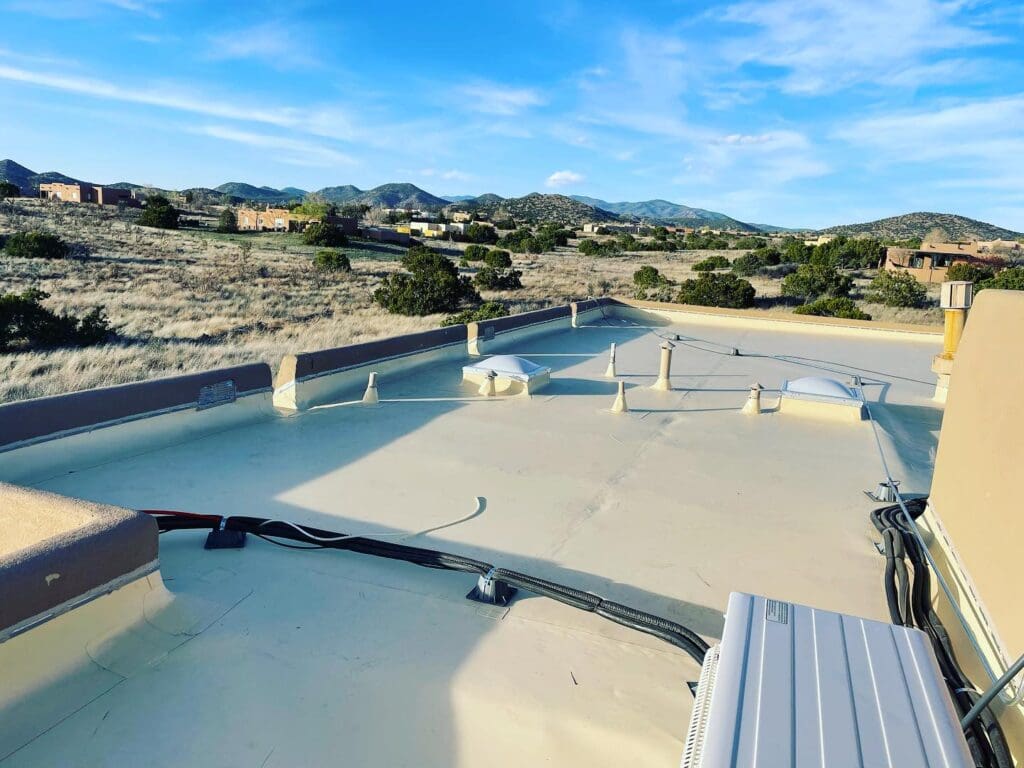
A properly installed and maintained TPO roof can provide many years of reliable service in New Mexico, but there is no single lifespan that applies to every roof. TPO roof longevity depends on membrane quality and thickness, installation, drainage, UV and weather exposure, rooftop traffic, maintenance, and how quickly developing problems are repaired.
That last point is especially important in New Mexico.
Two TPO roofs installed in Albuquerque or Santa Fe during the same year can age very differently. One may receive regular inspections, have excellent drainage, and experience little mechanical damage. Another may endure persistent ponding water, heavy rooftop HVAC traffic, hail impacts, poorly installed flashing, or neglected seam problems.
The calendar age of the two roofs may be identical, but their actual condition and remaining service life can be very different.
For that reason, property owners should view the age of a TPO roof as one piece of information—not as an automatic expiration date.
What Determines How Long a TPO Roof Lasts?
If you are researching how long a TPO roof lasts, it is tempting to look for one number.
Roofing systems do not work that way.
TPO, or thermoplastic polyolefin, is a single-ply membrane commonly used on commercial and other flat and low-slope roofs. If you are unfamiliar with the system itself, start with our guide explaining what is a TPO roof and why it may be appropriate for New Mexico.
For lifespan purposes, what matters most is that TPO is part of an entire roofing assembly.
The roof may include:
- Structural roof deck
- Insulation
- Cover board
- TPO membrane
- Adhesives or mechanical fasteners
- Heat-welded seams
- Flashing
- Roof edges
- Drains or scuppers
- HVAC curbs
- Pipes and other penetrations
A TPO membrane can still be in relatively good condition while another part of the roofing system develops a problem.
Likewise, a roof can be relatively young and experience premature trouble because of poor installation, storm damage, drainage problems, or mechanical damage.
That is why evaluating TPO roof lifespan requires looking at the entire system.
What Factors Can Extend or Shorten TPO Roof Life?
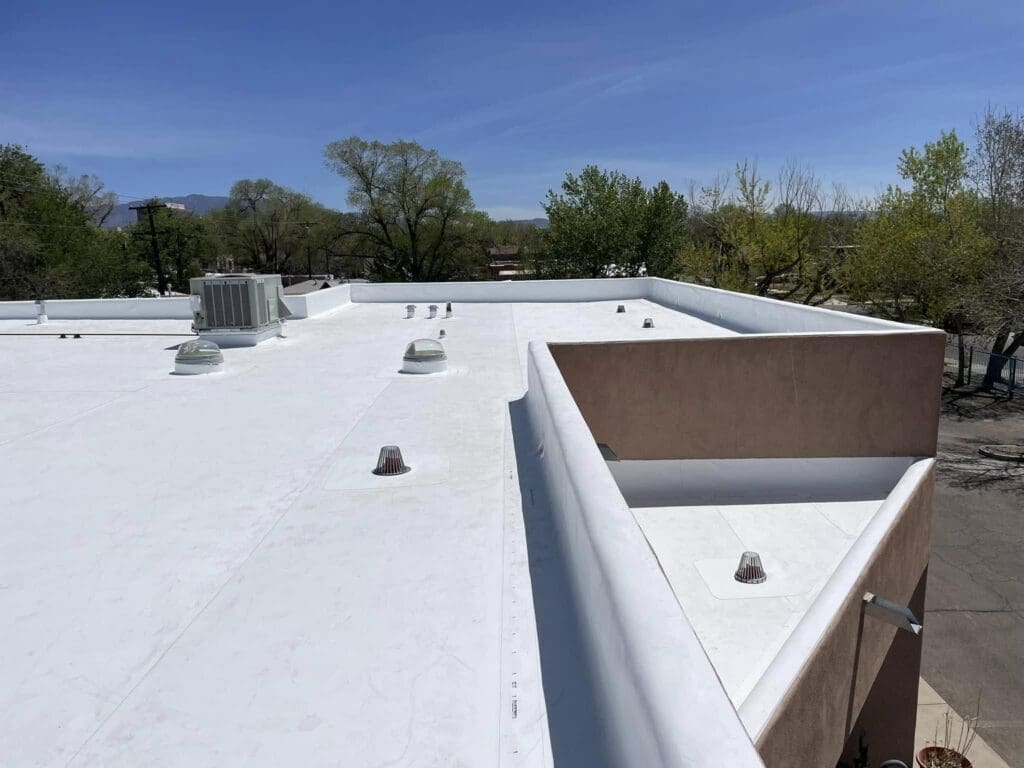
Several factors have a major influence on TPO longevity.
| Factors That Can Help Extend TPO Roof Life | Factors That Can Shorten TPO Roof Life |
| Quality installation | Poor installation |
| Properly welded seams | Defective or opening seams |
| Good roof drainage | Persistent ponding water |
| Regular inspections | Neglected maintenance |
| Prompt repairs | Unrepaired punctures or leaks |
| Controlled rooftop traffic | Heavy or careless rooftop traffic |
| Proper flashing | Failed flashing |
| Clean drains and scuppers | Blocked drainage |
| Appropriate roof assembly | Inadequate substrate or insulation |
| Post-storm inspections | Undetected hail or wind damage |
The important lesson is that TPO longevity is not determined by the membrane alone.
Installation, maintenance, weather, drainage, and building conditions all work together.
How Does Installation Quality Affect TPO Roof Lifespan?
Installation is one of the most important variables affecting the long-term performance of a TPO roof.
TPO membrane sheets are commonly joined with heat-welded seams. When properly prepared and welded, those seams form a continuous weather-resistant connection between sheets.
Problems can develop when seams are not properly prepared or welded.
Installation quality also matters around:
- Roof edges
- Drains
- Scuppers
- HVAC curbs
- Skylights
- Pipes
- Vents
- Flashing
- Other penetrations
These transitions deserve particular attention because water often enters a roofing system at details and penetrations rather than through an undamaged area in the middle of the membrane.
A small installation defect may not produce a leak immediately.
Months or years of UV exposure, thermal movement, wind, rain, snow, and building movement can gradually expose that weakness.
This is one reason an experienced TPO roofing contractor should evaluate the complete roof assembly rather than focusing only on the visible membrane.
Does TPO Membrane Thickness Affect Roof Life?
Membrane thickness is one factor that can influence the durability of a TPO roofing system, but thickness should not be treated as the only measure of quality or expected lifespan.
The roof’s performance also depends on the membrane formulation, reinforcement, substrate, cover board, attachment method, workmanship, roof design, and environmental exposure.
A thicker membrane does not correct poorly welded seams.
It does not fix bad drainage.
And it does not prevent damage caused by careless rooftop activity.
When comparing TPO systems, property owners should therefore consider the complete roofing system rather than making a decision based solely on membrane thickness.
Does New Mexico Sun Shorten TPO Roof Life?
New Mexico receives intense sunshine, and roofs experience prolonged ultraviolet exposure.
This is one reason reflective TPO membranes are attractive for many New Mexico commercial buildings. White TPO surfaces reflect more solar energy than many darker roofing materials, helping reduce the amount of heat absorbed by the roof surface.
But reflective does not mean immune to sunlight.
Long-term UV exposure can contribute to gradual deterioration of roofing materials. Sealants, flashing materials, membranes, coatings, and other components can all age as they remain exposed to the elements.
High elevation adds another consideration in communities such as Albuquerque and Santa Fe.
A professional roof maintenance program should therefore monitor the condition of the membrane and the components surrounding it rather than assuming a reflective roof no longer needs attention.
How Do New Mexico Temperature Swings Affect TPO?
New Mexico roofs can become very hot under direct sunshine and then cool significantly after sunset.
That repeated heating and cooling causes roofing and building components to expand and contract.
This process is often called thermal cycling.
TPO is flexible, but the roofing system still has to accommodate movement.
Over time, repeated expansion and contraction can place stress on:
- Seams
- Flashing
- Roof edges
- Penetrations
- Fasteners
- Attachment points
- Areas around rooftop equipment
A properly installed system is designed with movement in mind.
However, thermal cycling can reveal weaknesses in poor installation or aging components.
That makes seams and flashing important areas to monitor as a TPO roof gets older.
Can Ponding Water Shorten the Life of a TPO Roof?
Flat roofs are not supposed to function like swimming pools.
Although TPO is designed for flat and low-slope roofing applications, water should still move toward the building’s drainage system.
Persistent ponding water may indicate:
- Clogged drains
- Blocked scuppers
- Inadequate slope
- Compressed insulation
- Structural deflection
- Drainage design problems
- Changes caused by previous roofing work
Ponding areas can collect dirt and debris and may place additional stress on portions of the roofing system.
More importantly, recurring standing water should prompt a property owner to determine why the water is not draining properly.
Simply repairing a leak without addressing the drainage problem may allow the same conditions to continue.
If a TPO roof regularly holds water after New Mexico monsoon storms, a professional roof inspection can help determine whether drain cleaning, localized repair, drainage improvements, insulation correction, or more extensive work is appropriate.
Can Hail Shorten TPO Roof Life?
Yes.
New Mexico hailstorms can damage TPO roofing, although the severity varies considerably from one storm and roof to another.
Factors include:
- Hailstone size
- Wind speed
- Impact angle
- Membrane condition
- Membrane thickness
- Roof age
- Cover board
- Insulation
- Overall roof assembly
A severe hailstorm can puncture or weaken roofing materials.
One of the difficulties with storm damage is that it may not produce an immediate interior leak.
A property owner might therefore conclude that the roof survived the storm without damage because the ceiling is dry the next morning.
That is not always a reliable test.
A post-storm inspection can identify impact damage, membrane concerns, flashing problems, displaced components, and other conditions before subsequent rain turns them into more obvious leaks.
Do High Winds Affect TPO Roof Longevity?
Strong New Mexico winds create uplift forces on roofing systems.
Roof edges and corners can be particularly important because wind pressures are often greater in these areas.
TPO roofing systems may be mechanically attached, adhered, or installed using another approved system. The proper attachment method depends on the roof design and system specifications.
Wind can also move debris across the roof or displace objects that damage the membrane.
Following significant wind events, property owners should look for signs such as:
- Loose edge materials
- Membrane movement
- Damaged flashing
- Displaced rooftop components
- Punctures
- Debris accumulation
- Damage around penetrations
Early identification matters because wind damage that initially appears minor can expose the roof to water intrusion during the next storm.
How Does Rooftop HVAC Work Affect TPO Roof Life?
One frequently overlooked threat to commercial TPO roofs is not weather.
It is people.
Commercial roofs often contain HVAC systems, exhaust equipment, vents, electrical equipment, and other mechanical components that require service.
Technicians may repeatedly cross the same sections of roof.
Tools may be placed on the membrane. Equipment panels may be removed. Fasteners or sharp objects may fall onto the roofing surface.
Over time, concentrated traffic can contribute to membrane wear or punctures.
Designated walkways or protective materials may be appropriate around frequently serviced equipment.
Property managers should also inspect roofing areas after significant rooftop mechanical work.
A small puncture created during HVAC service may be relatively straightforward to repair when discovered early. If unnoticed, it can become a source of water intrusion.
Why Do TPO Seams Sometimes Fail as a Roof Ages?
Heat-welded seams are one of the important characteristics of TPO roofing, but seams should still be monitored.
Potential problems can develop because of:
- Improper original welding
- Contamination during installation
- Long-term weather exposure
- Building movement
- Mechanical damage
- Previous improper repairs
A questionable seam does not automatically mean the entire roof has reached the end of its life.
A localized seam problem may sometimes be repairable when the surrounding membrane and roofing assembly remain in serviceable condition.
That distinction is important.
The goal of an inspection should be to determine the extent and cause of the problem, not simply to assume that an older roof needs replacement.
How Can Preventative Maintenance Extend TPO Roof Life?
Preventative maintenance is one of the most practical ways to protect a commercial roofing investment.
Rocky Mountain Roofing Services recommends maintenance activities such as:
- Annual roof inspections
- Post-storm inspections
- Roof drain cleaning
- Debris removal
- Flashing inspections
- Monitoring penetrations
- Prompt repair of minor leaks
- Commercial preventative maintenance
Why does this matter?
Roofing problems rarely improve on their own.
A small puncture can allow moisture into the roof assembly.
A partially blocked drain can contribute to ponding.
A flashing defect can become a leak.
A small seam problem can become larger.
Finding these conditions early may allow for localized TPO roof repair rather than allowing moisture damage to spread into insulation, decking, ceilings, walls, or building contents.
How Often Should a TPO Roof Be Inspected in New Mexico?
An annual inspection is a practical baseline for preventative maintenance.
Additional inspections can be valuable after significant weather events.
New Mexico property owners can think about roof maintenance seasonally.
Spring
Inspect for winter weather and wind damage. Look for debris, damaged flashing, and drainage problems.
Summer
Monitor UV-related deterioration and prepare drains and scuppers for monsoon rainfall.
Fall
Remove debris, clean drainage components, inspect flashing, and complete maintenance before winter.
Winter
Monitor snow and storm conditions and consider inspections after significant snow or high-wind events.
Commercial buildings with frequent rooftop HVAC work or a history of leaks may deserve additional attention.
The objective is not simply to find active leaks.
A good inspection identifies conditions that could become leaks later.
What Are the Signs a TPO Roof Is Aging?
An aging TPO roof may show one or more warning signs.
Common concerns include:
- Recurring leaks
- Opening or questionable seams
- Membrane punctures
- Tears
- Damaged flashing
- Deterioration around penetrations
- Roof-edge problems
- Persistent ponding water
- Areas damaged by rooftop traffic
- Storm damage
- Wet insulation
- Increasing frequency of repairs
None of these signs, by itself, automatically proves that the roof requires complete replacement.
For example, one isolated puncture on an otherwise healthy roof is very different from widespread membrane deterioration combined with wet insulation and repeated seam failures.
Condition and extent matter.
Can an Older TPO Roof Still Be Repaired?
Yes.
An older TPO roof does not automatically need to be replaced simply because of its age.
Localized repairs may remain practical when:
- The surrounding membrane is serviceable
- Damage is limited
- Most seams remain sound
- Insulation is largely dry
- The substrate is stable
- Flashing can be repaired
- Drainage is functioning properly
- Repairs can be made reliably
Possible repair areas include punctures, localized seam problems, flashing defects, roof-edge damage, penetrations, and certain storm-damaged areas.
This is consistent with a broader principle of flat roof repair:
Repair the roof when a repair is technically appropriate and likely to provide useful additional service life.
Replacement should not be the automatic recommendation for every leak.
When Should TPO Roof Replacement Be Considered?
At some point, continued repairs can stop making financial or technical sense.
Replacement may deserve serious consideration when an inspection finds:
- Widespread membrane deterioration
- Extensive wet insulation
- Repeated seam failures
- Numerous recurring leaks
- Large areas of storm damage
- Significant substrate problems
- Major drainage or structural deficiencies
- Repairs that repeatedly fail
- An overall roof assembly that is no longer a reliable candidate for localized repairs
This is where roof condition becomes more important than simply asking how old the roof is.
Consider two hypothetical buildings.
Building A: Its TPO roof is older but has been regularly maintained. Drainage is good, the insulation is dry, seams are generally sound, and the roof has one repairable flashing problem.
Building B: Its TPO roof is younger but has widespread ponding, wet insulation, multiple seam failures, and recurring leaks.
Building A may have considerably more useful service life remaining despite being older.
That is why a professional evaluation should precede a flat roof replacement decision.
Should an Aging TPO Roof Be Coated Instead of Replaced?
Some existing roofing systems may be candidates for roof coating restoration, but coating is not an automatic solution for every aging TPO roof.
Before considering restoration, the existing roof should be evaluated for:
- Membrane condition
- Wet insulation
- Seam condition
- Flashing
- Adhesion
- Drainage
- Surface contamination
- Compatibility with the proposed coating system
A coating should not simply conceal unresolved leaks or wet roofing materials.
If the underlying roof is a suitable candidate, restoration may sometimes help extend useful service life.
If the underlying assembly has widespread moisture or deterioration, a different approach may be necessary.
Does a TPO Warranty Tell You How Long the Roof Will Last?
No.
Warranty length and actual roof service life are not the same thing.
Roofing warranties can vary according to:
- Manufacturer
- Roofing system
- Materials
- Installation
- Commercial or residential application
- Workmanship coverage
- Specific warranty terms and exclusions
A warranty describes particular coverage under specified conditions.
It should not be interpreted as a promise that every roof will perform for exactly that number of years or that no maintenance will be required during that period.
Likewise, reaching the end of a warranty period does not necessarily mean the roof suddenly needs replacement.
The physical condition of the roof remains the more useful consideration.
What Has the Biggest Effect on TPO Roof Longevity in New Mexico?
For New Mexico property owners, several factors deserve particular attention.
| New Mexico Condition | Potential Effect on TPO Roofing |
| Intense UV exposure | Gradual weathering of exposed roofing components |
| High elevation | Greater concern about prolonged solar exposure |
| Large temperature swings | Repeated expansion and contraction |
| Monsoon rainfall | Exposes drainage, seam, and flashing problems |
| Hailstorms | Potential membrane or assembly damage |
| High winds | Uplift, edge damage, and wind-blown debris |
| Snow | Adds moisture and temporary roof loading |
| Freeze-thaw cycles | Repeated temperature-related stress |
| Rooftop HVAC activity | Traffic-related wear and puncture potential |
The important point is that New Mexico does not present only one roofing challenge.
A TPO roof may face intense sun for weeks and then suddenly experience high winds, hail, or heavy monsoon rainfall.
Long-term performance therefore depends on a roofing system capable of handling changing conditions and on maintenance that identifies problems as they develop.
Is TPO Roof Lifespan Different in Albuquerque and Santa Fe?
The basic principles are the same, but local conditions can vary.
Albuquerque TPO Roofs
Albuquerque commercial roofs frequently experience:
- Strong sunshine
- Intense UV exposure
- Hot summer roof temperatures
- Large daytime-to-nighttime temperature changes
- High winds
- Hail
- Monsoon rainfall
Drainage, membrane condition, flashing, rooftop HVAC areas, and storm damage should all be part of routine maintenance.
Santa Fe TPO Roofs
Santa Fe’s higher elevation brings strong solar exposure along with colder winter conditions.
Properties may also experience:
- Snow
- Freeze-thaw cycles
- High winds
- Hail
- Significant temperature changes
The correct maintenance and repair strategy should reflect the individual building and roof rather than assuming every New Mexico TPO roof ages at the same rate.
How Do You Know How Much Life Your TPO Roof Has Left?
You cannot reliably determine remaining TPO roof life from the installation date alone.
A professional assessment should examine the actual roofing system.
That may include evaluating:
- Overall membrane condition
- Welded seams
- Flashing
- Roof edges
- Drains and scuppers
- Ponding areas
- Penetrations
- HVAC curbs
- Punctures or mechanical damage
- Storm damage
- Insulation concerns
- Evidence of previous repairs
- Leak history
The inspector can then consider the roof’s age alongside its physical condition.
That provides a much more useful basis for deciding whether the appropriate next step is maintenance, localized repair, restoration, or replacement.
Frequently Asked Questions About TPO Roof Lifespan
How many years does a TPO roof usually last?
There is no single lifespan that applies to every TPO roof. Actual service life depends on the membrane and complete roof assembly, installation quality, climate exposure, drainage, maintenance, storm damage, rooftop traffic, and repair history. The roof’s actual condition should be considered alongside its age.
Can a TPO roof last 30 years?
Some TPO systems may remain serviceable for long periods under favorable conditions, but property owners should not assume a universal 30-year lifespan. Product, installation, maintenance, environment, and roof assembly all affect longevity.
Does New Mexico sun shorten TPO roof life?
Long-term UV exposure contributes to roofing material weathering. Reflective TPO can reduce solar heat absorption compared with many darker surfaces, but it is not immune to aging from prolonged exposure.
Does TPO membrane thickness affect lifespan?
Membrane thickness can be one durability factor, but it is only part of the system. Installation, seams, substrate, drainage, maintenance, weather, and rooftop traffic also influence longevity.
How does installation quality affect TPO longevity?
Installation quality is extremely important. Poor seam welding, flashing, attachment, penetration detailing, or drainage can create premature problems even when the membrane itself is high quality.
Can ponding water shorten TPO roof life?
Persistent ponding can indicate drainage, slope, insulation, or structural problems and should be investigated. Keeping drains and scuppers clear is an important part of flat-roof maintenance.
Can hail shorten TPO roof life?
Yes. Severe hail can puncture or damage TPO roofing systems. The severity depends on the storm, membrane, substrate, roof condition, and complete roof assembly.
Do high winds damage TPO roofing?
Strong winds can create roof uplift, damage edges or flashing, move debris, and expose weaknesses in attachment. Significant wind events may justify a post-storm inspection.
Why do TPO seams fail as a roof ages?
Potential causes include poor original welding, contamination, weather exposure, building movement, mechanical damage, and improper previous repairs.
How often should a TPO roof be inspected?
Annual inspections are a practical preventative-maintenance approach, with additional inspections after significant hail, wind, snow, or other severe weather events.
Can regular maintenance extend TPO roof life?
Preventative maintenance can help identify small problems before they cause more extensive damage. Drain cleaning, flashing inspections, debris removal, monitoring penetrations, and prompt repairs can help protect the roofing system.
Can an older TPO roof still be repaired?
Yes. Localized damage may remain repairable when the surrounding membrane, insulation, substrate, seams, flashing, and drainage remain serviceable.
What are signs a TPO roof is nearing the end of its life?
Widespread membrane deterioration, recurring leaks, extensive wet insulation, repeated seam failures, numerous repairs, and major drainage or substrate problems may indicate that replacement should be evaluated.
When should TPO be replaced instead of repaired?
Replacement may make more sense when deterioration is widespread or when recurring repairs can no longer provide reliable long-term performance. A professional inspection should determine the extent of the problem before that decision is made.
Does a TPO warranty tell you how long the roof will last?
No. Warranty terms describe specific coverage and conditions. They should not be treated as a guaranteed roof lifespan.
Protecting the Long-Term Life of a TPO Roof in New Mexico
So, how long does a TPO roof last in New Mexico?
The most useful answer is not simply a number.
TPO roof longevity depends on the quality of the original roofing system, installation, seam welding, flashing, drainage, UV and weather exposure, storm history, rooftop activity, maintenance, and how quickly small problems are corrected.
That is particularly important in Albuquerque, Santa Fe, and throughout Central and Northern New Mexico, where roofs must withstand intense sunshine, hail, high winds, monsoon rainfall, temperature swings, snow in some areas, and freeze-thaw conditions.
A well-maintained older TPO roof may still have useful service life remaining. A poorly installed or storm-damaged younger roof may require substantial attention much sooner.
Roof condition—not age alone—should drive the decision.
Rocky Mountain Roofing Services provides residential and commercial roofing services throughout Albuquerque, Santa Fe, and surrounding New Mexico communities. With more than 35 years of combined roofing experience, the company provides TPO roofing, flat roof repair, roof inspections, leak detection, roof replacement, roof restoration, roof coatings, drainage improvements, and preventative maintenance.
If your TPO roof is aging, leaking, showing seam or flashing problems, or you simply do not know how much service life it has left, start with an experienced roof evaluation.
Call Rocky Mountain Roofing Services at 505-717-1925 to request a free roof inspection or free roofing quote.