TPO Roofing Systems in Albuquerque & Santa Fe, New Mexico

Rocky Mountain Roofing Services provides professional TPO roofing installation, repair, replacement, inspection, and maintenance for commercial and low-slope roofing systems throughout Albuquerque, Santa Fe, and surrounding New Mexico communities.
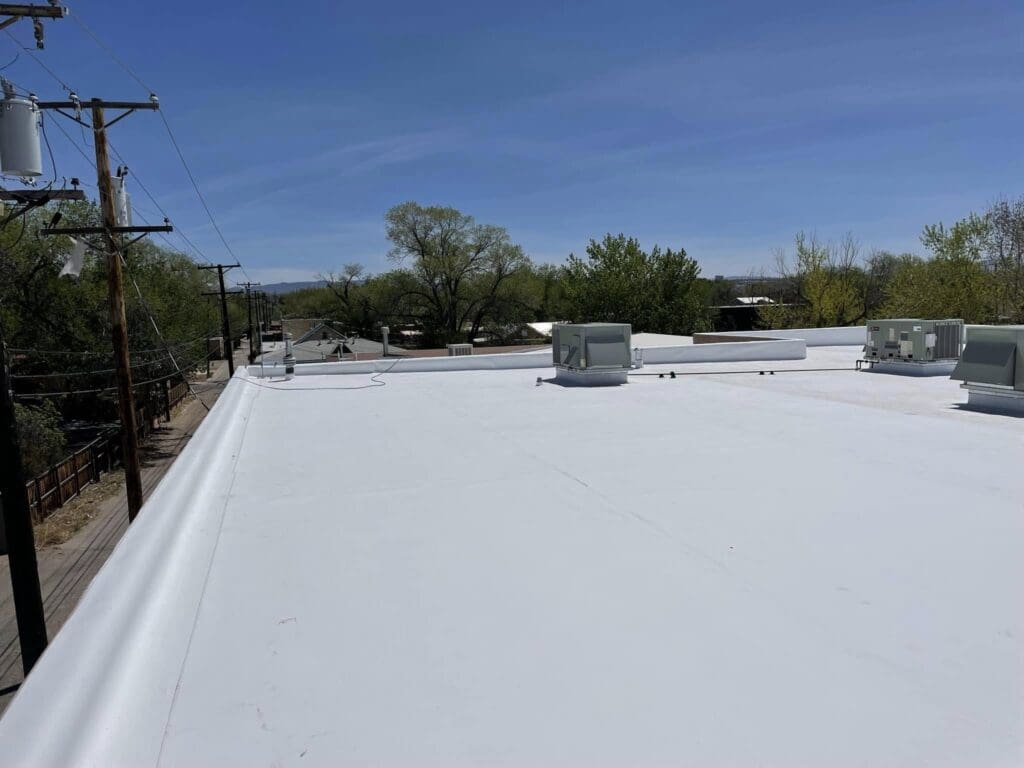
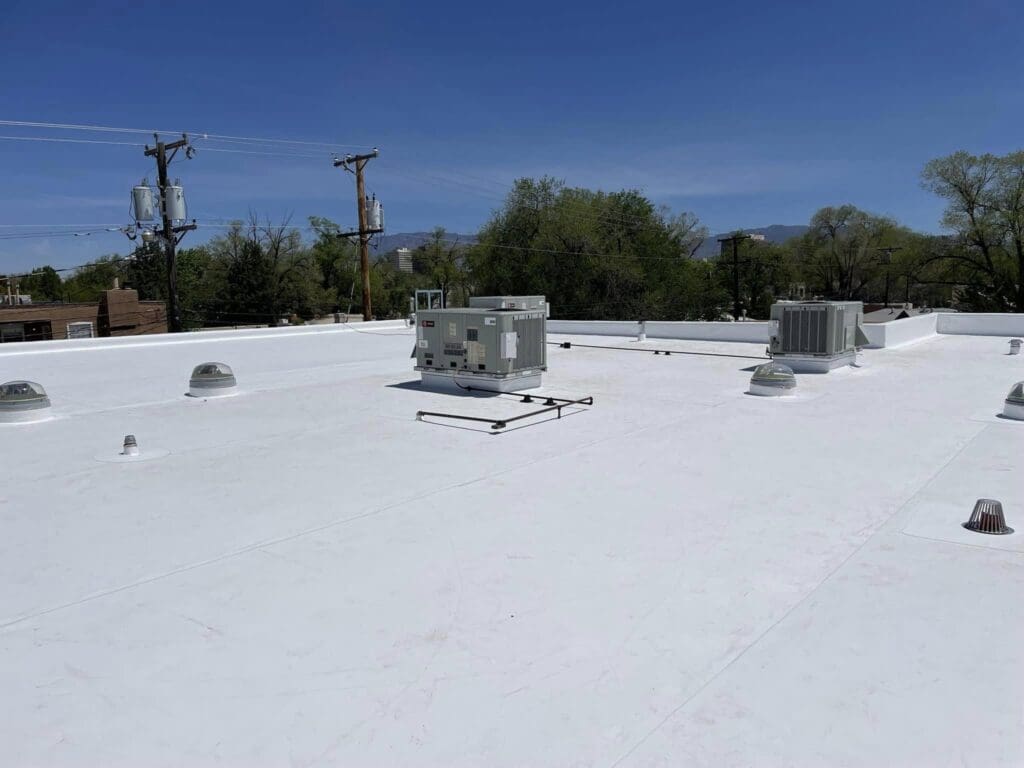
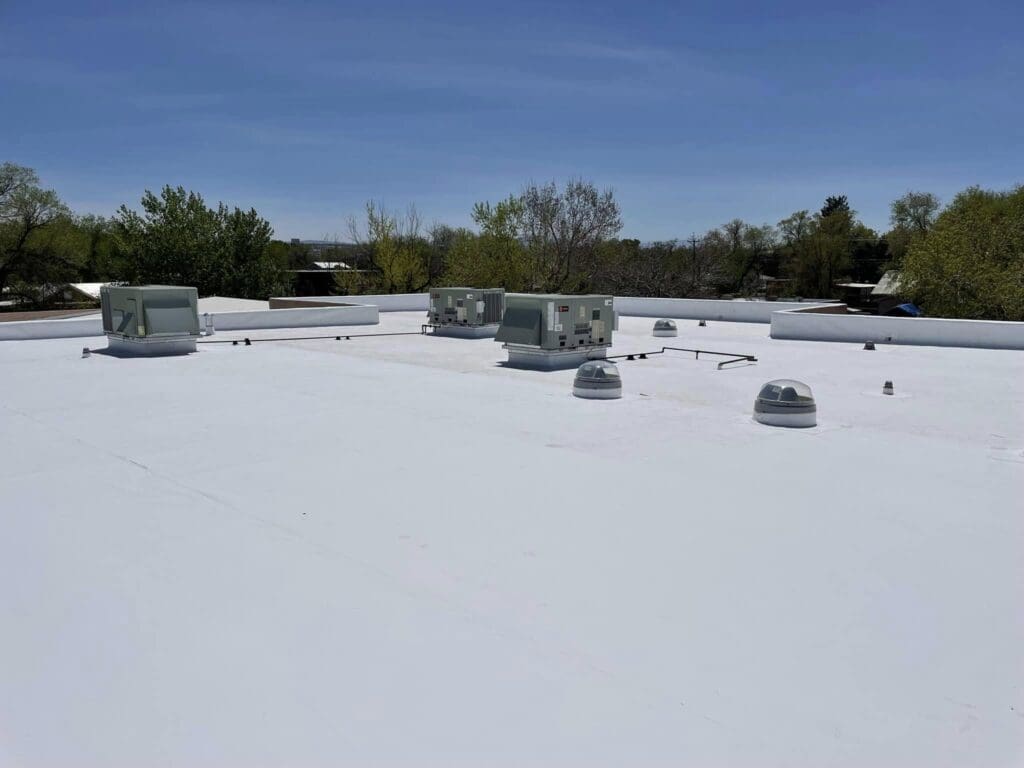
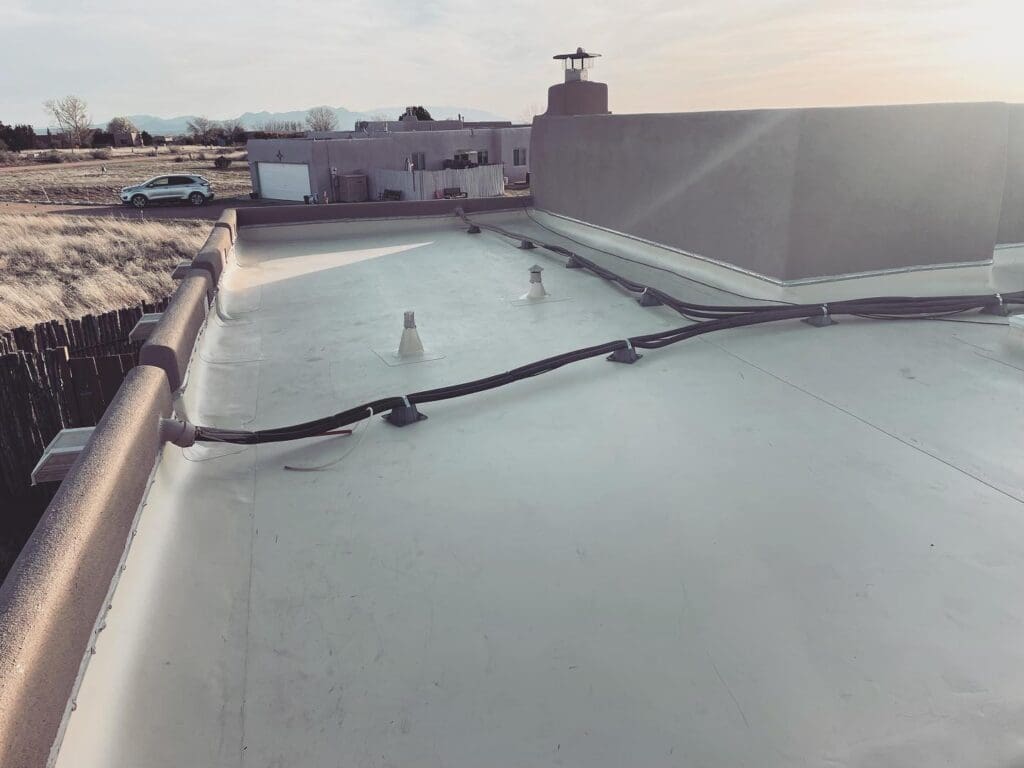
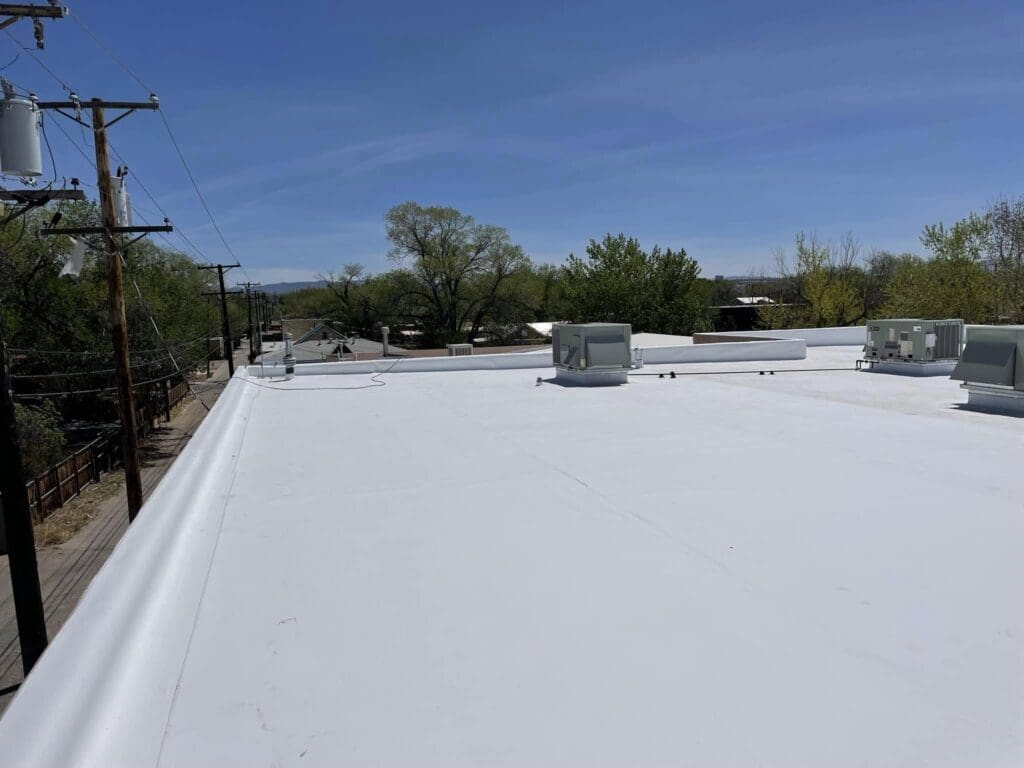
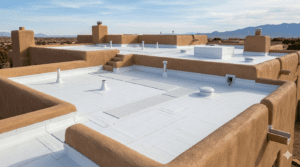
TPO roofing is one of the most widely used single-ply roofing options for commercial and low-slope buildings. Its durable membrane, heat-welded seams, reflective surface, and ability to withstand demanding weather conditions make it particularly well suited for many New Mexico properties.
At Rocky Mountain Roofing Services, we do more than install TPO membrane. We evaluate the complete roofing system—including the membrane, seams, flashing, insulation, penetrations, drainage, roof edges, and underlying components—to determine what your roof actually needs.
With more than 35 years of combined roofing experience, our team provides TPO roofing solutions designed around New Mexico's intense sunlight, high elevation, hailstorms, strong winds, monsoon rains, temperature swings, and seasonal freeze-thaw conditions.
Need your TPO roof inspected? Call Rocky Mountain Roofing Services at (505) 717-1925 to request a free roof inspection or roofing quote.
What Is TPO Roofing?
TPO stands for thermoplastic polyolefin. It is a flexible, single-ply roofing membrane commonly installed on commercial buildings and other low-slope or flat roofing systems.
TPO membrane is typically installed in large sheets. Adjacent sections are joined using hot-air welding equipment, creating heat-welded seams that become an important part of the roof's weather-resistant surface.
TPO roofing is generally recognized for its combination of:
- Reflective roofing performance
- Durable single-ply construction
- Heat-welded seams
- Resistance to common rooftop conditions
- Flexibility
- Energy-efficiency potential
- Repairability when damage is localized
- Suitability for many commercial and low-slope roofs
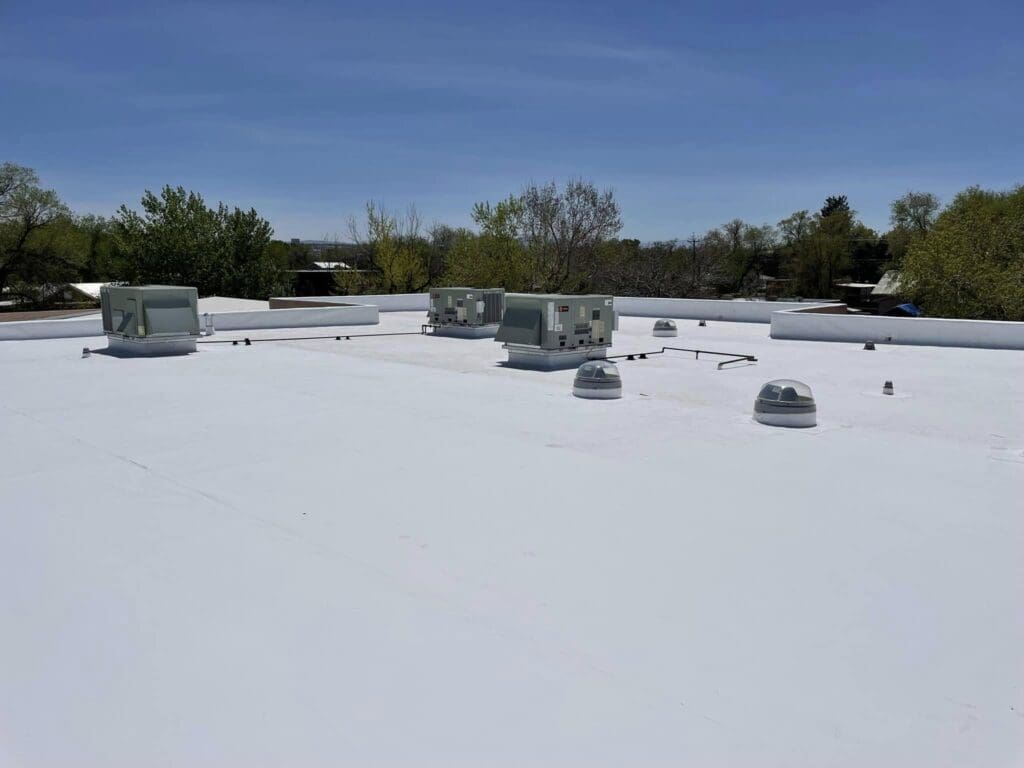
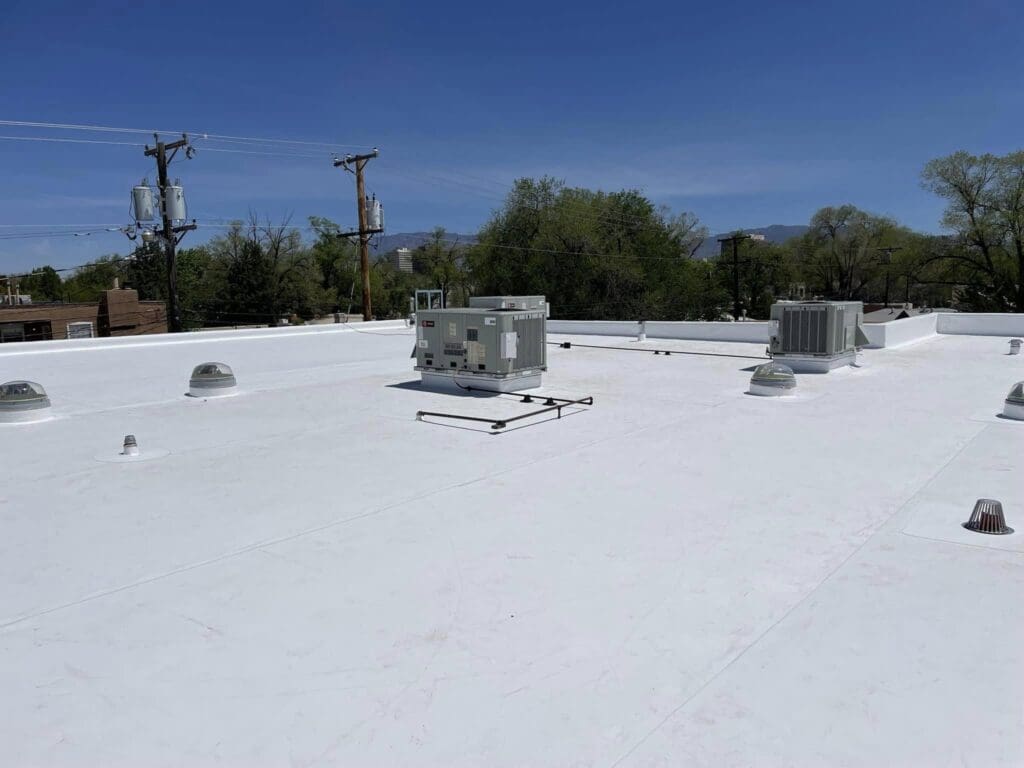
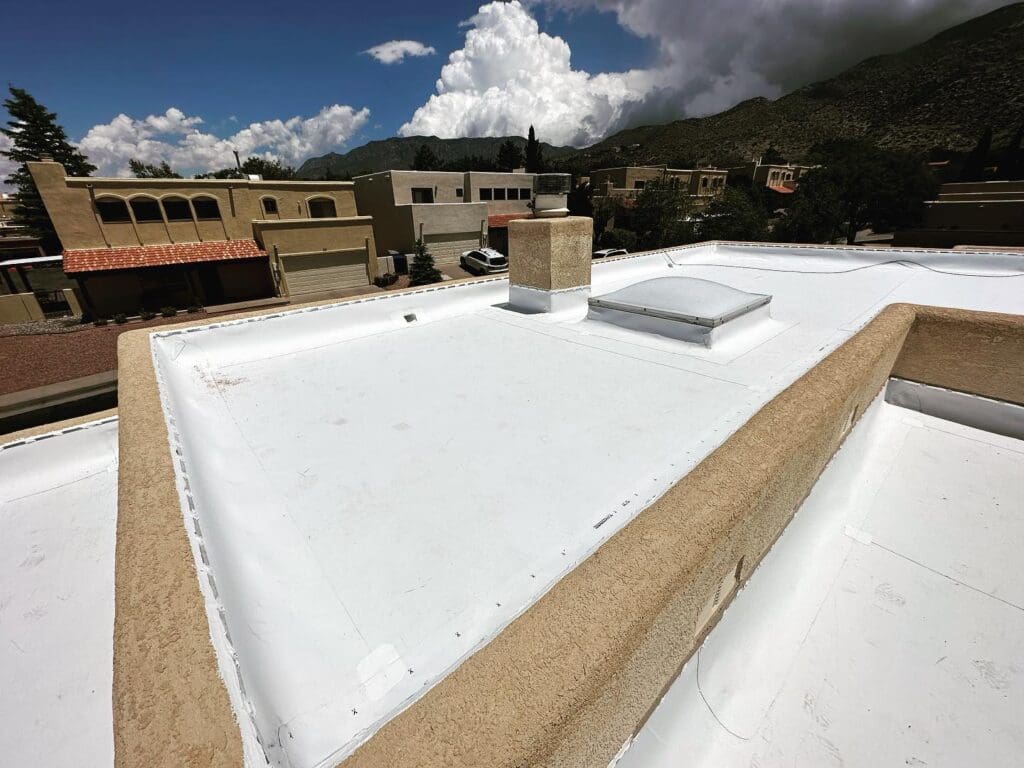
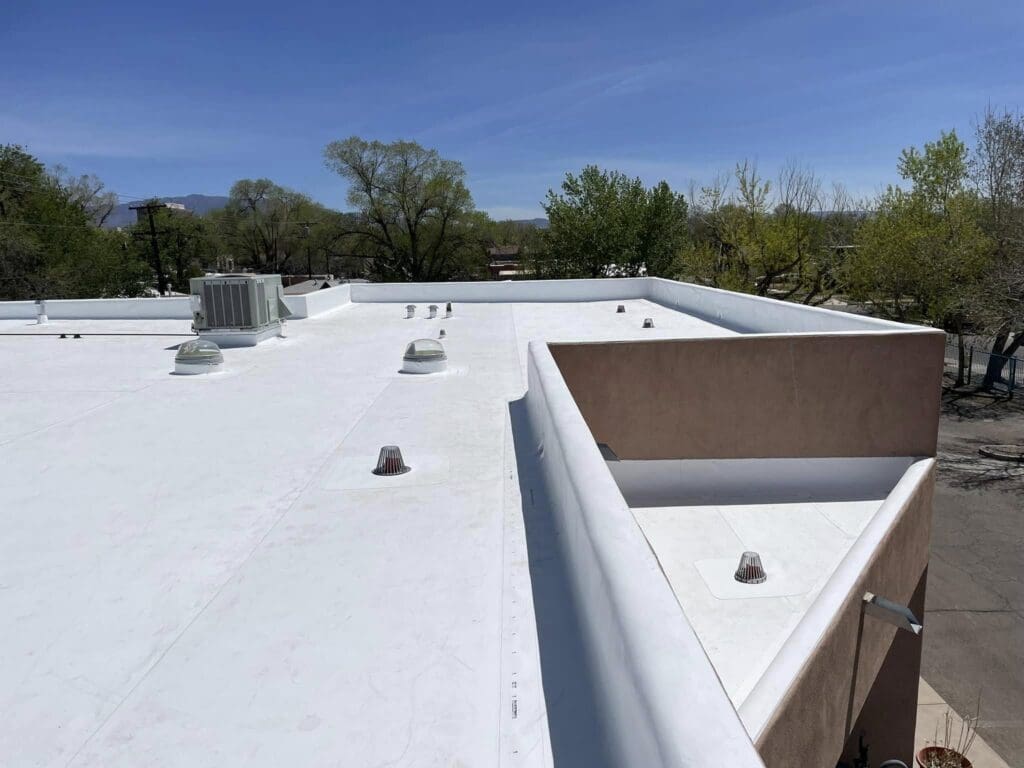
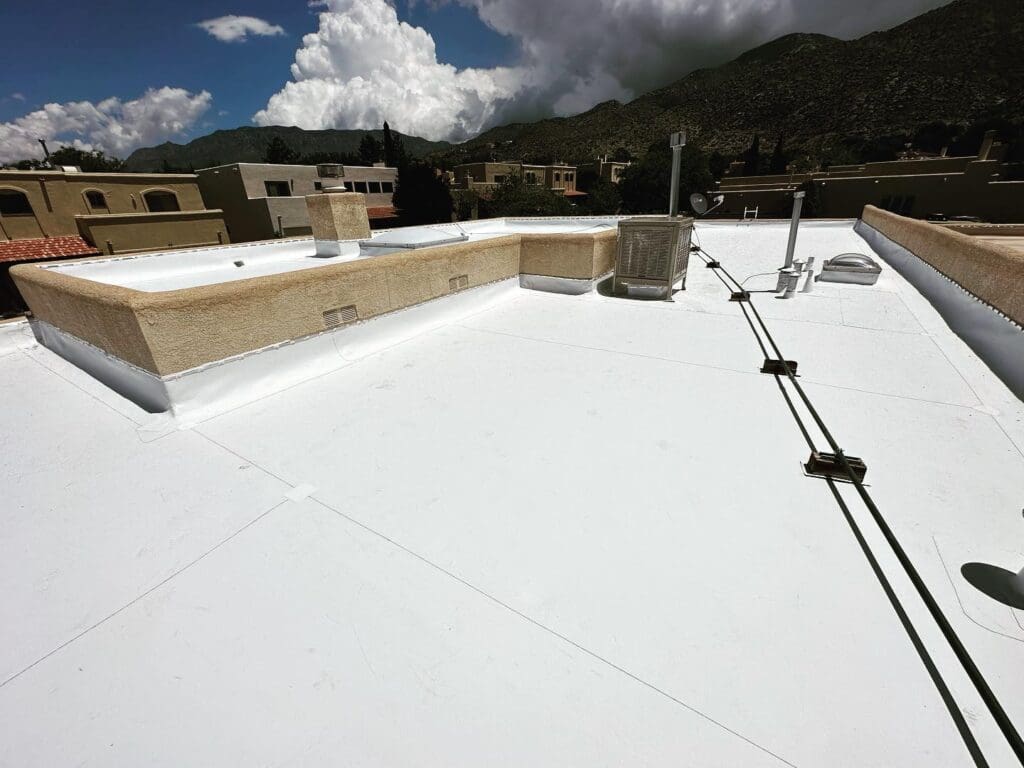
White TPO membrane is highly reflective. In New Mexico's sunny climate, a reflective roofing surface can help reduce the amount of solar heat absorbed by the roof compared with darker roofing materials.
Why Is TPO Roofing a Good Choice for New Mexico?
A roofing system in New Mexico faces conditions that can be very different from roofs in milder climates.
Commercial roofs throughout Albuquerque, Santa Fe, and Central and Northern New Mexico can experience intense ultraviolet exposure, high summer temperatures, sudden monsoon storms, hail, strong winds, dramatic daily temperature changes, snow at higher elevations, and repeated freeze-thaw cycles.
TPO can be an excellent roofing option when the roof is properly designed, installed, flashed, drained, and maintained.
Reflective Surface for Intense New Mexico Sun
One of TPO's most recognizable characteristics is its white reflective surface.
New Mexico receives intense sunlight, and prolonged solar exposure can significantly heat a roofing system. A reflective TPO membrane can reduce solar heat absorption at the roof surface and may help improve the building's overall cooling performance.
The actual energy performance of a building depends on many factors, including insulation, HVAC efficiency, roof design, building construction, and how the property is used.
Durable Single-Ply Membrane
TPO provides a durable protective membrane over a commercial or low-slope roof assembly.
It is designed to withstand normal rooftop exposure while providing protection against water intrusion when properly installed and maintained.
Like any roofing system, however, TPO can still be damaged by severe weather, falling or wind-blown debris, rooftop equipment, construction work, HVAC servicing, sharp objects, and excessive rooftop traffic.
Heat-Welded TPO Seams
TPO is a thermoplastic membrane.
During installation, overlapping sections of compatible membrane can be joined with specialized hot-air welding equipment. Proper seam installation is critical because seams are an important part of the roof's resistance to water intrusion.
The quality of the entire installation—not simply the membrane itself—plays an important role in long-term roof performance.
TPO Roofing for Commercial Buildings
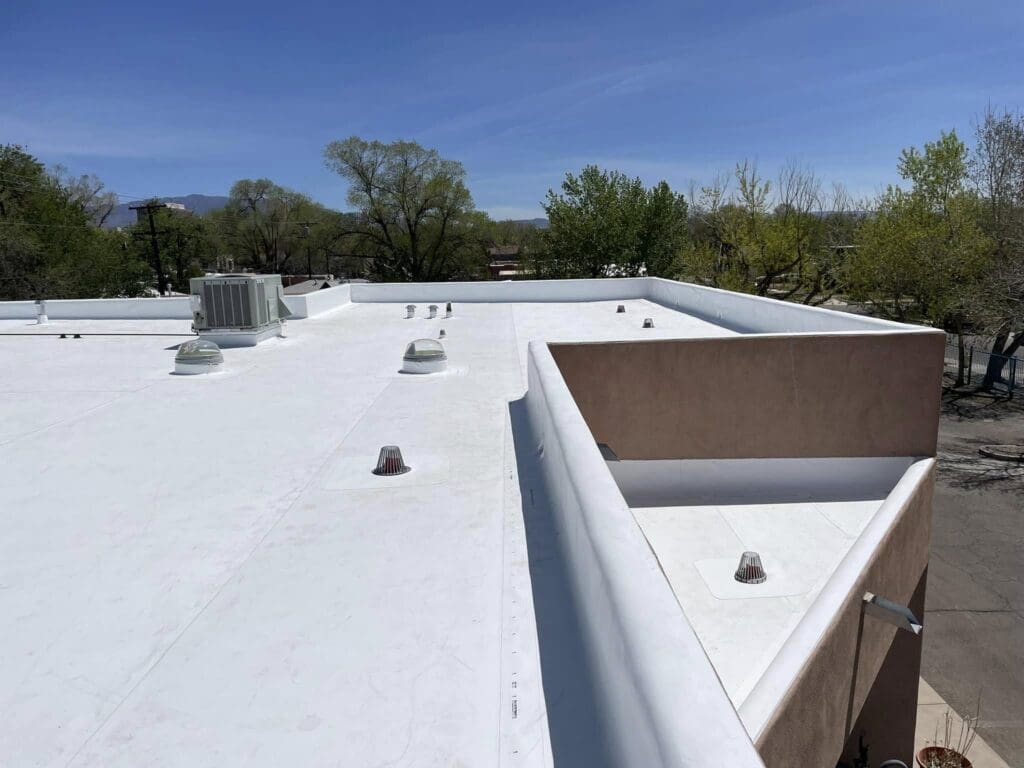
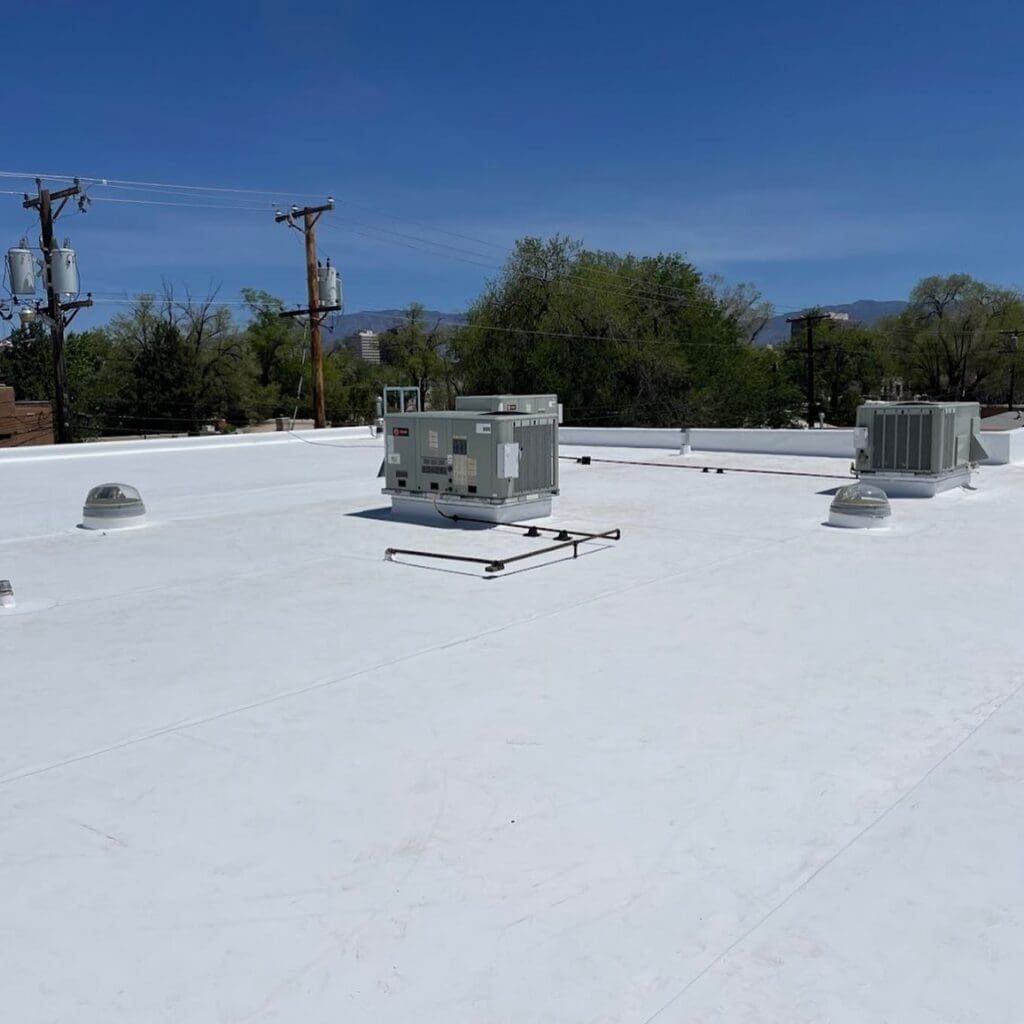
TPO is commonly used on commercial flat and low-slope roofs because large membrane sheets can cover substantial roof areas while accommodating penetrations, equipment, curbs, drains, scuppers, roof edges, and other commercial roof details.
Rocky Mountain Roofing Services provides TPO roofing services for commercial property owners, property managers, facility managers, HOAs, churches, industrial properties, multi-family properties, general contractors, and other New Mexico building owners.
Our TPO roofing services include:
- TPO roof installation
- TPO roof replacement
- TPO roof repair
- TPO leak detection
- TPO roof inspections
- TPO seam repair
- TPO flashing repair
- TPO membrane repair
- TPO storm damage assessment
- TPO hail damage inspection
- TPO drainage evaluation
- TPO preventative maintenance
- Commercial roof restoration evaluations
TPO Roof Installation
A successful TPO roof depends on much more than rolling membrane across the surface of a building.
The roofing assembly must work as a complete system.
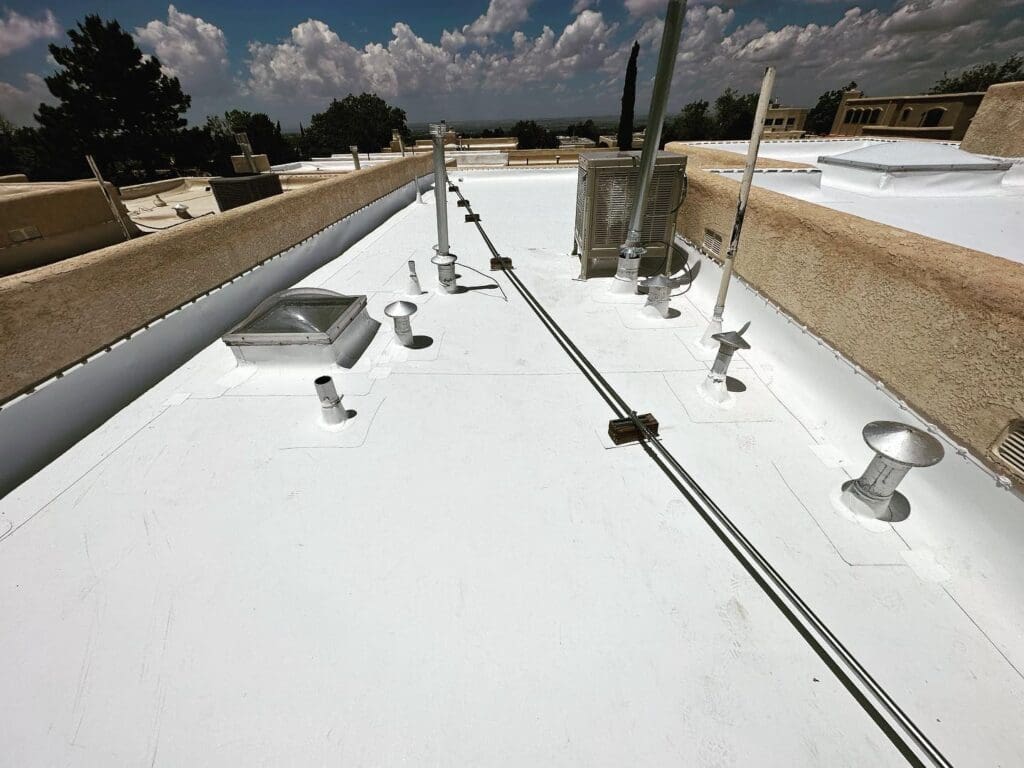
Depending on the building and project requirements, a professional TPO roofing installation may involve evaluation and preparation of the roof deck, insulation, attachment system, membrane, seams, roof edges, drainage components, penetrations, flashing, HVAC curbs, walls, vents, pipes, and other rooftop details.
Proper drainage is especially important on flat and low-slope roofs.
Water should be directed efficiently toward drains, scuppers, gutters, or other designed drainage points. A high-quality membrane cannot compensate indefinitely for significant drainage or structural problems underneath it.
Rocky Mountain Roofing Services evaluates each property individually rather than recommending a one-size-fits-all roofing system.
TPO Roof Repair
Can a TPO roof be repaired? In many cases, yes.
A leaking or damaged TPO roof does not automatically need to be replaced.
Many TPO problems can potentially be repaired when the damage is localized and the surrounding membrane and roofing assembly remain serviceable.
Common repairable TPO problems can include:
- Small membrane punctures
- Isolated open seams
- Localized flashing failures
- Leaks around HVAC curbs
- Damaged areas around pipes and vents
- Roof penetration problems
- Certain roof-edge problems
- Localized storm damage
- Some areas of wet insulation
- Certain drainage-related problems
The important question is not simply whether a TPO roof is leaking.
The better questions are:
Where is the water entering? How much of the roofing system has been affected? And will repairing the damaged area provide dependable long-term performance?
That is why professional leak detection and roof inspection should come before the repair recommendation.
Can a Puncture in a TPO Roof Be Repaired?
Often, yes.
Because TPO is an exposed single-ply membrane, punctures can occur from dropped tools, HVAC maintenance, sharp equipment, loose fasteners, construction activity, debris, storm damage, or repeated rooftop traffic.
A small puncture does not necessarily justify replacing an otherwise serviceable roofing system.
When conditions allow, the damaged area can be properly prepared and compatible TPO repair material can be installed and heat-welded to suitable existing membrane.
The surrounding roof must first be evaluated to make sure it remains suitable for repair.
Can an Open TPO Seam Be Repaired?
Some open or damaged TPO seams can be repaired.
An isolated seam problem is very different from seam failures occurring throughout an entire roofing system.
When one seam has been affected, a roofing professional can evaluate the surrounding membrane and determine whether an appropriate repair can be made.
When multiple seams are failing in different areas of the roof, the problem deserves a more comprehensive evaluation.
Repeatedly repairing individual seams may provide poor long-term value if the overall roofing system is deteriorating.
TPO Flashing and Roof Penetration Repair
Many commercial roof leaks develop around roof details rather than through an undamaged section in the middle of the membrane.
Important areas include:
- HVAC curbs
- Pipes
- Vents
- Skylights
- Roof drains
- Scuppers
- Walls
- Roof edges
- Equipment supports
- Other penetrations and transitions
When flashing damage is localized and the surrounding TPO remains serviceable, the affected flashing can often be repaired or rebuilt.
The objective should be to correct the detail that actually failed—not simply cover the area with another temporary patch.
TPO Roof Leak Detection
Finding an interior water stain does not necessarily tell you where water entered the roofing system.
Water can travel through insulation, along structural components, or within other parts of the roof assembly before becoming visible inside a building.
That means applying repair material directly above an interior water stain may not solve the problem.
Professional TPO leak detection may include evaluation of:
- Membrane condition
- Heat-welded seams
- Flashing
- HVAC curbs
- Pipes and vents
- Roof penetrations
- Drains and scuppers
- Ponding areas
- Previous repairs
- Soft areas
- Roof edges
- Interior water damage
- Suspected moisture beneath the membrane
When appropriate, additional moisture-detection or infrared evaluation may help determine whether water has spread underneath the visible roofing surface.
Can Wet Insulation Under TPO Be Repaired?
Sometimes.
Wet insulation beneath a TPO roof does not automatically mean every square foot of membrane and insulation must be removed.
When moisture is confined to a definable area, affected roofing materials may potentially be removed back to dry boundaries, damaged insulation replaced as appropriate, and the membrane restored.
The situation changes when moisture has spread through substantial portions of the roof assembly.
Extensive trapped moisture can affect insulation performance and other roofing components and may eventually contribute to problems with the roof deck or substrate.
This is one reason determining the extent of moisture intrusion is so important before deciding between TPO roof repair and TPO roof replacement.
TPO Roofing and Ponding Water
Ponding water should not automatically be treated as a membrane failure.
The first question is:
Why isn't the water draining?
Potential causes include:
- Clogged roof drains
- Blocked scuppers
- Accumulated debris
- Insufficient roof slope
- Settled or compressed insulation
- Structural deflection
- Drainage design problems
- Previous roof modifications
Some drainage problems can be corrected without replacing the entire TPO roof.
Others may indicate larger problems involving insulation, slope, drainage design, or underlying structural components.
Simply patching the membrane does not correct poor drainage.
TPO Roof Hail Damage
New Mexico's spring and summer storms can expose commercial TPO roofs to significant hail.
The amount of damage depends on more than hailstone size.
Roof performance can also be influenced by wind speed, impact angle, membrane condition and thickness, insulation, cover board, substrate, and the construction of the overall roof assembly.
Localized hail damage may sometimes be repairable.
Widespread impact damage requires a different evaluation.
Following a significant hailstorm, a commercial roof should not be judged solely by whether water is currently entering the building. An inspection may reveal punctures, membrane damage, flashing problems, or other conditions that are difficult to identify from the ground.
TPO Roof Wind Damage
High winds are another significant roofing concern throughout Albuquerque, Santa Fe, and much of New Mexico.
Wind can affect:
- Roof edges
- Flashing
- Attachment points
- Membrane areas
- Penetrations
- Rooftop equipment details
Wind-blown debris can also puncture exposed TPO membrane.
An isolated area of wind damage may be repairable. Damage involving substantial portions of the membrane, perimeter attachment, or other critical roofing components may require a more extensive solution.
TPO Roof Repair vs. Replacement
One TPO roof leak does not automatically mean the roof needs replacement.
The condition and extent of damage are generally more important than the existence of a leak by itself.
Repair may make sense when there is:
- One small membrane puncture
- An isolated open seam
- Localized flashing damage
- One leaking penetration
- Limited wet insulation
- Correctable drainage trouble
- Localized hail or wind damage
- An otherwise serviceable roofing system
TPO roof replacement should receive stronger consideration when there is:
- Widespread membrane deterioration
- Extensive wet insulation
- Multiple failing seams
- Chronic drainage problems
- Significant roof deck or substrate damage
- Widespread storm damage
- Recurring leaks in unrelated areas
- Numerous previous repairs
- A roofing system that can no longer reliably support additional repairs
Age alone should not determine whether a TPO roof is replaced.
An older roof that has been properly installed and maintained may still have useful service life. A newer roof can develop serious problems because of poor installation, storm damage, mechanical damage, drainage problems, or neglected maintenance.
The roof's actual condition should drive the decision.
TPO Roof Replacement
There comes a point when repeatedly repairing an aging or deteriorated roofing system may no longer provide good long-term value.
If a commercial property is experiencing recurring leaks, widespread wet insulation, multiple seam failures, significant membrane deterioration, chronic drainage issues, or deterioration of underlying components, TPO roof replacement may become more practical than continuing to address one problem at a time.
Rocky Mountain Roofing Services evaluates the complete roofing system before recommending replacement.
Our goal is not to sell the largest roofing project. It is to determine which solution makes the most practical sense for the building's condition and long-term roofing needs.
TPO Roof Inspections
Regular roof inspections can identify developing problems before they turn into major leaks or emergency repairs.
A professional TPO roof inspection may evaluate:
- Membrane condition
- Seams
- Flashing
- Roof penetrations
- HVAC curbs
- Roof edges
- Drains and scuppers
- Ponding water
- Previous repairs
- Signs of moisture
- Storm damage
- Rooftop traffic damage
- Insulation or substrate concerns
- Overall drainage performance
Commercial roofs should also be inspected following significant hail, high winds, or other severe weather events.
TPO Roof Maintenance
Preventative maintenance can help extend the useful life of a TPO roofing system and identify problems while they are still manageable.
Recommended maintenance can include:
- Regular professional roof inspections
- Post-storm inspections
- Roof drain and scupper cleaning
- Debris removal
- Flashing inspections
- Monitoring roof penetrations
- Prompt repair of membrane damage
- Checking previous repair areas
- Monitoring ponding water
- Controlling unnecessary rooftop traffic
Maintenance is particularly important for commercial buildings with HVAC equipment or other rooftop systems because service technicians and contractors may regularly walk across the membrane.
Is TPO Roofing Right for Your Building?
TPO can be an excellent option for many commercial and low-slope roofs, but no roofing material is automatically the best choice for every building.
Before recommending TPO, a roofing professional should consider factors such as:
- Existing roofing system
- Building construction
- Roof slope
- Drainage
- Insulation requirements
- Rooftop equipment
- Penetrations
- Building use
- Existing moisture
- Roof condition
- New Mexico weather exposure
- Long-term maintenance requirements
Rocky Mountain Roofing Services also works with other commercial roofing and flat roofing systems, allowing our roofing professionals to evaluate the building and recommend a system based on actual project conditions rather than forcing every property into the same solution.
Why Choose Rocky Mountain Roofing Services for TPO Roofing?
Rocky Mountain Roofing Services is a locally owned and operated New Mexico roofing contractor serving Albuquerque, Santa Fe, and surrounding communities.
Our team brings more than 35 years of combined roofing experience to residential and commercial roofing projects.
Property owners choose Rocky Mountain Roofing Services for:
- Extensive commercial roofing experience
- TPO and flat roofing expertise
- Local knowledge of New Mexico roofing conditions
- Professional roof inspections
- TPO leak detection
- TPO repair and replacement
- Preventative roof maintenance
- Storm and hail damage assessments
- Honest recommendations
- Quality workmanship
- Long-term roofing solutions
We believe an inspection should determine whether a roof needs repair, restoration, maintenance, or replacement—not a predetermined sales recommendation.
TPO Roofing in Albuquerque
Albuquerque's combination of intense sunshine, high elevation, summer monsoon storms, hail, strong winds, and significant temperature swings creates demanding conditions for commercial roofing systems.
Rocky Mountain Roofing Services provides TPO roofing in Albuquerque for commercial buildings and low-slope properties throughout the metro area.
Services include TPO roof installation, TPO repair, TPO replacement, leak detection, inspections, storm damage assessments, drainage evaluation, and preventative maintenance.
TPO Roofing in Santa Fe
Santa Fe roofing systems face many of the same intense UV, hail, wind, and monsoon conditions as Albuquerque while also experiencing colder winter temperatures, snow, higher elevations, and freeze-thaw cycles.
Rocky Mountain Roofing Services provides TPO roofing in Santa Fe for commercial and low-slope properties requiring installation, repair, replacement, inspections, leak detection, and preventative maintenance.
Frequently Asked Questions About TPO Roofing
What is TPO roofing?
TPO stands for thermoplastic polyolefin. It is a flexible single-ply roofing membrane commonly used on commercial and low-slope roofing systems. TPO is known for its reflective surface, heat-welded seams, durability, and energy-efficiency potential.
Is TPO good for commercial flat roofs?
TPO can be an excellent option for many commercial flat and low-slope roofs. The right roofing system depends on the building, drainage, insulation, rooftop equipment, existing roofing conditions, and long-term performance requirements.
Can a leaking TPO roof be repaired?
Yes. Many TPO roof leaks can be repaired when the problem is localized and the surrounding membrane and roofing assembly remain serviceable. The source and extent of water intrusion should be identified before deciding on a repair.
Can a puncture in TPO roofing be repaired?
Often, yes. When the surrounding membrane is suitable, a damaged area can typically be prepared and compatible TPO repair material installed and heat-welded to the existing membrane.
Can an open TPO seam be repaired?
An isolated open seam can often be repaired when the surrounding membrane remains serviceable. Multiple seam failures throughout a roof may indicate a larger problem requiring a more comprehensive evaluation.
Does one TPO roof leak mean I need a new roof?
No. One leak can result from a puncture, flashing failure, seam problem, penetration, drainage issue, or another localized defect. The roofing system should be inspected before assuming complete replacement is necessary.
Can hail-damaged TPO roofing be repaired?
Localized hail damage may sometimes be repairable. Widespread impact damage can require more extensive repair or replacement. A professional inspection can determine how much of the roofing system was affected.
Can ponding water be fixed without replacing a TPO roof?
Sometimes. A clogged drain or blocked scupper may be relatively straightforward to correct. Ponding caused by widespread slope, insulation, drainage design, or structural problems can require more substantial corrective work.
Can wet insulation under TPO be replaced without replacing the entire roof?
Sometimes. If moisture is confined to a limited area, affected materials may potentially be removed back to dry boundaries and replaced. Extensive moisture throughout the roofing assembly can make a larger repair or replacement more practical.
When should a TPO roof be replaced instead of repaired?
Replacement becomes more practical when deterioration affects substantial portions of the roofing system. Warning signs include widespread membrane deterioration, extensive wet insulation, recurring leaks, multiple failing seams, major substrate problems, chronic drainage issues, and an increasing history of repairs.
Does the age of a TPO roof determine whether it needs replacement?
No. Age is only one consideration. Membrane condition, seams, flashing, moisture, drainage, repair history, storm exposure, installation quality, substrate condition, and maintenance history should also be considered.
How often should a TPO roof be inspected?
Regular professional inspections and post-storm inspections are an important part of preventative TPO maintenance. Inspection frequency can vary depending on roof condition, building use, weather exposure, rooftop traffic, and maintenance history.
Can a TPO roof be restored or coated instead of replaced?
Possibly. Some TPO roofs may be candidates for restoration or a compatible coating system. The membrane, moisture levels, seams, flashing, adhesion, drainage, substrate, previous repairs, and compatibility with the proposed restoration system should be evaluated first.
Request a TPO Roof Inspection or Estimate
If your TPO roof is leaking, punctured, holding water, showing signs of seam or flashing problems, or requiring repeated repairs, don't assume the entire roof automatically needs replacement.
Start by finding out what is actually happening with the roofing system.
Rocky Mountain Roofing Services provides TPO roof inspections, repairs, replacement, installation, leak detection, storm damage assessments, and preventative maintenance throughout Albuquerque, Santa Fe, and surrounding New Mexico communities.
With more than 35 years of combined roofing experience, our roofing professionals evaluate each roof individually and focus on dependable, long-term solutions.
Call Rocky Mountain Roofing Services at (505) 717-1925 to request a free roof inspection or free roofing quote.
Request an Inspection or Estimate for Your TPO Roof
Complete the form below, and Rocky Mountain Roofing Services will contact you to discuss your project and schedule a time to inspect your roof.
GET QUOTE
Request an Inspection or Estimate for your Roofing Repair or Replacement
Please complete the form below. We will contact you promptly to discuss your project and schedule a time to come see your roof.
Need help right away? Tap on the TAP TO CALL button below to talk to us immediately