
How Do I Know If My Commercial Roof Has Wet Insulation?

You usually cannot confirm wet commercial roof insulation just by looking at the roof or waiting for water to drip inside the building. Recurring leaks, soft or spongy areas, blistering, repeated repairs, ceiling stains, or unexplained changes in roof performance can justify a moisture investigation, but none of those clues proves by itself that the…
Read MoreWhy Is My Roof Leaking Around a Skylight?
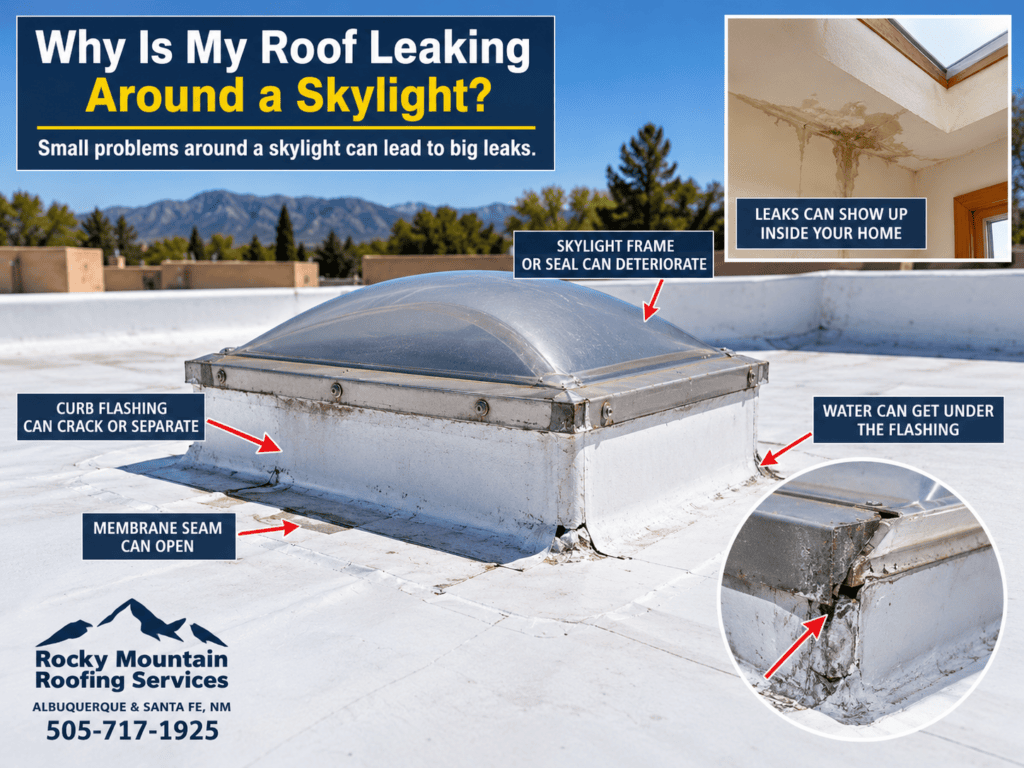
Rocky Mountain Roofing Services Albuquerque • Santa Fe • Central and Northern New Mexico | 505-717-1925 Direct Answer: Water around a skylight often comes from the weatherproofing around the opening – flashing, underlayment, a curb or the surrounding roofing – but the skylight frame or glazing can also leak, and interior condensation can imitate a…
Read MoreHow Can I Tell If Roof Flashing Is Causing a Leak?
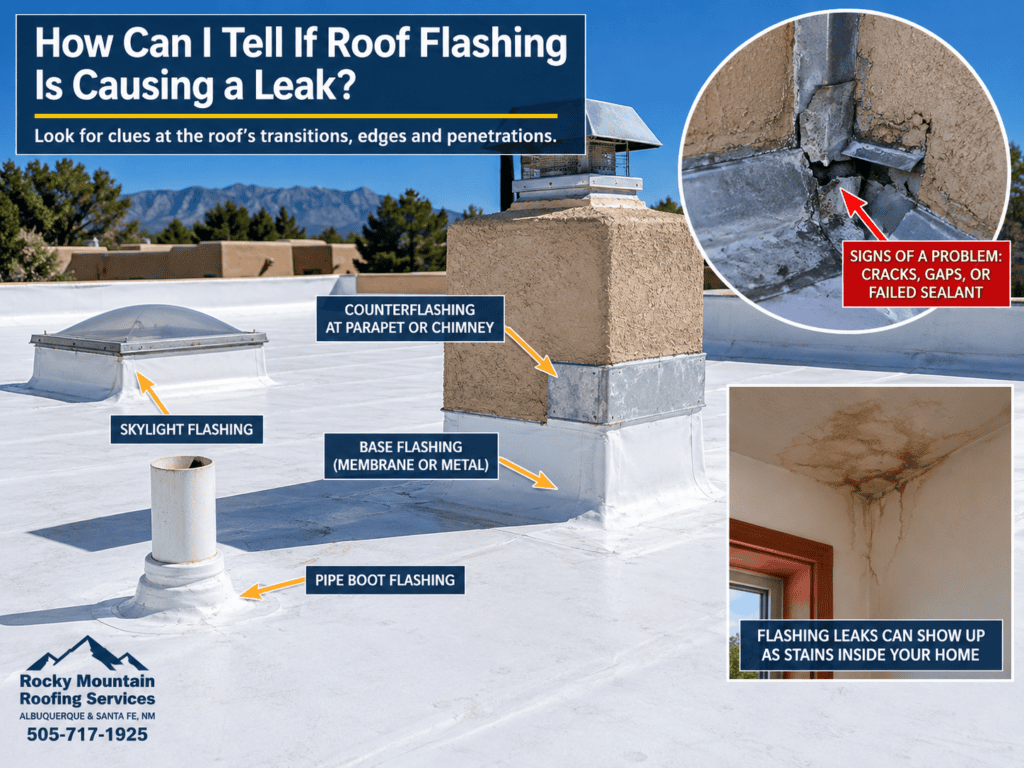
Roof flashing is a strong suspect when a leak appears near a place where the roof changes direction, meets a wall, or surrounds a penetration such as a chimney, skylight, plumbing vent, or rooftop HVAC curb. Visible separation, an open lap, cracked or hardened sealant, corrosion, a deteriorated pipe boot, loose metal, or membrane pulling…
Read MoreWhy Is My Roof Leaking Around a Plumbing Vent Pipe?
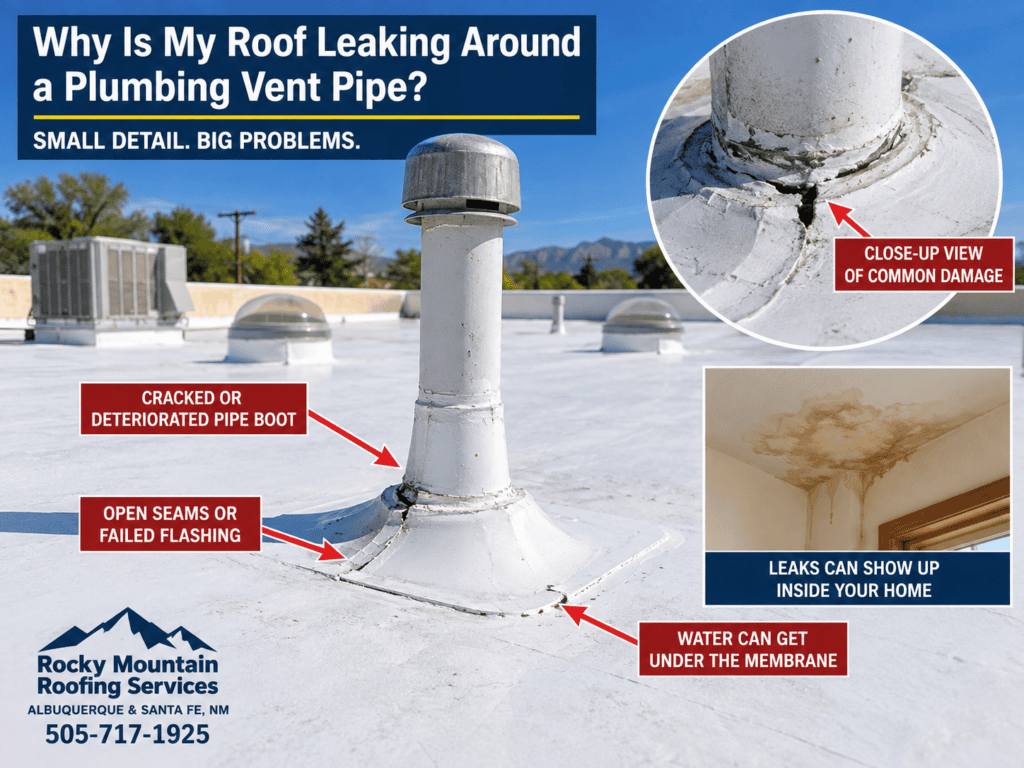
Rocky Mountain Roofing Services | Albuquerque & Santa Fe, New Mexico Direct answer: A roof leak near a plumbing vent pipe usually means water is getting past the weatherproofing where the pipe penetrates the roof—not that the plumbing vent itself is necessarily leaking. On a shingle roof, the problem may involve a cracked pipe boot,…
Read MoreShould I Have My Roof Inspected After a Hailstorm Even If It Is Not Leaking?
Yes. After a significant hailstorm, having your roof professionally inspected can be worthwhile even when nothing is leaking inside your home or building. A dry ceiling tells you that water is not reaching that interior location now. It does not tell you whether hail affected shingles, tile, a roof membrane, foam or coating, flashing, vents,…
Read MoreCan a Rooftop Swamp Cooler Cause a Roof Leak Even When the Cooler Is Off?
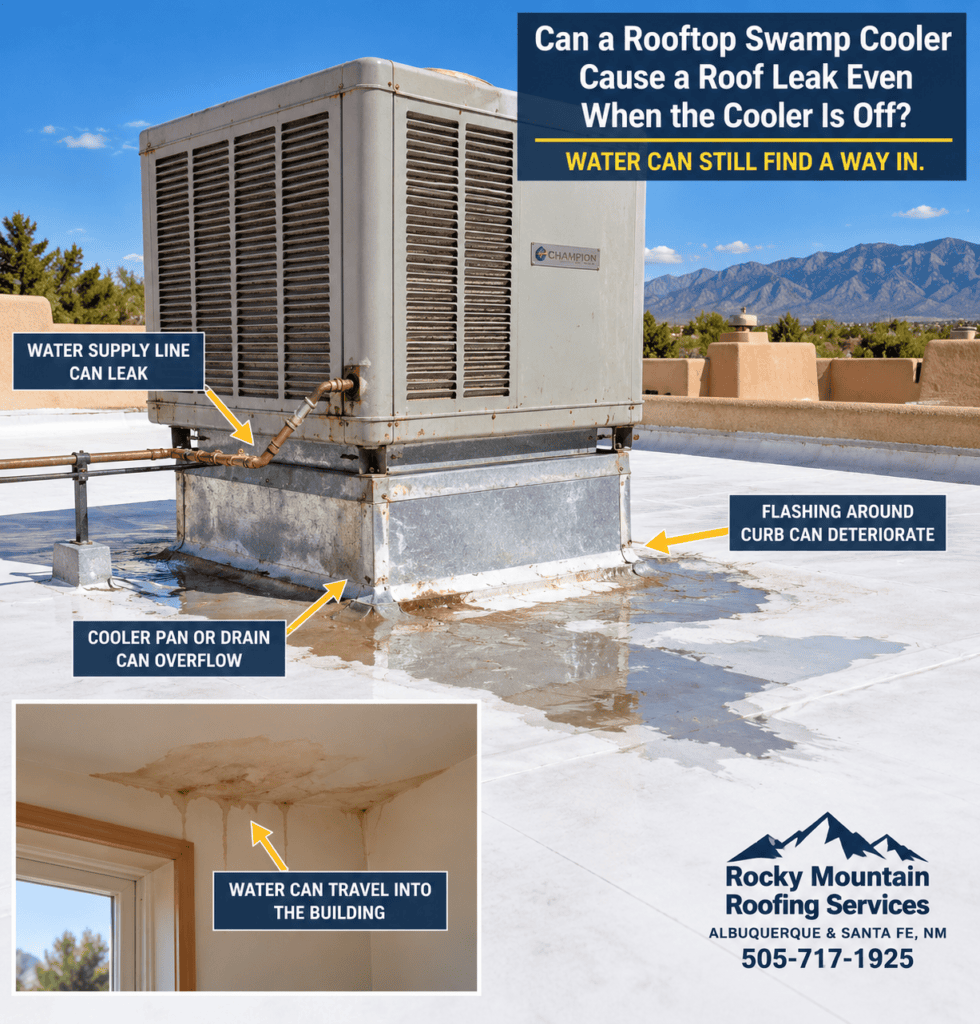
Yes. A rooftop swamp cooler can still be associated with a roof leak even when the cooler is turned off. The reason is simple: switching off the fan or pump does not necessarily shut off the water supply, empty the cooler pan, or stop rain from entering around the roof penetration. That distinction is especially…
Read MoreWhy Does My Commercial Roof Keep Leaking in Different Places?
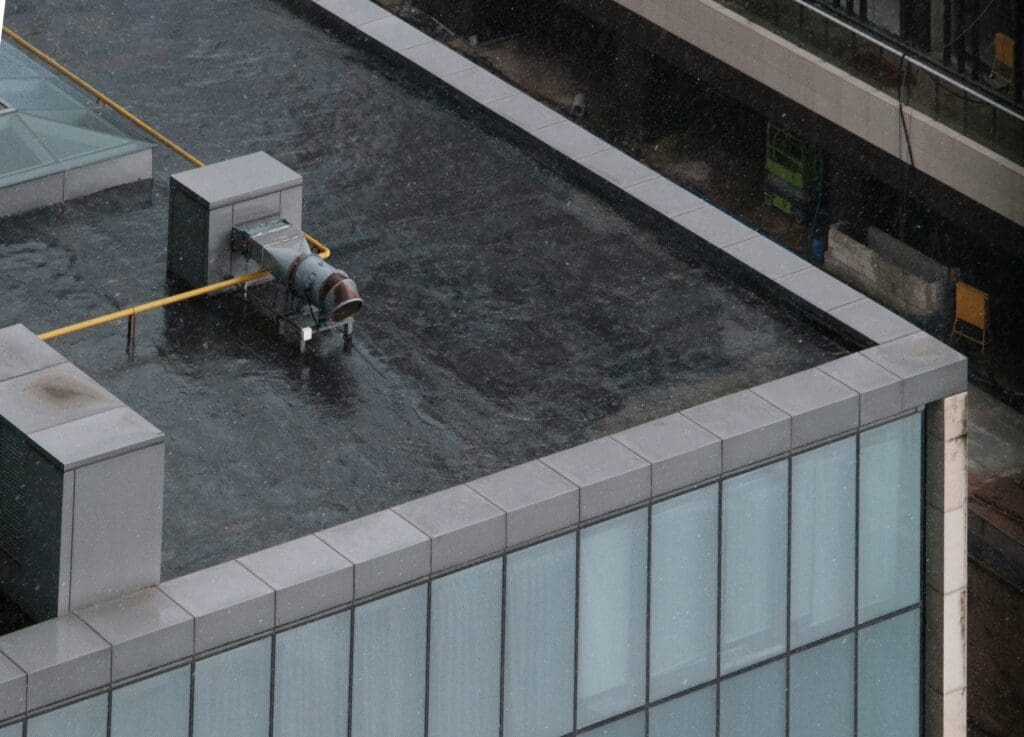
A commercial roof that keeps leaking in different places may have several separate defects, one exterior entry point with water traveling inside the roof assembly, concealed moisture that is redistributing, or a non-roof source such as HVAC condensate, plumbing, wall leakage, or condensation. The changing ceiling location by itself cannot tell you which explanation is…
Read MoreCan a Cracked Canale Cause Water to Leak Into a Wall?
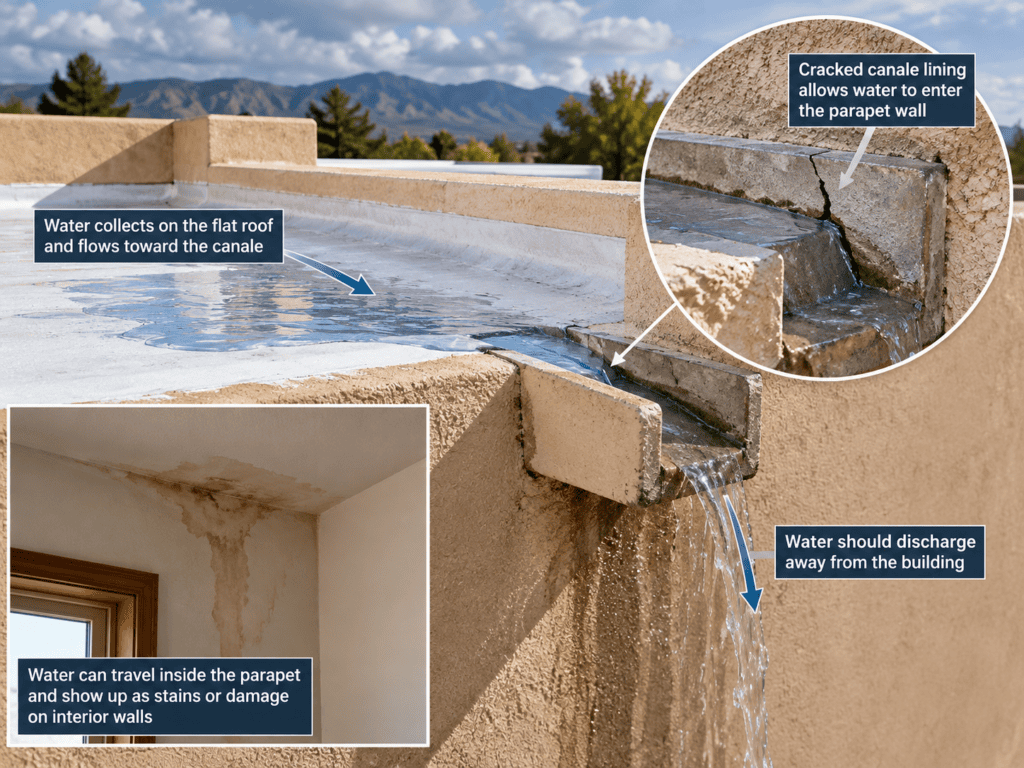
Yes. A cracked, deteriorated, or poorly flashed roof canale can allow rainwater to enter a parapet or exterior wall instead of carrying it safely away from the building. The risk is greater when the damage affects the water-carrying pan or lining, the canale throat where it passes through the parapet, or the flashing that ties…
Read MoreWhy Is My Flat Roof Leaking Around an HVAC Unit?
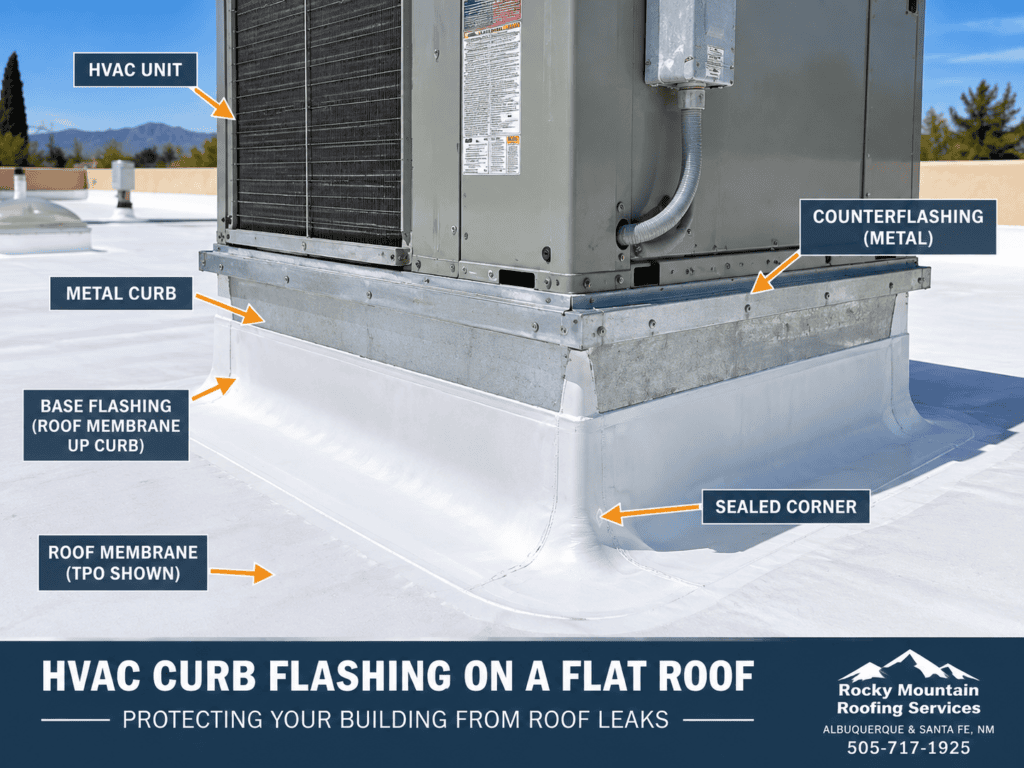
A flat roof leak that appears around a rooftop HVAC unit can come from the roof, the equipment, or the transition where the two meet. Common roof-side sources include deteriorated HVAC curb flashing, open membrane seams or corners, nearby penetrations, punctures, and water that ponds around the unit. Equipment-side sources can include condensate drainage or…
Read MoreWhy Is Water Backing Up Around My Roof Canale?
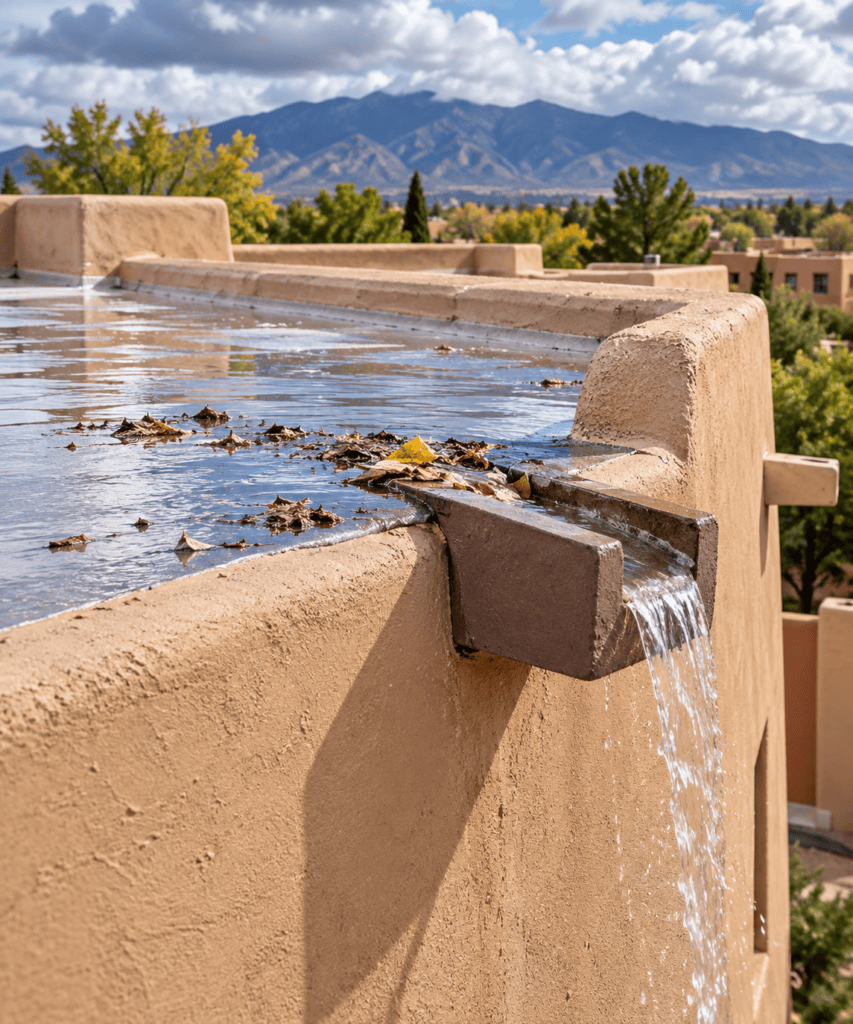
A New Mexico guide to canale drainage, ponding, flashing problems, and roof leaks Water backing up around a roof canale usually means water is not moving through that drainage outlet as intended. A partial blockage is one possibility, but it is not the only one. The opening may be restricted, the roof may not be…
Read More