
Why Is Water Coming Through My Parapet Wall After Rain or Snow?
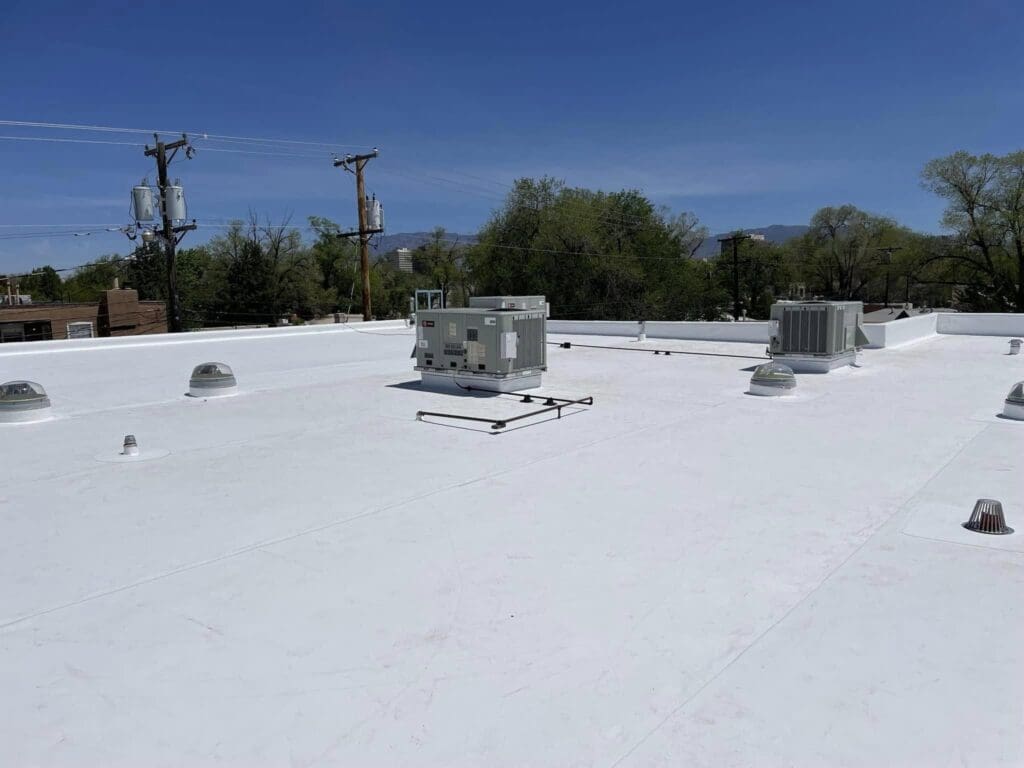
Water coming through a parapet wall after rain or snow usually means moisture has found a way past the wall’s protective roofing, flashing, or exterior finish. Possible entry points include damaged parapet caps, loose roof-to-wall flashing, cracked canales, deteriorated membrane connections, or openings in stucco.
The location of the water stain does not necessarily identify where the leak started. Moisture can travel along framing, masonry, or roof decking before appearing inside your home.
This is especially important in Albuquerque and Santa Fe, where flat roofs, stucco parapets, and canales are common. Summer thunderstorms can expose openings that remain unnoticed during light rain, while melting snow can produce leaks hours or even days after a storm.
Understanding how water enters a parapet wall can help you recognize warning signs and determine when professional roof repair is needed.
Why Does Water Enter Through a Parapet Wall?
A parapet is a short wall that extends above the roofline. On many Southwestern homes, it surrounds part or all of a flat roof and helps create the architectural appearance associated with New Mexico homes.
Although the wall may look solid, several components work together to keep water out. The top must shed moisture, the roof covering must connect properly to the wall, and drainage openings must carry water away without allowing it into the building.
A failure at any of these locations can cause a leak.
1. Damaged Parapet Caps or Coping
The top of a parapet wall is exposed directly to rain, snow, sunlight, and temperature changes.
Many parapets have a protective cap or coping made from metal, concrete, or another weather-resistant material. Its purpose is to direct water away from vulnerable parts of the wall.
Over time, joints may separate, protective materials may deteriorate, or cracks may develop.
Water entering through the top can move downward inside the wall before appearing as an interior stain.
A crack in the stucco below the cap may be visible, but the actual opening could be higher up.
2. Failed Roof-to-Wall Flashing
Where a flat roof meets a parapet, the roofing system must turn upward or connect to protective flashing.
This transition is one of the most important waterproofing details on the roof.
Depending on the roofing system, the connection may include a membrane upturn, termination components, metal flashing, or compatible protective coatings.
Problems can develop when flashing separates, a membrane termination loosens, or an opening forms at a joint.
Rainwater collecting near the wall can then reach the vulnerable connection.
A professional inspection should evaluate both the roof covering and the wall connection rather than assuming the visible stucco crack is responsible.
For more information, see How Can I Tell If Roof Flashing Is Causing a Leak?.
3. Cracked Canales or Scupper Openings
Many Albuquerque and Santa Fe flat roofs drain through canales, which are openings or projecting outlets that carry water through a parapet wall.
A canale may be made from metal or another suitable material. The surrounding waterproofing must connect securely to the roof and wall.
When the canale deteriorates or its connections fail, water may enter the parapet instead of flowing safely away from the building.
Potential trouble spots include cracks in the outlet, separated flashing, and gaps where the canale passes through the wall.
A water stain directly beneath a canale makes that area worth investigating, but it does not prove the canale itself is damaged.
Learn more in Can a Cracked Canale Cause Water to Leak Into a Wall?.
4. Cracked Stucco or Open Wall Joints
Stucco provides an exterior finish, but it should not be treated as the only protection against water intrusion.
Small surface cracks do not automatically mean water is entering the wall. However, wider cracks, separated joints, damaged wall caps, or failures in the underlying weather-resistant assembly can create potential entry paths.
Wind-driven rain may be particularly revealing because it strikes vertical surfaces that receive less direct exposure during ordinary rainfall.
The problem may involve the wall assembly rather than the roofing membrane.
In some cases, both a roofing contractor and a qualified stucco or building-envelope professional are needed to identify the full extent of the damage.
Why Does My Parapet Wall Leak After Snow but Not Every Rainstorm?
A parapet wall that leaks during snowmelt but remains dry during some rainstorms may have a problem involving prolonged moisture exposure, drainage, or freezing conditions.
Snow behaves differently from a short rainstorm.
Snow can accumulate along parapet walls and around drainage openings. As temperatures rise, melting snow releases water that may remain near vulnerable roof details for an extended period.
In Santa Fe and higher-elevation New Mexico communities, temperatures can also move above and below freezing over relatively short periods.
These changes may expose existing weaknesses in joints, flashing, and protective materials.
Snowmelt Can Cause Delayed Water Stains
Imagine snow accumulating against a parapet during a winter storm.
The following afternoon, sunlight warms the roof and melting begins. Water moves toward a canale, but snow or debris partially restricts the opening.
Moisture remains near the roof-to-wall connection. If that connection has an existing defect, water may enter the building.
An interior stain might not appear until later because moisture must travel through the assembly before becoming visible.
This explains why a homeowner may notice a damp wall after the snow has already disappeared.
However, delayed staining alone cannot establish the exact leak source.
Wind-Driven Rain Can Reveal Different Openings
Rain accompanied by strong wind may reach parapet surfaces, joints, and flashing details that ordinary vertical rainfall does not affect in the same way.
If a leak occurs primarily during storms with wind from one direction, record that observation.
It may help a roofing professional narrow the investigation, although the wind direction alone does not confirm where water entered.
How Can You Tell Where the Water Is Entering?
The best starting point is to document when the leak occurs, where moisture appears, and what changes during different weather conditions.
You do not need to climb onto the roof to collect useful information.
From a safe location, observe visible wall surfaces, accessible drainage discharge points, and interior stains.
The following clues can help guide a professional inspection.
| What you notice | Possible area to investigate |
| Water appears near the top of an interior wall | Parapet cap, upper wall joints, or roof-to-wall flashing |
| Staining develops below a canale | Canale outlet, surrounding flashing, or nearby drainage |
| Leaks appear after snow begins melting | Snow accumulation, drainage restrictions, or vulnerable roof-wall connections |
| Moisture appears mainly during windy rain | Exposed wall joints, coping, or flashing |
| Water remains on the roof near the parapet | Drainage slope, blocked outlets, or low areas |
| Staining continues during dry weather | Retained moisture or another source, such as plumbing or condensation |
These observations are clues, not a substitute for professional leak detection.
Why the Visible Stain May Be Misleading
Water rarely follows the path a homeowner expects.
For example, moisture may enter through a failed joint near the top of a parapet, move along the wall assembly, and emerge several feet away.
A ceiling stain near a roof drain might originate from a separate flashing defect.
This is why repairing the first visible crack does not always stop the leak.
An effective inspection follows the possible water pathways from the roof surface and wall cap toward the interior damage.
For additional background, read Albuquerque Parapet Wall Roof Leaks: How to Fix Flashing.
What Should You Do When Water Starts Coming Through the Wall?
Start by protecting the interior and recording what you observe.
- Move furniture and valuables away from the affected area when it is safe to do so.
- Photograph water stains, damp drywall, and any visible dripping.
- Record whether the leak began during rain, strong wind, active snowfall, or melting snow.
- Look for visible drainage problems from the ground without climbing onto the roof.
- Arrange a professional inspection if the leak is active, recurring, or spreading.
Avoid cutting into roofing materials, climbing onto icy or wet roofs, or applying sealant to an unidentified opening.
If water is near electrical outlets, fixtures, or wiring, keep clear of the area and obtain appropriate professional assistance. A sagging ceiling or significant water intrusion also warrants urgent attention.
Do not assume the problem is resolved simply because the wall dries after the storm.
How Is a Leaking Parapet Wall Repaired?
The repair depends on where water is entering and which part of the building assembly has failed.
A roofing professional may need to inspect the parapet cap, flashing connections, roofing membrane, canale openings, and drainage conditions.
If the problem involves deteriorated roof flashing, the repair may require restoring the waterproof connection between the roof and parapet.
A damaged canale may require repair or replacement along with appropriate waterproofing around the opening.
Where the roof drains poorly, correcting the leak may also involve evaluating water accumulation near the parapet.
For a more detailed discussion of drainage problems, see What Causes Ponding Water on a Flat Roof in New Mexico?.
If the source is damaged stucco, failed wall joints, or concealed wall waterproofing, a qualified building-envelope or stucco professional may need to participate.
Will Applying Roof Coating Stop the Leak?
Not necessarily.
A compatible coating can serve a useful purpose on certain roofing systems, but applying coating over an unidentified leak does not guarantee a repair.
If water is entering through a parapet cap, an open termination, or a damaged canale connection, coating the surrounding roof surface may leave the actual problem untouched.
Some concealed defects require more than surface treatment.
The existing roofing material, condition of the substrate, and manufacturer’s repair requirements should guide the work.
Does a Parapet Leak Mean the Entire Roof Needs Replacement?
No. A localized parapet leak does not automatically mean the entire roof has failed.
If the surrounding roofing system is in good condition, a targeted repair may be appropriate.
More extensive work may be necessary when damage is widespread, moisture has affected concealed materials, or multiple roofing components have deteriorated.
The decision should follow an inspection rather than the size of the visible interior stain.
See Can a Flat Roof Leak Be Repaired Without Full Replacement? for additional guidance.
Frequently Asked Questions About Parapet Wall Leaks
Can water travel sideways inside a parapet wall?
Yes. Water can move along joints, framing, and other building materials before reaching the interior. The stain may appear some distance from the original opening.
Does a stain below a canale mean the canale is leaking?
Not always. The canale, surrounding flashing, roof membrane, and nearby wall assembly should all be considered. A stain’s location is useful evidence but does not establish the cause.
Should I seal cracks in my parapet wall myself?
Avoid treating an unidentified crack as the confirmed leak source. Surface sealant may not address a failed flashing connection or concealed waterproofing defect. An inappropriate repair can also complicate later inspection.
Should I call a roofer or a stucco contractor?
A roofing contractor is an appropriate starting point when the leak appears connected to roof drainage, flashing, canales, or the roof-to-wall transition. If the evidence points to the wall assembly or stucco, a qualified stucco or building-envelope specialist may also be needed.
Can a parapet wall leak even when the roof surface looks undamaged?
Yes. The main roof surface can appear intact while water enters through a termination, coping joint, drainage penetration, or another vulnerable detail.
Request a Parapet Wall Leak Inspection in Albuquerque or Santa Fe
Water entering through a parapet wall after rain or snow should be investigated before repeated moisture exposure causes additional damage.
Rocky Mountain Roofing Services provides roof inspections, leak detection, flashing repair, flat roof repair, and drainage-related roofing services throughout Albuquerque, Santa Fe, and surrounding New Mexico communities.
Whether the problem involves a roof-to-wall connection, a canale, or another roofing detail, identifying the source is the first step toward choosing an appropriate repair.
Contact Rocky Mountain Roofing Services at 505-717-1925 to discuss a parapet wall leak or request a professional roof evaluation.