
Can a Flat Roof Leak Be Repaired Without Full Replacement?
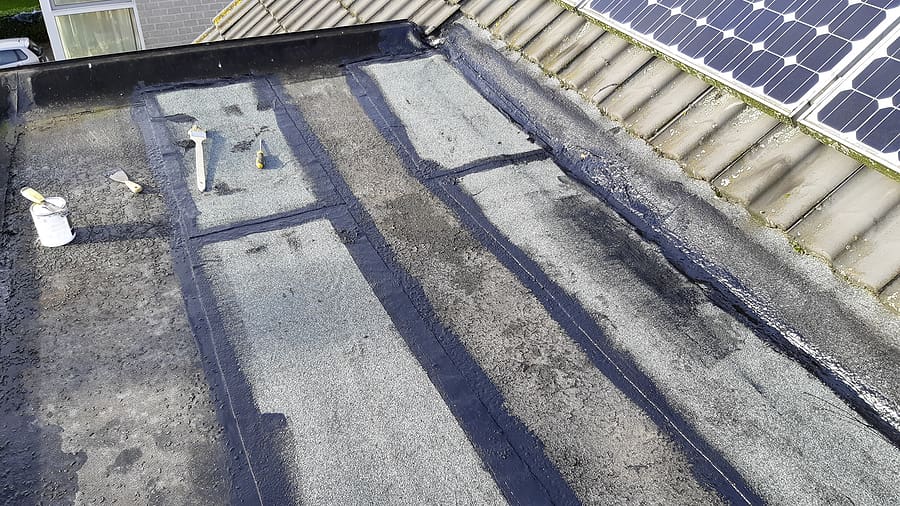
Yes. Many flat roof leaks can be repaired without replacing the entire roof, especially when the damage is limited to one area and the surrounding membrane, insulation, flashings, drainage system, and roof deck remain in serviceable condition.
A leak is a symptom. It is not a complete diagnosis of the roof.
Water may be entering through one failed flashing, an open TPO seam, a puncture, a deteriorated drain detail, a damaged roof penetration, or a small area of exposed spray foam. When the problem is identified early, a localized repair may stop the leak and extend the roof’s useful service life.
Replacement becomes more likely when the roof has leaks in multiple areas, widespread wet insulation, broad membrane deterioration, system-wide flashing failure, serious drainage problems, or damage to the underlying roof deck.
The decision should begin with a professional inspection—not the assumption that every leaking flat roof must be replaced.
Rocky Mountain Roofing Services provides flat roof inspections, leak detection, repair, restoration, maintenance, coatings, and replacement throughout Albuquerque, Santa Fe, and surrounding New Mexico communities. With more than 35 years of combined roofing experience, the company evaluates each roof individually and recommends the least extensive solution that can reasonably provide dependable long-term performance.
Why Does a Flat Roof Leak?
Flat roofs can leak for many different reasons. The likely source depends on the roofing material, installation quality, age, drainage, maintenance history, and exposure to New Mexico weather.
Common causes include:
- Failed flashing
- Open membrane seams
- Membrane punctures
- Damaged roof drains
- Loose roof edges
- Cracked roof coatings
- Exposed spray foam
- Failed pitch pockets
- Deteriorated HVAC curb details
- Parapet-wall damage
- Wind uplift
- Hail impact
- Ponding water
- Aging membrane
- Failed previous patches
- Poor original installation
Different roofing systems tend to develop different types of problems.
A TPO or PVC roof may leak through an open seam, puncture, or failed penetration detail. A spray polyurethane foam roof may develop exposed foam or coating damage. A built-up or tar and gravel roof may split, blister, or deteriorate beneath the aggregate surface. A modified-bitumen roof may crack or separate at laps and transitions.
Before a repair can be recommended, the contractor must first identify the roofing system and understand how that system was originally constructed.
Why Is the Ceiling Stain Not Always Directly Below the Roof Leak?
Property owners often assume the roof opening is directly above the ceiling stain. On a flat roof, that may not be true.
Water can travel:
- Through roof insulation
- Between membrane layers
- Across the roof deck
- Along steel or wood framing
- Around pipes and mechanical components
- Through wall cavities
- From a higher roof section
- Along conduits or ducts
By the time water becomes visible inside, it may have traveled several feet from the actual entry point.
This is one reason repeated patching can fail. A repair placed directly above the interior stain may cover an area that was never leaking while the real opening remains unaddressed.
A professional leak investigation compares interior water evidence with the roof’s drainage paths, penetrations, seams, flashings, previous repairs, and nearby equipment.
What Determines Whether the Roof Can Be Repaired?
The presence of a leak alone does not determine whether the roof should be repaired or replaced.
A roofing contractor should consider:
- The source of the leak
- The number of leak locations
- The size of the damaged area
- How far moisture has spread
- The condition of the membrane
- The condition of the insulation
- The condition of the roof deck
- Flashing condition
- Roof drainage
- Roof age
- Previous repairs
- Material compatibility
- Warranty requirements
- Planned building ownership
- Long-term use of the property
For example, a relatively old roof with one localized flashing failure may still be a good repair candidate. A much newer roof with widespread installation defects and saturated insulation may require extensive corrective work.
Age is important, but the roof’s actual condition is more important.
Which Flat Roof Leaks Can Often Be Repaired?
Many common flat roof problems can be addressed locally when the surrounding roofing system remains dry and stable.
Failed Flashing
Flashings protect areas where the roof meets walls, pipes, equipment, drains, and other components.
Common flashing locations include:
- Parapet walls
- Pipes
- Vents
- Skylights
- HVAC curbs
- Expansion joints
- Drains
- Scuppers
- Canales
- Roof edges
These details experience movement, concentrated water flow, temperature changes, and frequent service activity.
Common flashing failures include:
- Cracked wall transitions
- Loose counterflashing
- Failed sealants
- Open termination bars
- Deteriorated pitch pockets
- Separation around pipes
- Rusted metal
- Inadequate flashing height
- Poor previous repairs
A localized flashing defect may often be repaired without disturbing the rest of the roof. However, the failed detail may need to be rebuilt rather than covered with another layer of roofing cement.
Repeated surface patching may temporarily slow the leak while making the underlying problem harder to diagnose.
Open TPO or PVC Seams
TPO and PVC membranes are commonly joined through heat-welded seams.
Seams may fail because of:
- Incomplete original welding
- Surface contamination
- Incorrect welding temperatures
- Movement
- Inadequate fastening
- Mechanical damage
- Stress around penetrations
- Poor prior repairs
A localized open seam may often be repaired by cleaning and preparing the membrane, installing compatible material, heat welding the repair, and testing the completed seam.
These repairs require proper equipment and system-specific knowledge. Attempting to weld or seal a single-ply membrane without the correct materials and temperature controls may cause more damage.
Membrane Punctures
A small puncture can allow moisture to reach the insulation and spread beneath the roofing surface.
Punctures may be caused by:
- HVAC service
- Solar installation
- Electrical or plumbing work
- Dropped tools
- Sharp fasteners
- Windblown debris
- Hail
- Unprotected foot traffic
- Temporary rooftop equipment
When a puncture is identified early and the surrounding insulation remains dry, it may often be repaired with compatible reinforced membrane material.
The patch should extend beyond the damaged area and bond to clean, stable roofing.
A generic sealant should not be assumed to work on every roofing material. Product compatibility and surface preparation are critical.
Damaged Roof Penetrations
Every pipe, conduit, vent, line, and equipment support passing through a roof creates a potential leak location.
Problems may develop when:
- A penetration was installed after the roof.
- The original flashing has aged.
- Sealant has separated.
- A pitch pocket has deteriorated.
- Equipment movement stresses the detail.
- Service work damages the membrane.
- The penetration was flashed incorrectly.
A localized penetration repair may preserve the surrounding roof when the nearby membrane and insulation remain sound.
Roof Drain, Scupper, and Canal Leaks
A roof may leak around its drainage outlets because of:
- Loose drain components
- Failed clamping rings
- Cracked drain flashing
- Blocked drainage
- Failed sealants
- An outlet positioned too high
- Deteriorated scupper or canal lining
- Movement between the drain and roof deck
The repair may involve rebuilding the drain detail, replacing damaged flashing, correcting the clamping assembly, or improving water flow.
Cleaning a blocked drain may reduce ponding, but it will not correct a failed waterproofing connection. Both drainage and membrane condition must be evaluated.
Spray Foam Roof Damage
Spray polyurethane foam roofs can often be repaired locally when the surrounding foam remains dry, firmly adhered, and structurally stable.
Repairable damage may include:
- Small punctures
- Localized exposed foam
- Bird damage
- Minor hail impact
- Coating loss
- Damage around new penetrations
- Mechanical damage from rooftop work
The affected foam may be removed and rebuilt to match the original roof profile. A compatible protective coating is then applied over the repaired area.
The surrounding coating should also be inspected. One exposed area may indicate that the coating is becoming thin elsewhere.
Built-Up and Tar and Gravel Roof Damage
Built-up roofing, commonly called tar and gravel roofing, may develop localized:
- Splits
- Blisters
- Open laps
- Failed patches
- Exposed asphalt
- Damaged flashings
- Punctures
The gravel often needs to be moved so the membrane can be inspected.
A proper localized repair may involve removing deteriorated roofing, replacing wet insulation, installing reinforced repair plies, and restoring the protective aggregate or surface treatment.
The surrounding area should be inspected carefully because gravel can conceal broader membrane damage.
Modified-Bitumen Damage
Modified-bitumen roofs may develop:
- Open laps
- Surface cracking
- Punctures
- Failed flashings
- Blisters
- Deteriorated patches
- Damage at drains or penetrations
Localized repairs may be practical when the remaining membrane is flexible, bonded, and dry.
The repair method must match the particular modified-bitumen product and installation method.
Roof-Coating Damage
A coated roof may develop:
- Thin coating areas
- Cracks
- Peeling
- Localized adhesion failure
- Damage around penetrations
- Exposed substrate
- Small blisters
Localized coating repair may be possible if the surrounding coating is well adhered and compatible with the proposed product.
The repair process may require:
- Cleaning
- Drying
- Removing loose coating
- Repairing the substrate
- Applying primer
- Adding reinforcement
- Restoring the required coating thickness
A coating should not be used to hide saturated insulation, an unstable membrane, or a deteriorated deck.
Can Wet Roof Insulation Be Repaired Locally?
Sometimes.
If moisture is limited to one small section, the contractor may be able to remove the affected roofing and insulation, inspect the roof deck, install new insulation, and tie the repair into dry, stable materials.
The difficult part is determining where the wet area ends.
Water may spread well beyond the visible stain or puncture. A dry-looking roof surface does not prove the materials beneath it are dry.
Depending on the roofing system and building, moisture evaluation may involve:
- Visual inspection
- Interior inspection
- Infrared scanning
- Electronic moisture testing
- Core samples
- Test cuts
Not every project requires every method. The appropriate evaluation depends on the roofing system, weather conditions, building construction, and suspected damage.
A localized repair should extend to sound, dry materials. Covering saturated insulation with a new patch may contribute to:
- Recurring leaks
- Blistering
- Reduced insulation performance
- Corrosion
- Roof-deck deterioration
- Additional roof weight
When Is a Roof Coating or Restoration an Option?
A roof restoration system may extend the useful life of an existing roof without complete replacement.
Restoration may be appropriate when:
- The roof deck is structurally sound.
- Most insulation is dry.
- The membrane is stable.
- The surface can be properly prepared.
- Adequate coating adhesion can be achieved.
- Drainage is acceptable or correctable.
- Flashings and penetrations can be repaired.
- The coating is compatible with the existing system.
Restoration work may include:
- Rebuilding flashings
- Replacing localized wet areas
- Reinforcing seams
- Repairing punctures
- Correcting minor drainage problems
- Cleaning and preparing the roof
- Applying a compatible coating system
A roof coating is not an appropriate shortcut when:
- Insulation is widely saturated.
- The membrane is unstable.
- The roof deck has deteriorated.
- Existing coating is peeling throughout the roof.
- Severe ponding remains uncorrected.
- Materials are incompatible.
- The roof cannot provide a stable restoration surface.
Coating a wet or failing roof may hide the damage temporarily while deterioration continues beneath the surface.
When Does Partial Roof Replacement Make Sense?
Some roofs need more than a patch but less than complete replacement.
Partial replacement may be practical when:
- One drainage basin has failed.
- One addition has a different roofing system.
- Wet insulation is limited to a defined section.
- Damage is concentrated around equipment.
- Structural movement affects only one portion.
- Wind or hail damage is localized.
- One section was installed at a different time and has aged faster.
The connection between the new and existing roofing systems must be designed carefully. An improper transition may create a new leak location.
Partial replacement can provide a useful middle option when adjacent roof areas remain dry and serviceable.
When Is a Roof Recover Appropriate?
A roof recover involves installing an approved new roofing assembly over the existing roof instead of removing all existing materials.
A recover may reduce demolition, disposal, and disruption, but it is not right for every property.
Before recommending a recover, the contractor should consider:
- Number of existing roofing layers
- Moisture within the assembly
- Roof-deck condition
- Structural weight
- Building-code requirements
- Drainage
- Surface stability
- Insulation condition
- Manufacturer requirements
- Attachment methods
A recover should not be used simply to cover saturated insulation, widespread deterioration, or an unstable roofing system.
What Are the Signs That Repair May Not Be Enough?
Repair may not provide good long-term value when the roof shows broad or repeated failure.
Warning signs include:
- Leaks in several areas
- Widespread wet insulation
- Soft or unstable roof sections
- Repeated short-lived patches
- Extensive open seams
- Widespread coating failure
- Broad cracking or brittleness
- System-wide flashing deterioration
- Major drainage deficiencies
- Roof-deck corrosion or deterioration
- Several incompatible roof layers
- Extensive blistering
- Significant wind uplift
- Leaks after ordinary storms
- Repair costs approaching replacement cost
- A roof near the end of its practical service life
No single condition always decides the answer. The overall pattern is what matters.
A roof with several unrelated defects may technically be repairable, but a continuing cycle of temporary repairs may cost more than a planned replacement.
Repair, Restoration, Partial Replacement, Recover, or Full Replacement?
| Option | Best suited for | Main limitation | Primary goal |
| Localized repair | One or several isolated defects with stable surrounding materials | Does not correct unrelated aging elsewhere | Stop the leak and preserve the existing roof |
| Roof restoration | Stable roof with mostly dry insulation and repairable details | Requires compatible materials and good adhesion | Renew the weathering surface and extend roof life |
| Partial replacement | One failed section with sound adjacent roof areas | New and existing sections must connect properly | Replace only the failed portion |
| Roof recover | Suitable existing roof capable of supporting an approved new assembly | Not appropriate over widespread moisture or instability | Install a new surface without full tear-off |
| Full replacement | Widespread membrane, insulation, flashing, drainage, or deck failure | Greater initial scope and disruption | Install a complete long-term roofing system |
How Does New Mexico Weather Affect Flat Roof Repair?
Repairs in Albuquerque, Santa Fe, and other New Mexico communities must withstand the same conditions that contributed to the original damage.
Intense UV Exposure
Strong sunlight can dry asphalt, weaken exposed sealants, deteriorate coatings, and damage unprotected spray foam.
Repairs must be properly surfaced and protected from continued UV exposure.
High Roof-Surface Temperatures
Roof surfaces can become much hotter than the surrounding air. Repair materials must tolerate heat without softening, separating, or losing adhesion.
Daily Temperature Swings
Hot afternoons followed by cool nights create repeated expansion and contraction. Incompatible or overly rigid patches may crack as the roof continues to move.
Monsoon Rain
Sudden heavy rain can expose drainage and flashing defects quickly. The repair must address the full water path, not only the visible opening.
Hail
Hail may puncture membranes, bruise foam, fracture coatings, dent metal flashings, and damage skylights.
A professional inspection can determine whether the damage is localized or spread across the roof.
High Winds
Wind can lift membrane edges, open flashings, move gravel, and drive debris into the roof.
Roof perimeters and corners deserve particular attention after major wind events.
Snow and Freeze-Thaw Cycles
Santa Fe and higher-elevation communities may experience snow and repeated freezing and thawing.
Water that enters a small crack may freeze, expand, and gradually enlarge the defect.
How Long Can a Flat Roof Repair Last?
There is no universal lifespan for a flat roof repair.
Repair performance depends on:
- The condition of the surrounding roof
- Whether wet materials were removed
- Surface preparation
- Material compatibility
- Repair design
- Workmanship
- Drainage
- UV exposure
- Temperature movement
- Rooftop traffic
- Storm exposure
- Ongoing maintenance
A properly designed repair on a stable roof may provide meaningful additional service. A patch installed over wet insulation or deteriorated roofing may fail much sooner.
It is also important to distinguish a failed repair from a new defect somewhere else. Repairing one puncture cannot prevent an unrelated seam, flashing, or coating problem from developing later on an aging roof.
A contractor should explain what the repair addresses, what it does not address, and what maintenance the remaining roof may require.
Why Is a Professional Inspection Important?
A complete flat roof inspection may evaluate:
- Roofing membrane
- Seams
- Flashings
- Penetrations
- Roof edges
- Drains and scuppers
- Ponding areas
- Roof coatings
- Spray foam
- Previous repairs
- Insulation
- Roof deck
- Interior water evidence
- Rooftop equipment
The goal should not be to find the most expensive solution.
The goal is to identify the true cause and recommend the least extensive repair that can reasonably provide dependable performance.
Property owners should avoid unsafe rooftop inspection. Flat roofs may contain fall hazards, slippery coatings, electrical equipment, extreme surface heat, weak decking, or hidden soft areas.
What Does the Flat Roof Repair Process Include?
A professional repair process may include the following steps.
1. Review the Leak History
The contractor asks:
- When does the leak occur?
- Where does water appear?
- Has the roof been repaired before?
- Did the leak begin after a storm or rooftop service?
- Does it occur only during wind-driven rain?
2. Inspect the Interior
Ceiling stains, walls, equipment, framing, and visible deck conditions may provide clues about the water path.
3. Inspect the Roof
The contractor evaluates the membrane, flashings, seams, drains, penetrations, coatings, ponding areas, and surrounding details.
4. Identify the Probable Entry Point
Interior evidence is compared with roof construction and drainage paths.
5. Evaluate Moisture When Necessary
Moisture-detection tools, core samples, test cuts, or interior observations may be used where appropriate.
6. Explain the Options
The contractor may recommend:
- Localized repair
- Roof restoration
- Partial replacement
- Roof recover
- Full replacement
7. Remove Damaged Materials
Failed roofing and wet insulation are removed as needed.
8. Install Compatible Materials
The repair is tied into dry, stable sections of the existing system.
9. Review Drainage and Nearby Details
Related conditions are addressed so continued ponding or flashing failure does not undermine the repair.
10. Complete a Final Inspection
The repaired area and surrounding roof are reviewed.
11. Provide Maintenance Recommendations
The owner receives guidance on inspection frequency and future roof care.
How Should a Flat Roof Be Maintained After Repair?
Repair should be followed by preventative maintenance.
Recommended steps may include:
- Schedule professional inspections at least annually.
- Inspect after hail, wind, monsoon, snow, or freeze events.
- Keep drains, scuppers, and canales clear.
- Evaluate roof-coating condition.
- Check TPO and PVC seams.
- Inspect flashings and penetrations.
- Repair new punctures promptly.
- Monitor previous repair areas.
- Restrict unnecessary roof traffic.
- Use designated walkways where appropriate.
- Inspect after HVAC, solar, plumbing, or electrical work.
- Keep repair records and photographs.
A small defect found during maintenance is usually easier and less expensive to correct than an emergency leak that has spread into insulation, walls, or interior finishes.
Frequently Asked Questions
Can a flat roof leak be repaired without replacing the entire roof?
Yes. Many flat roof leaks can be repaired when the problem is localized and the surrounding roof remains dry, stable, and serviceable.
What flat roof leaks are commonly repairable?
Common repairable problems include failed flashings, open seams, punctures, damaged penetrations, drain leaks, small coating defects, and localized spray foam or asphalt-roof damage.
Why is the ceiling stain not directly below the roof opening?
Water may travel through insulation, across the roof deck, along framing, or through wall cavities before becoming visible.
Can an open TPO seam be repaired?
Often, yes. The seam must be cleaned and prepared before compatible material is heat welded and tested.
Can a punctured membrane be patched?
Yes, when the surrounding material remains stable. The repair should use reinforced materials compatible with the existing membrane.
Can a leaking spray foam roof be repaired?
Localized foam damage may often be removed, rebuilt, and recoated if the surrounding foam remains sound.
Can a tar and gravel roof leak be repaired?
Many localized built-up roof defects can be repaired. Gravel usually must be moved so the underlying membrane can be inspected.
Can wet insulation be replaced in only one area?
Sometimes. The contractor must locate the full wet area and extend the repair to dry and stable materials.
Can a leaking flat roof be recoated?
Possibly. The roof must be stable, mostly dry, compatible with the coating, and properly prepared.
Does ponding water mean the roof must be replaced?
Not automatically. Localized drainage problems may be corrected, while widespread slope or structural problems may require more extensive work.
When is partial replacement possible?
Partial replacement may be appropriate when one section has failed but adjacent areas remain dry and serviceable.
How long will a flat roof repair last?
Repair life depends on the surrounding roof, materials, preparation, drainage, workmanship, weather, and maintenance. No single lifespan applies to every repair.
Schedule a Flat Roof Inspection in Albuquerque or Santa Fe
A leaking flat roof does not automatically need to be replaced.
When a problem is identified early, a flashing repair, membrane patch, seam repair, drainage correction, foam restoration, coating repair, or partial replacement may be enough to stop the leak and extend the roof’s useful service life.
The longer water remains inside the roofing assembly, however, the greater the chance that moisture will spread through insulation, reach the roof deck, or damage interior finishes.
Rocky Mountain Roofing Services provides professional flat roof inspections, leak detection, repair, preventative maintenance, roof restoration, and complete replacement throughout Albuquerque, Santa Fe, and surrounding New Mexico communities.
With more than 35 years of combined roofing experience, the company evaluates each roof individually and recommends the least extensive solution that can reasonably provide dependable long-term performance.
Rocky Mountain Roofing Services
100 Mountain Park Place, Suite A
Albuquerque, New Mexico 87114
Santa Fe Office
150 Washington Avenue, Suite 201
Santa Fe, New Mexico 87501
Schedule a professional flat roof inspection before a localized leak spreads through insulation, decking, walls, or interior finishes.
Conclusion
Many flat roof leaks can be repaired without replacing the entire roof.
Localized flashing failures, open seams, punctures, drain problems, damaged penetrations, exposed spray foam, coating defects, and small areas of wet insulation may all be repairable when the surrounding roofing system remains stable.
The key is accurate diagnosis.
The location of an interior stain may not reveal the actual roof opening. Water can travel through insulation, across the roof deck, along framing, and around mechanical components before becoming visible inside.
A professional inspection should evaluate the membrane, flashings, seams, drains, penetrations, coatings, insulation, previous repairs, and roof deck before the scope of work is determined.
Localized repair is most practical when the defect can be identified, moisture is limited, compatible materials are available, and the surrounding roof has useful service life.
Restoration or recoating may be appropriate when the roof remains structurally sound, mostly dry, stable, and compatible with the proposed system. Partial replacement may work when one section has failed but adjacent areas remain serviceable.
Complete replacement becomes more likely when leaks occur throughout the building, insulation is broadly saturated, drainage problems affect large areas, flashings are failing system-wide, the membrane has become unstable, or repeated repairs no longer provide dependable performance.
The presence of a leak should lead to an inspection—not an automatic replacement decision.
An experienced New Mexico roofing contractor can determine whether localized repair, restoration, partial replacement, recover, or complete replacement offers the most practical long-term solution for the building and its owner.