What Roof Maintenance Should I Do Before the Albuquerque Monsoon Season?
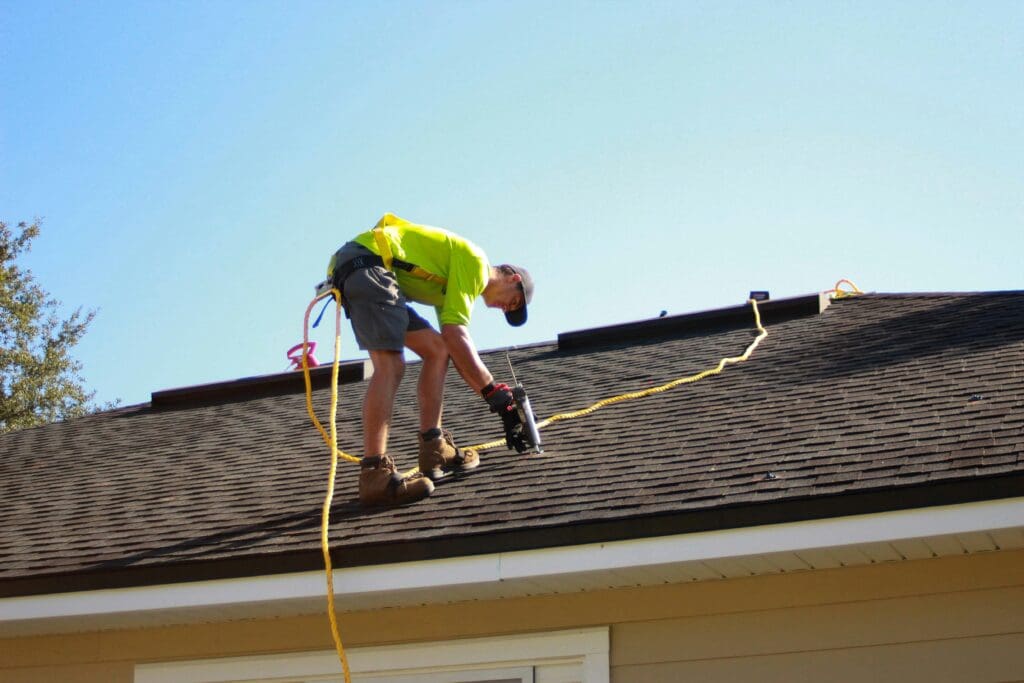
Before Albuquerque’s monsoon season, the most important roof maintenance is to check drainage paths, inspect roof canales and flashing, look for deteriorated roofing materials, and address signs of existing leaks. Flat roofs deserve particular attention because blocked drainage openings or damaged waterproofing can allow heavy rainfall to collect where it should flow away.
You can identify many warning signs from the ground or inside your home. However, inspecting roof membranes, clearing inaccessible drains, and repairing flashing should be left to qualified roofing professionals.
Albuquerque’s summer thunderstorms can bring intense rain, strong winds, and hail in a short period. A little preparation before those storms arrive can help reduce the risk of avoidable water damage.
What Roof Maintenance Matters the Most Before Albuquerque Monsoon Season?
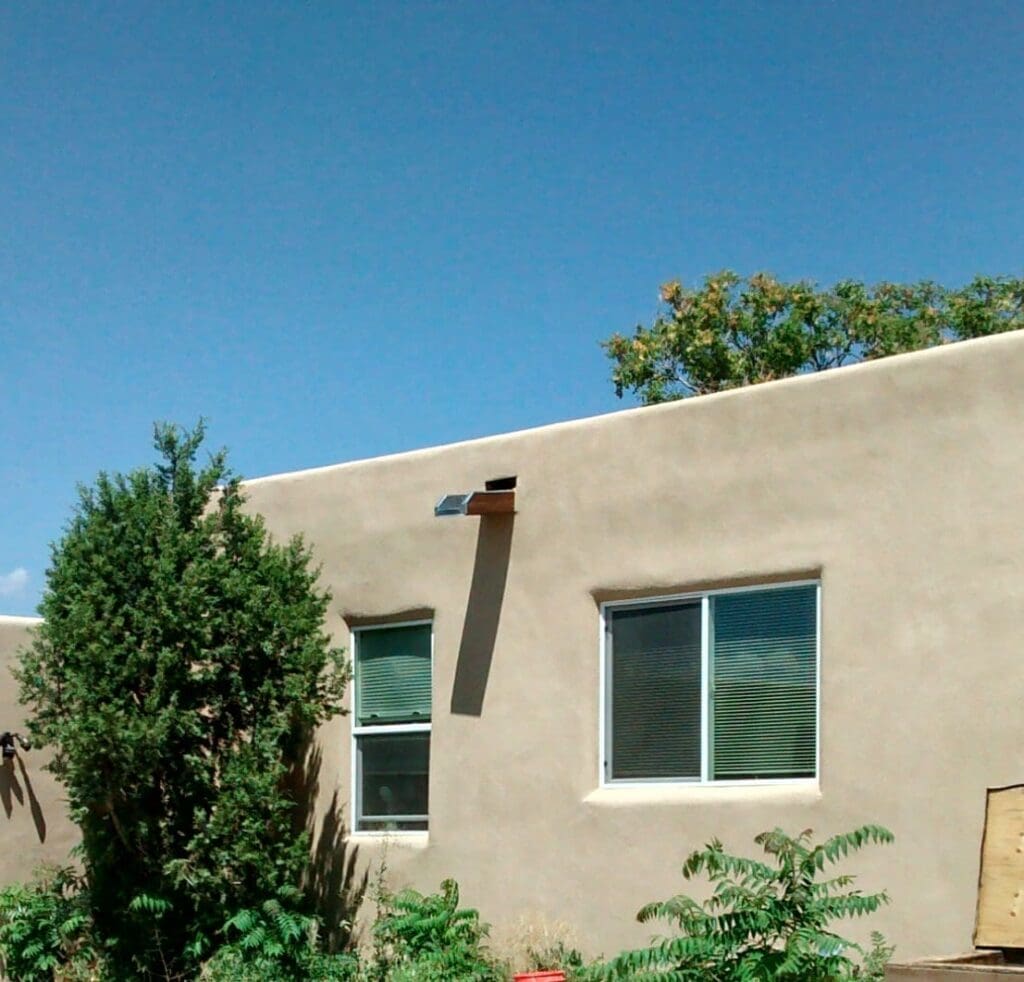
A pre-monsoon roof inspection should focus on the area’s most likely to affect how rainwater moves across and off your roof.
The following checklist helps you prioritize what needs attention.
| Roof area | Warning signs | Recommended action |
| Canales, scuppers, and drains | Visible debris, staining, or water overflowing | Arrange safe cleaning and inspection |
| Flat roof surface | Ponding history, cracks, blisters, or worn coating | Have a roofer evaluate the condition |
| Parapet walls and roof edges | Cracked sealant, loose metal, or separation | Request flashing and edge inspection |
| Swamp coolers and rooftop HVAC | Rust, staining, or deteriorated seals | Have roofing connections checked |
| Skylights and plumbing vents | Water stains or visibly damaged flashing | Schedule an inspection |
| Interior ceilings and walls | New or recurring moisture stains | Investigate the source before the next storm |
Not every warning sign means the roof is leaking. The purpose of maintenance is to identify potential weaknesses early enough to evaluate and correct them.
1. Check Where Rainwater Leaves the Roof
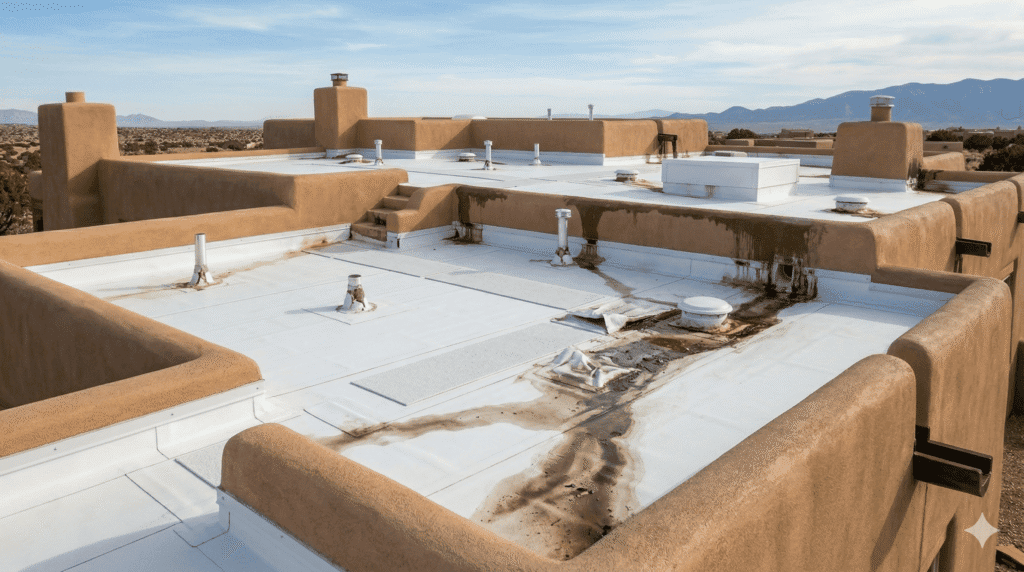
For many Albuquerque homes, roof drainage deserves attention before anything else.
Unlike steeply sloped roofs that shed water toward gutters, many Southwestern flat and low-slope roofs direct rainfall toward canales, scuppers, or internal drains.
If water cannot leave the roof efficiently, it may collect around seams, flashing, and other vulnerable areas.
Inspect Roof Canales, Scuppers, Gutters, and Drains
A canale is a drainage opening or spout commonly found on Southwestern-style roofs. It carries rainwater through or away from a parapet wall.
Leaves, dirt, roofing debris, and other material can restrict drainage.
From a safe ground-level location, look for visible debris near outlets, unusual staining below canales, or signs that water has been overflowing down exterior walls.
The condition of the opening matters, too. A cracked canale or damaged waterproofing where it passes through a parapet can allow water to enter the wall instead of flowing outside.
For a closer explanation, read Can a Cracked Canale Cause Water to Leak Into a Wall?.
A roofing professional can evaluate drainage openings that cannot be safely accessed and check the surrounding waterproofing.
Look for Signs of Ponding Water
A clean drain does not guarantee that a flat roof drains correctly.
Water must travel along a suitable drainage path:
Roof surface → roof slope → canale, scupper, or drain → discharge away from the building.
Problems anywhere along that path can affect drainage.
For example, a roof may have an unobstructed canale but still collect water in a low area because the surface has settled or the drainage slope is inadequate.
If puddles remain long after rainfall ends, the cause may require more than routine cleaning.
Learn about the possible causes in What Causes Ponding Water on a Flat Roof in New Mexico?.
Water discharging from a roof should also be directed appropriately away from walls and foundations. If runoff repeatedly stains a wall or collects beside the building, the drainage arrangement may need professional evaluation.
2. Look for Weak Points Around Roof Penetrations
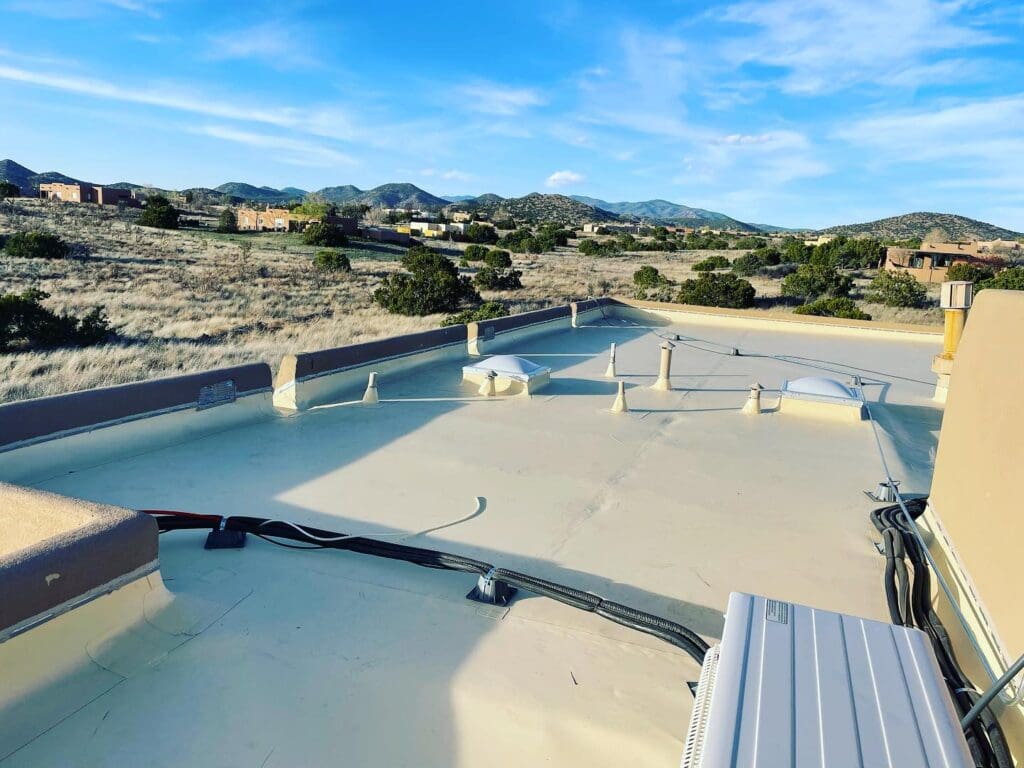
A roof penetration is any opening where equipment, pipes, vents, or other building components pass through the roofing system.
These areas depend on properly installed flashing and waterproofing to prevent rain from entering.
Before monsoon season, pay particular attention to the equipment commonly found on Albuquerque rooftops.
Rooftop Swamp Coolers and HVAC Equipment
Evaporative coolers, often called swamp coolers, are familiar features on New Mexico homes.
A rooftop cooler may have water lines, ductwork, mounting supports, and flashing connections that require attention.
Water around the equipment does not always come from rainfall. A leaking water supply line, deteriorated cooler pan, or drainage problem can also contribute to moisture.
Even when a swamp cooler is turned off, its roof penetrations remain exposed to weather.
The article Can a Rooftop Swamp Cooler Cause a Roof Leak Even When the Cooler Is Off? explains why.
A roofing professional should assess the waterproofing around the equipment. Cooler mechanical problems should be handled by a qualified HVAC technician.
Plumbing Vents, Skylights, and Roof-to-Wall Connections
Other common trouble spots include plumbing vent pipes, skylight frames, chimney connections, and locations where a roof meets a vertical wall.
These details can deteriorate through age, movement, or exposure to New Mexico’s strong sunlight.
Look for signs of previous water intrusion indoors, particularly near skylights and ceiling penetrations.
If you suspect flashing problems, see How Can I Tell If Roof Flashing Is Causing a Leak?.
Avoid applying caulk or roof cement over an unknown leak source. A temporary surface patch can conceal the actual problem and may be incompatible with the roofing material.
3. Check the Roofing Surface and Perimeter
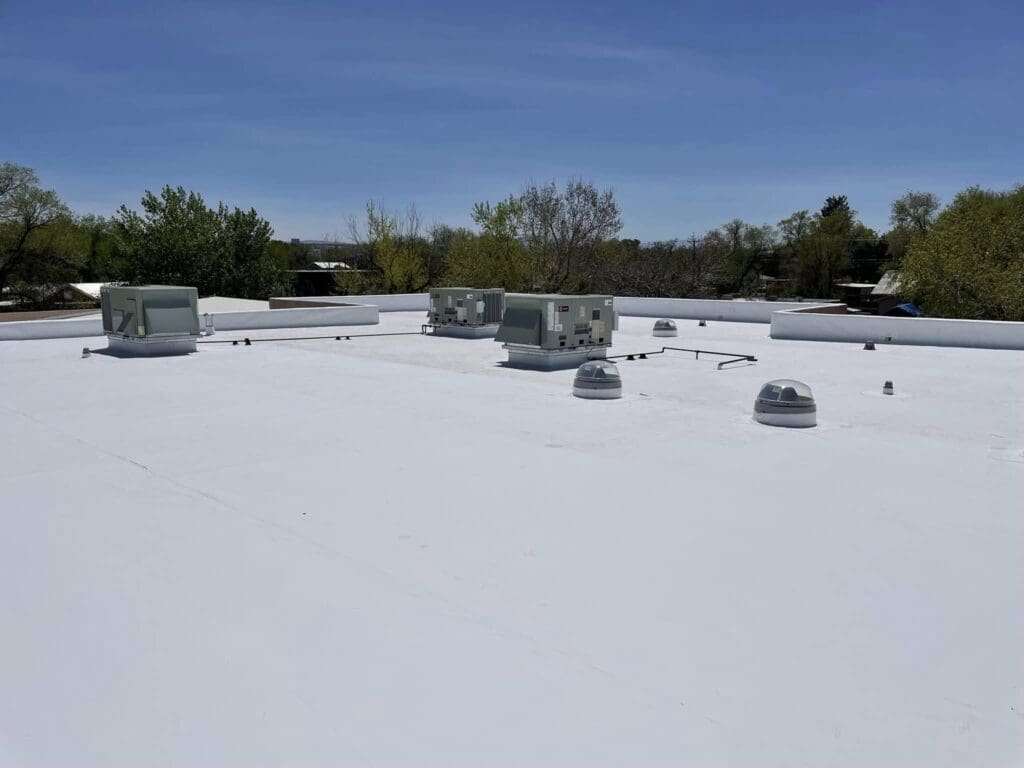
The maintenance your roof needs depends partly on its construction.
Albuquerque homes and commercial buildings may have foam, TPO, modified bitumen, built-up roofing, shingles, tile, or metal.
Each roofing system has different warning signs.
Foam Roofs and Protective Coatings
Spray polyurethane foam roofing uses a protective coating to shield the underlying foam from sunlight and weather.
Before monsoon season, a professional should evaluate visible concerns such as cracked or peeling coatings, exposed foam, damaged flashing, or deteriorated roof edges.
Not every surface crack indicates an active leak. However, exposed foam or damaged waterproofing should not be ignored.
Recoating may be appropriate for some roofs, but the correct treatment depends on the existing system, coating condition, and any moisture-related problems.
TPO, PVC, and Modified Bitumen Roofs
TPO and PVC roofs use flexible membranes with joined seams. Modified bitumen roofing uses asphalt-based sheets that overlap at the seams.
A pre-monsoon inspection should consider seam integrity, flashing, perimeter securement, punctures, and signs of previous repairs.
For TPO roofs, seam or membrane damage does not automatically mean the entire roof needs replacement.
Read Can a TPO Roof Be Repaired or Does It Need Replacement? to understand the difference between localized repair and more extensive roofing problems.
Shingle, Metal, and Tile Roofs
Sloped roofing systems have different maintenance priorities.
Asphalt shingles should be checked for missing, lifted, or visibly damaged sections. Metal roofs require attention around panel connections, fasteners, and flashing. Tile roofs may have cracked or displaced tiles that expose the waterproofing beneath them.
These problems are not always visible from the ground.
If you notice material in your yard after high winds or hail, document it and arrange a professional inspection rather than attempting to walk on the roof.
What Roof Maintenance Can Albuquerque Homeowners Safely Do Themselves?
You do not need to climb onto your roof to begin preparing for monsoon season.
A useful homeowner inspection can start indoors and around the outside of the building.
- Look for ceiling stains, bubbling paint, or damp areas around walls.
- Check visible canales and downspouts for signs of blockage or overflow.
- Examine accessible exterior walls for new water stains.
- Look for displaced roofing materials from a safe location.
- Photograph areas that appear different from previous seasons.
- Review notes or photographs from earlier roof leaks.
Keep a record of where and when you noticed each problem. This information can help a roofing contractor investigate the cause.
Avoid walking on flat roofs, attempting repairs near roof edges, handling rooftop electrical equipment, or clearing drains that require unsafe access. Wet roofing materials can be slippery, and some surfaces can be damaged by improper foot traffic.
When Should You Schedule a Pre-Monsoon Roof Inspection?
Schedule roof maintenance early enough to allow time for inspection and any necessary repairs before summer storms become frequent. Spring is a practical planning period for Albuquerque property owners.
The National Weather Service’s Albuquerque office provides local weather information and forecasts that can help you follow seasonal conditions.
A professional inspection is particularly worthwhile when your roof has:
- A history of ponding water or clogged drains.
- Previous leaks around swamp coolers, skylights, or vents.
- Aging foam coatings or membrane seams.
- Visible damage following wind or hail.
- Recurring ceiling stains.
- Repairs that have not been checked since the previous storm season.
For commercial buildings, inspections may also need to account for rooftop equipment, large drainage areas, and maintenance requirements associated with the installed roofing system.
Rocky Mountain Roofing Services’ Albuquerque Commercial Roof Inspection Monsoon Guide discusses additional considerations for commercial properties.
What If Your Roof Already Has a Stain or Ponding Problem?
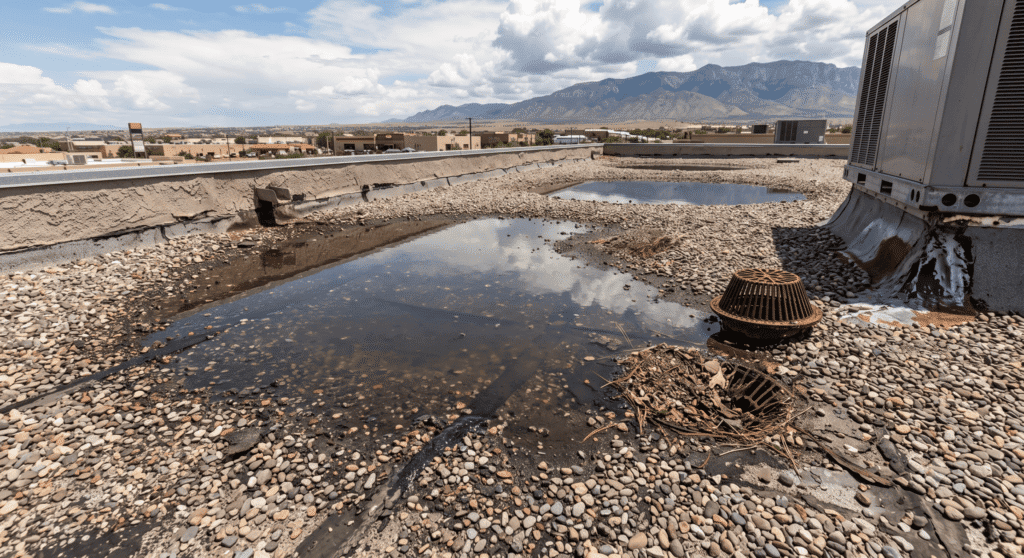
An existing problem should be evaluated before monsoon rainfall places additional demands on the roof.
Consider an Albuquerque homeowner who notices leaves near a parapet canale and remembers a faint ceiling stain from the previous summer.
Cleaning the visible debris might help drainage, but it would not explain the ceiling stain. The canale could have damaged flashing, the roof might have a separate leak, or water could be entering through another nearby opening.
The better approach is to document both observations and have the relevant roof components inspected.
Likewise, repeatedly applying roof coating to an area that collects standing water may not correct the underlying drainage problem.
A roofing professional can determine whether the roof needs cleaning, localized repair, drainage improvements, or a more extensive solution.
If water is actively entering your home, keep clear of sagging ceilings and electrical hazards, protect belongings when safe, and seek prompt roofing assistance.
Frequently Asked Questions About Albuquerque Monsoon Roof Maintenance
How Early Should I Schedule Roof Maintenance Before Monsoon Season?
Ideally, arrange maintenance during spring or before the first major summer thunderstorms. Scheduling early gives you time to address drainage problems, deteriorated flashing, or other repairs. If you miss that window, an inspection can still be worthwhile, especially when you have noticed warning signs.
Can a Newly Installed Roof Coating Fix Ponding Water?
A roof coating can protect or restore certain roofing surfaces when used appropriately, but it does not automatically correct poor drainage. Persistent ponding may require changes to the roof’s slope, drainage design, or underlying materials. The cause should be identified before selecting a repair.
Should I Inspect My Roof Again After the First Big Monsoon Storm?
Yes, a safe visual check after a significant storm can reveal problems that were not apparent beforehand. Look for new ceiling stains, overflow marks, displaced materials, or drainage concerns. Arrange a professional inspection if you notice changes or suspect damage.
Do Rooftop Swamp Coolers Increase the Risk of Roof Leaks?
They introduce additional roof penetrations and waterproofing connections that need maintenance. A properly installed and maintained cooler does not necessarily cause leaks, but deteriorated flashing, leaking water lines, and equipment-related moisture can create problems.
Schedule Albuquerque Roof Maintenance Before Every Monsoon Season
Preparing your roof for Albuquerque’s summer storms begins with understanding how water moves across the roofing system and identifying potential weaknesses before heavy rainfall arrives.
A professional inspection can help determine whether your roof needs drain cleaning, flashing repairs, coating maintenance, or other preventive work.
Rocky Mountain Roofing Services provides residential and commercial roof inspections, preventative maintenance, leak detection, and roof repairs throughout Albuquerque, Rio Rancho, Santa Fe, and surrounding New Mexico communities.
With more than 35 years of combined roofing experience, the company helps property owners evaluate roofing systems and make informed maintenance decisions.
Call Rocky Mountain Roofing Services at 505-717-1925 or request a roofing estimate to discuss your roof’s condition before the next monsoon season.