
What Causes Parapet Wall Cracks to Turn into Roof Leaks?
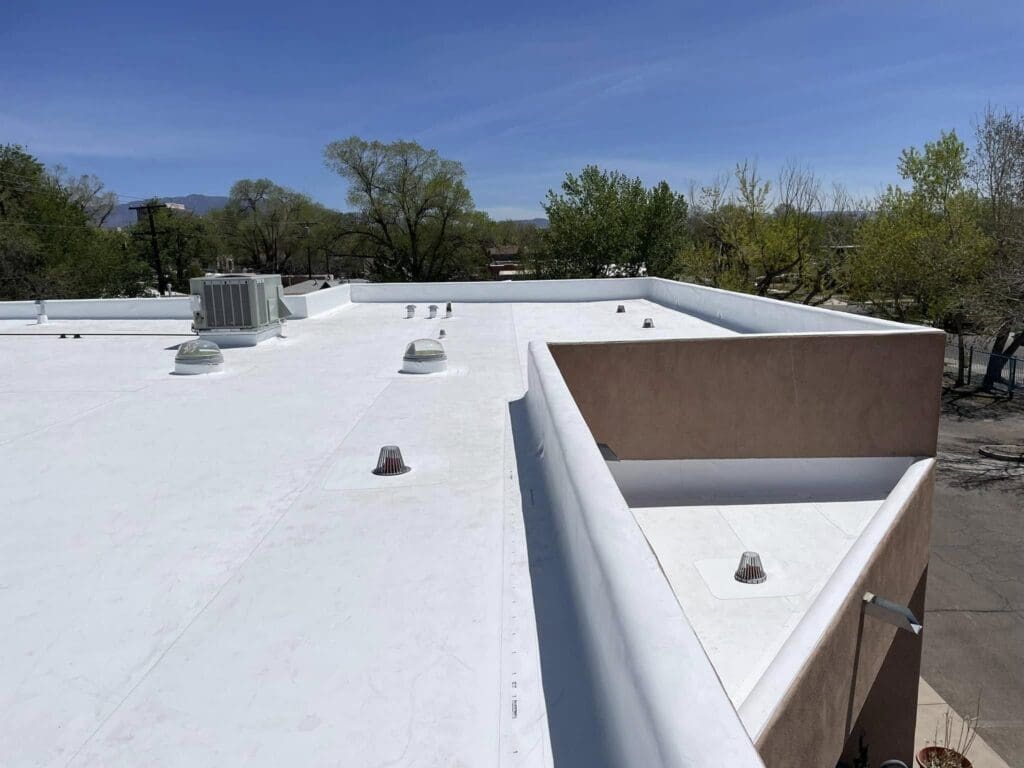
Parapet wall cracks can turn into roof leaks when rainwater or melting snow passes through an opening in the wall’s protective roofing or waterproofing system. The problem often develops around parapet caps, roof-to-wall flashing, membrane connections, and drainage openings called canales.
Not every parapet crack causes a roof leak. Some cracks affect only the outer stucco finish, while others may expose a deeper opening that allows moisture to reach the building.
For homeowners in Albuquerque and Santa Fe, understanding the difference is important. New Mexico’s intense sunlight, strong winds, summer monsoon storms, and winter temperature changes can place stress on roofing and wall materials.
A small crack may remain harmless for years, while a less noticeable opening near the roofline can allow water into a ceiling or wall.
How Can a Parapet Wall Crack Let Water into a Roof?
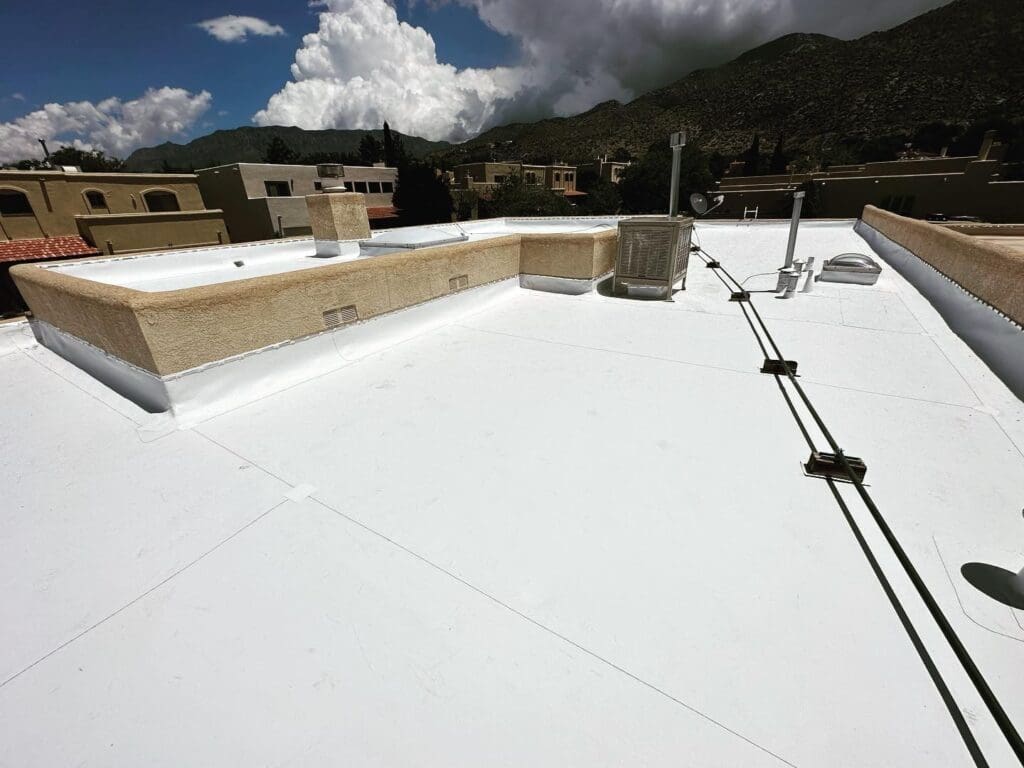
A parapet is the short wall that extends above the roofline on many flat-roofed homes and commercial buildings.
These walls are common in Southwestern architecture, particularly on stucco homes throughout Albuquerque, Rio Rancho, and Santa Fe.
A parapet may appear to be a solid wall, but it is part of a larger building system designed to manage rainwater and protect the roof.
Depending on the construction, that system may include exterior stucco, a weather-resistant layer, a protective parapet cap, roofing membrane connections, and metal flashing.
Water intrusion becomes possible when moisture finds an opening through these protective components.
The process may develop in stages:
- A crack or opening forms in the parapet finish, cap, flashing, or another protective detail.
- Rainwater or melting snow reaches the opening.
- Water moves behind the exterior finish or through a vulnerable roofing connection.
- Moisture travels along the wall, framing, or roof assembly.
- A water stain or damp area eventually appears inside the building.
The visible crack may be the entry point, but it may also be a sign of movement or deterioration elsewhere.
That distinction matters because filling a crack will not necessarily repair damaged flashing or concealed waterproofing.
Which Parapet Wall Cracks Are Most Likely to Cause Roof Leaks?
The location of a crack can provide more useful information than its appearance alone.
A narrow crack in an otherwise intact stucco finish may be less concerning than a separation where the roofing membrane meets the parapet wall.
However, crack width alone cannot determine whether water is entering.
The surrounding construction and condition of the waterproofing system must also be considered.
Cracks Along the Parapet Cap or Coping
The top of a parapet wall receives direct exposure to rain, snow, sunlight, and temperature changes.
A protective cap, sometimes called coping, is intended to help keep water from entering the wall from above.
Depending on the building, the cap may be constructed from metal, concrete, or other materials.
If joints separate, caps crack, or protective connections deteriorate, water can reach the materials underneath.
Once moisture enters from the top, gravity can carry it downward through the wall.
A homeowner might notice a vertical stain on the interior wall even though the original opening is several feet higher.
Cracks near parapet caps deserve attention because the top of the wall is regularly exposed to precipitation.
Cracks Where the Roof Meets the Parapet Wall
The connection between the roofing surface and parapet wall is one of the most important waterproofing details on a flat roof.
Roofing membranes generally need a properly designed transition where they meet vertical surfaces.
Depending on the roofing system, that transition may include membrane upturns, termination components, protective coatings, and metal flashing.
Movement or deterioration can create openings at these connections.
For example, a visible crack near the base of a parapet may appear to be a stucco problem. However, the underlying issue could be a separated membrane termination or damaged flashing.
Water collecting near the wall may then enter through the failed connection.
The article Albuquerque Parapet Wall Roof Leaks: How to Fix Flashing explains the importance of these roof-to-wall details.
Cracks Around Canales and Parapet Corners
Many New Mexico flat roofs drain through canales or scuppers.
These openings allow rainwater to pass through the parapet wall and discharge away from the roof.
Because a canale penetrates the wall, its surrounding waterproofing must remain intact.
Cracks near a canale may indicate movement or deterioration around the opening. The canale itself, its flashing, or the adjacent roofing membrane could also be damaged.
Water may enter the wall rather than flowing completely through the outlet.
For a closer look at this problem, read Can a Cracked Canale Cause Water to Leak Into a Wall?.
Parapet corners also deserve attention because different building materials and surfaces meet in these locations. Movement can place stress on joints and finishes, although a visible corner crack does not automatically indicate a leak.
Cracks in the Vertical Stucco Surface
Hairline cracks in stucco are not uncommon.
They can develop from drying, thermal movement, settling, or other changes in the building materials.
A superficial crack may affect only the outer finish without compromising the underlying weather protection.
Other cracks can be associated with failed joints, deteriorated water-resistant materials, or movement that affects the wall assembly.
This is why it is important not to assume that every stucco crack requires roofing repair.
When water intrusion is suspected, a qualified professional should determine whether the issue involves the roof, the wall assembly, or both.
How Does Crack Location Affect the Risk of a Roof Leak?
The following table shows why different crack locations call for different inspections.
| Visible crack location | Possible concern | What should be checked |
| Top of parapet wall | Damaged cap or open coping joint | Cap condition, joints, and underlying weather protection |
| Roof-to-wall junction | Separated flashing or membrane termination | Roofing connection and waterproofing continuity |
| Around a canale | Damaged outlet or surrounding flashing | Canale condition, drainage, and waterproofing |
| Parapet corner | Movement or separated materials | Wall joints, flashing, and nearby roof details |
| Vertical stucco face | Surface cracking or concealed wall damage | Stucco condition and underlying wall assembly |
These are possible relationships, not confirmed diagnoses.
For example, a crack near a canale might be unrelated to an interior stain. Water could instead be entering through damaged flashing several feet away.
The goal of a roof inspection is to identify the actual water-entry pathway before deciding how to repair it.
Why Do Some Parapet Cracks Leak Only During Heavy Rain or Snowmelt?
A crack may remain dry during ordinary weather but allow water intrusion under different conditions.
This does not necessarily mean the crack suddenly became larger.
The amount of water, direction of rainfall, duration of exposure, and drainage conditions can all affect whether moisture reaches a vulnerable opening.
Albuquerque Monsoon Rain and Strong Winds
Summer thunderstorms in Albuquerque can produce periods of heavy rain accompanied by strong winds.
Wind-driven rain may strike vertical parapet surfaces and joints that receive less direct exposure during lighter rainfall.
A vulnerable opening near the parapet cap or wall face may therefore leak during one storm but remain dry during another.
If water also accumulates near the roof-to-wall connection, it may increase exposure at damaged flashing or membrane details.
The article What Causes Ponding Water on a Flat Roof in New Mexico? explains why drainage conditions matter.
Santa Fe Snow and Freeze-Thaw Conditions
Snow creates a different pattern of moisture exposure.
Snow can accumulate along parapet walls and around drainage openings. When temperatures rise, melting snow releases water that may remain near the roofline.
If the roof drains poorly or a vulnerable connection is exposed to prolonged moisture, a leak may develop after the snowfall has ended.
Temperature changes can also cause building materials to expand and contract. Water trapped in certain openings may freeze and contribute to further deterioration.
This does not mean every parapet crack will worsen during winter. The outcome depends on the materials, construction, moisture exposure, and condition of the existing waterproofing.
How Can You Tell Whether a Parapet Crack Is the Actual Leak Source?
A visible crack and an interior water stain are useful clues, but they do not prove that one caused the other.
Water can move sideways or downward through concealed building materials before appearing indoors.
Consider a homeowner in Albuquerque who notices a thin vertical crack near a parapet corner.
After a wind-driven rainstorm, a stain appears on the ceiling several feet from that corner.
It would be easy to assume the crack caused the leak.
However, the moisture could have entered through a failed parapet cap joint, damaged roof flashing, or another opening along the roofline.
Filling the visible crack might leave the actual source untouched.
A better approach is to document the conditions and have the surrounding waterproofing details evaluated.
Warning Signs You Can Check Safely
Without climbing onto the roof, look for:
- New or expanding ceiling and wall stains.
- Damp drywall near an exterior parapet wall.
- Visible cracks that appear to be widening or changing.
- Water marks below roof canales.
- Exterior staining that appears after storms.
- Moisture that returns during rain or snowmelt.
- Peeling paint, bubbling finishes, or musty odors indoors.
Photograph changes and record when they occur.
For example, note whether moisture appears during heavy rain, after melting snow, or only when storms arrive from a particular direction.
These observations can help a roofing professional investigate the problem.
For additional guidance, see How Can I Tell If Roof Flashing Is Causing a Leak?.
Can a Parapet Crack Be Sealed, or Does the Flashing Need Repair?
A parapet crack may be repairable with an appropriate material when the problem is limited to the exterior finish or a specific joint. However, if the crack is associated with failed roof flashing, a damaged membrane connection, or concealed water intrusion, surface sealing alone may not correct the leak.
The repair should address the actual failure rather than simply cover the visible symptom.
For a localized stucco problem, a qualified stucco contractor may be able to recommend a suitable repair after evaluating the wall.
If the waterproofing at the roof-to-wall connection has failed, roofing work may be necessary.
Other situations may require repairs to the parapet cap, canale connection, or drainage system.
Why Caulking the Visible Crack May Not Work
Applying caulk to a crack may seem like a quick solution.
But if water is entering behind the stucco from an opening higher on the wall, sealing the visible crack will not stop that moisture.
Likewise, applying roof coating over damaged flashing may not restore a failed membrane termination.
Repair materials must also be compatible with the existing roofing or wall system.
A professional should evaluate the construction before recommending sealants, coatings, flashing replacement, or other repairs.
Does a Parapet Crack Mean the Roof Needs Replacement?
Not necessarily.
A localized leak caused by a damaged flashing detail or parapet connection may be repairable without replacing the entire roof.
The decision depends on the condition of the surrounding roofing system, whether concealed materials are damaged, and whether the problem is isolated or widespread.
Read Can a Flat Roof Leak Be Repaired Without Full Replacement? to learn how repair and replacement decisions differ.
When Should You Schedule a Parapet Wall Inspection?
Arrange a professional inspection when a parapet crack is accompanied by signs of moisture intrusion or changes that suggest deterioration.
A crack that appears to be growing, repeated staining after storms, or visible separation near the roofline deserves evaluation.
You should also seek an inspection when an earlier repair has not stopped the leak.
Do not climb onto a wet, icy, or damaged roof to investigate the problem yourself.
If water is entering near electrical fixtures or outlets, stay clear of the affected area and obtain appropriate professional assistance. A sagging ceiling or significant active water intrusion also requires urgent attention.
Preventative maintenance can help identify developing problems before they lead to additional damage.
For related guidance, see How Do I Prevent Albuquerque Roof Parapet & Scupper Failure?.
Frequently Asked Questions About Parapet Wall Cracks
Can Water Travel Behind Stucco Before a Ceiling Stain Appears?
Yes. Water can enter through a vulnerable opening and move behind the exterior finish or along building materials before reaching an interior surface. The location of the stain may be different from the original entry point.
Can Freezing and Thawing Make Parapet Cracks Worse?
Yes, under certain conditions. Water that enters an opening may freeze and expand, contributing to deterioration. Repeated temperature changes can also stress joints and materials. The effect depends on the construction and whether moisture is present.
Should I Call a Roofer or a Stucco Contractor?
A roofing contractor is a reasonable starting point when the problem appears connected to roof flashing, parapet caps, membrane connections, or canales. A stucco or building-envelope specialist may be needed when the wall assembly itself is damaged. Some leaks require both trades.
Can a Hairline Parapet Crack Cause a Roof Leak?
It can, but a hairline crack does not automatically mean water is entering. A superficial finish crack may leave the underlying waterproofing intact. The location and condition of the complete roof and wall assembly determine whether the crack is significant.
How Can I Prevent Parapet Cracks from Becoming Roof Leaks?
Periodic roof inspections, drainage maintenance, and prompt evaluation of damaged flashing or parapet connections can help identify problems early. Keep records of visible cracks and changes after storms, and have suspected waterproofing failures assessed before applying surface repairs.
Request a Parapet Wall Leak Evaluation in Albuquerque or Santa Fe
A crack in a parapet wall does not always mean the roof is leaking, but moisture intrusion should not be ignored.
The most effective repair begins with identifying whether water is entering through the parapet cap, roof-to-wall flashing, canale connection, or another part of the roofing and wall assembly.
Rocky Mountain Roofing Services provides residential and commercial roof inspections, leak detection, flashing repair, flat roof repair, and preventative maintenance throughout Albuquerque, Santa Fe, and surrounding New Mexico communities.
With more than 35 years of combined roofing experience, the company helps property owners evaluate roofing problems and determine appropriate repair options.
Call Rocky Mountain Roofing Services at 505-717-1925 or visit rockymountainrfg.com to discuss a parapet wall leak and request a professional roof evaluation.