What Happens During a Full Roof Tear-Off and Replacement?
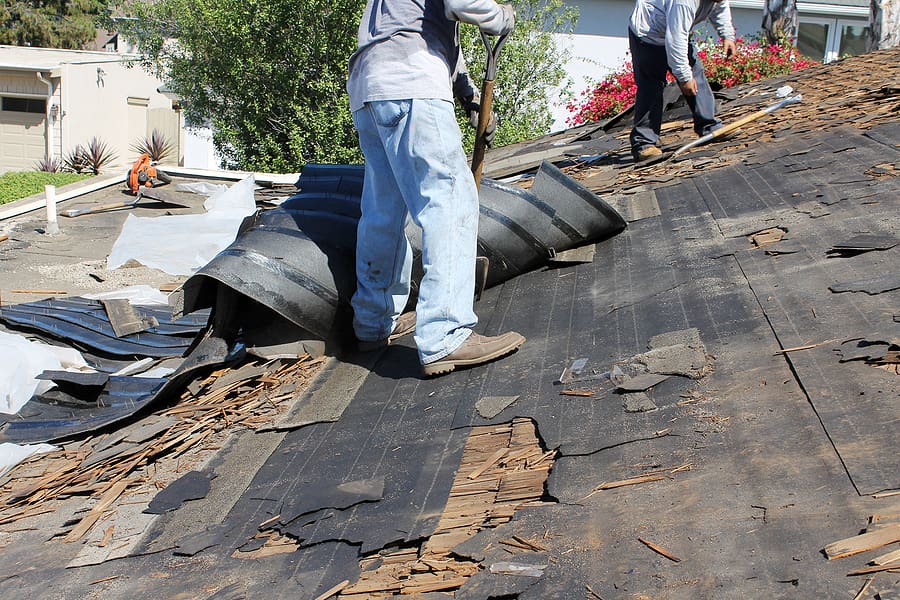
A full roof tear-off and replacement involves removing the existing roofing materials, inspecting the exposed roof deck or supporting substrate, correcting approved damage, and installing a new roofing system. The process also includes protecting the property, installing appropriate flashing and drainage details, removing construction debris, and completing a final inspection.
For homeowners and commercial property owners in Albuquerque and Santa Fe, understanding these steps makes it easier to prepare for construction, evaluate a roofing estimate, and know what to expect when the old roof comes off.
The exact process depends on the roofing material, building design, weather conditions, and any concealed damage discovered during removal.
What Is a Full Roof Tear-Off?
A full roof tear-off means removing the existing roofing materials included in the replacement scope rather than installing a new roof covering directly over them.
On a typical asphalt shingle roof, this generally involves removing the old shingles and associated underlayment to expose the roof decking.
For a commercial flat roof, removal may involve the existing membrane, insulation, cover boards, or other components, depending on the condition of the assembly and the replacement design.
A tear-off is different from a roof overlay, which involves installing a new covering over an existing one when the roofing system, manufacturer requirements, and applicable building rules permit it.
Removing the old materials provides an opportunity to examine components that cannot be fully evaluated while the existing roof remains in place.
That inspection is one of the most important reasons a complete tear-off may be recommended.
What Happens Before Roof Replacement Begins?
Roof replacement starts well before the first shingle or section of membrane is removed.
A contractor needs to understand the building, determine the work required, select appropriate materials, and plan how the property will be protected during construction.
Roof Inspection and Written Replacement Scope
The initial inspection helps identify visible deterioration, existing leaks, drainage problems, damaged flashing, and other conditions that may affect replacement.
The resulting estimate should explain which roofing materials will be removed, what new roofing system is proposed, and which related components are included.
It should also address how unexpected damage will be handled.
For example, a written scope might include replacing existing shingles and underlayment but treat deteriorated roof decking as additional work if its extent cannot be determined beforehand.
Before approving the project, ask whether the estimate addresses:
- Removal and disposal of existing roofing materials
- Inspection and repair of the exposed roof deck or substrate
- New roofing materials, flashing, and ventilation or drainage components
- Property protection, cleanup, and final inspection
- Procedures for approving additional work discovered during tear-off
A clear scope helps prevent confusion once construction begins.
Preparing the Property
Roof tear-off produces noise, dust, vibration, and falling debris. Materials and equipment also require space around the building.
Homeowners should ask where vehicles can be parked, whether driveways or walkways must remain clear, and how landscaping, outdoor furniture, and nearby equipment will be protected.
Moving fragile items away from walls or shelves may be sensible because roof work can create vibrations inside the building.
Pets should be kept away from construction activity, and occupants should follow the contractor’s instructions about safe access.
Commercial property managers may need to coordinate employee entrances, deliveries, parking, tenant access, and rooftop equipment servicing.
The contractor should establish work areas and protective measures appropriate for the site. Occupants should never enter active tear-off zones or walk beneath areas where roofing materials are being removed.
Planning Around New Mexico Weather
Albuquerque and Santa Fe roofing projects must account for high winds, monsoon storms, intense sunshine, and seasonal temperature changes.
Santa Fe’s higher elevation also brings winter snow and freezing conditions that may affect scheduling.
Weather planning is especially important during a tear-off because removing the existing roof temporarily exposes materials that were previously protected.
The contractor should explain how work will be staged, how exposed areas will be protected, and what happens if unfavorable weather interrupts the project.
A weather delay may be inconvenient, but continuing removal without an appropriate protection plan can create unnecessary risk.
What Are the Steps in a Full Roof Tear-Off and Replacement?
Although installation methods vary by roofing system, most complete replacements follow a recognizable progression.
| Project stage | What typically happens | What the property owner should understand |
| Site preparation | Materials arrive, work areas are established, and property protection is arranged | Confirm access restrictions and protection plans |
| Existing roof removal | Old roofing materials and specified components are removed | Expect noise, debris, and temporary exposure |
| Substrate inspection | The exposed deck or supporting materials are examined | Concealed damage may change the scope |
| Approved corrective work | Damaged components identified for replacement are repaired or removed | Additional work should be documented and authorized |
| New roof installation | The specified roofing assembly is installed | Methods depend on the selected roof system |
| Flashing and drainage | Roof transitions, penetrations, edges, and drainage details are completed | These connections are essential to weather protection |
| Final checks and cleanup | Work is reviewed, debris is removed, and project documentation is completed | Verify the agreed scope and any remaining items |
Step 1: Removing the Existing Roofing Materials
The tear-off begins with the controlled removal of the old roofing materials.
On an asphalt shingle roof, this may involve removing shingles, fasteners, underlayment, and flashing components designated for replacement.
For low-slope roofs, removal methods depend on the membrane, attachment system, insulation, and underlying construction.
Crews must manage debris and prevent removed materials from creating hazards around the building.
The roof may be opened in sections rather than all at once, depending on project conditions and the contractor’s weather-protection plan.
Once the old roofing materials are removed, the condition of the supporting surface becomes easier to evaluate.
Step 2: Inspecting the Exposed Roof Deck
The roof deck is the structural surface that supports the roofing assembly. On many residential roofs, it consists of plywood or oriented strand board, commonly called OSB.
Other buildings may use metal, concrete, or different supporting systems.
During tear-off, a contractor can look for deterioration that was concealed beneath the old roof.
Potential concerns include softened wood, damaged sheathing, moisture-affected materials, deteriorated attachment areas, or other conditions that could prevent proper installation.
A new roof should not simply conceal an unsuitable supporting surface.
However, a full roof replacement does not automatically require replacing all the decking. Sound materials may remain in place when they are suitable for the new roofing system and meet applicable requirements.
Step 3: Addressing Hidden Damage Before Installation
This is one of the most important decision points in the entire project.
Consider a hypothetical Santa Fe home undergoing asphalt shingle replacement.
After the old shingles and underlayment are removed, the contractor discovers a section of softened roof decking near a previous leak.
The original estimate may not have included replacing that section because the damage was concealed.
Before additional work proceeds, the contractor should document the condition, explain the necessary corrective work, identify the associated cost, and obtain authorization consistent with the contract.
This type of written modification is commonly called a change order.
The same principle applies to commercial roofs, although the affected components may differ.
For example, removing a deteriorated TPO membrane may reveal wet insulation or damaged cover boards. Those materials require evaluation before a new assembly can be installed.
A property owner should understand whether the discovery affects only a limited area or indicates a larger problem.
The appropriate response is based on actual conditions, not an assumption that every roof needs extensive substrate replacement.
Step 4: Installing the New Roofing System
Once the supporting materials are suitable, installation of the new roof assembly can begin.
On a typical pitched asphalt shingle roof, this may include specified underlayment, roof-edge components, flashing, starter materials, shingles, and ridge or ventilation details.
Underlayment is a protective layer installed beneath the primary roof covering. It provides additional protection against water intrusion but does not replace the need for correctly installed shingles and flashing.
Commercial low-slope systems may require insulation, cover boards, membranes, adhesives, fasteners, or other components selected for the building and roof design.
The installation sequence and attachment methods must follow the requirements applicable to the selected system.
Step 5: Completing Flashing, Roof Edges, and Drainage
A roofing system must protect more than its broad, open surface.
Water can enter where the roof meets a wall, chimney, skylight, plumbing vent, HVAC unit, or other penetration.
Flashing consists of materials and details designed to direct water away from these vulnerable connections.
On pitched roofs, flashing work may include roof valleys, chimneys, vents, and wall intersections.
Flat roofs in Albuquerque and Santa Fe may have parapet walls, scuppers, roof drains, and canales that require carefully integrated waterproofing details.
A canale is a drainage outlet commonly found in Southwestern roof construction. It allows water to leave the roof, often through a parapet wall.
An improperly detailed connection can undermine an otherwise well-installed roofing system.
For more information about these vulnerable areas, read Albuquerque Parapet Wall Roof Leaks: How to Fix Flashing.
How Does the Tear-Off Process Change for Different Roofing Materials?
Not every roof is constructed in the same way. A replacement method appropriate for asphalt shingles may be unsuitable for a commercial TPO roof or a traditional tile roof.
Asphalt Shingle Roof Replacement
Asphalt shingle replacement generally involves removing the existing shingles and specified underlying materials, inspecting the decking, and installing the new roofing assembly.
Proper flashing, roof-edge protection, ventilation details, and fastening are important parts of the installation.
TPO and PVC Flat Roof Replacement
TPO and PVC roofing systems use single-ply membranes that are typically joined with heat-welded seams.
A full replacement may require removing the existing membrane and affected insulation or cover boards.
The new assembly must account for insulation requirements, drainage, roof penetrations, attachment methods, and compatible flashing details.
Property owners interested in the construction of these systems can read What Are the Layers on a TPO Roof?.
Modified Bitumen and Built-Up Roofing
Modified bitumen and built-up roofing systems use different combinations of asphalt-based materials, reinforcement, and protective surfacing.
Removing these materials can require different equipment and handling methods from those used for single-ply membranes.
Installation requirements also vary according to the selected system and the condition of the supporting materials.
Tile and Metal Roof Replacement
Tile roofing may involve removing tiles to inspect and replace deteriorated underlayment and flashing.
Depending on their condition and the project requirements, some existing tiles may be suitable for reuse. Others may require replacement.
Metal roof replacement involves removing the existing panels and specified components before installing the new system.
Panel attachment, expansion and contraction, flashing, and roof-edge details require particular attention.
The important point is that a full tear-off does not mean every roofing system uses identical materials, removal methods, or installation steps.
What Should Homeowners Expect During Roof Replacement?
A roof replacement is an active construction project, and some disruption is unavoidable.
The amount depends on the building, roofing material, project scope, and site conditions.
Noise, Vibration, and Debris
Removing roofing materials and installing a new system can produce considerable noise.
Hammering, equipment operation, and material movement may also cause vibrations inside the building.
Debris must be controlled and removed from designated work areas. Property owners should keep children, pets, and visitors away from the construction zone.
Changes to Access and Parking
Driveways, sidewalks, and building entrances may be affected by material deliveries, equipment, or debris containers.
Ask the contractor which areas must remain clear and whether occupants need to use alternate entrances during particular stages.
For commercial properties, coordinating these restrictions with tenants and employees can help reduce disruptions.
Weather Delays and Temporary Protection
If rain or strong winds interrupt the project, the contractor may need to pause removal or installation.
Temporary weather protection, sometimes called dry-in, refers to measures used to help protect exposed roofing areas during construction.
The appropriate method depends on the roof system and the work completed.
Temporary protection should not be assumed to provide the same performance as a finished roofing system. Ask how exposed areas will be secured if work must stop.
How Long Does a Full Roof Tear-Off Take?
There is no universal completion time.
Project duration depends on roof size, slope, material type, accessibility, weather, crew availability, and the amount of corrective work required.
A relatively straightforward residential shingle replacement may take substantially less time than a large commercial roof replacement involving insulation, rooftop equipment, and complex drainage details.
Unexpected damage discovered during tear-off can also affect the schedule.
The most useful question is not simply how many days the project will take, but what conditions could change the proposed schedule and how those changes will be communicated.
What Happens During the Final Roof Inspection and Cleanup?
The final stage involves checking the completed roofing work, removing construction debris, and reviewing the project with the property owner.
The inspection should address the installed roofing system and relevant details included in the agreed scope.
Depending on the project, these may include flashing, roof edges, penetrations, drainage connections, and other completed components.
Cleanup may involve collecting removed materials, checking surrounding work areas, and retrieving loose fasteners. Magnetic nail sweeps are commonly used on some shingle projects, although the appropriate cleanup methods depend on the materials and site conditions.
No cleanup method guarantees that every small piece of debris will be recovered. Property owners should inspect accessible areas and report any concerns before the project is closed.
What Documentation Should You Receive?
Before final payment or project acceptance, confirm that the contractor has addressed the agreed work and explained any remaining items.
Useful records may include:
- The final invoice and approved change orders
- Applicable manufacturer and workmanship warranty information
- Product information for the installed roofing system
- Required inspection or permit documentation, when applicable
- Maintenance recommendations and any agreed follow-up work
Warranty coverage varies by manufacturer, roofing system, and contract. Property owners should review the actual documents rather than assume every replacement includes identical protection.
For commercial buildings, retaining photographs, material records, and inspection documentation can also help with future maintenance planning.
Frequently Asked Questions About Roof Tear-Off and Replacement
Can I Stay Home During a Full Roof Replacement?
In many cases, occupants can remain inside while roof replacement is underway. However, noise, vibration, access restrictions, and specific construction hazards may make temporary relocation preferable. Ask the contractor about the safety and access requirements for your property.
What Happens if It Rains During Roof Replacement?
The contractor may need to stop work and protect exposed areas using methods appropriate for the roofing system and stage of construction. Weather planning should be discussed before tear-off begins, particularly during New Mexico’s monsoon season.
Will All the Old Roofing Nails Be Removed?
Fasteners associated with removed roofing materials should be handled as part of the removal and cleanup process. Some existing fasteners may require different treatment depending on the roofing system and substrate. Ask how loose nails and debris will be collected and how the completed work area will be checked.
Does a Full Tear-Off Mean the Roof Deck Must Be Replaced?
No. A full tear-off exposes the roof deck or supporting substrate so its condition can be evaluated. Decking that remains sound and suitable for the new roofing system may not need replacement. Deteriorated or otherwise unsuitable components require appropriate corrective work.
What Is the Difference Between a Residential and Commercial Roof Tear-Off?
Residential pitched roofs often involve removing shingles, tile, or metal coverings and associated materials. Commercial low-slope roofs may require removal of membranes, insulation, cover boards, and other assembly components. Equipment access, drainage design, building operations, and installation methods can also make commercial projects more complex.
Request a Professional Roof Replacement Evaluation in Albuquerque or Santa Fe
A full roof tear-off is more than removing old roofing materials and installing new ones. It provides an opportunity to evaluate concealed conditions, correct damaged components, and install a roofing system appropriate for the building.
Understanding the sequence of work also helps property owners ask better questions about the estimate, construction schedule, weather protection, unexpected damage, and final inspection.
Rocky Mountain Roofing Services provides residential and commercial roof inspections, roof replacement, roof repair, and preventative maintenance throughout Albuquerque, Santa Fe, and surrounding New Mexico communities.
With more than 35 years of combined roofing industry experience, the company works with asphalt shingles, tile, metal, TPO, PVC, modified bitumen, built-up roofing, and spray foam systems.
If you are considering a complete roof replacement, contact Rocky Mountain Roofing Services to discuss your roofing concerns and request an evaluation of your property.
Call (505) 717-1925 or visit Rocky Mountain Roofing Services to learn more about your roof replacement options.