Can Rooftop HVAC Work Damage a Commercial TPO Roof?
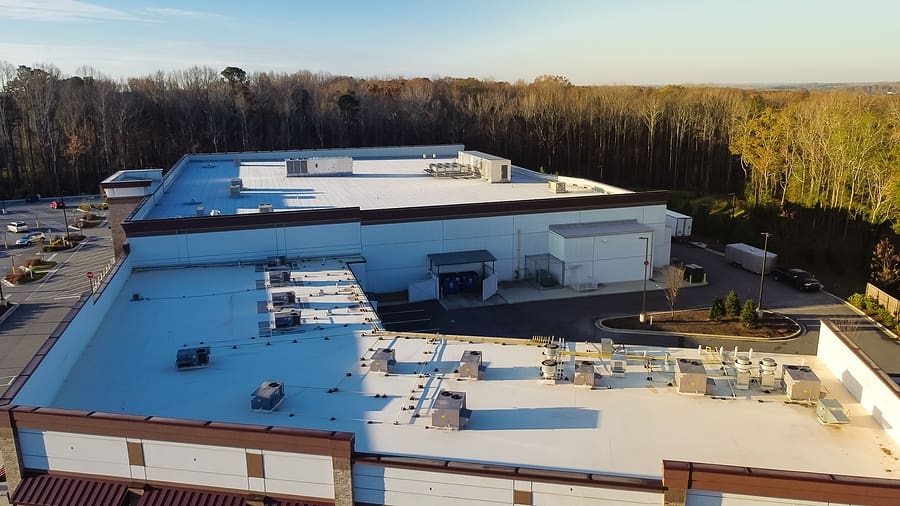
It is a known fact that rooftop HVAC work can damage a commercial TPO roof if it is not done carefully with all the necessary precautions. Maintenance technicians, heavy equipment, dropped tools, and repeated foot traffic can puncture or weaken the roofing membrane when proper precautions are not taken. Damage can also occur around HVAC curbs, flashing, and roof penetrations.
However, a roof leak appearing after HVAC service does not automatically mean the contractor caused it. Aging materials, existing seam problems, drainage issues, and deteriorated flashing can produce similar symptoms.
For commercial property owners and facility managers in Albuquerque and Santa Fe, understanding these differences is important. A timely roof inspection can help identify damage, prevent additional water intrusion, and determine whether repairs are necessary.
How Can Rooftop HVAC Maintenance Damage a TPO Roof?
Thermoplastic polyolefin (TPO) roofing is widely used on commercial buildings because of its durability, reflective surface, and resistance to weather exposure.
Although TPO membranes are designed to withstand normal environmental conditions, they are not intended to serve as unrestricted work surfaces for mechanical equipment.
Several activities associated with rooftop HVAC maintenance can damage the roofing system.
Sharp Tools and Dropped Equipment Can Puncture TPO Membranes
HVAC technicians frequently work with screwdrivers, wrenches, sheet-metal panels, replacement parts, and other equipment.
A dropped tool or sharp metal edge can puncture or cut the TPO membrane. Even a relatively small opening may allow water to enter the roofing assembly.
Damage may occur when technicians:
- Drop screws, drill bits, or sharp tools onto the roof.
- Place equipment panels directly against the membrane.
- Drag metal components across the roofing surface.
- Leave fasteners or construction debris behind.
- Move heavy replacement parts without adequate protection.
Small punctures are particularly concerning because they may be difficult to notice during a routine visual inspection.
A roof can appear relatively undamaged while moisture enters through a narrow opening during rain or snowmelt.
Repeated Foot Traffic Can Wear Down Roofing Materials
Commercial TPO roofs can accommodate limited maintenance access when the roofing system is designed and maintained appropriately.
However, frequent walking along the same route may contribute to surface wear, particularly around rooftop equipment requiring regular service.
The risk increases when technicians carry heavy tools, wear footwear containing embedded debris, or repeatedly cross areas without designated walkways.
Walking also places pressure on the insulation beneath the membrane. Where the underlying materials lack sufficient support, concentrated loads can cause compression or other damage.
Over time, repeated traffic may contribute to premature deterioration in heavily traveled areas.
This does not mean walking on a TPO roof always causes damage. The membrane’s condition, insulation, substrate, traffic frequency, and protective measures all influence its ability to tolerate maintenance activity.
Heavy HVAC Equipment Can Damage the Roofing Assembly
Replacing rooftop HVAC components may require moving motors, compressors, mechanical assemblies, or complete rooftop units.
Unlike ordinary foot traffic, heavy equipment can concentrate substantial weight on a relatively small area.
Rolling equipment across an unprotected membrane can create additional stress, particularly at seams, insulation joints, and changes in roof elevation.
Possible consequences include membrane abrasion, insulation compression, damaged seams, or punctures.
Commercial property managers should coordinate equipment movement with qualified roofing professionals when work involves substantial loads or travel across vulnerable roofing areas.
Where Is TPO Roof Damage Most Likely Around HVAC Equipment?
The area immediately surrounding an HVAC unit is not the only location where damage can occur.
A useful inspection considers the entire path technicians traveled while completing their work.
HVAC Access Routes
The route between the roof access point and the mechanical equipment may experience repeated foot traffic.
Inspectors should consider whether protective walk pads are installed and whether the membrane shows signs of abrasion, punctures, or surface deterioration.
Equipment Staging Areas
Technicians may temporarily place tools, replacement parts, and removed equipment on the roof.
These staging areas deserve attention because sharp edges and concentrated loads can damage the membrane even when no damage is visible around the HVAC unit itself.
HVAC Curbs and Flashing
An HVAC curb is the raised structure supporting a rooftop mechanical unit and connecting it to the roofing assembly.
Flashing creates a weather-resistant transition between the curb and the surrounding roof membrane.
Maintenance or equipment replacement can disturb these connections if components are moved, fasteners are installed improperly, or existing flashing is damaged.
Water may then enter through a compromised curb detail rather than through a puncture in the main roofing membrane.
Roof Penetrations and Drainage Areas
Electrical conduits, refrigerant lines, condensate piping, and other mechanical connections may pass through the roofing system.
Their flashing and seals must remain watertight.
Service work can also leave debris near roof drains or interfere with drainage paths. Water collecting around equipment may expose existing defects that previously went unnoticed.
For Albuquerque and Santa Fe commercial buildings, maintaining effective drainage is particularly important during summer monsoon storms and periods of snowmelt.
What Are the Warning Signs of HVAC-Related TPO Roof Damage?
A newly discovered roof defect may suggest mechanical damage, but its appearance alone rarely establishes the cause.
Facility managers can use the following observations to determine what needs closer examination.
| Visible condition | Possible explanation | Recommended next step |
| Small puncture near HVAC equipment | Dropped tool, sharp fastener, or unrelated impact | Document location and request a membrane inspection |
| Scuffing along a service route | Repeated traffic or equipment movement | Examine the surface and underlying support |
| Damaged membrane seam | Mechanical stress, aging, or installation defect | Have a qualified roofer evaluate the seam |
| Water staining near an HVAC curb | Flashing failure, condensate issue, or another water-entry path | Inspect curb details and HVAC drainage |
| Depressed or uneven roofing surface | Compressed insulation, moisture damage, or substrate movement | Evaluate the roofing assembly |
| New interior ceiling stain | Roof leak, HVAC condensate, or another moisture source | Investigate before assigning a cause |
A professional inspection helps distinguish surface damage from defects affecting the waterproofing system beneath it.
Can HVAC Work Cause a Roof Leak Without Puncturing the TPO Membrane?
Yes. Rooftop HVAC maintenance can contribute to water intrusion without creating a hole in the main roofing membrane.
For example, a disturbed flashing connection around an HVAC curb may allow rainwater to enter beneath the roofing material.
An improperly sealed mechanical penetration can create another pathway for moisture.
Water may also enter a building through HVAC equipment itself. Condensate drainage problems, equipment openings, or poorly sealed duct connections can produce interior water stains that resemble roof leaks.
This distinction matters because repairing the TPO membrane will not correct a leak originating inside the mechanical equipment.
The location of an interior stain does not always identify the point where water entered. Moisture can travel along insulation, structural components, and other concealed surfaces before becoming visible.
A thorough investigation should consider both the roofing system and the mechanical equipment.
How Can Commercial Property Managers Protect TPO Roofs During HVAC Service?
Preventing roof damage begins before technicians arrive.
Property managers can reduce unnecessary risks by coordinating rooftop access, equipment movement, and protective measures with their HVAC and roofing contractors.
Before HVAC Maintenance
Review the roof’s condition and identify areas where technicians will be working.
If available, consult the roofing manufacturer’s maintenance instructions and existing warranty documentation.
Important preparations include:
- Identifying designated access routes and existing walk pads.
- Establishing appropriate locations for tools and replacement equipment.
- Discussing how heavy components will be moved.
- Protecting vulnerable roofing surfaces with approved materials.
- Photographing relevant roof conditions before substantial work begins.
- Confirming who will address roofing details affected by equipment replacement.
Protective materials must be compatible with the roofing system. Improvised coverings may create problems if they trap debris, introduce incompatible substances, or concentrate equipment loads.
During HVAC Maintenance
Technicians should avoid dragging sharp materials across the membrane or placing concentrated loads on unprotected roofing surfaces.
Loose screws, metal fragments, and other debris should be controlled and removed.
Any work involving roof penetrations, curb modifications, or membrane repairs should be coordinated with appropriately qualified roofing professionals.
If equipment replacement requires lifting or moving heavy components, the work plan should account for the roof’s structural capacity and the protection of its waterproofing materials.
After HVAC Maintenance
Once service is complete, the property manager should arrange for the work area to be checked for visible damage and leftover materials.
Careful specific attention and care should be given to access routes, staging areas, seams, penetrations, and HVAC curb flashing.
Photographs taken before and after service can provide a useful record of changing roof conditions.
When substantial equipment work has occurred, a professional roofing inspection may be appropriate even if no interior leak has appeared.
What Should You Do if Your Commercial Roof Starts Leaking After HVAC Service?
Consider a commercial building in Santa Fe where an HVAC contractor completes rooftop maintenance on Monday.
By Wednesday, the facility manager notices a new ceiling stain beneath the mechanical equipment.
The timing raises a reasonable question about whether the maintenance caused damage.
However, the stain could also result from an existing flashing defect, blocked condensate drainage, or a roof opening unrelated to the recent work.
Rather than immediately assuming responsibility, the property manager should begin with documentation.
First, record when the problem appeared. Save maintenance work orders, service dates, photographs, and reports of the interior leak.
Next, identify the affected areas. Note the location of the HVAC unit, nearby roof penetrations, equipment staging areas, and the interior moisture damage.
Then, request an appropriate inspection. A qualified commercial roofing contractor can evaluate the membrane, seams, flashing, and related roofing components. An HVAC technician may also need to inspect the equipment and condensate system.
Finally, preserve the findings. Photographs, inspection reports, and repair recommendations can help the parties understand the problem and determine appropriate corrective work.
A professional evaluation may identify a likely source of water intrusion. Establishing who caused the damage or bears financial responsibility can require additional evidence and review of applicable agreements.
Why Is HVAC Roof Protection Important in Albuquerque and Santa Fe?
Commercial roofing systems in Central and Northern New Mexico face environmental conditions that make maintaining a watertight membrane especially important.
Albuquerque’s intense sunlight and seasonal temperature changes place ongoing demands on exposed roofing materials.
Santa Fe experiences similar ultraviolet exposure, along with colder winter conditions and periods of snow accumulation.
When rooftop HVAC activity damages a membrane or flashing detail, subsequent weather can reveal the opening.
Summer monsoon storms may introduce water through an existing puncture. During colder months, melting snow can expose weaknesses around mechanical penetrations and roof seams.
Temperature changes can also cause roofing materials and mechanical components to expand and contract at different rates.
These conditions do not establish that HVAC work caused a particular defect. They do explain why damaged or deteriorated roof details should be evaluated before water intrusion becomes a larger building maintenance problem.
When Should a Commercial Roofer Inspect a TPO Roof After HVAC Work?
A professional roof inspection is particularly appropriate when technicians have replaced major equipment, modified roof penetrations, disturbed flashing, or moved heavy components across the membrane.
An inspection is also advisable when a facility manager notices new punctures, unusual surface depressions, damaged seams, or interior water stains.
Qualified roofing professionals can determine whether a defect is limited to the membrane surface or involves insulation, flashing, or other components of the roofing assembly.
Some localized TPO damage can be repaired using manufacturer-approved methods, including compatible membrane patches and properly executed heat-welded seams.
More extensive damage may require additional investigation or replacement of affected roofing components.
The appropriate solution depends on the membrane’s condition, the location and extent of damage, and the requirements of the existing roofing system.
A small puncture does not automatically mean an entire commercial roof needs replacement.
Frequently Asked Questions About HVAC Work and TPO Roof Damage
Do HVAC Contractors Need Protective Walk Pads on TPO Roofs?
Protective walk pads are often recommended for areas experiencing frequent maintenance traffic, particularly around rooftop mechanical equipment. Requirements depend on the roofing manufacturer, system design, and warranty conditions. Walk pads should be compatible with the membrane and installed according to the applicable specifications.
Can HVAC Maintenance Void a Commercial TPO Roof Warranty?
HVAC work does not automatically void a roof warranty. However, damage caused by other trades, unauthorized membrane alterations, or repairs that do not meet manufacturer requirements may be excluded from coverage or affect warranty obligations. Property owners should review their specific warranty and contact the appropriate manufacturer or authorized roofing contractor when necessary.
Who Should Inspect a TPO Roof After HVAC Equipment Replacement?
A qualified commercial roofing contractor familiar with TPO systems should inspect suspected membrane, seam, and flashing damage. An HVAC contractor should evaluate mechanical components, condensate drainage, and equipment-related moisture sources. Some situations require both trades to identify the problem.
What Records Should a Property Manager Keep After Rooftop HVAC Service?
Useful records include HVAC service reports, work orders, equipment replacement details, dated photographs, roofing inspection findings, and repair invoices. Maintaining these records helps establish a timeline and supports future maintenance decisions.
Protect Your Commercial TPO Roof After Rooftop HVAC Work
Rooftop HVAC equipment is essential to many commercial buildings, but maintaining that equipment should not compromise the roofing system protecting the property.
Punctures, membrane abrasion, damaged seams, and disturbed flashing can create opportunities for water intrusion. Identifying these conditions early may help prevent more extensive moisture damage.
Rocky Mountain Roofing Services provides commercial roofing, TPO roof repair, roof inspections, and preventative maintenance services throughout Albuquerque, Santa Fe, and surrounding New Mexico communities.
With more than 35 years of combined roofing industry experience, the company helps property owners evaluate roofing conditions and identify appropriate repair and maintenance solutions.
If you have noticed a new leak or possible TPO membrane damage following rooftop HVAC work, contact Rocky Mountain Roofing Services to discuss a professional commercial roof inspection.
Rocky Mountain Roofing Services
Phone: (505) 717-1925
Website: https://rockymountainrfg.com