
Can You Paint Over a Ceiling Water Stain or Do I Need to Replace the Drywall?
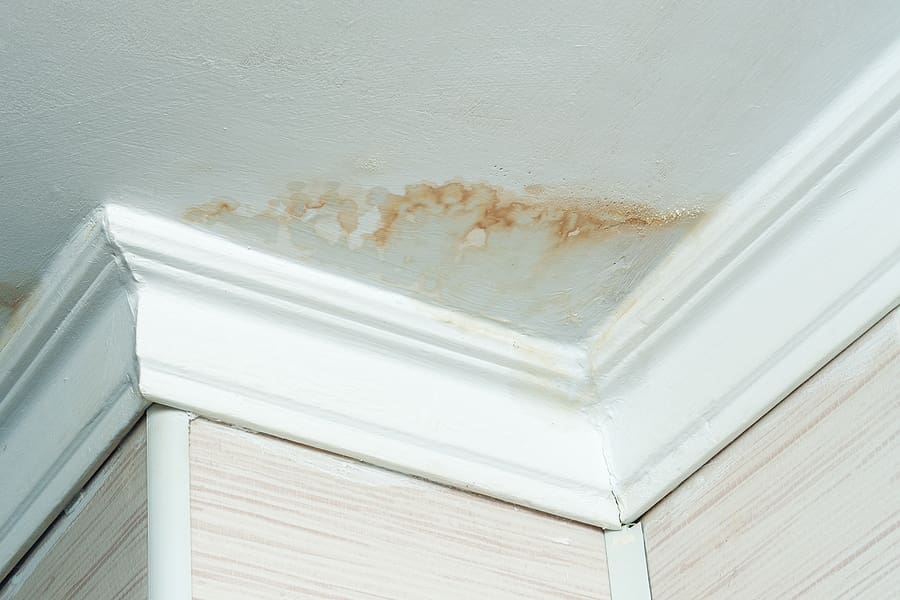
A brown or yellow ceiling water stain can make an otherwise clean room look neglected. It is understandable that many homeowners want to grab a can of stain-blocking primer, cover the discoloration, and move on.
Sometimes that is an acceptable final repair.
But painting should never be the first step.
You may be able to prime and repaint a small ceiling stain if the roof leak or other moisture source has been completely repaired, the ceiling and insulation are fully dry, and the drywall remains flat, firm, and structurally sound. If the drywall is soft, swollen, sagging, crumbling, repeatedly wet, or affected by visible mold-like growth, the damaged section may need to be removed and replaced.
A product such as KILZ can block a dry residual stain from bleeding through new paint. It cannot stop a roof leak, dry wet insulation, restore weakened drywall, repair rotten roof decking, or correct failed flashing.
The proper order is simple:
- Find the source of the water.
- Stop the leak.
- Determine what materials can be saved.
- Remove or dry damaged materials as appropriate.
- Prime and repaint only after the area is dry and sound.
This distinction is especially important in Albuquerque, Santa Fe, Rio Rancho, and other New Mexico communities where flat roofs, roof coatings, rooftop swamp coolers, seasonal monsoon storms, intense ultraviolet exposure, hail, and high winds can all contribute to hidden water intrusion.
Can You Paint Over a Ceiling Water Stain?
Yes, you can sometimes paint over a ceiling water stain—but only after the moisture source has been located and repaired and the drywall is completely dry and structurally sound.
A stain-blocking primer can seal the remaining discoloration so it does not bleed through the finish coat. The manufacturer’s instructions for KILZ primers require surfaces to be clean, dry, and free of loose paint and other contaminants before priming.
Painting may be appropriate when:
- The leak has been permanently repaired
- The ceiling is completely dry
- The stain is not expanding
- The drywall remains flat and firm
- There is no sagging or bulging
- The paper facing is intact
- There is no crumbling or delamination
- Wet insulation has been addressed
- There is no significant visible mold-like growth
- The stain does not return after rain or swamp cooler operation
In this situation, the stain is primarily a cosmetic problem. The surface may need cleaning, light preparation, stain-blocking primer, and ceiling paint.
Painting is not appropriate when the water source is still active or the building materials remain wet.
A Ceiling Stain Is Evidence, Not the Whole Problem
A ceiling stain is the visible evidence of water that came from somewhere else.
The source may be directly above the stain, but water does not always travel straight downward. It can move along roof decking, rafters, framing, pipes, ductwork, insulation, fasteners, or the underside of a roofing membrane before reaching the ceiling.
That means the visible stain may be several feet from the actual roof leak.
Common sources include:
- Failed roof flashing
- Damaged roof coatings
- Cracked foam roofing
- Punctured flat-roof membranes
- Open seams
- Missing or damaged shingles
- Broken roof tiles
- Leaking skylights
- Plumbing vents
- Rooftop swamp coolers
- Swamp cooler supply lines
- Corroded drain pans
- Ponding water
- Clogged roof drains
- Wind damage
- Hail damage
- Improper previous repairs
Rocky Mountain Roofing Services identifies flashing failures, roof membrane punctures, cracked roof coatings, UV deterioration, storm damage, ponding water, drainage problems, and aging roofing materials as common problems affecting New Mexico properties.
Covering the stain before identifying the source can hide an important warning sign while the damage continues above the ceiling.
Why Ordinary Ceiling Paint Often Fails
Ordinary latex ceiling paint may temporarily improve the appearance of a stain, but discoloration can migrate through the new coating.
Water moving through drywall can carry:
- Dust
- Wood tannins
- Rust
- Roofing residue
- Smoke deposits
- Minerals
- Other dissolved contaminants
After the water evaporates, those materials remain in or on the drywall surface. Applying ordinary paint may reactivate the stain or allow it to bleed through.
The result is familiar: the ceiling looks clean for several days or weeks, and then the yellow or brown ring reappears.
A stain-blocking primer is designed to seal the discoloration before the finish coat is applied. KILZ describes its ceiling stain-sealing products as primers intended to block stains caused by water, smoke, tannin, grease, and similar contaminants.
However, even the best primer only addresses the appearance of a dry stain.
It does not repair the condition that created it.
What KILZ and Other Stain-Blocking Primers Can and Cannot Do
| Stain-blocking primer can | Stain-blocking primer cannot |
| Seal a dry residual water stain | Stop an active roof leak |
| Reduce stain bleed-through | Dry wet drywall |
| Prepare repaired drywall for finish paint | Dry wet insulation |
| Improve paint adhesion | Restore weakened gypsum |
| Seal certain surface odors | Repair damaged flashing |
| Improve the final appearance | Correct ponding water |
| Cover discoloration after repairs | Remove concealed mold |
| Serve as the final cosmetic repair step | Repair rotten roof decking or framing |
The most important word in this table is dry.
Primer manufacturers generally require a properly prepared, dry surface. Applying primer over wet or unstable material may lead to peeling, bubbling, poor adhesion, recurring stains, and concealed deterioration.
How Do You Know Whether Ceiling Drywall Can Stay?
Not every ceiling stain requires drywall removal.
Drywall may remain serviceable after a minor leak if it dried quickly and did not lose its shape or strength. The decision should be based on the material’s condition rather than the stain’s color alone.
Signs that the drywall may be salvageable include:
- The ceiling is flat
- The surface feels firm
- The paper facing remains attached
- There is no bulging
- There is no crumbling
- Joint tape has not separated
- Fasteners have not pulled through
- The area is fully dry
- The stain is no longer growing
- The leak has been verified as repaired
A moisture meter or inspection of the cavity above the ceiling may be needed to confirm that the area is actually dry. The painted surface can feel dry while insulation, wood, or the back of the drywall remains damp.
When Should Ceiling Drywall Be Removed?
Drywall should be evaluated for removal when water has changed its shape, strength, attachment, or sanitary condition.
Warning signs include:
Soft or Spongy Drywall
If the ceiling yields when lightly touched, the gypsum core may have lost strength.
Do not repeatedly press on a wet ceiling. A saturated section may break loose.
Sagging or Bulging
Sagging is a serious warning sign. Water may be sitting on top of the drywall or the panel may have absorbed enough moisture to pull away from its fasteners.
Keep people, pets, furniture, and electronics away from the affected area and obtain professional help.
Swollen or Separating Material
Water can cause the drywall tape to bubble up, joints to open, texture to release, or layers to separate.
Crumbling Gypsum
If the material breaks apart easily or has become powdery, it is no longer a dependable ceiling surface.
Repeated Saturation
Drywall that has been soaked repeatedly may remain weaker even if it appears dry between leaks.
Visible Mold-Like Growth
Porous materials with mold growth can be difficult to clean completely because growth can extend into the material. The EPA notes that wet, mold-affected porous materials may have to be discarded rather than simply wiped or painted.
Extensive Water Damage
USG’s drywall repair instructions address water-damaged sections by cutting out the damaged panel and installing replacement drywall rather than merely coating the surface.
Paint, Repair, or Replace?
| Ceiling condition | Likely next step |
| Small dry stain, leak repaired, drywall firm | Apply stain-blocking primer and repaint |
| Stain returns after painting | Reinspect for an active or recurring leak |
| Stain enlarges after rain | Schedule roof leak detection |
| Drywall feels soft or swollen | Remove and replace the damaged section |
| Ceiling is sagging or bulging | Keep people away and request urgent help |
| Drywall is crumbling or separating | Replace the damaged material |
| Joint tape is loose | Repair after the area is dry and the leak is fixed |
| Visible mold-like growth is present | Obtain qualified evaluation before disturbing it |
| Insulation above the ceiling is wet | Evaluate for drying or removal |
| Roof decking or framing is deteriorated | Repair structural and roofing materials |
| Cause of the stain is unknown | Inspect the roof before cosmetic work |
This table provides general guidance. The final decision depends on the duration of the leak, type of water exposure, material condition, affected area, and what is found inside the ceiling cavity.
Why Wet Insulation Cannot Be Ignored
Homeowners often focus on the drywall because it is visible. The insulation above it may be the larger hidden problem.
Insulation can retain water after the ceiling surface appears dry. Depending on the type and extent of exposure, wet insulation may:
- Lose insulating effectiveness
- Develop musty odors
- Hold moisture against framing
- Keep the back of the drywall damp
- Conceal a continuing leak
- Contribute to staining
- Create conditions that support mold growth
- Increase the area requiring repair
Painting the ceiling does nothing to correct wet insulation.
The EPA’s primary moisture-control advice is to repair the water problem and dry wet materials completely. CDC/NIOSH guidance similarly recommends drying wetted materials promptly or removing them and specifically warns that painting over water-damaged or moldy surfaces can cause additional problems.
Access may be possible through an attic, ceiling opening, removed light fixture, duct opening, or carefully planned drywall removal. The correct approach depends on the home’s construction and the location of the stain.
Does a Ceiling Water Stain Mean the Roof Deck Is Rotten?
Not necessarily.
A single recent stain does not prove that the roof decking or framing has rotted. Wood deterioration generally develops after repeated or prolonged moisture exposure.
However, roof rot should be considered when the leak has existed for a long time.
Possible warning signs include:
- Repeated stains in the same location
- A musty odor that never goes away
- Soft roof decking
- Sagging roof areas
- Darkened wood
- Rusted fasteners
- Crumbling drywall
- Damp insulation
- Multiple layers of old roof patching
- A stain that grows after every storm
- Water entering around the same roof penetration repeatedly
The only reliable way to determine the extent of damage is through inspection.
A professional roof inspection may evaluate the exterior roofing system, flashing, roof penetrations, drainage, roof curb, coatings, membranes, shingles, tile, and accessible decking. Interior inspection may reveal wet insulation, staining patterns, damaged framing, or evidence that water traveled from another location.
Rocky Mountain Roofing Services provides roof inspections, leak detection, active leak repairs, temporary weather protection, flashing inspection, storm assessments, flat roof repair, roof coatings, and preventative maintenance.
Common Roof Problems That Cause Ceiling Water Stains
Failed Flashing
Flashing protects roof transitions and penetrations, including vents, chimneys, skylights, walls, pipes, and rooftop equipment.
If the flashing becomes loose, corroded, cracked, or separated, water may enter beneath the roofing system.
Flat-Roof Membrane Damage
TPO, PVC, modified bitumen, built-up roofing, and other flat-roof systems can develop punctures, open seams, failed transitions, or damage around equipment.
Cracked Roof Coatings
New Mexico’s intense sunlight can age exposed roof coatings. Small cracks may allow water to enter the underlying roof assembly.
Ponding Water
Water that remains on a flat roof can increase stress around seams, drains, flashings, and low areas.
Ponding does not always mean the roof will leak, but it can expose weak points and accelerate deterioration.
Storm Damage
Hail, high winds, and wind-driven debris can damage roofing materials, roof coatings, flashing, swamp coolers, and other roof-mounted equipment.
Swamp Cooler Leaks
A rooftop evaporative cooler introduces several potential water-entry points:
- Supply line
- Float valve
- Drain pan
- Overflow
- Roof curb
- Flashing
- Duct connection
- Electrical penetrations
- Fasteners
- Nearby roofing material
A ceiling stain near the main cooler duct may originate from the cooling system, the roof penetration, or both.
Why New Mexico Homes Frequently Develop Stains Near Swamp Coolers
Rooftop swamp coolers are common throughout Albuquerque and other parts of New Mexico because evaporative cooling works well in dry climates.
However, placing water-filled equipment on a roof creates additional maintenance needs.
The cooler and surrounding roofing are exposed to:
- Intense UV radiation
- High summer temperatures
- Monsoon rain
- Hail
- Strong winds
- Sudden temperature swings
- Winter freezing
- Seasonal shutdown and startup
- Vibration from the equipment
Sealants can harden and crack. Metal pans can corrode. Water lines can age. Flashing may separate. Roof coatings can deteriorate around the curb.
A musty smell when the cooler runs, staining near the main vent, damp insulation, or recurring discoloration after monsoon storms should not be treated as a paint problem until the roof and cooler have been inspected.
Rocky Mountain Roofing Services’ editorial profile specifically emphasizes expertise in New Mexico’s high elevation, intense UV exposure, monsoon season, hailstorms, high winds, freeze-thaw cycles, flat-roof construction, flashing systems, drainage, and leak detection.
Should You Repair the Roof or the Drywall First?
Repair the water source before completing permanent drywall and paint repairs.
The recommended sequence is:
1. Stop Active Water Intrusion
Turn off a leaking swamp cooler or water line when possible. Protect the interior from additional dripping.
2. Document the Damage
Photograph the stain, active water, damaged belongings, and any visible changes after rain.
Documentation may also be useful for an insurance claim.
3. Inspect the Roof and Rooftop Equipment
A roofer should identify whether the water came from the roofing system, flashing, storm damage, or roof penetration.
An HVAC technician or plumber may also be required if the source is the swamp cooler or supply line.
4. Complete Temporary Protection
Emergency tarping or temporary weather protection may be needed until permanent repairs can be completed.
5. Repair the Source
The correct repair may involve flashing, a membrane, coating, shingles, tile, roof drainage, a cooler curb, or another component.
6. Dry the Ceiling Assembly
Drying may involve air movement, dehumidification, removal of wet insulation, or opening the ceiling cavity.
7. Remove Unsalvageable Material
Soft drywall, contaminated porous materials like paint, damaged insulation, and deteriorated wood may require removal.
8. Complete Interior Repairs
Replace insulation and drywall as needed. Restore joint compound, texture, and other finishes.
9. Apply Stain-Blocking Primer
Use a primer intended for water stains and follow the manufacturer’s instructions.
10. Repaint the Ceiling
Apply the final ceiling paint after the primer has dried and the stain is fully sealed.
Painting first reverses the proper order and makes it harder to monitor whether the leak has truly stopped.
What Happens During a Professional Roof Inspection?
A roof inspection for a ceiling water stain should be more thorough than looking directly above the damaged ceiling.
The roofer may examine:
- Roof condition above and around the stain
- Roof penetrations
- Flashing
- Swamp cooler curbs
- Water-line penetrations
- Duct openings
- Roof coatings
- Flat-roof membranes
- Seams and transitions
- Shingles or tile
- Ponding areas
- Drains and scuppers
- Previous repair materials
- Storm damage
- Accessible roof decking
- Interior moisture patterns
Professional leak detection is a process of elimination.
Experienced roofers look at how water is likely to move across and through the roofing system. They also distinguish between recent damage and long-term deterioration.
Rocky Mountain Roofing Services evaluates roofing systems individually rather than using one-size-fits-all recommendations. The company considers the roof’s age, material, condition, building type, and long-term performance goals when recommending repair, restoration, or replacement.
Common DIY Mistakes to Avoid
Painting Before Fixing the Leak
This hides the warning sign while the moisture problem continues.
Assuming the Ceiling Is Dry Because It Feels Dry
The surface may dry before the insulation, framing, or back of the drywall.
Applying Repeated Coats of Ordinary Paint
More paint does not correct stain bleed-through or moisture.
Priming Over Mold-Like Growth
CDC/NIOSH specifically identifies painting over moldy or water-damaged materials as inappropriate remediation that may create further problems.
Ignoring a Musty Odor
A musty smell may indicate damp material even when no active dripping is visible. The CDC notes that mold may appear in different colors and can have a musty odor, but appearance or smell alone does not identify the mold species or determine the extent of contamination.
Puncturing a Bulging Ceiling
A bulging ceiling may contain trapped water and weakened drywall. Puncturing it without proper precautions can release water and cause the material to collapse.
Climbing Onto a Wet Roof
Wet roofs, damaged roofing, electrical equipment, steep surfaces, and high winds create serious hazards. Leave roof access to trained professionals with appropriate fall protection.
Smearing Roof Cement Over the Suspected Area
Unplanned patching may not stop the leak and may make a professional repair more difficult, especially if the material is incompatible with the roof system.
Frequently Asked Questions
Can I paint directly over a ceiling water stain?
You can paint over a stain only after the water source has been repaired, the area is fully dry, and the drywall remains sound. Use a stain-blocking primer before applying ceiling paint.
Will KILZ stop a roof leak?
No. KILZ and similar products are primers and stain sealers. They can block dry discoloration but cannot repair roofing materials or stop water intrusion.
Why does my ceiling stain keep coming back?
The stain may not have been sealed with the correct primer, or the leak may still be active. A stain that grows after rain strongly suggests that the moisture source requires further investigation.
How can I tell whether ceiling drywall is ruined?
Softness, sagging, bulging, crumbling, swelling, separating paper, loose tape, or repeated saturation are signs that removal may be necessary.
Can water-damaged drywall dry without being removed?
Minorly damp drywall may sometimes dry successfully if the water source is stopped quickly and the material remains firm and undamaged. Saturated, sagging, contaminated, or structurally weakened drywall should be evaluated for removal.
Does wet drywall always develop mold?
No, but moisture creates conditions that can support mold growth. The EPA emphasizes that mold requires moisture and that moisture problems should be corrected promptly.
What happens if wet insulation is left above the ceiling?
It may retain moisture, lose insulating effectiveness, contribute to odors, keep nearby materials damp, and increase the potential for concealed damage.
Can a ceiling collapse after a roof leak?
A heavily saturated drywall ceiling can sag, separate from its fasteners, or collapse. Keep people away from a bulging or sagging area and request professional help.
Is every brown ceiling stain caused by a roof leak?
No. Plumbing, HVAC condensation, swamp coolers, bathroom fixtures, and supply lines can also cause staining. The source must be identified before repairs begin.
Should I call a roofer or drywall contractor first?
If the stain appeared after rain, below a roof penetration, near a swamp cooler, or beneath a flat roof, call a roofing contractor first. Once the leak has been corrected, a drywall contractor can restore damaged interior materials.
Can I use bleach on a ceiling water stain?
Bleach is not a substitute for repairing the moisture source or removing damaged material. Never mix bleach with ammonia or other cleaners. CDC guidance says cleanup methods depend on the extent and location of water damage and warns against mixing cleaning products.
Will homeowner’s insurance cover damaged ceiling drywall?
It may, depending on what caused the leak and the terms of the policy. Sudden accidental damage may be treated differently from long-term deterioration or deferred maintenance. Document the damage and contact the insurer promptly.
Fix the Leak Before You Cover the Stain
A ceiling water stain is not merely a painting problem.
It is evidence that water entered the ceiling assembly. The drywall may still be usable, or it may be hiding wet insulation, damaged framing, failed flashing, a leaking swamp cooler, or an active roof defect.
You may be able to seal and repaint a small stain when:
- The leak has been repaired
- The area is fully dry
- The drywall is firm and flat
- The insulation is dry
- No significant contamination is present
Drywall removal may be necessary when:
- The ceiling is soft
- The panel is swollen
- The material is sagging
- The gypsum is crumbling
- The area has been repeatedly soaked
- Mold-like growth affects porous material
- Wet insulation or concealed damage must be accessed
Painting is the final cosmetic step. It is not actual repair.
Schedule a Professional Roof Inspection with Rocky Mountain Roofing Services
If a ceiling stain appeared after rain, near a rooftop swamp cooler, below a flat roof, or beneath another roof penetration, contact Rocky Mountain Roofing Services before covering it with paint.
Rocky Mountain Roofing Services provides professional roof inspections, roof leak detection, flashing repair, emergency roof repair, storm-damage assessments, flat-roof repair, roof coatings, preventative maintenance, roof restoration, and roof replacement throughout Albuquerque, Santa Fe, Rio Rancho, Corrales, Bernalillo, Placitas, Los Lunas, Belen, Edgewood, and surrounding Central and Northern New Mexico communities.
With more than 35 years of combined roofing experience, the company understands how New Mexico’s intense sunlight, hailstorms, high winds, monsoon rains, freeze-thaw cycles, flat-roof systems, and rooftop swamp coolers contribute to water intrusion.
The company’s internal linking strategy places ceiling-water-stain education within the broader roof repair, leak detection, inspection, flashing repair, emergency roofing, flat roofing, and preventative maintenance knowledge cluster.
Rocky Mountain Roofing Services can inspect the roofing system, identify visible sources of water intrusion, document the roof’s condition, and recommend an appropriate repair based on the building and roofing system.
Rocky Mountain Roofing Services
100 Mountain Park Place, Suite A
Albuquerque, NM 87114
Phone: (505) 717-1925
Contact Rocky Mountain Roofing Services today to schedule an honest professional roof evaluation. Fix the source of the water damage first—then repair, prime, and paint the ceiling with confidence.