
What Are the Risks of a Tar and Gravel Flat Roof?
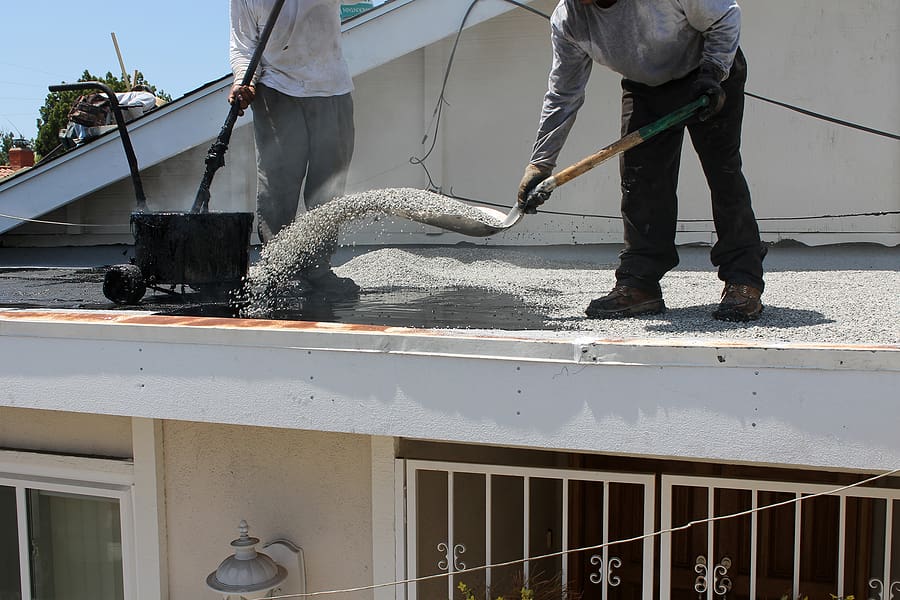
Tar and gravel flat roofs can provide dependable weather protection for many years, but they also have several important disadvantages. Common risks include hidden membrane damage, difficult leak detection, ponding water, considerable roof weight, displaced gravel, deteriorating asphalt, flashing failures, and increasingly expensive repairs as the roof ages.
These problems do not mean every tar and gravel roof need immediate replacement. A properly installed and well-maintained built-up roofing system may continue performing for decades. The difficulty is that the gravel surface can conceal early signs of deterioration that would be much easier to see on a smooth roofing membrane.
That makes regular professional roof inspections especially important.
In Albuquerque, Santa Fe, and throughout New Mexico, aging tar and gravel roofs face intense ultraviolet radiation, high winds, hail, dramatic temperature changes, summer monsoon storms, snow, and freeze-thaw cycles. These conditions can gradually dry out asphalt, move surface gravel, weaken flashings, create cracks, and expose low areas where water collects.
Rocky Mountain Roofing Services evaluates each roofing system individually. Roof age is only one consideration. Drainage, moisture, insulation, flashing condition, previous repairs, roof-deck stability, and the owner’s long-term plans must also be examined before deciding whether repair, restoration, or replacement offers the best value.
What Is a Tar and Gravel Flat Roof?
A tar and gravel roof is a traditional form of built-up roofing, commonly abbreviated as BUR.
Although these systems are commonly called tar and gravel roofs, the waterproofing material is generally roofing asphalt rather than ordinary tar. The roof is constructed from several layers of reinforcing fabric or roofing felt embedded in asphalt or another compatible bituminous material.
A typical system may include:
- A structural roof deck
- Roof insulation or a cover board
- A base sheet
- Multiple asphalt and reinforcing layers
- A protective asphalt flood coat
- Gravel or another mineral aggregate
The reinforcing layers create a thick waterproofing assembly. The gravel protects the asphalt against direct sunlight, windborne debris, minor impact, and regular rooftop exposure.
Built-up roofs became common on commercial buildings, schools, churches, apartment properties, industrial facilities, and Southwestern homes because they offered multiple waterproofing layers and a history of dependable performance.
The same gravel that protects the roof, however, can also hide the damage beneath it.
Why Did Tar and Gravel Roofs Become Popular?
Traditional built-up roofs earned a strong reputation because of their layered construction.
Potential advantages include:
- Multiple reinforced waterproofing layers
- Resistance to normal rooftop traffic
- Protection from ultraviolet exposure
- Some resistance to minor impact and windborne debris
- Familiar repair methods
- Compatibility with many commercial buildings
- Long service potential when properly installed and maintained
A single small defect does not necessarily compromise every roofing layer. That redundancy is one of the reasons BUR systems remained common for so many decades.
However, performance depends heavily on installation quality, drainage, flashing design, regular maintenance, and the condition of the underlying roof deck and insulation.
As the system ages, the features that once provided protection can also complicate inspections and repairs.
Gravel Can Hide Roof Damage
One of the most significant disadvantages of a tar and gravel roof is that the waterproofing membrane cannot be viewed easily.
On a smooth single-ply roof, an experienced inspector may be able to identify:
- Open seams
- Surface cracks
- Punctures
- Loose membrane
- Shrinkage
- Previous repairs
- Exposed fasteners
- Flashing separation
On a tar and gravel roof, many of these conditions may be covered by aggregate.
Inspectors may need to carefully move gravel from selected areas to evaluate the asphalt and reinforcing layers. The gravel must then be restored correctly after the inspection or repair.
Conditions hidden beneath the surface can include:
- Cracked asphalt
- Membrane splits
- Deteriorated patches
- Loose laps
- Blisters
- Bare asphalt
- Open pitch pockets
- Wet insulation
- Separation around roof penetrations
A roof may appear reasonably uniform from the ground while damage continues developing underneath the gravel.
Tar and Gravel Roof Leaks Can Be Difficult to Locate
The place where water appears inside a building is not always directly beneath the roof opening.
Water can enter through a failed flashing, drain, penetration, crack, seam, or deteriorated patch. It may then travel through insulation, between roof layers, along structural components, or across the roof deck before becoming visible on a ceiling or wall.
The gravel surface makes leak detection more challenging because:
- The membrane is covered.
- Previous repairs may be difficult to see.
- Water can spread through wet insulation.
- Multiple defects may be present.
- Loose aggregate can redirect surface water.
- Ponding may affect a large area.
- Rooftop equipment can create complex leak paths.
A professional leak investigation may require gravel removal in suspected areas, flashing examination, drain inspection, moisture testing, core sampling, or infrared evaluation when appropriate.
Applying roof cement directly above an interior water stain may not solve the problem because the stain shows where water became visible—not necessarily where it entered the roof.
Ponding Water Can Accelerate Deterioration
A flat roof should never be completely flat. It requires enough slope to direct water toward drains, scuppers, gutters, or other designed outlets.
Ponding water is water that remains on the roof for an extended period after rainfall. The Rocky Mountain Roofing Services knowledge base defines ponding as water remaining on a flat roof for more than 48 hours after rain.
Common causes include:
- Inadequate original slope
- Settled insulation
- Roof-deck deflection
- Structural movement
- Clogged drains
- Blocked scuppers
- Poorly positioned drainage outlets
- Previous repairs that created high spots
- Compressed insulation
- Added rooftop equipment
Standing water can keep vulnerable areas wet for extended periods. It may also carry dirt and sediment into low spots, increase roof loading, and expose existing membrane defects to prolonged moisture.
During New Mexico’s monsoon season, one intense storm can expose drainage problems that are difficult to recognize during the dry months.
The correct solution depends on the cause. It may involve:
- Cleaning drains and scuppers
- Repairing localized low areas
- Installing tapered insulation
- Improving drainage outlets
- Correcting roof-deck problems
- Reconstructing portions of the roofing system
- Replacing a roof with widespread slope deficiencies
Adding more roofing material to the low area without correcting the drainage path can simply move the ponding problem somewhere else.
Tar and Gravel Roofing Is Heavy
A built-up roof may be considerably heavier than many modern single-ply roofing systems.
The total load can include:
- Several asphalt and reinforcing layers
- Surface gravel
- Roof insulation
- Repeated patches
- Additional roofing layers
- Retained water
- Wet insulation
- Ponding water
- Rooftop mechanical equipment
The building may have been designed for the original roof weight, but complications can arise when additional roof systems are installed over the existing assembly.
Before placing a new roofing system over an old tar and gravel roof, the contractor should evaluate:
- The number of existing roof layers
- Roof-deck stability
- Moisture within the system
- The condition of the insulation
- Structural load limitations
- Building-code requirements
- Manufacturer requirements
- The weight of the proposed assembly
A roof recover may be appropriate in certain situations, but it should not be used to conceal saturated insulation, widespread deterioration, structural instability, or excessive loading.
Gravel Can Shift and Leave Asphalt Exposed
Gravel protects the underlying asphalt, but it does not always stay evenly distributed.
New Mexico’s strong winds can move loose aggregate across a roof. Foot traffic, hail, maintenance work, HVAC service, drainage patterns, and equipment installation may also disturb the surface.
Displaced gravel can lead to:
- Exposed asphalt
- Uneven protective coverage
- Gravel accumulation around drains
- Hidden low areas
- Unstable walking conditions
- Loose stones near roof edges
- Accelerated UV deterioration
- Damage from concentrated foot traffic
Bare asphalt is especially vulnerable to the intense sunlight common in Albuquerque and Santa Fe. Once exposed, it may begin to oxidize, dry out, crack, and lose flexibility.
Roof inspections should identify both bare areas and locations where aggregate has accumulated excessively.
UV Exposure Can Dry Out Asphalt
New Mexico’s high elevation and frequent sunshine expose roofing systems to intense ultraviolet radiation.
The gravel layer is intended to shield the asphalt. Problems develop where gravel has moved or where repairs and flashing details remain exposed.
Asphalt deterioration can accelerate around:
- Bare surface areas
- Roof edges
- Penetrations
- Previous repair locations
- Wall flashings
- Equipment curbs
- Drains and scuppers
Dark roof surfaces also absorb substantial heat. A roof may become extremely hot during the afternoon and cool rapidly after sunset.
This daily heating and cooling causes repeated movement within the roofing system. Over time, the asphalt may become less flexible, making it more vulnerable to cracking and splitting.
Temperature Changes Cause Roof Movement
Albuquerque and Santa Fe can experience major differences between daytime and nighttime temperatures. Seasonal conditions add more stress, particularly at higher elevations where freezing temperatures and snow are more common.
Different roof components expand and contract at different rates. Asphalt, insulation, metal flashings, masonry walls, pipes, structural decking, and equipment curbs do not all move together.
This movement can contribute to:
- Membrane splits
- Cracked patches
- Open flashing joints
- Separation around pipes
- Damage at parapet walls
- Stressed expansion joints
- Open drain details
- Cracks around rooftop equipment
Water can enter a small defect and freeze during cold weather. As it expands, it may enlarge the opening. Repeated freeze-thaw cycles can gradually turn a minor problem into a more serious leak.
Flashing Failures Are Common Leak Sources
Many flat-roof leaks begin at flashing details rather than in the open field of the roof.
Flashings protect areas where the roofing system meets another building component, including:
- Parapet walls
- Roof edges
- Pipes
- Vents
- Skylights
- HVAC curbs
- Drains
- Scuppers
- Expansion joints
- Electrical penetrations
- Pitch pockets
These locations experience water concentration, material transitions, movement, service activity, and frequent repairs.
Common flashing failures include:
- Cracks at wall transitions
- Loose counterflashing
- Open termination bars
- Failed sealant
- Deteriorated pitch pockets
- Rusted metal
- Improper patches
- Separation around pipes
- Inadequate flashing height
- Water entering behind the flashing
Applying another layer of roofing cement over a failing detail may provide temporary relief, but repeated patching can hide the original problem and make future repairs more difficult.
A lasting solution usually requires identifying the exact failure and rebuilding the flashing detail properly.
Blisters May Form Between Roofing Layers
Blisters are raised areas caused by trapped air, moisture, or gas between roofing layers.
As the roof heats, trapped material expands and creates pressure. The roofing plies may separate and form a bubble-like area.
A blister may remain stable for some time, but it can be damaged by:
- Foot traffic
- Sharp gravel
- Hail
- Maintenance work
- Standing water
- Thermal movement
- Freeze-thaw cycles
Once ruptured, the blister may create a direct path for water.
Not every blister should automatically be cut open. A roofing professional should consider its size, location, moisture condition, stability, and risk before recommending repair.
Roof Drains and Scuppers Can Become Blocked
Loose gravel and sediment frequently migrate toward drainage areas.
Leaves, dirt, roofing aggregate, bird nesting material, windblown debris, and construction materials can obstruct drains or scuppers.
When drainage is restricted:
- Water backs up around the outlet.
- Ponding spreads across the roof.
- Sediment collects in low areas.
- Water may rise above flashing details.
- Additional weight is placed on the structure.
- Leaks may develop around drain connections.
Drain and scupper cleaning should be included in a preventative roof maintenance program.
Drainage should also be evaluated after:
- Monsoon storms
- High-wind events
- Hail
- Snow or ice
- HVAC service
- Nearby construction
- Solar-panel installation
- Other rooftop work
Because flat roofs involve serious fall hazards, owners should avoid climbing onto the roof without proper safety training and equipment.
Repairs Can Be Labor-Intensive
Repairing a tar and gravel roof typically requires more work than simply covering a visible crack.
A proper repair may involve:
- Moving gravel away from the damaged area
- Cleaning and drying the exposed roof
- Locating the full extent of deterioration
- Removing failed roofing materials
- Replacing wet insulation
- Installing reinforced repair plies
- Tying the repair into the existing roof
- Restoring compatible protective surfacing
The repair becomes more difficult when the roof contains:
- Many old patches
- Several different repair materials
- Widespread trapped moisture
- Contaminated asphalt
- Loose roofing layers
- Incompatible coatings
- Deteriorated insulation
- Structural movement
Not every roof coating, membrane, cement, or sealant is compatible with every built-up roofing system.
A poorly planned patch can trap moisture, crack prematurely, block drainage, or interfere with future repairs.
Wet Insulation Can Remain Hidden
Once water penetrates a built-up roof, it may become trapped in the insulation or between roofing layers.
The surface may appear dry while the underlying insulation remains saturated.
Hidden moisture can lead to:
- Reduced insulation performance
- Higher heating and cooling costs
- Roof-deck deterioration
- Corrosion of metal components
- Roof blistering
- Interior humidity
- Repeated leakage
- Mold growth in vulnerable building materials
- Additional roof weight
Repeatedly repairing only the visible surface may leave wet materials in place.
Moisture evaluation may involve:
- Visual inspection
- Core samples
- Infrared scanning
- Electronic moisture detection
- Examination from below
- Inspection of insulation and deck conditions
The purpose is to determine whether the leak affected a small, repairable area or a broader portion of the roof assembly.
Tear-Off and Disposal Can Be Difficult
When a tar and gravel roof reaches the end of its practical service life, removal may require substantial labor and planning.
Crews must manage:
- Loose aggregate
- Heavy asphalt plies
- Old insulation
- Previous patches
- Rooftop equipment
- Debris containment
- Building protection
- Material handling
- Disposal requirements
- Dust and odor
- Safe lowering of heavy debris
Commercial property owners may also need to coordinate replacement around employees, tenants, customers, inventory, and operating hours.
The weight and volume of the removed materials can increase labor, staging, and disposal requirements compared with some lighter roofing systems.
Common Tar and Gravel Roof Problems
| Roofing problem | Why it develops | Possible result |
| Hidden membrane damage | Gravel covers cracks and failed repairs | Leaks may remain undetected |
| Ponding water | Poor slope, blocked drains, or settled insulation | Faster deterioration and added weight |
| Exposed asphalt | Gravel displacement | UV damage and cracking |
| Flashing failure | Movement and material transitions | Leaks around walls and penetrations |
| Blistering | Trapped air or moisture | Layer separation and rupture |
| Wet insulation | Unrepaired water intrusion | Energy loss and roof-deck damage |
| Drain blockage | Gravel, leaves, and debris | Widespread standing water |
| Repeated patching | Aging system or incorrect repairs | Rising costs and short repair life |
| Heavy roof assembly | Multiple plies, gravel, and retained water | Structural and recover limitations |
Can a Tar and Gravel Roof Be Repaired?
Yes. Many tar and gravel roofs can be repaired when the deterioration is limited and the surrounding roofing system remains stable.
Repair may be appropriate when:
- The leak source can be identified.
- The damage is localized.
- Most insulation is dry.
- The roof deck remains sound.
- Flashing failure is limited.
- Drainage can be corrected.
- Widespread splitting is absent.
- Previous repairs are performing.
- The remaining roof has useful service life.
Possible repairs include:
- Rebuilding damaged flashings
- Repairing drains
- Replacing localized roofing sections
- Removing wet insulation
- Reinforcing splits
- Repairing blisters
- Restoring pitch pockets
- Redistributing gravel
- Improving scuppers
- Installing a compatible restoration system when appropriate
An honest inspection should come before any recommendation. Rocky Mountain Roofing Services emphasizes extending the useful life of a roof whenever repair or maintenance remains practical.
When Does Replacement Make More Sense?
Replacement may provide better long-term value when damage is widespread or when repairs no longer control the underlying problems.
Replacement may be considered when:
- Leaks occur throughout the building.
- Large areas of insulation are wet.
- The roof has widespread cracking or blistering.
- Drainage problems affect most of the roof.
- Perimeter and penetration flashings are failing.
- The roof contains many incompatible patches.
- Repairs are becoming frequent.
- The roof deck is deteriorated.
- Additional roof weight is a concern.
- The owner wants improved energy performance.
- The roof is near the end of its practical life.
- Major building improvements are planned.
Roof age alone should not control the decision. An older roof that has been installed and maintained correctly may outperform a much newer system with poor drainage or installation defects.
| Roof condition | Repair may be practical | Replacement may offer better value |
| Leak pattern | One identifiable leak | Repeated leaks across several areas |
| Moisture | Small localized wet area | Widespread saturated insulation |
| Membrane | Mostly stable | Extensive cracks, splits, or brittleness |
| Flashing | One failed detail | System-wide flashing deterioration |
| Drainage | Correctable obstruction or low spot | Broad slope or structural problems |
| Repair history | Few effective repairs | Repeated short-lived patches |
| Ownership plan | Short-term service extension | Long-term building ownership |
How Does Tar and Gravel Compare With TPO and Foam Roofing?
No flat roofing system is best for every building.
The correct option depends on:
- Roof structure
- Existing materials
- Drainage
- Building use
- Insulation goals
- Rooftop traffic
- Mechanical equipment
- Owner priorities
- Available maintenance
- Long-term plans
| Feature | Tar and gravel BUR | TPO roofing | Spray polyurethane foam |
| Construction | Multiple asphalt and reinforced plies | Reinforced single-ply membrane | Seamless sprayed foam with coating |
| Surface | Gravel-covered | Smooth membrane | Coated foam surface |
| Weight | Relatively heavy | Generally lighter | Generally lightweight |
| Visibility | Gravel can hide damage | Surface defects may be easier to see | Damage often appears in the coating |
| Seams | Multiple redundant plies | Heat-welded seams | Seamless field application |
| Reflectivity | Usually dark unless coated | Commonly reflective | Depends on coating |
| Drainage correction | May require reconstruction or tapered insulation | Tapered insulation may be installed | Foam thickness can sometimes improve drainage |
| Maintenance | Gravel, drains, flashings, and membrane | Seams, flashings, punctures, and penetrations | Coating, punctures, and exposed foam |
TPO Roofing
TPO is a thermoplastic single-ply membrane commonly installed on commercial buildings.
Potential benefits include:
- A comparatively lightweight assembly
- Reflective surface options
- Heat-welded seams
- Easier visual surface inspection
- Compatibility with tapered insulation
- Strong commercial-roofing applications
TPO still requires skilled installation, secure flashing details, inspections, and repair of punctures or seam damage.
Spray Polyurethane Foam
Spray polyurethane foam is applied as a liquid that expands into a continuous insulating layer. A protective coating is placed over it.
Potential benefits include:
- Seamless application
- Added insulation
- Conformity around penetrations
- Potential drainage improvements
- Restoration through recoating when maintained
Foam roofing requires regular coating inspections and protection against punctures or mechanical damage.
Roof Coatings
Some existing built-up roofs may qualify for silicone, acrylic, or another compatible roof-restoration coating.
A coating should not be used to cover:
- Saturated insulation
- Structural deterioration
- Unstable roofing
- Widespread membrane failure
- Serious drainage defects
- Incompatible materials
The roof must be inspected, repaired, cleaned, prepared, and tested before a restoration coating is recommended.
How Often Should a Tar and Gravel Roof Be Inspected?
A professional roof inspection should generally be considered at least once each year and after severe weather.
Additional inspections may be appropriate after:
- Hailstorms
- High winds
- Heavy monsoon rains
- Snow and ice
- HVAC work
- Electrical or plumbing work
- Solar-panel installation
- Rooftop construction
- New interior water stains
- Repeated leak complaints
- Changes in drainage
Preventative maintenance may include:
- Cleaning drains and scuppers
- Removing debris
- Redistributing loose gravel
- Checking for exposed asphalt
- Inspecting flashing details
- Reviewing roof penetrations
- Monitoring ponding water
- Evaluating previous patches
- Repairing small defects promptly
- Checking roof edges and parapets
Regular maintenance can identify small problems before they become emergency leaks or major structural repairs.
Frequently Asked Questions
What is a tar and gravel roof?
It is a built-up roofing system made from several reinforced asphalt layers covered with gravel or mineral aggregate.
How long does a tar and gravel roof last?
Service life varies according to installation, number of plies, drainage, maintenance, weather exposure, previous repairs, and the condition of the roof deck and insulation.
Are tar and gravel roofs still installed?
Yes, built-up roofing remains available, although many property owners also consider TPO, PVC, modified bitumen, spray foam, and roof coatings.
Why do tar and gravel roofs leak?
Leaks may develop through membrane cracks, failed flashings, blisters, deteriorated patches, punctures, blocked drains, exposed asphalt, or water trapped within the roofing system.
Can leaks hide beneath the gravel?
Yes. Gravel can conceal cracks, open laps, failed repairs, exposed asphalt, and wet roofing materials.
Does ponding water mean the roof must be replaced?
Not automatically. The cause and extent of ponding should be evaluated. Some problems can be corrected through maintenance or localized drainage work.
Can a tar and gravel roof be coated?
Some BUR roofs may qualify for a restoration coating after moisture testing, repairs, cleaning, preparation, and compatibility review.
Is TPO better than tar and gravel roofing?
Not for every building. Both systems have advantages and limitations. The appropriate choice depends on the roof structure, drainage, energy goals, building use, and long-term plans.
Can a leaking built-up roof be repaired?
Often, yes. Localized damage may be repairable when the surrounding roof is dry, stable, and structurally sound.
How often should a commercial flat roof be inspected?
An annual professional inspection and additional inspections after major storms or rooftop work are practical starting points. Older or leak-prone roofs may require more frequent attention.
A tar and gravel roof may continue protecting a building long after the first small defect develops—provided the problem is found and repaired correctly.
The difficulty is that gravel may hide damage until water becomes visible inside the property. Ponding water, deteriorated asphalt, wet insulation, loose aggregate, blocked drains, and failing flashings can become increasingly expensive when ignored.
Rocky Mountain Roofing Services provides professional roof inspections, leak detection, flat roof repair, preventative maintenance, roof restoration, and complete roof replacement throughout Albuquerque, Santa Fe, and surrounding New Mexico communities.
With more than 35 years of combined roofing experience, the company evaluates each roof individually and provides recommendations based on the existing roofing system, moisture conditions, drainage, building needs, and long-term performance goals.
Rocky Mountain Roofing Services
100 Mountain Park Place, Suite A
Albuquerque, New Mexico 87114
Santa Fe Office
150 Washington Avenue, Suite 201
Santa Fe, New Mexico 87501
Phone: 505-717-1925
Schedule a professional roof inspection before a hidden defect becomes a major repair.
Conclusion
Tar and gravel flat roofs have protected New Mexico homes and commercial buildings for generations. Their reinforced asphalt layers and protective gravel can provide dependable weather protection when the system is properly installed, drained, inspected, and maintained.
Their strengths also create several important risks.
The gravel protects the asphalt but hides the waterproofing membrane. The multilayer construction provides redundancy but adds weight and complicates removal. Asphalt creates a durable water barrier but can become brittle after years of ultraviolet exposure and temperature movement.
Common concerns include:
- Hidden leaks
- Ponding water
- Gravel displacement
- Exposed asphalt
- Flashing failure
- Blistering
- Blocked drains
- Wet insulation
- Difficult leak detection
- Increasing repair costs
None of these conditions automatically means the roof must be replaced.
Localized flashing failures, drain problems, punctures, blisters, and small wet areas may often be repaired. Replacement becomes more likely when damage is widespread, insulation is saturated, drainage deficiencies affect large portions of the roof, repeated repairs fail, or the system no longer provides dependable long-term performance.
The most reliable recommendation begins with a thorough inspection—not the roof’s age alone.
An experienced New Mexico roofing contractor can evaluate the visible roof, underlying moisture, flashings, drainage, penetrations, insulation, repair history, and roof deck before recommending repair, restoration, or replacement. That accurate diagnosis allows property owners to protect their buildings without paying for work the roofing system does not yet require.