What Makes Commercial Roof Leaks Spread to Multiple Locations?
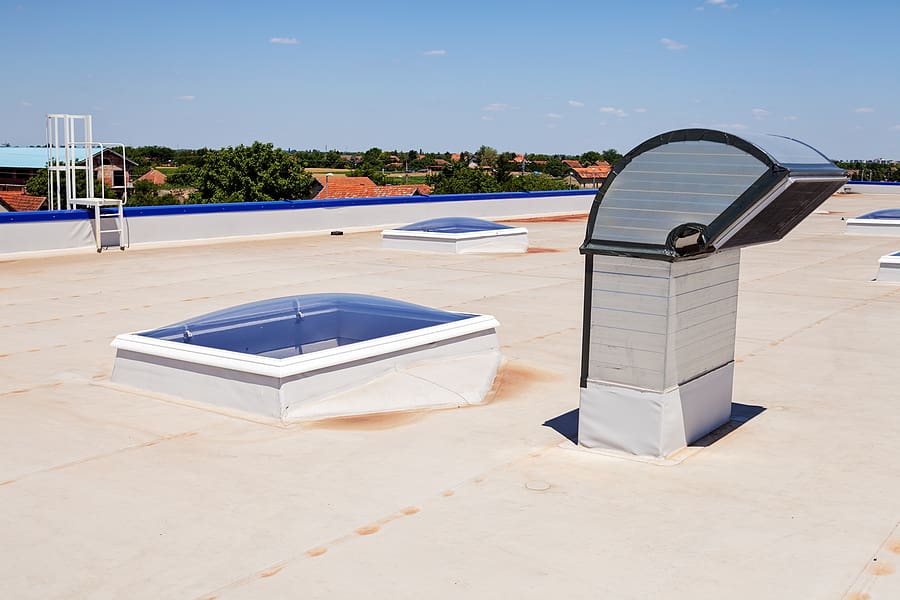
A commercial roof can leak in different places because water may travel beneath the roofing membrane before entering the building, or because several parts of the roofing system are deteriorating at the same time. Damaged seams, failed flashing, roof penetrations, drainage problems, and moisture trapped in insulation can all contribute to recurring leaks.
For commercial property owners and facility managers in Albuquerque and Santa Fe, the frustrating part is that repairing one visible leak does not always resolve the underlying problem. A ceiling stain may disappear after a repair, only for water to appear somewhere else during the next storm.
The key is determining whether the building has multiple independent leaks, one concealed water-entry point, or a larger roofing problem that isolated repairs cannot adequately address.
Why Does Water Appear in Different Places Inside a Commercial Building?
The location where water drips from a ceiling is not necessarily where it entered the roof.
Commercial roofing systems often contain several layers, including a waterproofing membrane, insulation, cover boards, and a structural roof deck. Depending on the roof assembly, water entering through a damaged area may move horizontally before finding a path into the occupied space.
Water can follow insulation joints, gaps between materials, structural members, or openings around penetrations. It may eventually reach the ceiling at a location some distance from the original entry point.
This creates a misleading situation. A property manager sees water dripping near an office doorway and assumes the roof directly above that doorway is leaking. After that area is repaired, another stain appears farther down the hallway.
The second stain could indicate another roof defect. It could also result from water traveling through the same concealed assembly.
That distinction cannot reliably be made from interior stains alone.
Understanding the layers of a TPO roofing system helps explain why the path water follows can be more complicated than the visible damage suggests.
Can One Roof Leak Cause Multiple Ceiling Stains?
Yes. A single roof opening can sometimes produce several interior stains, particularly when water spreads through concealed materials or follows different pathways during successive storms.
Changes in rainfall intensity, wind direction, water accumulation, and the amount of moisture already present in the roof assembly may affect where water becomes visible.
However, multiple stains do not prove there is only one leak.
A systematic investigation is necessary to determine whether the symptoms share a common source.
What Causes Commercial Roofs to Develop Multiple Leaks?
Recurring leaks often involve more than one contributing condition. The most useful approach is to evaluate how the roof’s membrane, seams, flashing, drainage, and underlying materials work together.
1. Deteriorating Roof Membrane Seams
TPO and PVC roofs use heat-welded seams to join adjacent membrane sheets.
These seams are intended to form continuous watertight connections. If a seam is inadequately welded, damaged, contaminated during installation, or affected by movement and aging, an opening may develop.
One seam defect can cause a localized leak. Multiple weakened seams across the roof can create a broader pattern of water intrusion.
A repair may successfully address one damaged seam while other vulnerable connections remain.
This does not mean every TPO roof with a seam leak needs replacement. The extent of the damage, condition of the surrounding membrane, and suitability of repair methods must be evaluated.
For a closer look at the problem, read Why Do TPO Roof Seams Fail?.
2. Damaged Flashing Around Rooftop Equipment
Commercial roofs frequently contain HVAC units, exhaust fans, vents, pipes, and other equipment.
Each penetration creates a transition that must be properly waterproofed.
Flashing protects these connections, but movement, deteriorating materials, installation defects, or equipment work can compromise the waterproofing.
A building with several rooftop HVAC units may develop leaks at different equipment locations over time.
There is another complication. Water entering near an HVAC curb may travel beneath the roofing materials and become visible elsewhere.
That makes it important to examine the entire connection rather than assume the nearest ceiling stain identifies the defective flashing.
Learn more about roof leaks around rooftop HVAC units.
3. Ponding Water and Poor Roof Drainage
Low-slope commercial roofs are designed to move water toward drains, scuppers, or other drainage outlets.
When water accumulates because of blocked drains, inadequate slope, settlement, or damaged drainage components, it can remain on the roof longer than intended.
Ponding water does not automatically mean the roof membrane is leaking. A properly designed and intact roofing system should resist water intrusion under its specified conditions.
However, prolonged water accumulation can increase exposure at vulnerable seams, flashing, and other defects.
For example, an area that remains dry during light rainfall may begin leaking when heavy monsoon rain produces deeper water around a deteriorated connection.
The resulting leak may seem unpredictable even though the underlying weakness has been present for some time.
For Albuquerque commercial buildings, flat roof ponding problems and their possible corrections deserve attention when recurring leaks coincide with standing water.
4. Moisture Trapped in Roof Insulation
Commercial roof insulation can become wet when water enters the roofing assembly.
Depending on the insulation type, roof design, and extent of intrusion, moisture may spread beyond the original entry point.
That moisture can complicate leak detection because the visible ceiling damage may not correspond directly to a single membrane opening.
Wet insulation may also affect the thermal performance of the roofing assembly and the suitability of certain repair or restoration options.
A roof can appear relatively intact from above while concealed materials remain moisture-affected.
Identifying wet insulation may require professional investigation using appropriate inspection methods and, when justified, confirmation through carefully selected test openings.
The article How Do I Know If My Commercial Roof Has Wet Insulation? explains why this condition cannot always be identified through a visual inspection alone.
5. Aging Roofing Materials and Repeated Repairs
A commercial roof may develop leaks in several places because its materials are deteriorating across a larger area.
On an aging roofing system, ultraviolet exposure, temperature changes, movement, weathering, and previous repairs can contribute to multiple vulnerable locations.
Different roofing materials show deterioration differently.
TPO and PVC systems may develop problems at seams, flashing, or damaged membrane areas. Modified bitumen and built-up roofing systems may experience deterioration involving laps, surfacing, blisters, or other assembly components.
Spray foam roofs and coating systems have their own maintenance and repair considerations.
Repeated patching can become ineffective when new failures continue developing outside the repaired areas.
The question then changes from identifying the next individual leak to evaluating the condition of the roofing system as a whole.
How Can You Tell Whether the Roof Has One Leak or Several?
The pattern of water intrusion can provide useful clues, but it rarely establishes the exact cause by itself.
A facility manager can help the investigation by documenting when leaks occur, where water becomes visible, and whether previous repairs changed the pattern.
| What you notice | What it could indicate | What needs investigation |
| Several ceiling stains appear during the same storm | Multiple openings or water traveling beneath the roof | Membrane condition, moisture pathways, and roof penetrations |
| A repaired area stops leaking, but a new stain appears nearby | Another defect or an unresolved concealed water pathway | Surrounding roofing materials and prior repair boundaries |
| Leaks occur mainly during heavy rainfall | Water accumulation or defects exposed under certain conditions | Drains, scuppers, ponding areas, and flashing |
| Water appears near rooftop equipment | Flashing failure, equipment-related moisture, or another nearby entry point | HVAC curbs, penetrations, and equipment connections |
| Stains persist or grow between storms | Retained moisture, delayed drainage, condensation, or plumbing-related water | Roof assembly, interior systems, and moisture sources |
These observations help guide the inspection. They are not definitive diagnoses.
For example, water appearing beneath an HVAC unit does not prove the roofing membrane is leaking. Condensation from mechanical equipment or a plumbing-related problem may produce similar interior symptoms.
A professional evaluation should consider these alternatives before recommending roof repairs.
How Should a Commercial Roof with Recurring Leaks Be Inspected?
When leaks repeatedly appear in different locations, investigating only the latest ceiling stain may overlook the larger problem.
A systematic roof assessment should connect the building’s leak history with conditions found on the roof.
Start With the History of the Leaks
The property owner or facility manager should gather available information about previous leaks and repairs.
Useful records include:
- Dates and locations of interior water intrusion
- Photographs of ceiling stains or active dripping
- Weather conditions when leaks occurred
- Previous roofing invoices and repair locations
- Roof installation, maintenance, and warranty records
A simple floor plan showing the locations of recurring leaks can be particularly useful.
It allows the roofing professional to compare interior symptoms with roof features such as drains, HVAC equipment, parapet walls, and membrane seams.
Inspect the Entire Roofing System
The investigation should consider more than the area directly above the latest leak.
Depending on the roof type and conditions, a roofing professional may examine membrane surfaces, seams, flashing, penetrations, drainage outlets, and previous repairs.
The inspection should also identify whether damage is concentrated in one section or distributed across several roof areas.
That difference matters when deciding whether isolated repairs remain practical.
Investigate Concealed Moisture When Necessary
A visual inspection cannot always establish the extent of water intrusion beneath a commercial roof membrane.
Additional testing may be appropriate when recurring leaks suggest moisture has entered the underlying assembly.
Infrared thermography, electronic leak detection, moisture surveys, or selective test openings may be useful in certain circumstances.
However, no single testing method is appropriate for every roofing system or guaranteed to identify every leak.
Infrared surveys, for example, depend on suitable environmental conditions and differences in thermal behavior. Their findings may require further confirmation.
The investigation method should match the roof’s construction and the problem being evaluated.
Compare the Findings with Previous Repairs
If several repairs have already been performed, their locations and results should be reviewed.
A repair that successfully stopped one leak does not necessarily mean the original diagnosis was incorrect when another leak appears elsewhere.
The new leak may be unrelated.
On the other hand, repeated repairs that fail to control water intrusion may indicate that the underlying problem was not fully identified.
The purpose of the investigation is to establish a defensible repair scope, not simply add another patch.
When Are Repeated Roof Repairs No Longer the Best Option?
Recurring commercial roof leaks do not automatically mean the entire roof needs replacement. Localized defects may still be repairable when the surrounding roofing materials remain suitable.
However, replacement or more extensive restoration deserves consideration when damage is widespread, concealed moisture affects substantial areas, or the roofing system can no longer support reliable repairs.
Consider two hypothetical commercial buildings in Santa Fe.
The first has a TPO roof with several leaks concentrated around rooftop equipment. Inspection identifies damaged flashing, but the surrounding membrane and insulation are in suitable condition.
Targeted flashing repairs may address the problem without requiring complete roof replacement.
The second building has experienced repeated leaks across several roof sections. Investigation identifies deteriorated membrane connections, moisture-affected insulation, and extensive previous repairs.
Continuing to patch individual locations may offer diminishing value if additional failures are likely to develop.
In the second situation, a more comprehensive roofing solution may be justified.
The appropriate recommendation depends on the actual roof conditions, the extent of damage, repair feasibility, and the building owner’s long-term plans.
For additional guidance, read Can a Flat Roof Leak Be Repaired Without Full Replacement?.
Commercial property owners with TPO systems can also review Can a TPO Roof Be Repaired or Does It Need Replacement?.
Why the Lowest Repair Estimate May Not Solve the Problem
An inexpensive repair may be reasonable when a specific defect has been identified and the surrounding roofing system remains sound.
But a proposal addressing only the latest visible leak may not resolve widespread deterioration or concealed moisture.
When comparing estimates, ask what the contractor inspected, which defects were identified, what materials will be repaired or replaced, and whether additional investigation is recommended.
The goal is to understand what each proposal will actually accomplish when the job is completed.
How Does New Mexico Weather Contribute to Recurring Commercial Roof Leaks?
Commercial roofing systems in Albuquerque and Santa Fe face demanding environmental conditions.
Intense ultraviolet exposure and substantial temperature changes can contribute to the aging of roofing materials.
High winds and hailstorms may damage membranes, flashing, and rooftop components.
During monsoon season, heavy rainfall can expose drainage deficiencies or existing openings that were less noticeable during dry weather.
Santa Fe’s colder winter conditions also introduce snow accumulation, freezing temperatures, and freeze-thaw cycles.
These factors do not necessarily create multiple leaks by themselves. Instead, they can expose existing weaknesses or contribute to deterioration over time.
For example, a roof with partially obstructed drainage may appear to perform adequately during a light shower but develop leaks during a prolonged storm.
A building with aging flashing may experience water intrusion only when wind-driven rain reaches a vulnerable connection.
Understanding when leaks occur helps roofing professionals evaluate these possibilities.
How Can Property Managers Reduce the Risk of Recurring Leaks?
Preventative maintenance cannot eliminate every potential roof failure, but it can help identify developing problems before they cause extensive interior damage.
Commercial property managers should maintain records of inspections, repairs, and known roof conditions.
Routine professional assessments can help identify deteriorating flashing, membrane damage, drainage obstructions, and other concerns.
Additional inspections may be appropriate after significant storms or when new leaks appear.
Rooftop equipment work should also be coordinated carefully. Mechanical contractors may need access to areas where roofing materials and flashing can be damaged if work is not properly managed.
A useful maintenance plan considers the roof as an interconnected system rather than a collection of unrelated repair locations.
For more information, see How Often Should You Inspect and Maintain a Flat Roof?.
Frequently Asked Questions About Commercial Roof Leaks
Can Water Travel Several Feet from a Roof Leak Before Dripping Inside?
Yes. Water can move horizontally through parts of a roofing assembly or along structural components before entering the occupied space. The distance depends on the roof’s construction and the available moisture pathways. The visible ceiling stain should not be treated as definitive proof of the entry point.
Why Does My Commercial Roof Leak Only During Heavy Rain?
Heavy rainfall may produce deeper water accumulation, overwhelm obstructed drainage, or expose vulnerable flashing and membrane connections. Wind direction can also affect water entry. An inspection is needed to determine which conditions are responsible.
Can Wet Roof Insulation Cause Leaks to Appear in Different Places?
Wet insulation can contribute to moisture spreading through a roof assembly, depending on the materials and construction. However, the insulation itself is not necessarily the original entry point. The investigation should identify both the source of intrusion and the extent of affected materials.
Why Does My Roof Still Leak After Several Repairs?
Previous repairs may have addressed individual defects while other openings remained. Water may also be traveling from a concealed source, or additional roofing components may be deteriorating. Reviewing the repair history alongside a broader roof assessment can help distinguish these possibilities.
Should I Replace My Commercial Roof if It Has Multiple Leaks?
Not automatically. Several localized defects may be repairable when the surrounding roofing system remains suitable. Widespread deterioration, extensive wet insulation, or recurring failures despite appropriate repairs may support a recommendation for more substantial restoration or replacement.
Get a Professional Commercial Roof Leak Evaluation in Albuquerque or Santa Fe
Recurring commercial roof leaks can disrupt business operations, damage interior finishes, and create uncertainty about whether additional repairs will solve the problem.
When water appears in different locations, the most important step is identifying where it enters the roofing system, how it moves through the building, and whether the damage is isolated or widespread.
Rocky Mountain Roofing Services provides commercial roof inspections, leak detection, roof repair, roof replacement, and preventative maintenance throughout Albuquerque, Santa Fe, and surrounding New Mexico communities.
With more than 35 years of combined roofing experience, the company works with TPO, PVC, modified bitumen, built-up roofing, spray foam, coatings, and other commercial roofing systems.
If your commercial roof continues leaking despite previous repairs, contact Rocky Mountain Roofing Services to discuss a professional evaluation of the roofing system.
Call (505) 717-1925 or visit Rocky Mountain Roofing Services to request a roofing evaluation.