
Can a TPO Roof Be Repaired or Does It Need Replacement?
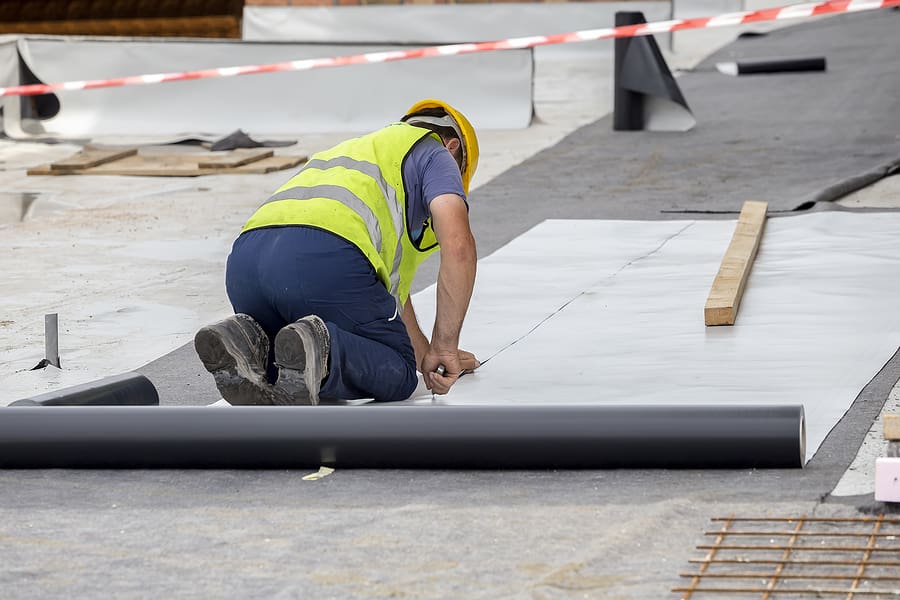
Yes, many TPO roofs can be repaired when damage is localized. Punctures, open seams, flashing failures, and some areas of wet insulation may be repairable. Replacement becomes more likely when deterioration, moisture, drainage problems, or repeated failures affect large portions of the roof. Condition—not age alone—should drive the decision.
Discovering a leak in a TPO roof does not automatically mean the entire roofing system has failed.
That is an important distinction for commercial property owners in Albuquerque, Santa Fe, and throughout New Mexico.
A relatively small puncture caused by rooftop work may require a localized repair. A problem around an HVAC curb may require new flashing. An open seam may be repairable. Even some areas of wet insulation can potentially be removed and replaced without tearing off the entire roof.
On the other hand, repeatedly repairing a TPO roof with widespread deterioration, extensive trapped moisture, failing seams, chronic drainage problems, or significant substrate damage may no longer make financial sense.
The real question is not simply, “Can a TPO roof be repaired?”
It is:
What is actually wrong with the roof, how widespread is the problem, and will repairing it provide dependable long-term performance?
That requires an accurate roof inspection before deciding between TPO roof repair and TPO roof replacement.
Does One TPO Roof Leak Mean the Entire Roof Needs Replacement?
Usually, no.
One roof leak does not automatically mean an entire TPO roofing system needs to be replaced.
TPO roofs contain numerous details where water intrusion can potentially develop, including:
- Seams
- Flashing
- HVAC curbs
- Pipes
- Vents
- Roof drains
- Scuppers
- Skylights
- Roof edges
- Other penetrations
A leak may originate from one relatively small problem while the majority of the roofing membrane remains serviceable.
This is why professional leak detection is so important.
Water entering a building does not always drip directly below the point where it entered the roofing system. Moisture can move within insulation, along structural components, or through other parts of the roof assembly before appearing inside.
Simply applying material to the area directly above an interior water stain may not correct the actual problem.
The first step should be finding the source.
TPO Roof Repair vs. Replacement: How Do You Know Which One You Need?

The extent and condition of the damage are generally more important than the existence of a leak itself.
Here is a practical starting point:
| TPO Roof Condition | Repair May Be Appropriate | Replacement Should Be Evaluated |
| Small membrane puncture | Yes, often | If punctures are widespread or membrane condition is poor |
| Isolated open seam | Often | If seam failures are occurring throughout the roof |
| Localized flashing failure | Often | If flashing and membrane deterioration are widespread |
| One leaking penetration | Often | If numerous penetrations and surrounding membrane are failing |
| Localized wet insulation | May be possible | If moisture extends through large areas of the roof |
| Hail or wind damage | Depends on extent | More likely when damage is widespread |
| Ponding water | Drainage may be correctable | If extensive structural or insulation problems exist |
| Older roof | Age alone does not require replacement | Replacement may make sense when age is combined with widespread deterioration |
| Repeated leak repairs | Depends on cause | Increasingly likely when repairs are frequent and failures continue |
| Damaged substrate | Local repair may sometimes be possible | More likely when deterioration is extensive |
A professional roof inspection should evaluate the roofing system as a whole rather than treating each leak as an isolated event.
What TPO Roof Problems Can Usually Be Repaired?
Several common TPO roof problems may be repairable when they are confined to a limited area and the surrounding roof remains in good condition.
Can a Puncture in a TPO Roof Be Repaired?
Often, yes.
Punctures are a common concern on commercial single-ply roofs because the membrane is exposed.
Damage can occur from:
- Dropped tools
- Sharp equipment
- HVAC maintenance
- Loose screws or fasteners
- Construction activity
- Debris
- Storm damage
- Repeated rooftop traffic
A small puncture does not necessarily justify replacing thousands of square feet of otherwise serviceable roofing.
When conditions allow, a professional TPO repair generally involves cleaning and preparing the damaged area and installing compatible reinforced TPO repair material. The new material can be heat-welded to suitable existing membrane to create a weather-resistant repair.
The surrounding membrane must first be evaluated to make sure it is in a condition that allows an appropriate repair.
This is one reason rooftop damage should be addressed promptly.
A small membrane puncture may be relatively straightforward to repair before water spreads into the insulation and other components of the roof assembly.
Can an Open TPO Seam Be Repaired?
Yes, some seam problems can be repaired.
TPO is a thermoplastic membrane. During installation, overlapping sheets are joined using hot-air welding equipment.
Properly welded seams are an important part of the system’s weather resistance.
However, seam problems can develop because of factors such as installation deficiencies, contamination, mechanical damage, aging, movement, or other roof conditions.
An isolated problem may be repairable.
A roofing professional can inspect the seam, determine the extent of the affected area, prepare suitable membrane, and make the appropriate repair.
A different concern exists when seam failures appear throughout the roof.
Multiple failing seams can indicate a broader problem that deserves a more comprehensive evaluation rather than an ongoing series of isolated patches.
Can TPO Flashing Be Repaired?
Often.
Flashing protects some of the most vulnerable areas of a commercial roof.
These include:
- HVAC curbs
- Pipes
- Vents
- Roof edges
- Walls
- Equipment supports
- Drains
- Other penetrations and transitions
In practical roof leak investigations, these details deserve close attention because leaks frequently originate around penetrations and transitions rather than through an undamaged section in the middle of the roof.
When a flashing problem is localized and the surrounding membrane remains serviceable, the flashing can often be repaired or rebuilt.
The important part is correcting the actual detail that failed instead of simply applying another temporary patch over the area.
Can Wet Insulation Under a TPO Roof Be Repaired?
Sometimes.
Finding wet insulation beneath TPO does not automatically mean every square foot of insulation and membrane has to be removed.
If moisture is limited to a definable area, it may be possible to remove the affected roofing materials back to dry boundaries, replace damaged insulation as appropriate, and restore the membrane.
The challenge is determining how far the moisture has traveled.
Water underneath a membrane is not always visible from the surface.
Roofing professionals may use a combination of inspection methods and, when appropriate, moisture-detection or infrared equipment to help evaluate suspected moisture conditions.
This is an important part of the repair-versus-replacement decision.
One small wet area is very different from moisture spread across a substantial portion of a commercial roof.
Extensive trapped moisture may affect insulation performance, roofing components, and potentially the roof deck or substrate.
In those circumstances, repeatedly repairing the visible leak without addressing the wet roof assembly underneath may only postpone a larger problem.
How Do Roofers Find Hidden Moisture Under TPO?
A visual inspection is usually the starting point, but hidden moisture can require additional investigation.
Roofing professionals may look for:
- Interior water stains
- Soft roof areas
- Membrane abnormalities
- Previous repairs
- Open seams
- Damaged flashing
- Drainage patterns
- Ponding areas
- Suspected entry points
When appropriate, moisture-detection equipment or infrared evaluation may provide additional information.
The objective is not simply to find where water is dripping today.
It is to determine how much of the roofing system has been affected.
That distinction can completely change the repair recommendation.
Can Hail-Damaged TPO Roofing Be Repaired?
It depends on the severity and extent of the damage.
New Mexico commercial roofs can be exposed to significant hailstorms, particularly during the spring and summer storm seasons.
Hail can affect TPO roofs differently depending on factors such as:
- Hailstone size
- Wind speed
- Impact angle
- Membrane thickness and condition
- Insulation
- Cover board
- Substrate
- Complete roof assembly
Localized storm damage may sometimes be repairable.
Widespread impact damage is a different situation.
Following a significant hailstorm, a roof should not be judged solely by whether water is currently dripping into the building.
A hail damage inspection can help identify punctures, impact damage, flashing problems, or other conditions that may not be obvious from the ground.
Can Wind Damage to TPO Be Repaired?
Some wind damage can be repaired.
High winds are a significant concern throughout Albuquerque, Santa Fe, and much of New Mexico.
Wind can affect roof edges, flashing, attachment points, penetrations, and membrane areas. Wind-blown debris can also puncture or damage exposed single-ply roofing.
The extent of the damage again determines the appropriate response.
An isolated damaged area may be repairable.
If a storm has compromised large sections of the roofing system, perimeter attachment, or other critical components, a broader repair or replacement strategy may be necessary.
Can Ponding Water on a TPO Roof Be Fixed Without Replacing the Entire Roof?
In some situations, yes.
But the important issue is understanding why the water is ponding.
Ponding water is water that remains on a flat roof instead of draining away properly.
Potential causes include:
- Clogged drains
- Blocked scuppers
- Debris
- Insufficient slope
- Compressed insulation
- Structural deflection
- Poorly designed drainage
- Previous roofing modifications
If a drain is blocked, correcting the drainage problem may be relatively straightforward.
If insulation has settled or compressed in one area, a more localized correction may sometimes be possible.
If the entire roof has widespread drainage or structural problems, the solution can become considerably more involved.
Installing a patch over the membrane does not correct poor drainage.
That is why ponding water on a flat roof should be treated as a roof-system problem rather than simply a membrane problem.
When Is a TPO Roof Too Damaged to Repair?
There is no single defect that automatically determines the answer in every situation.
Instead, roof replacement becomes more practical as problems become widespread and the remaining roofing system becomes less dependable.
Warning signs can include:
Widespread Membrane Deterioration
Localized membrane damage is one thing.
Deterioration occurring across substantial portions of the roof is different.
If the existing membrane can no longer reliably support repairs or is experiencing extensive weathering, the value of continued patching should be questioned.
Multiple Failing Seams
One isolated seam problem may be repairable.
Repeated seam failures across the roof can indicate that the problem is no longer isolated.
At some point, repairing one seam after another may become less practical than addressing the roofing system more comprehensively.
Extensive Wet Insulation
Localized wet insulation may potentially be removed and replaced.
Moisture extending through large portions of the roof assembly can significantly change the economics and practicality of repair.
The amount and location of moisture should therefore be understood before a major repair decision is made.
Significant Substrate or Deck Problems
The membrane is only the upper portion of a roofing assembly.
Problems underneath it matter.
If prolonged water intrusion has contributed to significant deterioration of underlying components, correcting only the visible membrane problem may be insufficient.
Chronic Drainage Problems
A TPO membrane should not be expected to compensate indefinitely for a poorly functioning roof drainage system.
Recurring ponding caused by larger slope, insulation, or structural problems may require more substantial corrective work.
Repeated Leaks and Repairs
One of the clearest signals that a roof deserves a broader evaluation is an increasing pattern of repairs.
If a building owner is repeatedly calling for leak repairs in different areas of the same roof, the question changes.
Instead of asking:
“Can this leak be patched?”
The more useful question becomes:
“Does continuing to repair this roofing system still make financial and operational sense?”
Does the Age of a TPO Roof Determine Whether It Should Be Replaced?
No.
Roof age matters, but condition matters more.
This is one of the most important points for property owners to understand.
An older TPO roof that has been properly installed, maintained, and protected from major damage may still have useful service life remaining.
A newer roof can develop serious problems if it was poorly installed, damaged, neglected, or affected by severe weather.
Age should therefore be considered alongside:
- Membrane condition
- Seam condition
- Flashing
- Moisture
- Insulation
- Drainage
- Repair history
- Storm damage
- Rooftop traffic
- Substrate condition
- Maintenance history
If you are evaluating the expected TPO roof lifespan, a calendar date alone does not provide enough information.
The roof itself needs to be evaluated.
Should a TPO Roof Be Replaced After Repeated Leaks?
Repeated leaks are a strong reason to perform a comprehensive roof assessment.
They do not automatically prove that replacement is necessary.
First, determine whether the leaks have a common cause.
For example, repeated water intrusion could result from one unresolved drainage problem or one poorly detailed roof penetration.
Correcting that underlying problem might stop the pattern.
But repeated leaks occurring in multiple unrelated areas may indicate more widespread deterioration.
Property owners should also consider the operational cost of recurring problems.
Roof leaks can affect:
- Interior finishes
- Inventory
- Equipment
- Tenant spaces
- Employee work areas
- Customer areas
- Electrical systems
- Building operations
Emergency service calls and repeated repairs also have costs.
At some point, investing continually in short-term repairs can become less economical than installing a dependable replacement system.
That decision should be based on inspection findings and long-term value—not pressure to purchase a new roof.
Repair or Replace: Which Costs Less Over Time?
Repair almost always involves a smaller immediate scope than complete replacement.
But immediate cost and long-term cost are not the same thing.
Imagine two commercial TPO roofs.
Roof A has one puncture caused by an HVAC technician dropping a sharp piece of equipment. The membrane is otherwise in good condition, seams are performing well, insulation is dry, and drainage works properly.
Replacing that entire roof because of one puncture would generally make little sense if a proper localized repair can restore the affected area.
Now consider Roof B.
It has recurring leaks in multiple areas, extensive previous patches, wet insulation, drainage problems, questionable seams, and deteriorated flashing.
Repairing the next visible leak may cost less this month.
But if additional repairs are likely to follow, continued patching may produce poor long-term value.
This is why Rocky Mountain Roofing Services focuses on the condition and long-term performance of the roofing system rather than automatically recommending the largest project.
Can a TPO Roof Be Restored or Coated Instead of Replaced?
In some circumstances, roof restoration or a coating system may be another option worth evaluating.
However, not every TPO roof is automatically a coating candidate.
Before considering restoration, the existing roofing system should be evaluated for:
- Membrane condition
- Moisture
- Adhesion
- Seams
- Flashing
- Drainage
- Substrate
- Existing repairs
- Compatibility with the proposed restoration system
A coating should not simply be used to hide unresolved wet insulation, failing roof components, or major structural and drainage problems.
When the roof is an appropriate candidate, restoration may become part of a long-term roofing strategy.
When it is not, repair or replacement may be the more appropriate solution.
Why Is Diagnosis More Important Than Patching?
Because the visible symptom is not always the underlying problem.
Consider water appearing below an HVAC unit.
The leak might be caused by:
- Failed curb flashing
- A puncture nearby
- An open seam
- Water entering farther upslope
- Mechanical damage from HVAC work
- Ponding around the equipment
- Another roof penetration
Putting sealant around the most obvious location without diagnosing the source may stop nothing.
The same principle applies throughout a TPO roof.
A professional commercial roof repair should begin by identifying why the roof is leaking or deteriorating.
Only then can the correct repair be selected.
How Does New Mexico’s Climate Affect TPO Roof Repairs?
TPO roofs in New Mexico operate in a demanding environment.
Intense UV Exposure
Albuquerque and Santa Fe receive abundant sunshine, and high elevation increases the importance of ultraviolet exposure.
Roof membranes and other exposed components weather over time.
Large Temperature Swings
Roofing systems can heat significantly during the day and cool rapidly at night.
This thermal cycling causes roofing components to expand and contract repeatedly.
Seams, flashing, edges, and penetrations deserve particular attention as roofs age.
Hail
New Mexico hailstorms can damage membranes, flashing, rooftop equipment, and other roofing components.
High Winds
Strong winds can stress roof edges and attachments while moving debris across roof surfaces.
Monsoon Rainfall
Summer storms can deliver substantial rain over short periods.
A small defect that caused no noticeable interior problem during dry weather can become obvious during a heavy storm.
Snow and Freeze-Thaw Conditions
Santa Fe and higher-elevation areas of northern New Mexico can experience snow and repeated freezing and thawing.
These conditions make proper drainage and sound flashing especially important.
New Mexico’s climate is one reason preventative roof maintenance and regular inspections are valuable for TPO roofing systems.
How Often Should a TPO Roof Be Inspected?
Annual professional roof inspections are a practical baseline.
Additional inspections are advisable after major weather events or significant rooftop work.
Maintenance can include:
- Annual roof inspections
- Post-storm inspections
- Roof drain cleaning
- Debris removal
- Flashing inspections
- Monitoring penetrations
- Identifying membrane damage
- Prompt repair of minor leaks
Commercial roofs should also be checked after contractors have worked around HVAC equipment or other rooftop systems.
A screw, dropped tool, removed equipment panel, or other seemingly minor event can damage a single-ply membrane.
Finding that damage before the next major rain can prevent a small problem from becoming a much larger one.
Frequently Asked Questions About TPO Roof Repair and Replacement
Can a leaking TPO roof be repaired?
Yes. Many TPO roof leaks can be repaired when the source is localized and the surrounding membrane and roof assembly remain serviceable. The cause and extent of water intrusion should be determined before deciding on a repair.
How do you repair a puncture in a TPO roof?
When appropriate, the damaged area is cleaned and prepared and compatible TPO repair material is installed and heat-welded to suitable existing membrane. The exact repair procedure depends on the roofing system and conditions.
Can an open TPO seam be repaired?
Often, yes. An isolated seam problem may be repairable when the surrounding membrane remains suitable. Widespread seam failures require a broader evaluation.
Can TPO flashing be repaired?
Yes, localized flashing problems around penetrations, curbs, walls, edges, drains, and other details can often be repaired or rebuilt when surrounding roofing materials remain serviceable.
Can wet insulation under TPO be replaced locally?
Sometimes. If moisture is confined to a limited area, affected materials may potentially be removed to dry boundaries and replaced. Widespread moisture can make a larger repair or replacement more practical.
Does one roof leak mean the whole TPO roof needs replacement?
No. One leak can result from a small puncture, seam problem, flashing defect, or penetration issue. The entire roof should be evaluated before assuming replacement is necessary.
When is a TPO roof too damaged to repair?
Replacement becomes more likely when membrane deterioration, wet insulation, seam problems, drainage defects, substrate damage, or repeated failures affect substantial portions of the roof.
Does roof age determine whether TPO should be replaced?
No. Age is one consideration, but condition, moisture, repair history, installation quality, drainage, storm exposure, and remaining serviceability are also important.
Can hail-damaged TPO be repaired?
Localized hail damage may sometimes be repairable. Widespread impact damage can require a more extensive repair or replacement strategy.
Can ponding water be fixed without replacing the whole roof?
Sometimes. The answer depends on the cause. Blocked drainage may be relatively simple to correct, while widespread slope, insulation, or structural problems can require more extensive work.
Can a TPO roof be restored or coated instead of replaced?
Possibly, if the existing roofing system is an appropriate candidate. Moisture, membrane condition, adhesion, drainage, flashing, compatibility, and other conditions should be evaluated first.
How do roofers find hidden moisture under TPO?
Roofers begin with visual and physical inspection and may use moisture-detection equipment or infrared evaluation when appropriate to help determine where moisture is present beneath the membrane.
How long should a TPO repair last?
There is no responsible universal lifespan for every repair. Longevity depends on the type of damage, membrane condition, repair method, installation quality, surrounding roof condition, weather exposure, and maintenance.
What are the signs TPO replacement may be more practical?
Widespread membrane deterioration, extensive moisture, recurring leaks, multiple seam failures, major substrate problems, chronic drainage issues, and a growing repair history are reasons to evaluate replacement.
Should I repair or replace my TPO roof after repeated leaks?
Repeated leaks warrant a comprehensive inspection. If the problems are localized and their causes can be corrected, repair may still make sense. If failures are widespread and repairs are becoming frequent, replacement may provide better long-term value.
So, Should You Repair or Replace Your TPO Roof?
The presence of a leak should never be the only reason to assume a TPO roof needs replacement.
Many problems are localized.
A puncture can potentially be patched. An open seam may be repaired. Failed flashing can often be rebuilt. Damaged membrane can be replaced in a limited area. Even localized wet insulation may sometimes be removed and replaced without tearing off the entire roof.
The decision changes when the problem is no longer localized.
Widespread deterioration, extensive trapped moisture, chronic drainage problems, recurring seam failures, damaged underlying components, and repeated leaks can eventually make continued repairs less practical.
That is why the best repair-versus-replacement decisions begin with an inspection.
Rocky Mountain Roofing Services – The New Mexico TPO Experts
Rocky Mountain Roofing Services provides TPO roofing, commercial roof repair, flat roof repair, roof replacement, leak diagnostics, roof inspections, roof restoration, coatings, drainage improvements, and preventative maintenance throughout Albuquerque, Santa Fe, and surrounding New Mexico communities.
With more than 35 years of combined roofing experience, the company evaluates each roofing system individually and focuses on extending useful roof life whenever practical rather than recommending unnecessary replacement.
If your TPO roof is leaking, punctured, holding water, experiencing seam or flashing problems, or requiring repeated repairs, call Rocky Mountain Roofing Services at 505-717-1925 to request a free roof inspection or free roofing quote. Find out what the roof actually needs before assuming it needs to be replaced.