What are the Pitfalls of a Tar and Gravel Flat Roof?
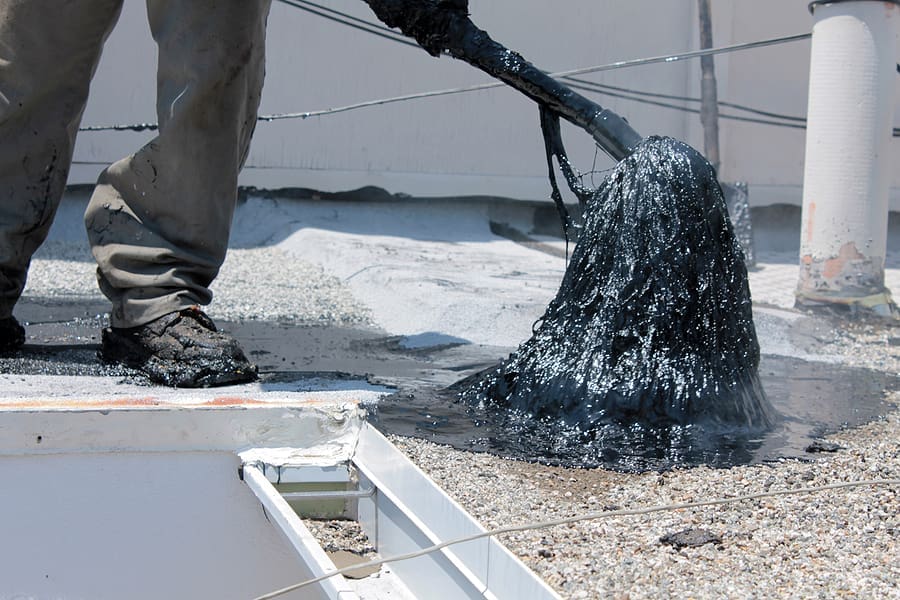
Tar & Gravel roofs are heavy and may have a shorter lifespan than other roofing materials currently available on the market. They perform poorly in extreme weather! Tar and Gravel roofing systems, also called built-up roofing, have several drawbacks compared to other flat roofing systems available today, like TPO roofing systems and PVC roofing Systems.
Tar and Gravel Roof Weight
Tar and gravel roofs are extremely weighty due to their asphalt-saturated felt, tar, and gravel, which can put stress on a roof’s underlying structure which usually necessitates strengthening the surfaces that support it.
Tar and Gravel Roof Installation Complications
Installing a tar and gravel roof is costly, it requires a ton of workers to install, and it is definitely not the best roofing system to install. In fact, when it comes to roof longevity and low maintenance, a tar and gravel roof is the very worst roof system to install. It takes specialized skills and roofing equipment to install a tar and gravel roof. While installing it, workers’ foot traffic can also cause damage before the roof is even finished.
Tar and Gravel Roof Maintenance
Regular maintenance of tar and gravel flat roofs means re-graveling and resealing seams and roof flashings consistently and constantly, year after year for overall longevity and performance. Ignoring minor repairs can cause degradation of the roofing membrane, and it’s needless if repairs don’t follow in short order.
Tar and Gravel Roof Aesthetics
If you live in an upscale neighborhood on a tar and gravel roof, there are many other materials to be applied that can appeal to an envious eye level.
Tar and Gravel Roof Environmental Issues
Hot tar misses the green light completely; producing and installing these roofs uses petroleum-related products, so they are not very good for Mother Earth. Tar and Gravel consistently fight only a losing battle.
Tar and Gravel Roof Fire Risk
Flammable like lighter fluid, tar-and-gravel roofs can go up like a Roman candle. Tar-and-gravel roofs are comprised of tar/bitumen and are highly combustible. Gravel itself may provide some protection, but the fire risk remains, and fire barrier materials must be of the utmost quality.
Final Thoughts on Tar and Gravel Roofs
Tar and gravel roofs don’t have very many redeeming qualities, and as we’ve noted, without repair, they will break down faster than a car engine without motor oil. They are hard to maintain, and evidently, they are very poor at handling New Mexico’s weather elements, such as wind, rain, dust and dirt, and high UV rays. They just don’t last very long here in New Mexico.
If you are constantly having roof problems with your tar-and-gravel roof, such as leaks, roof cracks, and holes and gaps around roof penetrations, give the New Mexico pros at Rocky Mountain Roofing Services a call at 505-717-1925 for a free roof inspection. We’ll be honest and upfront and do our very best to give you the peace of mind that only comes from being made aware of all the solutions available for your tar and gravel roof problems.