
How Quickly Can Mold Grow After a Swamp Cooler Leak?
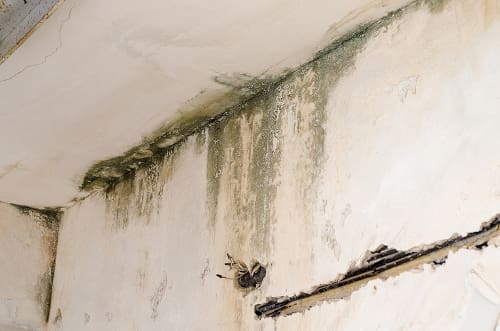
Mold may begin developing relatively quickly when ceiling materials remain damp after a swamp cooler leak, but there is no exact countdown that applies to every building. The safest practical guideline is to dry water-damaged materials as quickly as possible—ideally within 24 to 48 hours.
The U.S. Environmental Protection Agency states that, in most cases, mold will not grow when wet or damp materials are dried within 24 to 48 hours after a leak or spill. The Centers for Disease Control and Prevention similarly advises cleaning, drying, or removing wet materials within that period to help prevent mold growth. These recommendations make 24 to 48 hours an important response window, not a guarantee that mold always appears at a particular hour.
Visible mold may not appear immediately. Growth may begin on the back of drywall, within dusty insulation, on wood framing, or in another concealed part of the ceiling before anything becomes noticeable inside the room.
That is why a wet ceiling should not simply be left alone with the assumption that New Mexico’s dry outdoor air will solve the problem. The visible stain may dry while insulation, drywall paper, decking, or framing inside the cavity remains damp.
After discovering a swamp cooler leak, the priorities are to:
- Stop the water source.
- Determine whether the cooler or roof is leaking.
- Inspect the roofing and equipment-curb flashing.
- Evaluate the ceiling and insulation for concealed moisture.
- Begin drying or removing affected materials promptly.
- Bring in qualified mitigation or mold-remediation professionals when appropriate.
Rocky Mountain Roofing Services provides roof inspections, leak detection, flashing repair, shingle repair, flat-roof repair, roof restoration, and roof replacement throughout Albuquerque, Santa Fe, and surrounding New Mexico communities. The company addresses the roofing portion of the problem while helping property owners understand when HVAC, water-mitigation, mold-remediation, electrical, or medical professionals may also be needed.
Can Mold Really Begin Growing Within 24 to 48 Hours?
Mold can begin developing when spores encounter suitable moisture, temperature, and material conditions. However, it is inaccurate to say that every wet ceiling will contain visible mold at exactly 24 or 48 hours.
The 24-to-48-hour period is best understood as a prevention and drying benchmark.
EPA guidance explains that moisture control is the key to controlling mold and that wet materials should be dried within 24 to 48 hours whenever possible. CDC guidance uses the same response window for water-damaged homes and belongings.
The actual rate of growth depends on:
- How much water entered
- How long the leak continued
- Whether the area was previously damp
- Indoor temperature
- Relative humidity
- Air movement
- The type of ceiling materials
- Whether insulation retained water
- Whether mold spores were already present
- How quickly active drying began
A lightly damp surface exposed to good airflow may dry before substantial growth develops. A saturated ceiling cavity containing paper-faced drywall, wood, dust, and insulation may remain wet much longer and create more favorable conditions.
Therefore, the practical question is not, “Has exactly 48 hours passed?” It is:
“Have all affected materials actually been dried?”
Why Are Ceiling Cavities Vulnerable to Mold?
A ceiling cavity can remain damp long after the room-facing surface appears dry.
Several factors make these concealed areas difficult to dry.
Limited Airflow
The space above drywall is enclosed. Normal room air may not reach the back of the ceiling, the insulation, or the framing.
Paper-Faced Drywall
Drywall contains a gypsum core with paper facing. Damp paper, joint compound, paint residue, and accumulated dust can support mold growth.
Wood Framing and Decking
Ceiling joists, roof decking, blocking, and other wood components may absorb water. If moisture remains elevated, mold may develop on the surface. Prolonged wetting can also contribute to swelling, staining, loss of strength, or decay.
Insulation
Fiberglass itself is inorganic, but dust, paper facings, adhesives, and surrounding building materials can support mold. Cellulose insulation contains organic fibers and may retain significant moisture.
Warmth
New Mexico roof and attic spaces can become very warm, particularly during sunny weather. A warm, damp enclosed cavity may remain favorable for microbial growth even when the room below feels dry.
Painted Surfaces
Paint can slow evaporation through the room-facing side of the drywall. A stain may appear dry to the touch while moisture remains behind the painted surface.
EPA guidance specifically recognizes that hidden areas can contain moisture and mold that are difficult to see, including spaces behind drywall and other concealed building cavities.
How Does a Swamp Cooler Leak Reach the Ceiling?
A rooftop evaporative cooler can release water through several mechanical or roofing failures.
Common causes include:
- A stuck or misadjusted float valve
- Water set too high in the reservoir
- A cracked or rusted cooler pan
- A loose water-supply fitting
- A split supply line
- A leaking drain connection
- A blocked overflow
- A failed winterization plug
- An unlevel cooler
- Deteriorated cooler housing
- Failed equipment-curb flashing
- A punctured flat-roof membrane
- An open TPO or PVC seam
- Damaged shingles or underlayment
- Poor drainage around the cooler
Sometimes the evaporative cooler itself is releasing water. In other cases, rain or cooler discharge reaches a failed roofing detail around the unit.
A qualified HVAC technician should address float valves, pans, pumps, supply lines, drains, and other mechanical components. A roofing contractor should evaluate shingles, membranes, equipment curbs, penetrations, flashings, insulation, decking, and drainage.
Both problems may exist at the same time.
Why Is a Constant Swamp-Cooler Leak Especially Concerning?
A rainstorm normally ends. Water drains away, and the roof begins drying.
A leaking swamp cooler may run every day during hot weather and release water continuously onto the same small section of the roof.
This repeated moisture can:
- Keep insulation damp
- Saturate drywall
- Wet framing repeatedly
- Create mineral deposits along the water path
- Deteriorate roofing and flashing
- Rewet materials before they have dried
- Conceal damage beneath a dry-looking surface
- Cause stains to return even when it has not rained
Albuquerque’s hot summers can make the visible roof surface dry quickly. That can create a false sense that the problem has resolved even though moisture remains trapped underneath.
In Santa Fe and higher-elevation communities, cool nights and freeze-thaw conditions can further stress wet roofing and flashing details.
Which Ceiling Materials Can Support Mold Growth?
Mold requires moisture and a suitable surface. Many ordinary building materials contain or collect organic matter that can support growth.
Drywall
The paper facing on drywall is particularly important. Even when the gypsum core is not a strong food source, the paper, paint residue, joint compound, and dust can support mold when wet.
Wood Framing and Roof Decking
Wood joists, plywood, and oriented strand board can develop surface mold when they remain damp. Longer-term saturation may also damage the material itself.
Cellulose Insulation
Cellulose insulation is made primarily from treated paper fibers. It can absorb and retain water, making thorough drying difficult after a significant leak.
Fiberglass Insulation
The glass fibers do not provide food for mold, but dust, paper backing, adhesives, and adjacent wood or drywall may. Wet fiberglass may also compress or lose some thermal effectiveness until it is fully dried or replaced.
Ceiling Texture and Paint
Dust and organic residue on textured or painted surfaces can support growth. Some water-damaged finishes may also peel, blister, stain, or lose adhesion.
The National Institute of Environmental Health Sciences notes that indoor mold can grow on damp materials, including the paper surface of wet drywall.
What Are the Warning Signs of Hidden Moisture or Mold?
Possible warning signs include:
- A musty or earthy odor
- Yellow or brown ceiling staining
- A stain that expands while the cooler operates
- Bubbling paint
- Peeling paint
- Sagging drywall
- A soft ceiling surface
- Cracks around a stained area
- Dark spotting
- Damp or compressed insulation
- Recurring discoloration
- Water dripping from a light fixture
- Rust near the cooler curb or metal deck
- Water sounds inside the ceiling
- Staining during otherwise dry weather
- Increased indoor humidity near the affected area
These signs do not identify a particular mold species, prove toxicity, or establish the cause of someone’s symptoms. They indicate that moisture investigation is warranted.
Mold can appear in many colors, and color alone does not determine whether it presents a particular health risk. CDC guidance notes that indoor mold may look like differently colored spots and may produce a musty odor.
Why Shouldn’t You Just Let the Ceiling Air Dry?
Some lightly damp materials may dry successfully when the leak is found immediately and strong airflow reaches all affected surfaces. A concealed ceiling cavity is more complicated.
Waiting for passive drying may be risky because:
- Insulation can hold water.
- Painted drywall dries slowly from one side.
- Framing may remain damp.
- The leak may still be active.
- Moisture can spread beyond the visible stain.
- The back of the drywall may be wetter than the front.
- Air circulation inside the cavity may be limited.
- Sagging drywall can weaken and eventually fall.
- Wet electrical fixtures may create hazards.
Professional drying may require air movement, dehumidification, moisture monitoring, insulation removal, or selective opening of the ceiling.
EPA guidance recognizes that porous materials may need to be discarded if mold develops because growth can enter spaces and crevices that are difficult to clean completely.
What Should You Do Immediately After Discovering the Leak?
1. Shut Down the Cooler Safely
Turn off the evaporative cooler if you can do so without approaching water-damaged electrical equipment.
2. Stop the Water Supply
Shut off the cooler’s water supply when the valve can be reached safely. Do not climb onto a wet or damaged roof to do this without proper training and equipment.
3. Avoid Wet Electrical Fixtures
Do not touch a wet light fixture, ceiling fan, switch, or electrical device. Contact a qualified electrician when water has reached electrical components.
4. Protect the Interior
Move furniture, electronics, rugs, and belongings away from the affected area. Place a container beneath active dripping only when it is safe.
5. Photograph the Damage
Document the ceiling stain, dripping water, affected belongings, and visible roof or cooler conditions without entering unsafe areas.
6. Contact an HVAC Technician
The technician should repair the float valve, pan, supply line, drain, pump, overflow, or cooler housing.
7. Contact a Roofing Contractor
The roofer should inspect the equipment curb, flashing, shingles, membrane, drainage, insulation, and visible decking.
8. Contact a Water-Mitigation Professional
Prompt help may be needed when drywall, insulation, framing, walls, flooring, or furnishings are wet.
9. Seek Mold-Remediation Guidance When Appropriate
Professional remediation may be appropriate when mold is visible, suspected within a concealed cavity, affects a significant area, or involves occupants with particular sensitivities.
10. Contact a Medical Professional About Symptoms
Questions involving breathing problems, allergic reactions, asthma, chronic lung disease, or weakened immune systems should be addressed by a healthcare professional.
A sagging or bulging ceiling may contain significant water. Do not puncture it casually, stand beneath it, or assume it is structurally secure.
When Should Drywall or Insulation Be Removed?
Not every wet ceiling requires demolition. Removal may become appropriate when:
- Drywall is sagging or structurally weakened.
- Materials cannot be dried promptly.
- Insulation is saturated.
- Visible mold is present on porous materials.
- Repeated leaks have occurred.
- Moisture remains trapped after active drying.
- The cavity must be opened to reach wet framing.
- The water was contaminated.
- A restoration professional determines drying in place is impractical.
Sound materials affected for a short period may sometimes be dried when the leak is stopped quickly and all surfaces can be reached.
The decision should be based on moisture readings, material condition, contamination, elapsed time, and the feasibility of complete drying—not on the ceiling stain’s appearance alone.
How Do Professionals Determine Whether the Ceiling Is Still Wet?
Visual Inspection
Professionals look for staining, swelling, sagging, peeling finishes, compressed insulation, rust, and visible water pathways.
Moisture Meters
Meters can help identify elevated moisture in drywall, wood, and other materials. Correct settings and interpretation are important because different materials produce different readings.
Infrared Imaging
Thermal cameras can reveal temperature patterns that may be associated with moisture. They do not detect mold and do not prove that every cool area is wet.
Humidity Measurements
Indoor humidity and cavity conditions may help determine whether drying is progressing.
Attic or Roof-Cavity Inspection
When access is available, insulation, framing, decking, and the back of the ceiling can be examined directly.
Selective Openings
A restoration professional may create a controlled opening to inspect or remove wet materials.
No single method proves that the entire cavity is dry. Several observations may need to be combined.
Is Mold Testing Always Necessary?
Mold testing is not automatically required in every water-damage situation.
When visible mold and an obvious moisture problem are present, the immediate priorities are usually to:
- Stop the water
- Dry the building
- Remove or clean affected materials properly
- Correct the roof or cooler defect
Testing may be helpful in complicated, disputed, occupational, medical, or concealed-contamination situations. It should be performed and interpreted by a qualified professional.
A single air sample may not reveal the full moisture problem, and a “normal” result does not repair a leaking cooler or wet roof assembly.
EPA’s guidance emphasizes that the moisture source must be corrected as part of any mold response.
Can Mold Affect Health?
Some people exposed to indoor mold may experience:
- Nasal irritation
- A sore or irritated throat
- Coughing
- Wheezing
- Eye irritation
- Skin irritation
People with asthma or mold allergies may react more strongly. Individuals with weakened immune systems or chronic lung disease may face additional risks and should seek medical guidance regarding exposure or cleanup.
The presence of mold does not automatically prove that a particular symptom was caused by the building. Rocky Mountain Roofing Services does not diagnose medical conditions or provide medical treatment.
Who Handles Each Part of the Problem?
| Professional | Primary responsibility |
| HVAC or evaporative-cooler technician | Repairs the float valve, pan, pump, water line, drain, overflow, housing, or mechanical operation |
| Roofing contractor | Repairs shingles, membrane, equipment-curb flashing, roof penetrations, decking, roof insulation, and drainage |
| Water-mitigation contractor | Extracts water, installs drying equipment, monitors moisture, and performs selective removal when necessary |
| Mold-remediation professional | Establishes containment and removes or cleans mold-affected materials using appropriate procedures |
| Electrician | Evaluates wet fixtures, wiring, panels, fans, and other electrical components |
| Medical professional | Evaluates individual respiratory, allergic, or other health concerns |
| Insurance adjuster | Reviews covered damage and documentation under the applicable policy |
A single contractor may not perform every service. Clear coordination is important so that the cooler is repaired, the roof is restored, and the interior materials are dried properly.
Can the Roof Around the Swamp Cooler Be Repaired?
Often, yes.
Localized roof repair may be practical when:
- The cooler leak has been stopped.
- Roof damage is confined to one area.
- Most roof insulation is dry.
- The deck remains sound.
- The flashing failure is localized.
- Surrounding shingles or membrane remain serviceable.
- Compatible repair materials are available.
- Drainage can be corrected.
Possible roofing repairs include:
- Replacing damaged asphalt shingles
- Replacing underlayment
- Replacing a localized section of decking
- Rebuilding equipment-curb flashing
- Repairing TPO or PVC seams
- Repairing modified-bitumen roofing
- Rebuilding damaged spray foam
- Restoring a compatible roof coating
- Replacing localized wet roof insulation
- Improving drainage around the cooler
Rocky Mountain Roofing Services works with asphalt shingles, TPO, PVC, modified bitumen, built-up roofing, spray polyurethane foam, and compatible roof-coating systems.
When Might Partial or Complete Roof Replacement Be Needed?
Partial replacement may make sense when:
- Damage is concentrated around the cooler.
- One section of insulation is saturated.
- Decking near the curb has deteriorated.
- The cooler is being removed.
- A new equipment curb will be installed.
- Adjacent roofing remains serviceable.
Complete replacement may deserve consideration when:
- Moisture has spread through a large roof area.
- The building has several active leaks.
- Deck deterioration is widespread.
- The roof membrane or shingles are already failing broadly.
- Flashings are deteriorated throughout the roof.
- Drainage problems affect large areas.
- Repeated repairs have failed.
- Multiple incompatible repair materials are present.
- Repair costs approach the value of replacement.
The presence of mold or one ceiling stain does not automatically mean the entire roof must be replaced. The recommendation should be based on the condition of the roofing system, insulation, decking, drainage, and flashings.
Swamp-Cooler Leak Response Timeline
| Time after discovery | Main concern | Recommended response |
| Immediately | Active water and electrical hazards | Shut down the cooler safely, stop the water, avoid wet fixtures, and document damage |
| First several hours | Water spreading into drywall and insulation | Contact HVAC, roofing, and water-mitigation professionals |
| Within 24 hours | Concealed materials remaining damp | Begin active drying and moisture assessment |
| Within 24–48 hours | Increasing opportunity for mold growth | Confirm that drywall, insulation, framing, and cavities are actually drying |
| After 48 hours | Persistent moisture and possible microbial growth | Evaluate hidden areas and obtain remediation guidance when appropriate |
| After repairs | Repeat leakage | Verify cooler repair, roof repair, drainage, and final moisture levels |
This table is a response guide. It does not guarantee that mold will or will not be present at a specific hour.
How Can Future Swamp-Cooler Leaks Be Prevented?
Preventative steps include:
- Service the evaporative cooler before each cooling season.
- Inspect and adjust the float valve.
- Check the reservoir pan for corrosion or cracks.
- Inspect supply and drain lines.
- Confirm that the cooler sits level.
- Watch for overflow after startup.
- Inspect the equipment-curb flashing.
- Keep nearby drains, scuppers, and canales clear.
- Check the roof after spring startup.
- Inspect after fall shutdown and winterization.
- Repair ceiling stains promptly.
- Schedule annual professional roof inspections.
- Inspect the roof after cooler replacement or removal.
- Keep service records and photographs.
Preventative maintenance does not eliminate every possible leak, but it can identify small defects before they saturate roofing and interior materials.
Frequently Asked Questions
How quickly can mold grow after a swamp cooler leak?
Mold may begin developing relatively quickly under favorable conditions. Wet materials should be dried within 24 to 48 hours whenever possible to reduce the opportunity for growth.
Does mold always start within 24 hours?
No. Mold development varies with moisture, temperature, airflow, material type, and other conditions. Twenty-four to 48 hours is a response benchmark, not an exact timer.
Can mold grow inside a ceiling before it becomes visible?
Yes. Growth may occur on the back of drywall, insulation, framing, or decking before it appears on the room-facing surface.
Can wet ceiling drywall dry on its own?
Lightly damp drywall may sometimes dry when the leak is stopped quickly and both sides receive adequate airflow. Saturated or enclosed drywall may require active drying or removal.
Should wet ceiling insulation be removed?
Saturated, contaminated, compressed, or difficult-to-dry insulation may need removal. A mitigation professional should evaluate its condition.
Why does my ceiling smell musty after the leak?
A musty odor can indicate persistent moisture or microbial growth, but odor alone does not identify the species or extent of mold.
Can mold grow on fiberglass insulation?
Fiberglass fibers are inorganic, but dust, paper facings, adhesives, and nearby wood or drywall may support mold. Wet fiberglass can also trap moisture.
Why is the ceiling stain away from the cooler?
Water can travel through insulation, across decking, along framing, around ducts, or through wall cavities before becoming visible.
Should I turn the swamp cooler off immediately?
Yes, provided it can be shut down safely. Avoid wet electrical fixtures and do not climb onto a dangerous roof.
Who repairs the cooler, roof, and ceiling?
An HVAC technician repairs the cooler, a roofing contractor repairs the roofing system, and a water-mitigation or restoration professional dries the interior materials.
Does visible mold mean the entire ceiling must be removed?
Not always. The scope depends on the material, affected area, moisture, structural condition, and whether the material can be cleaned or dried properly.
Can infrared imaging find mold?
No. Infrared imaging shows temperature differences that may help locate moisture patterns. It does not detect or identify mold.
Schedule a Swamp-Cooler Roof Inspection in Albuquerque or Santa Fe
A ceiling that becomes wet after a swamp-cooler leak should not be ignored while waiting for it to air dry.
Water can remain trapped behind drywall, inside insulation, along framing, or beneath the roofing system after the visible stain appears dry. The longer materials remain damp, the greater the opportunity for mold growth and additional property damage.
The evaporative cooler’s mechanical problem should be corrected promptly. The roof and equipment-curb flashing should then be inspected to identify the water-entry point and determine whether shingles, membrane, insulation, or decking have been damaged.
Rocky Mountain Roofing Services provides professional roof inspections, leak detection, shingle repair, flat-roof repair, flashing reconstruction, roof restoration, and roof replacement throughout Albuquerque, Santa Fe, and surrounding New Mexico communities.
With more than 35 years of combined roofing experience, the company evaluates each roof individually and recommends the least extensive roofing solution that can reasonably restore dependable long-term performance.
Interior drying, mold remediation, electrical repairs, and medical concerns may require separate qualified professionals.
Rocky Mountain Roofing Services
100 Mountain Park Place, Suite A
Albuquerque, New Mexico 87114
Santa Fe Office
150 Washington Avenue, Suite 201
Santa Fe, New Mexico 87501
Phone: 505-717-1925
Schedule a professional roof inspection promptly when a swamp cooler has leaked into a ceiling, attic, or wall cavity.
Conclusion
Mold may begin developing relatively quickly after a swamp-cooler leak when drywall, insulation, wood, dust, and other building materials remain damp.
There is no exact hour at which every ceiling begins growing mold. The widely used 24-to-48-hour period is a drying and prevention benchmark. It emphasizes the importance of stopping the leak and drying all affected materials promptly rather than waiting for visible mold to appear.
The visible ceiling stain may show only part of the damage. Moisture can travel through insulation, across decking, along framing, and around ducts before appearing inside the room. The painted ceiling surface may dry while concealed materials remain wet.
A complete response may involve several professionals. An HVAC technician repairs the cooler. A roofing contractor repairs shingles, membranes, equipment-curb flashing, drainage, insulation, or decking. A water-mitigation professional dries the building. A mold-remediation professional addresses confirmed or suspected contamination when appropriate. A medical professional evaluates individual health concerns.
Localized roofing damage can often be repaired when identified early. More extensive work may be necessary when wet insulation, deteriorated decking, repeated leaks, or broad roofing failure are present.
The key is prompt action.
Stop the water, avoid electrical and rooftop hazards, have the roofing system inspected, and verify that the ceiling cavity has been dried—not merely that the visible stain has faded.