What are the Most Common Flat Roof Problems in New Mexico?
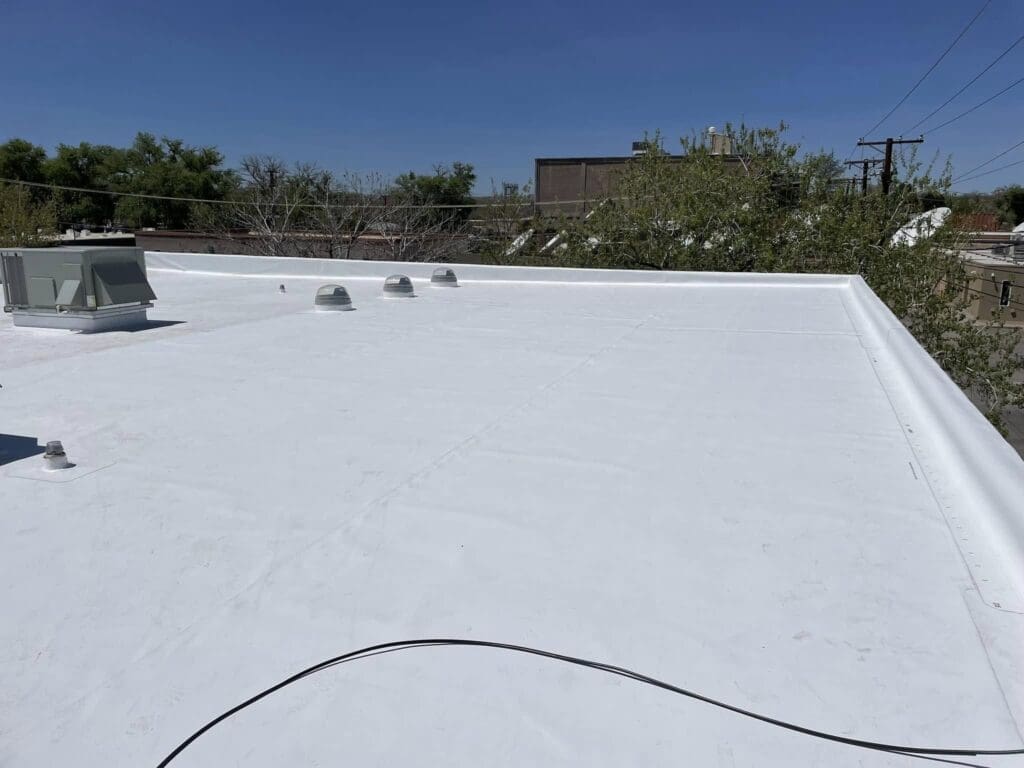
Though a flat roof on a New Mexico home or commercial building has many benefits, such as cost-effectiveness, ease of access, relatively simple installation, and potential energy efficiency, it is not without problems. The same characteristics that make a flat roof work can quickly become weaknesses if proper care is not provided. Below are the top 10 most common New Mexico flat roof problems experienced with flat roofing systems. The problems are as follows:
1) Exposure to the Environment
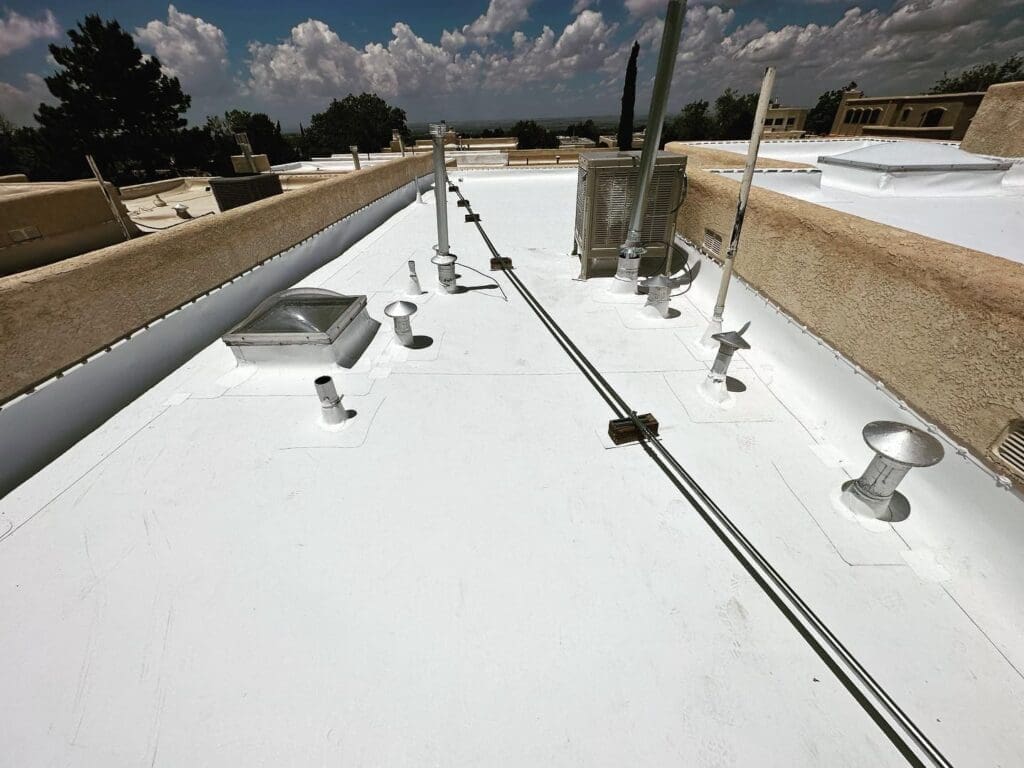
No matter how long your roof has been installed, it will have constant exposure to the sun and environmental elements. The roof covering material will wear and fail due to factors including years of high UV sunlight, high wind damage, freezing rain, snow accumulation, hailstorm damage, and debris from windstorms. Flat roofs are also at risk for exposure to oil from restaurants and to environmental pollutants and chemicals.
2) Roof Leaks
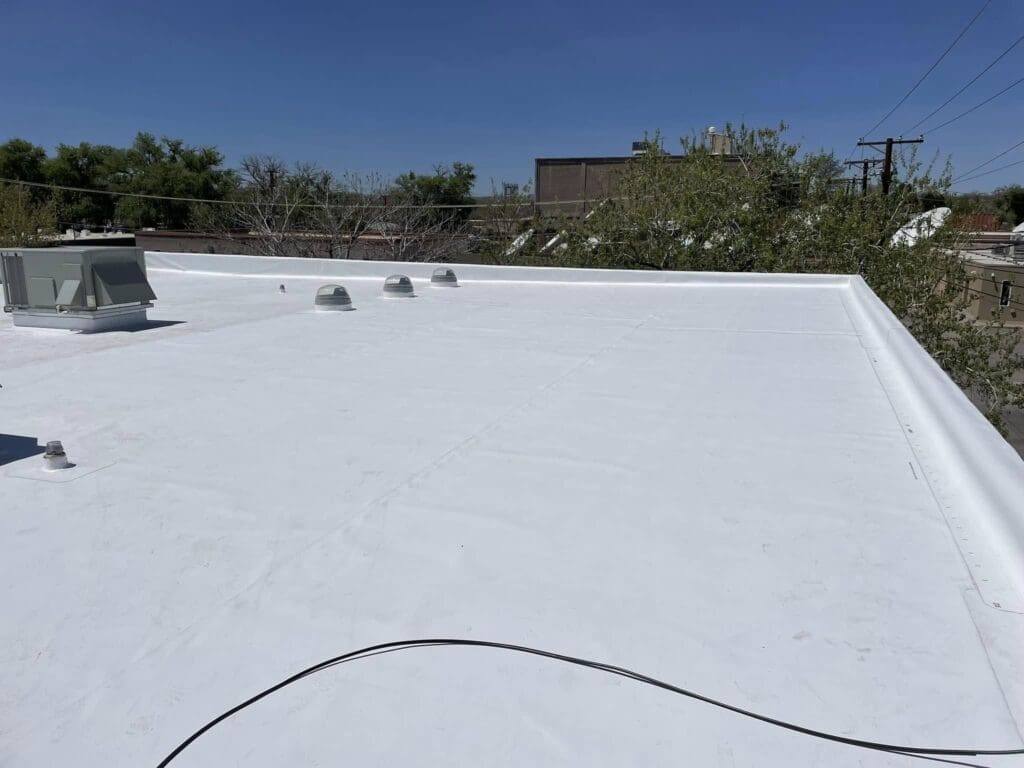
In many cases, roof leaks are common on flat roofs due to their inability to properly shed water when maintenance issues arise. Moisture will eventually find its way into the building when there is no proper roof drainage.
While roof leaks may appear to be innocuous, if left unattended or unrepaired, they could result in much larger problems down the road. They often lead to ruined interior walls, destroyed insulation, and deadly black mold.
3) Ponding Water
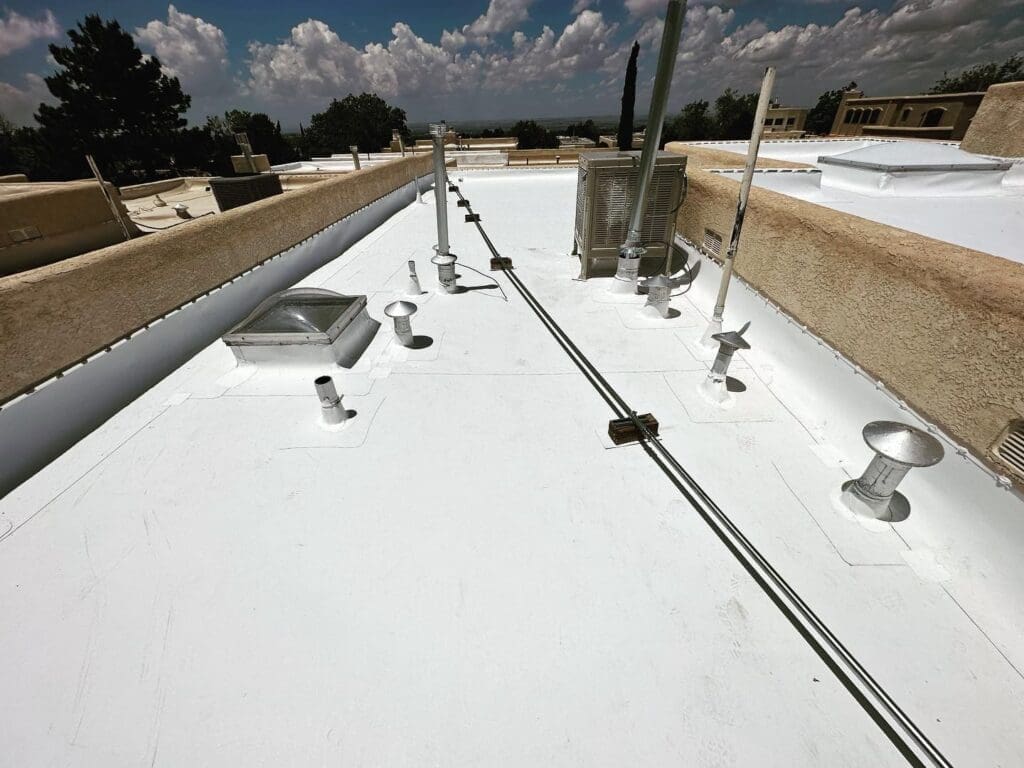
Many flat roofs are unable to provide the necessary drainage for precipitation runoff. Many flat roofs are constructed with enough slope to permit drainage of precipitation, but the inability of flat roofs to naturally slope creates an issue: with continuous rainfall, water can accumulate in puddles.
Eventually, the weight of ponding water will cause the roof to sag or the roofing membrane to deteriorate, and leaks could occur.
4) Punctures/Splits/Tears
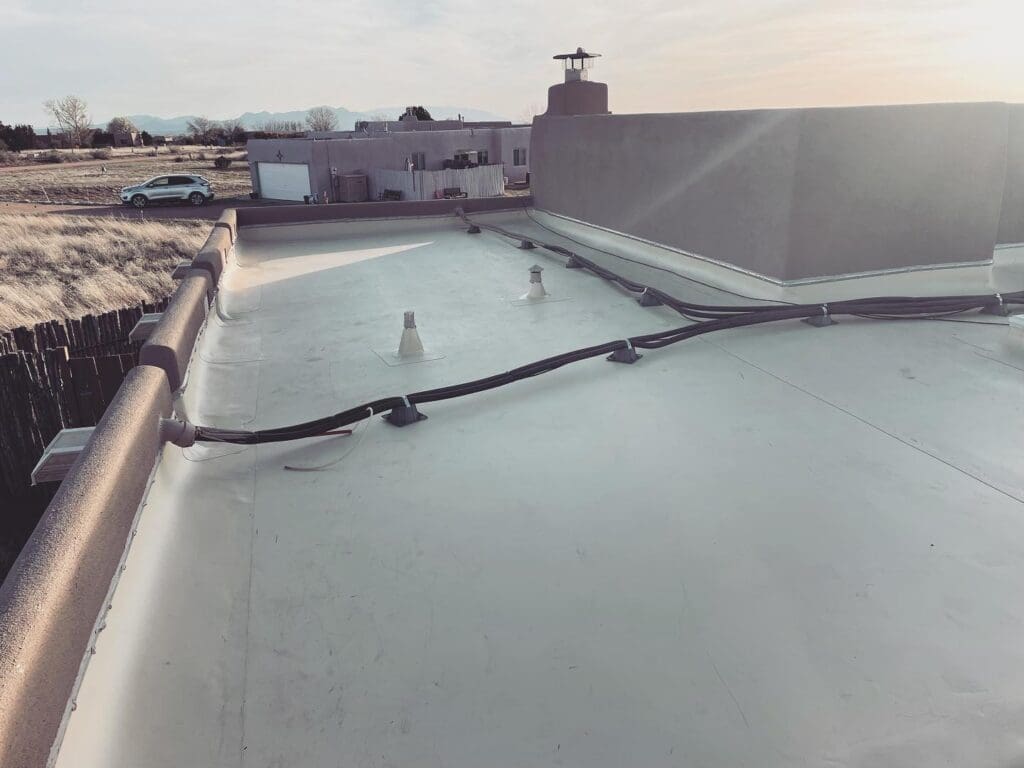
Flat roofs are especially susceptible to punctures or tears from storm activity, so it is essential to inspect your roof for damage following major weather events. In addition, pedestrian traffic can also cause punctures, and installing walk pads in restoration systems may help eliminate this issue.
5) Structural Movement
Structural movement from thermal movement represents the natural expansion and contraction of the structural building envelope caused by temperature changes. Structural movement can occur not only within the building but also in the flat roofing assembly.
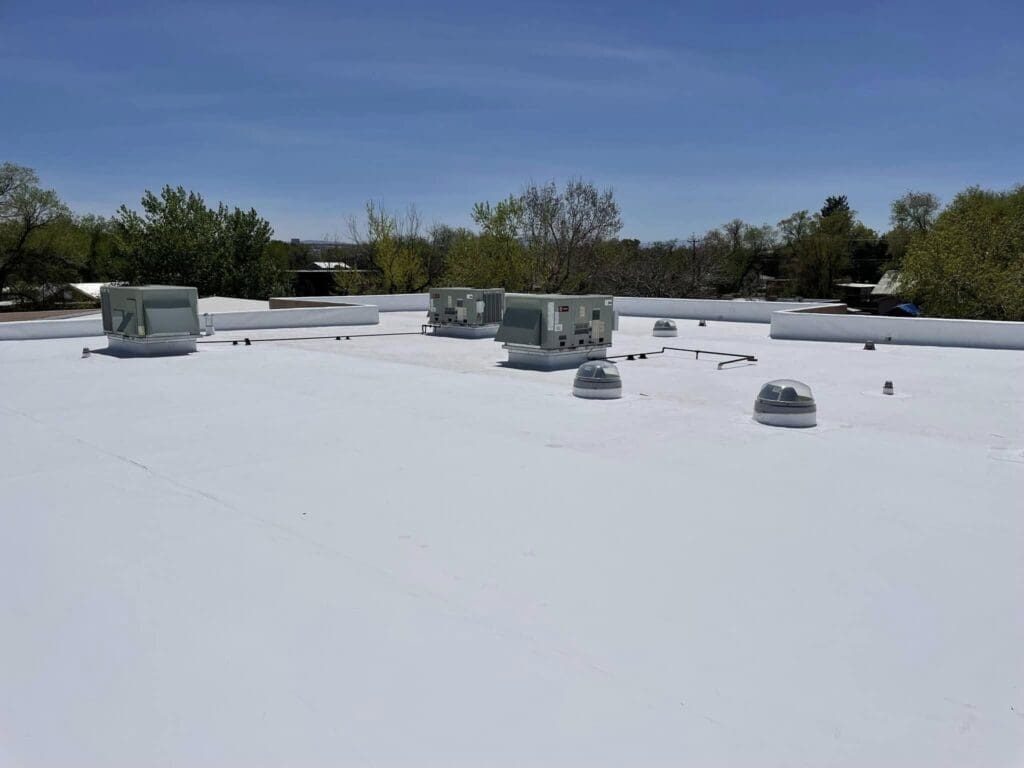
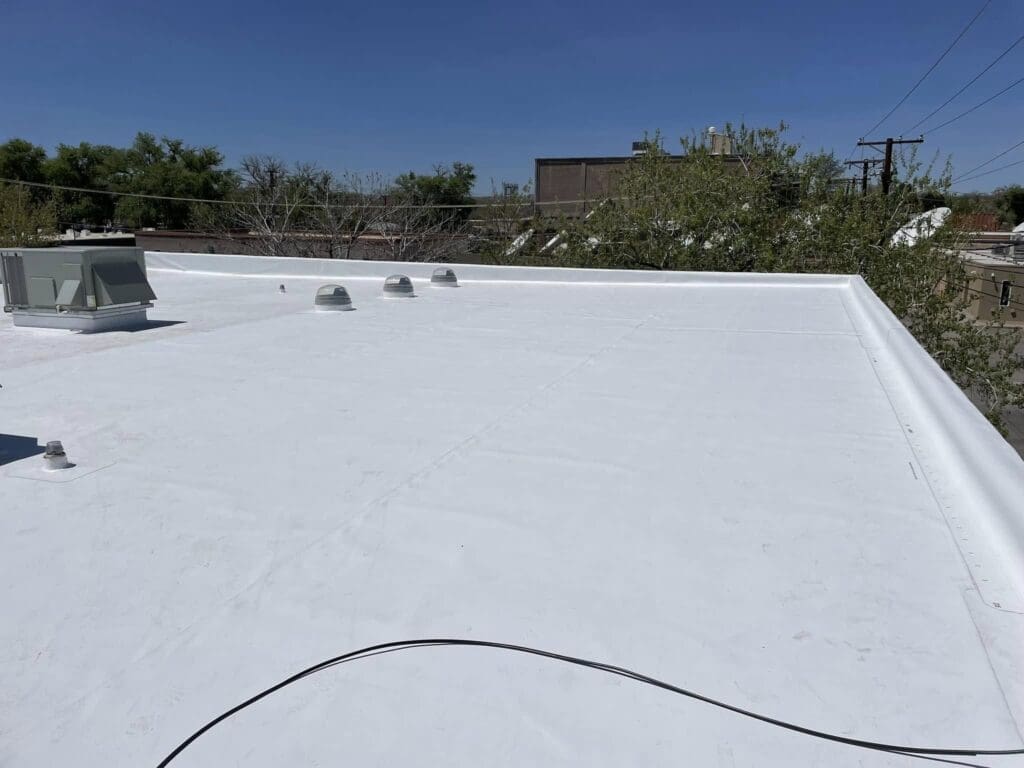
When air conditioning is cooling your building, the temperature differential between the inside and outside is significant, leading to increased structural movement in the roofing assemblies and the building itself. Increased movement stresses flat roofing membranes, causing them to split and crack at roof penetrations, such as vents, seams, and flashings.
6) Debris
Roof debris includes anything that collects on the surface of a roof, such as dirt, dust, leaves, small branches, mud, or even materials left behind from nearby construction or foot traffic. It’s normal for roofs to gather some debris over time because they’re constantly exposed to weather and the outdoors. However, when too much debris builds up—especially on flat roofs—it can block drains and keep water from flowing off properly. Since flat roofs do not shed water as easily as sloped roofs, clogged drainage can lead to standing water, leaks, and serious roof damage if the problem is not addressed quickly.
Debris can be removed from flat roofs by picking it up, using a leaf blower, or pressure washing.
7) Biological Growth on the Roof
Every stagnant body of water becomes a breeding ground for vegetation, algae, and other biological growth, such as an unattended swimming pool without circulating water. The longer ponding water on a flat roof remains stagnant, the harder it is to clean, and, as a result, the more vegetation and algae will form on the roof.
A dirty roof will have lower reflectivity in sunlight and ultimately lead to higher interior and exterior temperatures in the building. Keeping the roof surface clean where ponding water is possible and having a scheduled program to check for biological growth are mandatory for flat roof maintenance.
8) Blistering
Blisters and other surface defects (roof material blisters are known as “alligatoring” of the membrane) are very common on flat roofing systems.
Alligatoring occurs when there is too much UV exposure and/or insulation saturation occurs, resulting in the appearance of the roof membrane “alligator skin” (see photo). Most membrane defects are caused by overexposure to the sun or by water saturation of the insulation.
9) Roofing Membrane Shrinkage
Shrinkage is a common issue with flat roofing systems made from synthetic rubber membranes, particularly EPDM (a common flat roofing material). When rubber membranes shrink, their seams delaminate and pull apart, creating small holes in the roofing surface.
Although EPDM is widely used for flat roofs because of its durability, all EPDM roofing membranes will shrink over time, and this shrinkage can be accelerated by installation or manufacturing defects.
10) Neglecting Proper Schedule Roof Maintenance
Routine roof maintenance is the single largest reason why flat roofing systems fail or do not last as long as they should. Most of the 10 flat roofing problems listed above can be prevented through routine maintenance and roof inspections. Most of the 10 flat roofing problems listed above can be easily addressed with a fluid-applied membrane restoration system.
Final Flat Roof Problem Thoughts
If your flat roofing system is leaking or suffering from any of the other issues listed above, don’t hesitate to call Rocky Mountain Roofing Services. In addition, if you decide to restore your flat roofing system by installing a TPO or PVC membrane, they can provide a free estimate of the cost to replace it.