How Do I Spot a Roof Leak vs. Swamp Cooler Leak in ABQ?
Finding a mysterious water stain on your ceiling can send a wave of panic through any Albuquerque homeowner. Your mind immediately goes to the worst-case scenario: Do I need a brand-new roof?
But in New Mexico, a ceiling drip doesn’t always mean your shingles or flat roof membrane have failed. Because evaporative cooling is so popular across the Duke City, there is a very high chance the culprit is actually your swamp cooler or its water supply line.
Calling a roofer when you need an HVAC technician—or vice versa—wastes your time and money. Use this quick troubleshooting guide to diagnose the source of your Albuquerque home’s roof leak before you schedule a repair.
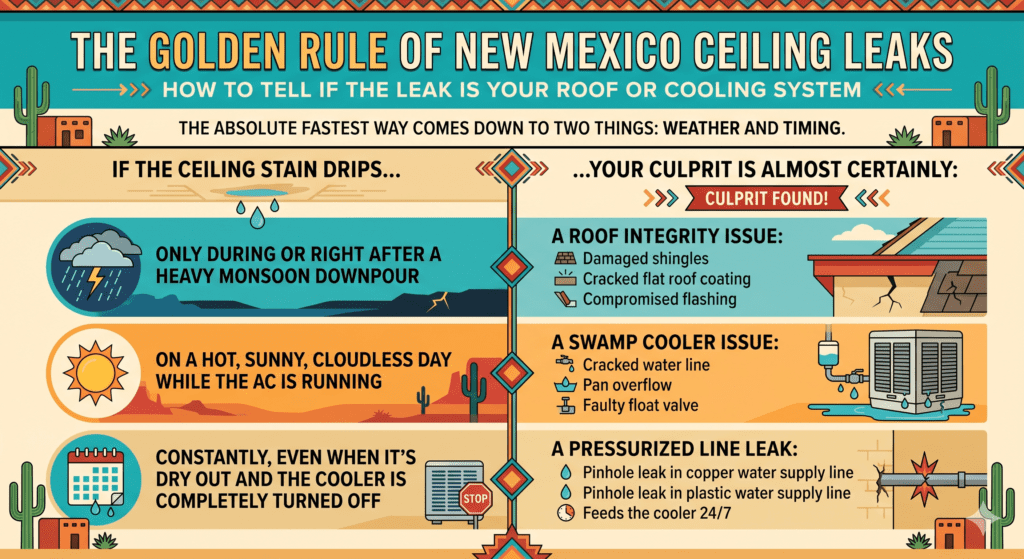
The Golden Rule of New Mexico Ceiling Leaks
The absolute fastest way to tell if your leak is a roof integrity issue or a cooling system failure comes down to two things: weather and timing.
3 Troubleshooting Steps to Pinpoint the Leak
Before you pull out the ladder or call for and Albuquerque roofing company that offers roof leak repair service, take a few minutes to play detective from inside and outside your home.
1. Track the Timing and Your Cooling Schedule
Think about exactly when the drip started. Did it begin an hour after you turned on your evaporative cooling for the day?
Swamp cooler water lines face brutal conditions on Albuquerque rooftops, enduring freezing winters and intense high-desert UV rays. Over time, plastic and copper lines can freeze, split, or crack. The moment the water valve is turned on for the season or the unit kicks on to pump water to the pads, a cracked line will pour water directly onto your roof deck.
2. Map the Location of the Leak
Take a look at where the unit sits on your roof in relation to the water stain on your ceiling.
Swamp coolers are incredibly heavy and sit on specialized roof jacks or platforms. If the ceiling drip is located directly beneath or slightly downslope from the cooling unit, the cooler itself or its roof penetration is your prime suspect. If the stain is near the edge of your house, by a valley, or in an interior room far away from the unit, it’s highly likely a standard roof leak.
3. Check the “Water Color” and Residue
The appearance of the water or the stain can give away its origin:
- The Roof Leak Stain: Rainwater filtering through New Mexico dust, roof decking, and attic insulation usually leaves a dark, yellowish-brown stain with distinct, dark rings as it dries.
- The Swamp Cooler Stain: If a water line is actively leaking fresh municipal water, the drip might look clear at first. However, because Albuquerque water is notoriously high in mineral content, a cooler leak will often leave a heavy white, chalky, or crusty buildup of calcium and scale around the leak site.
The “Both” Exception: Duct and Leg Flashing
Sometimes, the diagnostic lines blur. Your swamp cooler might not be leaking a single drop of its own water, but the roof flashing sealed around the cooler’s legs or the main air duct may have cracked or pulled away from the roof. In this scenario, it will only leak when it rains, but the entry point exists because of how the cooler is mounted. This requires a professional roofer to re-flash and seal the unit properly.
Real Roof Leaks: The Albuquerque Weather Factor
If your troubleshooting points to a weather-related issue rather than a plumbing line, it is vital to understand why local roofs fail. Albuquerque’s high altitude, intense UV exposure, and 30-to-40-degree daily temperature swings subject roofing materials to massive thermal shock. This constant expansion and contraction cause caulking to crack, seams to separate, and fasteners to loosen.
When the summer monsoon season hits between June and September, torrential rains and high winds exploit these hidden weaknesses. Water forces its way under curled shingles, through dried-out tile underlayment, or down cracks along parapet walls on flat pueblo-style roofs.
Your Next Steps: Who Do You Call?
Once you’ve run through the checklist, you’ll know which local professional to get on the phone to prevent further drywall damage, rotted decking, or attic issues:
- When to Call an HVAC Specialist: If the leak happens exclusively on clear days while the unit is running, or if you find the water shut-off valve is causing a continuous drip. They can replace cracked supply lines, swap out faulty float valves, or clear blocked overflow drains.
- When to Call an Albuquerque Roofing Contractor: If your mystery drip hits during a severe storm or stems from failed equipment curbs and cracked duct flashing, you need specialized local expertise.
For fast, dependable service, turning to Rocky Mountain Roofing Services‘ Albuquerque Roof Leak Repair ensures the root cause is resolved, not just the visible symptoms. Backed by over 35 years of local experience, their licensed and insured teams specialize in diagnosing and repairing tricky leaks across all roof types—including asphalt shingles, tile underlayment failures, foam coatings, and flat roofs. Whether you need a comprehensive digital leak analysis with photos or emergency monsoon tarping to protect your home from an active storm, scheduling a professional inspection takes the guesswork out of protecting your property.
Final Thoughts on Roof Leaks vs. Swamp Cooler Leaks
Distinguishing between a swamp cooler line failure and a true structural roof leak is the critical first step in keeping your Albuquerque home dry and secure. By paying close attention to the timing of the drip, checking the color of the water residue, and monitoring our unpredictable New Mexico weather patterns, you can confidently call the right professional for the job. Don’t let a minor ceiling stain quietly evolve into costly structural damage or mold growth behind your drywall. Act quickly, use these simple troubleshooting steps to pinpoint the problem, and lean on trusted local experts to ensure your home remains fully protected against the desert elements.