
Santa Fe Historic District Commercial Roofing Codes & Restrictions
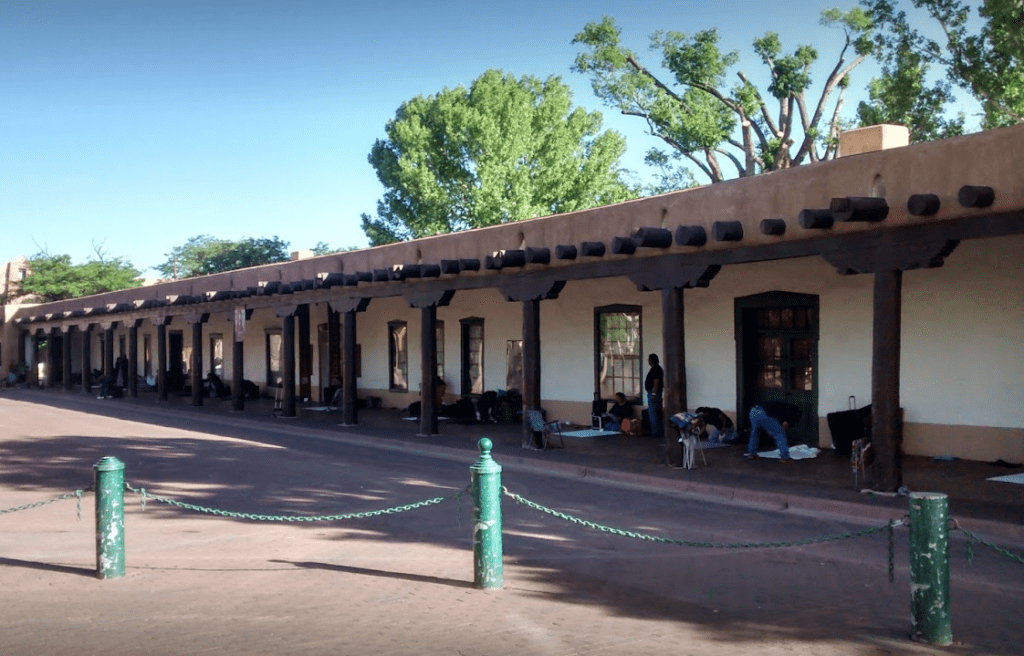
If you own or manage a commercial property, a retail boutique, or a historical building near the Plaza or within Santa Fe’s protected historic districts, building maintenance is never a simple “call and install” procedure. While commercial entities in Albuquerque’s industrial parks can freely roll out bright white single-ply membranes without a second thought, the City of Santa Fe enforces some of the strictest municipal historic preservation codes in the United States.
In these historic zones, your roof line is a vital architectural asset governed tightly by Santa Fe’s Historic Districts Review Board (HDRB). In Santa Fe’s unique Pueblo Revival and Territorial architectural landscapes, flat roofs and parapet walls aren’t just structural elements—they are the literal framework of the city’s identity.
At Rocky Mountain Roofing Services, we have decades of hands-on experience helping commercial property owners navigate the intersection of modern engineering and rigid historic code compliance. Let’s pull back the curtain on how to navigate Santa Fe’s historic commercial roofing restrictions without sacrificing your building’s structural integrity or your operational budget.
The Strict Legal Framework: Santa Fe’s “Adobe Effect” Mandates
According to City of Santa Fe Ordinance guidelines (such as Section 14-5.2), any alteration, repair, or substitution of materials on a contributing or significant commercial building must rigidly harmonize with the historical streetscape. The foundational rule governing historic commercial structures dictates that the overall dominating effect must be that of traditional adobe construction.
For low-slope and flat commercial roofing systems, this brings specific, non-negotiable legal mandates:
- The Uniform Color Rule: Roofs, generally, must be flat with a slight slope and entirely surrounded by a parapet wall that matches the exact same color and material as the exterior stucco walls, or constructed of traditional brick.
- The Concealment Clause: The restriction to flat roof designs does not legally prohibit you from installing necessary modern upgrades like commercial skylights, high-efficiency evaporative cooling units, or industrial HVAC platforms. However, the historic code explicitly states that all such necessary roof structures must be placed so as to be completely concealed by the parapet wall from any public way. If an HVAC unit or mechanical system protrudes visibly above the parapet line from the street, it is a direct violation of municipal historic code.
Navigating Parapet Restrictions and the New Mexico Building Code
The vertical parapet walls that give Santa Fe commercial buildings their iconic southwest silhouette are the single most common failure point for leaks. In historical zones, fixing a deteriorated parapet is heavily restricted because you cannot alter its visual shape, height, or smooth stucco texture.
However, under Chapter 15 of the New Mexico Commercial Building Code (§ 14.7.2.23 NMAC), the state mandates strict weatherization standards for these historic walls that roofers must follow:
The Plastered Parapet Weather Barrier Mandate
Under state law, a plastered or stucco’ ed parapet wall on a commercial facility requires a seamless but permeable waterproof weather barrier that completely caps the entire horizontal top of the parapet and wraps cleanly over each vertical side.
- On the exterior wall side, this flashing/cover must extend down past the vertical break a minimum of four inches.
- On the interior roof side, it must properly lap over the rising single-ply roof membrane and be fully sealed.
- To maintain the historic visual aesthetic, a layer of expanded metal lath must be installed directly over this weather barrier before a smooth mud or hard plaster coat can be applied.
The Strict Santa Fe Historic District Parapet Wall Fastener Restriction
To prevent water infiltration into historical framing, building codes explicitly state that no penetrating fasteners are permitted on the horizontal top surface of a parapet wall. All commercial anchoring must be executed vertically along the interior or exterior face of the wall system.
Scuppers, Canales, and Drainage Rules in Santa Fe Historic Zones
Because Santa Fe commercial properties feature low-slope roofs enclosed by tall parapet walls, clearing storm water during intense July monsoon cycles is a major engineering hurdle. In historic districts, water is historically discharged through wall cutouts called scuppers or traditional wooden/metal waterspouts known as canales.
While the exterior facade of the canales must look visually period-accurate to satisfy the Historic Design Review Board, the underlying engineering must comply fully with modern commercial moisture codes:
- Metal Pan Lining Mandate: According to § 14.7.2.23 NMAC, all commercial canales and scuppers must feature an integrated metal pan lining. This metal sleeve must extend not less than six inches past the inside face of the parapet wall and at least six inches out from each side of the drainage opening.
- The Positive Drainage Mandate: The metal pan substrate must provide continuous positive drainage. If a historic scupper holds stagnant water or is cut too high relative to the roof deck, it creates a flat roof ponding loop that accelerates structural wood rot behind your historic stucco facade.
Material Compatibility: Staying Invisible to the Santa Fe Historic District Review Board
One of the biggest questions commercial property owners ask us is: “Can I legally use a modern, highly efficient material like TPO or PVC on a Santa Fe historic district roof?”
The answer is yes—provided the installation remains completely invisible from the public right-of-way.
The Problem with Reflective Roof Membranes
Standard commercial single-ply membranes are brilliant white, designed to deflect harsh high-desert UV rays and slash facility cooling loads. However, if your building sits on a sloping street or is flanked by taller structures, a bright white sheet shimmering behind a historic parapet wall is a flagrant code violation.
The Engineering Solution
When Rocky Mountain Roofing Services manages a historic commercial restoration, we utilize specialized, non-reflective gray or tan TPO (Thermoplastic Polyolefin) or premium PVC membranes that mimic the muted, matte earth tones mandated by local historic color boards. Furthermore, we utilize advanced taperboard insulation grids at all roof-to-deck transitions and around drainage valleys to establish uniform sloping directly to your historic scupper openings, providing modern structural waterproofing without changing an inch of the building’s exterior historic profiles.
Conclusion: Don’t Let Santa Fe Historic District Building Codes Turn into Structural Failures
Managing a historical commercial property in Santa Fe means balancing a profound respect for municipal heritage with the hard realities of modern roofing physics. Putting off a critical low-slope roof repair because you are intimidated by the Santa Fe Historic Design Review Board process only guarantees that a sudden monsoon downpour will eventually compromise your historic vigas, interior plaster walls, or high-value business inventory.
Don’t guess on historic code compliance or trust your irreplaceable asset to an out-of-state contractor who doesn’t understand New Mexico building codes or Santa Fe preservation law. Get a seasoned, local eye on your roof line who can seamlessly bridge the gap between historic aesthetics and bulletproof commercial engineering.
If you need a professional, code-compliant drainage or membrane assessment for your historic property, call Rocky Mountain Roofing Services today at 505-717-1925 to consult with an authentic Santa Fe flat roof expert.