How Do I Prevent Albuquerque Roof Parapet & Scupper Failure?
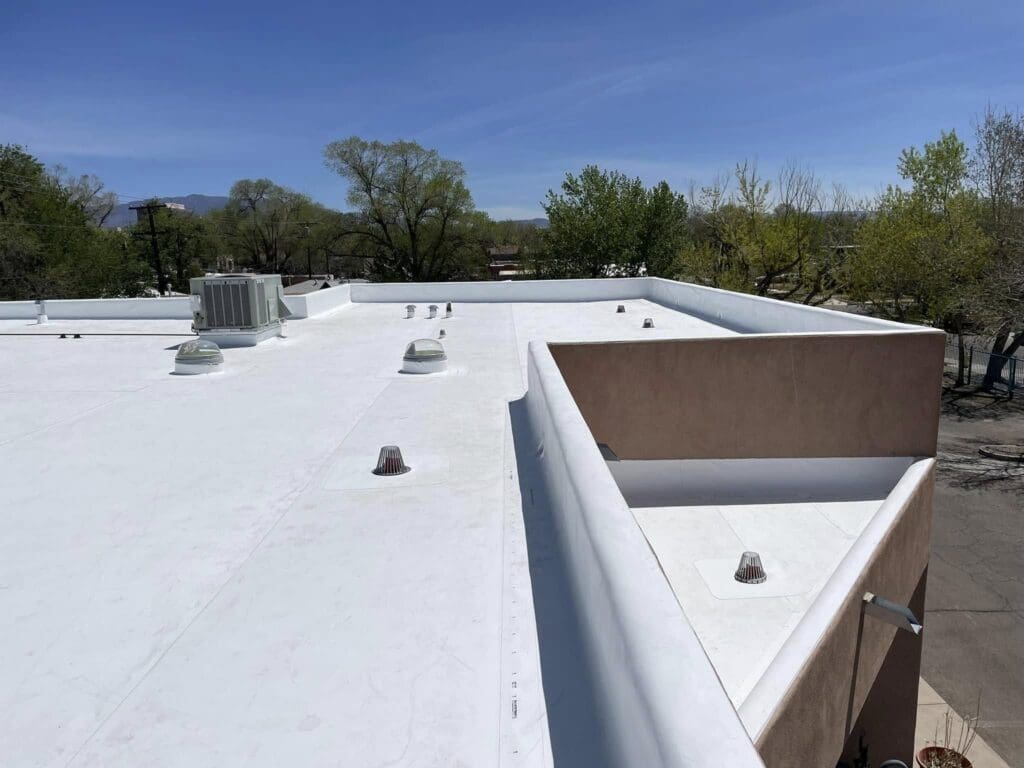
If you manage a commercial property or warehouse in Albuquerque, or Bernalillo County, you know that our regional climate puts a brutal amount of stress on a building envelope. Out-of-state property owners often assume that our dry, high-desert air means roofing systems last forever. But local asset managers across the Duke City know the truth: the real test doesn’t come from the dry spells—it comes from the intense, short-duration downpours brought by the July monsoon cycles in Bernalillo County.
When a sudden summer storm rolls off the Sandia Mountains and dumps two inches of rain onto an Albuquerque warehouse in under an hour, that expansive flat footprint is put under immediate structural duress. Your facility is completely dependent on two critical structural components to shed that volume of water: parapet walls and roof scuppers.
At Rocky Mountain Roofing Services, I’ve spent more than 35 years walking low-slope decks on Albuquerque commercial buildings. I can tell you from experience that structural failures at the roof perimeter are the leading causes of catastrophic, expensive interior building damage during our New Mexico storm season.
Let’s look at the mechanics of parapet and scupper failures, why our local environment accelerates these issues, and the proactive steps you need to take right now to secure your facility before the monsoons hit.
Demystifying the Components of Your Albuquerque Commercial Roof
To a busy property owner or business manager, a roof is often “out of sight, out of mind”. It is frequently viewed as just a flat surface tasked with keeping the rain out. However, when a roofing contractor starts tossing around technical terms, an owner’s eyes can easily glaze over.
To effectively protect your investment, it helps to understand what these components are called in daily conversation versus what they actually do structurally on Bernalillo County industrial properties.
1. The Parapet Wall (The Structural Edge)
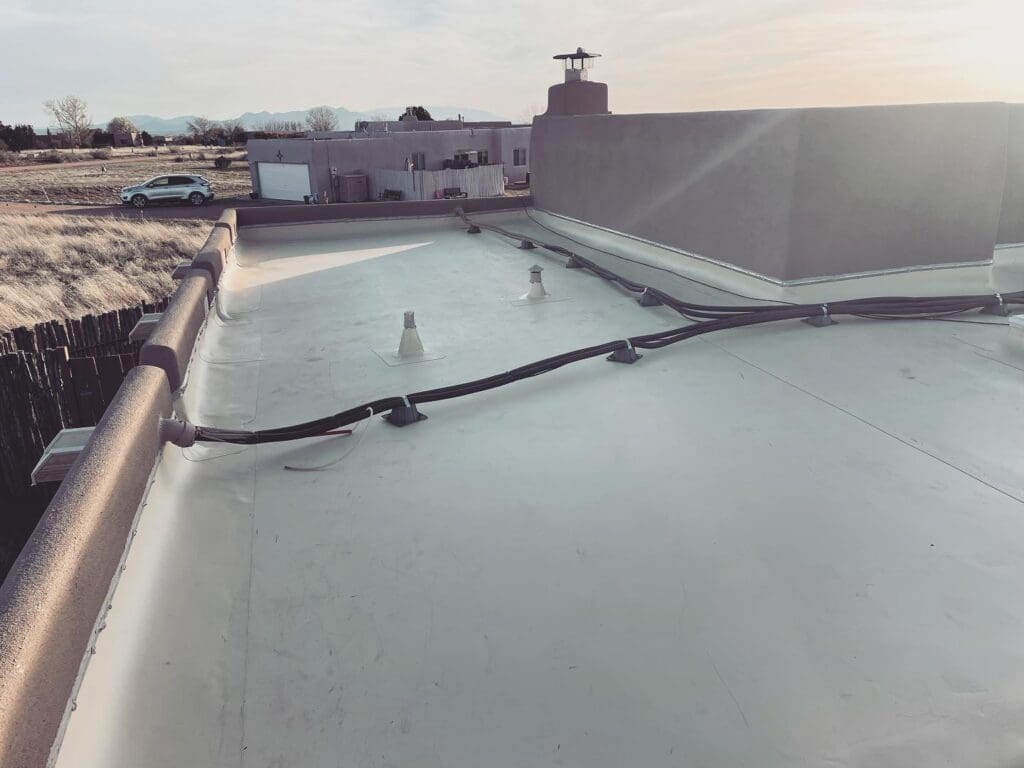
- What you might call it: “The edge,” “the structural lip,” or “the decorative wall around the top.”
- What it actually is: A low protective wall that projects vertically above the flat roofline.
- Why it matters to your facility: Parapets are critical for building aesthetics, safety, and wind resistance against high-desert gusts. For a facility manager, the most important takeaway is that the parapet flashing—where the flat roof membrane transitions up the vertical side of the wall—is one of the most common failure points for leaks on Albuquerque commercial buildings.
2. The Scupper – (The Roof’s Drainage Outlet)
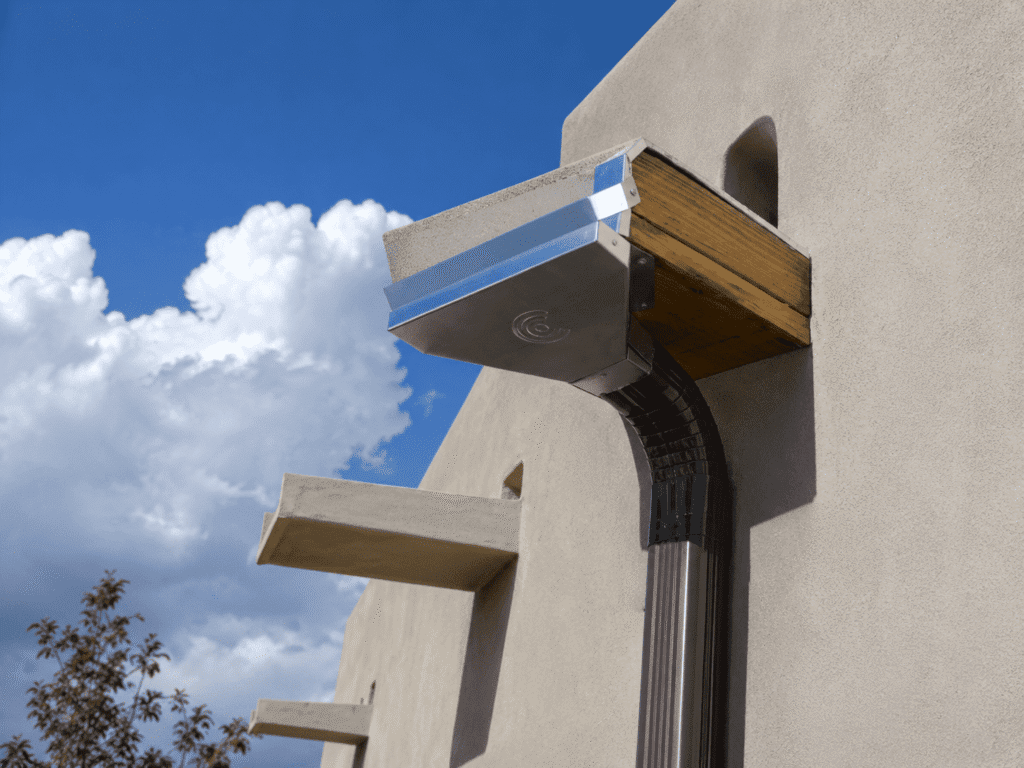
- What you might call it: “The drainage hole,” “the overflow pipe,” or “the cutout in the wall.”
- What it actually is: An engineered opening cut directly through the parapet wall that allows water to drain off the roof into an exterior downspout, collector box, or gutter system.
- Why it matters to your facility: Flat roofs across the Duke City aren’t perfectly flat; they are slightly sloped toward these drainage points. When leaves, dirt, or wind-blown desert debris block these openings, your roof transforms into a giant swimming pool. The resulting standing water can quickly overload your building structure or destroy a TPO membrane.
The Geometry of Failure: How Parapets and Scuppers Break Down on New Mexico Commercial Roofs
When a severe storm hits, the intersection where your flat roof membrane meets a vertical parapet wall becomes ground zero for structural stress. If your scuppers are restricted or your parapet flashing is compromised, a high-desert rainstorm will exploit those weaknesses in minutes.
Parapet Wall Termination and Flashing Leaks
The weakest point on any flat commercial roof is where the horizontal membrane changes direction and runs vertically up the side of a parapet wall. This transition is sealed using specialized base flashing.
In the Southwest, our extreme environmental conditions accelerate flashing degradation:
- Albuquerque’s Intense 5,000-Foot Elevation UV Exposure: The intense, high-altitude sun cooks the adhesives and membranes used on vertical wall terminations, causing materials to dry out, crack, or pull away from the wall (delamination).
- High-Desert Thermal Shock: The Duke City regularly experiences sudden 30° to 40° daily temperature drops when a cold monsoon downpour hits a sun-baked, 140° roof. This causes rapid, violent material contraction. If the parapet flashing is brittle, it snaps or tears at the seams, creating a direct entry path for water to travel behind your exterior building envelope.
The Scupper “Dam” Effect and Water Backups
When a scupper fails to discharge water at its engineered flow rate, the results are immediate. If a storm dumps a ton of water faster than the scuppers can drain it, water backs up across the membrane.
The primary cause of this failure is restricted flow due to wind-driven high-desert debris. Albuquerque and Santa Fe windstorms love to deposit dirt, tumbleweeds, nesting materials, and cottonwood debris directly into the corners of flat roofs. When rain falls, this loose debris is swept forward by the rushing sheet flow, creating a thick, solid dam right across the mouth of the scupper opening.
Structural Wall Rot and Stucco Failure
When water backs up behind a clogged scupper or slips behind cracked parapet flashing, it tabs directly into the internal structural cavity of the parapet wall itself.
For facilities across the Duke City featuring traditional Southwest stucco or masonry finishes, this trapped water causes rapid deterioration. Moisture rots out internal wood framing, rusts steel metal tracks, and destroys the bond of exterior stucco. You’ll often spot the early warning signs of this internal failure via bubbling stucco, white powdery mineral stains (efflorescence) on the exterior facade, or active leaks inside the building’s perimeter walls.
The Proactive Pre-Monsoon Commercial Checklist for Albuquerque Building and Property Managers
You should never wait for a major weather event to find out if your commercial drainage system is functioning. By implementing a proactive inspection protocol before the storm season hits, facility managers can mitigate risk and protect their operational assets.
Step 1: Clean and Clear All Drainage Orifices
- Remove all physical debris, silt, wind-driven sand, and plant growth within a 10-foot radius of every scupper and drain.
- Inspect exterior collection boxes and downspouts to ensure they aren’t choked with debris from past spring windstorms.
Step 2: Inspect Parapet Wall Coping Caps
- Check the metal or masonry coping caps that seal the very top of the parapet walls.
- Ensure the seams between metal cap sections are tightly sealed and that fasteners haven’t backed out due to thermal movement. Missing or unsealed coping joints allow rain to pour directly down into the hollow center of the building wall.
Step 3: Audit the Membrane Termination Seams
- Walk the vertical perimeter and physically check the top edge of the roofing membrane where it terminates on the wall.
- Look for signs of sagging, bridging (where the membrane pulls away from the corner angle, leaving an empty void underneath), or split caulking along the counterflashing termination bar.
Permanent Engineering Fixes for Albuquerque’s Core Industrial Corridors
If your commercial building suffers from chronic perimeter pooling or recurring leaks during heavy rains, standard maintenance won’t solve the root issue. You likely have an inherent architectural design flaw that requires a targeted structural correction. At Rocky Mountain Roofing Services, we permanently remediate these drainage vulnerabilities across the city’s key trade zones:
Upgrade to Hot-Air Welded Single-Ply Flashings
Older asphalt, modified bitumen, or multi-ply built-up roofs utilize glued or torched flashings that break down rapidly under Albuquerque’s intense 5,000-foot elevation UV exposure. When we update a facility, we transition the perimeter wall components to heavy-duty TPO (Thermoplastic Polyolefin) or premium PVC (Polyvinyl Chloride) membranes. The vertical wall flashings are hot-air welded directly to the primary field membrane, forming a continuous, molecularly fused bond that cannot separate, crack, or wash out under thermal shock or standing water pressure.
Custom Fabricated Oversized Scuppers and Collection Boxes
Many older commercial facilities in mature logistics corridors like the Near North Valley or the industrial hubs off Broadway feature drainage openings that were undersized by the original builder. We structurally modify these openings, cutting out the restrictive masonry or framing to install custom-fabricated, heavy-gauge commercial scuppers with integrated, oversized exterior collector boxes. Maximizing the physical dimensions of the drainage opening ensures the system can easily process high-volume monsoon downpours without backing up water onto the deck.
High-Slope Insulation Crickets Between Scuppers
When a flat roof features a series of scuppers spaced along a parapet wall—common in large-scale office parks throughout the Journal Center or massive distribution warehouses along the West I-40 Corridor—water can often stagnate in the “dead zones” between the drainage openings. To solve this, we engineer and install steeply sloped insulation crickets directly against the vertical wall between the scuppers. These rigid foam structures form a series of V-shaped valleys that actively steer traveling rainwater laterally, forcing it out of the nearest scupper rather than allowing it to sit and pool against the wall.
Conclusion: Secure Your Albuquerque Commercial Property Roof Before the Monsoon Rains Start
When a monsoon storm rolls off the Sandia Mountains, a minor perimeter flashing defect can turn into a major operational nightmare in less than thirty minutes. Flooded inventory, ruined equipment, and forced business downtime are incredibly costly consequences of a preventable drainage failure.
Whether your building is a heavy manufacturing plant down near Mesa Del Sol or a multi-tenant flex space in the Near North Valley, don’t wait for the first torrential downpour of the season to test the integrity of your building’s perimeter. Get an experienced, local eye on your roof line who understands high-desert structural dynamics, reads water flow patterns accurately, and can implement a permanent engineering solution that keeps your facility completely dry for decades.
If you want to ensure your property is fully prepared to survive the upcoming storm season, call Rocky Mountain Roofing Services today at 505-717-1925 to schedule a comprehensive, professional pre-monsoon commercial drainage and parapet assessment.
Commercial Flat Roofing FAQ
What exactly is ponding water and why is it dangerous?
Ponding water refers to rainwater that sits on a flat commercial roof for more than 48 hours after a storm without draining or naturally evaporating. Because flat roofs are technically “low-slope” systems designed to shed water, persistent pooling indicates a structural sag, a blocked drain, or improper sloping. The immense dead weight of this standing water puts severe stress on the building’s structural deck, accelerates membrane decay, and can completely void your roofing manufacturer warranty.
What is roof flashing and why does it fail so often?
Flashing consists of thin strips of waterproof material (such as TPO, specialized membranes, or metal) engineered to seal the joints where your roof system transitions to a wall, pipe boot, skylight, or commercial HVAC curb. Roughly 90% of all commercial roof leaks originate at the flashing rather than the open center membrane. Because different building materials expand and contract at different rates under the sun, flashing eventually cracks, gaps, or pulls away from the vertical surface.
What is a core test and why should I request one?
A core test (or core sample) is a process where a roofer cuts a small, physical cross-section out of your roof down to the wood or steel deck to inspect the hidden, subsurface layers. The sample hole is immediately patched and sealed. This test is critical when purchasing a building or planning a re-roof, because building codes generally limit commercial structures to two roofing layers before a total tear-off is required. It also reveals if underlying insulation layers are secretly soaked and rotting.
How does thermal shock impact my flat commercial roof?
Thermal shock is the strain caused by the rapid expansion and contraction of roofing materials due to extreme temperature swings over a short period. This is a constant issue in New Mexico, where a blistering hot afternoon can be followed by a sudden, cold desert downpour or chilly night. Over time, thermal shock splits membrane seams, backs out structural fasteners, and cracks aging materials. Highly reflective white single-ply systems (like TPO) help mitigate this movement by keeping the roof surface closer to the ambient air temperature.
What is a termination bar and what happens if it fails?
A termination bar (or T-bar) is a rigid metal strip fastened along the top vertical edge of a roofing membrane where it directly mounts to a parapet wall or structural transition. It functions to mechanically pin the roofing system securely in place. The T-bar is the primary defense that keeps high desert winds from slipping beneath the membrane and peeling the roof deck off like banana skin. If the sealant layer along the top of the T-bar fails, rainwater can trickle directly behind the membrane and flow straight into your building’s interior walls.