
What are the Main Reasons New Mexico Flat Roofs Fail and How Do Your Repair Them?
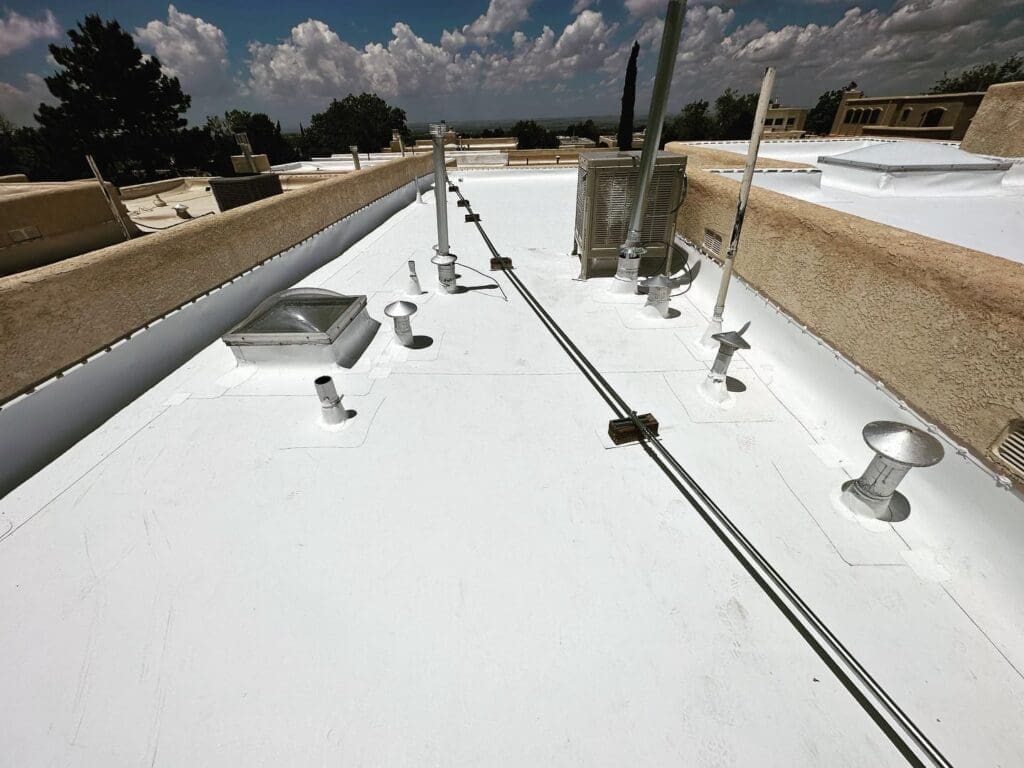
Flat roofs in New Mexico are a common architectural feature and have a long history in the state. They are popular due to their practicality, cost-effectiveness, and compatibility with the design heritage of the Southwest. However, the unique combination of environmental conditions that exist in New Mexico can cause flat roofs to fail before homeowners expect them to.
Flat roofs in New Mexico have been around for hundreds of years. The fact is that harsh environmental conditions, such as very high levels of UV exposure, large temperature differences between day & night, heavy monsoon rains, and continual high winds, all contribute to the ongoing additional stress that New Mexico flat roofing systems experience.
When problems like ponding water, membrane cracking, or UV deterioration are not addressed in an effective & timely manner, they will lead to roof leaks that cause structural damage and will require expensive roof leak repairs or roof replacement.
If you have (or are considering purchasing) a flat-roof home in New Mexico, it is critical that you read this guide.
Top Reasons Why Flat Roofs Are Popular in New Mexico
Flat roofs are very popular in New Mexico for both homes and commercial buildings, reflecting the traditional Pueblo architectural styles that have been used to build structures in the state for many years. In addition to aesthetics, flat roofs are desirable for the following reasons:
- They have clean architectural lines.
- They are compatible with adobe and stucco construction materials.
- They are easy to access for maintenance purposes.
- They provide a flat surface for installing solar panels or mechanical equipment.
- They have a lower cost of installation, compared to sloped roofs that require additional construction costs for framing and/or additional building materials.
Even though flat roofs are suited to the Southwestern region of the United States, they must be designed, built, and maintained for New Mexico’s environmental conditions. When not properly designed and constructed, flat roofs will suffer more frequent and severe failures than most homeowners anticipate.
How Flat Roofs Work
A flat roof may look flat and is called a flat roof, but not really 100 percent flat; they are built with a slight slope (most commonly 1/4″ per linear foot) to drain water off the roof system toward their canales / drain / scupper. A typical flat roof system will consist of:
- A structural roof deck.
- Insulation.
- A waterproofing membrane (TPO, modified bitumen, or built-up roofing).
- Flashing for perimeter, roof penetrations, and transitions.
- Drainage components.
If any combination of the above parts of a flat roof system fails to perform to established standards, the flat roof system as a whole will not perform to the desired level. This means that weaknesses in any part of the roofing system can create cracks or openings in the membrane or the roof system seams.
Why New Mexican Weather Is Unforgiving on Flat Roof Systems
Key variables associated with damaging flat roofs in New Mexico include:
- High intensity UV radiation that degrades roofing materials.
- Extreme temperature fluctuations produce stresses of expansion and contraction to roofing systems.
- Low annual rainfall and sudden, intense rainstorms create high demand for waterproofing systems.
- Very strong winds create roof lift and damage roofing materials & carry dust and debris.
Most flat roofs rely solely upon the waterproofing membrane for waterproofing. Winds that are common in New Mexico can also deposit vegetation on flat roofs which creates the need for regular maintenance of the flat roofing system.
- Intense UV Radiation – The very high elevation of New Mexico and clear skies produce a continuous source of UV radiation exposure to flat roofing membranes.
- Extreme Temperature Swings – The large temperature differences between hot days and cool nights in New Mexico produce ongoing stresses of expansion and contraction to flat roofing systems.
- Monsoonal Rainfall – Sudden, intense rainfall can overwhelm flat roofing systems that do not have adequate slopes or drainage.
- High Winds – Constantly high winds in New Mexico will stress the seams of flat roofing membranes and cause lifting of membrane edges.
- Low Humidity Followed By Sudden Moisture – Materials dry out when low humidity exists and absorb a large amount of water very quickly during storm events, increasing the rate of cracking.
New Mexico’s climatic conditions create a great deal of difficulty for flat roofs and, in particular, for flat roofs that are solely relying on their membranes for waterproofing.
The Importance of Proper Flat Roof Installation
Proper professional flat roof installation is the foundation for a reliable, long-lasting roofing system in New Mexico’s harsh climate. The combination of intense sun exposure, sudden storm damage, and large temperature fluctuations requires that all aspects of the roof installation be done correctly.
Roofing industry professionals from Albuquerque, Santa Fe, and throughout New Mexico emphasize, such as the Albuquerque roofing company Rocky Mountain Roofing Services, that strict adherence to quality workmanship and local building codes are mandatory for a flat roof to provide total protection of your property. It is well known within the roofing industry that most roof repairs are the result of very poor roof installation practices or insufficiently performed routine maintenance.
A properly installed flat roof system, using compatible materials and roofing techniques that are appropriate for New Mexico’s unique environmental conditions, will provide a functional roofing system for many years and minimize roof repair costs. Proper drainage, flashing integrity, and membrane continuity are essential in preventing leaks, mold, and other significant issues will adversely affect the long-term integrity of your building.
Routine maintenance is critical; however, it is always dependent upon a well-installed flat roofing system. Homeowners and commercial property owners who use experienced roofing contractors will be assured that the roofing system will far exceed the minimum requirements established by the local building department.
A properly installed flat roof system will provide long-term protection for the property, preserve the property’s value, and provide peace of mind to the homeowner, regardless of what type of weather the flat roof may be subjected to in New Mexico.
Ponding Water – The #1 Flat Roof Issue in New Mexico
Ponding water is defined as any water that has been present on the surface of a flat roof for more than 48 hours after rainfall has ceased. While it is true that the state of New Mexico is well known for its dry climate, extremely heavy rainfall can occur during the Monsoon Season and create excessive amounts of water on the flat roof in a very short amount of time.
Why Ponding Happens on Flat Roofs
Standing water on flat roofs is a good indicator of drainage problems. Common reasons for water ponding include inadequate roof slope, settling of structures over time, degradation or compression of insulation, blocked drains or scuppers, poor original roof design, and debris buildup due to wind and dust.
Regular inspection of flat roofs will help you identify these issues early before they become worse. Even if a flat roof has small depressions, standing water could become trapped in them.
Why Ponding Water Is the Bane of Every New Mexico Flat Roof
Standing water accelerates every other mode of failure. UV damage becomes more severe as sunlight reflects off of standing water. Membrane materials tend to break down and weaken from being continually stressed at seams. Dust and debris continue to build upon rooftops that have standing water.
Algae and other microbial growth can develop in stagnant water. Most importantly, ponding will eventually lead to roofing membrane failure and leaking.
Signs Of Ponding Water Issues
Signs of standing water on flat roofs include water stains or rings, sagging areas, softness underfoot, discolored ceilings inside the home, and ongoing leaks after storms. If a roof has repeated instances of water ponding, the roof has been compromised.
How to Fix Flat Roof Ponding Water Problems
The following are long-term solutions to flat roof ponding problems:
- adding tapered insulation for better drainage,
- adding additional drains or scuppers, correcting slope issues when reroofing,
- and keeping subsequent drainage pathways clean and clear.
Addressing ponding water should be one of most important priorities of flat roofing contractors to prevent more damage. Many so-called temporary fixes do not work long-term. Therefore, to provide long-term solutions to these issues, roofing contractors must focus on the slope and drainage system design of flat roofs.
Membrane Cracking
Cracking of flat roofing membranes is a major problem in arid climates, such as New Mexico. Although flat roofing membranes are sold as flexible, the extreme heat and cold experienced on flat roofs will push these materials beyond their breakpoint.
Cracking flat roofing membranes occurs due to many factors, most often the result of thermal cycles (expansion due to heating and contraction due to cooling), the de-drying of materials due to ultraviolet radiation, the age of membranes, improper installation methods, and the use of low-quality materials not rated for high desert climates.
Consequences of Membrane Cracking
As the membrane materials lose flexibility, they become brittle and susceptible to splitting. In most cases of widespread cracking of the flat roofing membrane, the only long-term solution is to replace the membrane.
Even hairline cracking of the flat roofing membrane can permit water to:
- Enter the insulation system
- Affect the lateral movement of moisture under the membrane to other areas of the roof system.
- Saturate the roof decking.
- Lead to mold growth
- Deteriorates the structural integrity of the building.
By the time a person discovers water leaking inside the building due to cracked membranes, the majority of the damage has already occurred.
Common Locations of Cracking
Typically, cracking flat roofing membranes occur at the following locations of the flat roof:
- Seams in the roofing membrane
- The edges of the roof
- The areas around HVAC systems
- At the transitions in roof flashings
- Over structural joints
There are a lot of mechanical stresses and movement in these locations.
New Mexico Flat Roof Repair and Prevention Methods
Repairing or preventing cracking of flat roofing membranes can be accomplished through a few methods:
- Using a professional to repair any cracked membrane area
- Installing a membrane patching or reinforced patching system
However, if the cracking is extensive, replacing the flat roofing membrane is usually the only choice to restore its structural integrity.
Preventing the cracking of flat roofing membranes depends on:
- Using UV-resistant membranes
- Using proper installation methods
- Providing routine inspection and maintenance of the roof surface
UV Radiation Damage
Ultraviolet (UV) radiation is one of the most damaging elements affecting flat roofing systems in New Mexico.
Ultraviolet rays will:
- Break polymer chains in the roofing membrane.
- Cause chalking of the roof membrane.
- Dried oils in the roofing membrane that keep it flexible.
- Fade protective coatings
- Create brittleness in the roofing membrane with prolonged exposure
The effects of UV damage can be cumulative, making it difficult for flat roofing owners to see until failure occurs.
Factors Increasing UV Exposure
Several factors in New Mexico increase the level of UV radiation exposure on flat roofs:
- High altitude
- Low humidity
- Lack of elevation of the ozone layer
- Flat roofs receive constant UV radiation because the angle of the sun is near to horizontal when it shines on flat roofs and it is constantly moving in the sky
Signs of Roof UV Damage
Signs of UV damage to a flat roofing system include:
- Discoloration – roof membrane
- Surface cracking – roof membrane
- Delaminated surfaces due to UV damage
- Creosote buildup
- Abrasion of reinforcement material due to UV exposure
Mitigating Flat Roof UV Damage
There are several effective ways to mitigate UV damage:
- Install reflective roofing membranes.
- Utilize UV-resistant coating.
- Utilize proper materials for flat roofing built in high desert climates.
- Provide routine inspection and maintenance of the flat roof surface.
Roof coatings can increase the life of a flat roof; however, the coatings must be applied before extensive damage occurs.
Roof Coating and Protection
Roof coatings and protection systems are effective strategies to extend the life of flat roofs in New Mexico. Professionally installed roof coatings on flat roofs provide an additional barrier against New Mexico’s unfavorable weather conditions, such as extreme sun exposure, heavy rain, and the possibility of storm damage.
Consulting with qualified roofing professionals, using a scheduled maintenance and timely installation plan will help curb the chances of developing cracks, leaks, and other damage, which may result in costly repairs.
Rocky Mountain Roofing Services is Here to Help!
We provide Free Quotes for flat roofing repair or roof replacement throughout New Mexico.
Here at Rocky Mountain Roofing Services, we are the premier expert provider of flat roofing solutions in New Mexico. After all, we have been in business for over 35 years! We understand the unique challenges of flat roofs in New Mexico and value our reputation for providing reliable, high-quality flat roofing products and services. Give us a call today at 505-717-1925 to discuss your roof problems and schedule an appointment for free inspection and quote.